
Beth Griser’s family is pleading with the Pennsylvania Parole Board to keep Erin Petroski in prison, saying the woman who killed Griser in a drunken hit-and-run has not served enough time and has not shown genuine remorse.Sharon Chisholm, Griser’s aunt, traveled more than 1,200 miles from Frisco, Texas, to Pittsburgh’s South Side to speak to the parole board in person. She said she felt compelled to be there so board members could fully understand the pain Griser’s family continues to carry and the impact that Petroski’s possible release after 36 months would have on them.“She is who I would call the sweetheart of the family,” Chisholm said. “Never a mean bone in her body. She was a very kind, generous person.”Standing near the memorial marking the spot on Babcock Boulevard where Griser was killed on Jan. 13, 2023, Chisholm said reliving the loss remains deeply painful. Griser had just gotten off a bus and was walking along the road when police said Petroski, who was driving drunk, struck her and kept going. Petroski was later tracked down and charged, and she ultimately pleaded guilty.Chisholm said the family never felt it truly had its day in court because the plea agreement was reached without their knowledge.“It’s obviously very hard to relive what we’ve gone through, but it’s important for the board to understand what our concerns were,” Chisholm said. “Especially when you consider that her pleading guilty was part of a plea arrangement that we had no knowledge of or input in. So it made us feel like we didn’t ever have our day in court.”In a five-page statement submitted to the parole board, Chisholm described Griser’s love of painting and writing, her devotion to family, and the future she was beginning to build before her life was cut short. She also argued Petroski should remain behind bars because, she said, this was not the first time Petroski had driven under the influence.“She is a repeat DUI offender who, on the night that my niece was killed, she made a conscious decision while she was sober that she was going out drinking that night, but didn’t take that step to make sure she made safer arrangements for safe transportation home,” Chisholm said. “Had she made one responsible decision that night, not 10, not 20, just one, Beth would still be alive today.”Chisholm also said the family was not moved by a letter she said Petroski sent them from prison. She described it as focused more on Petroski’s own feelings and rehabilitation than on the life that was taken.“When you read it, it is very focused on her, her feelings, things that she’s done, programs she’s completed,” Chisholm said. “And I’m looking for that apology. I’m looking for you to acknowledge wrong, to give a statement that is truly meaningful and acknowledging the tragedy of the life you took and how are you going to live your life moving forward in honor of the one you took. That’s not what she gave us. What we got was, ‘I’m sorry, but my life’s been affected too.’”The parole board is expected to interview Petroski next month before making a final decision on whether she will be released. For Griser’s family, Chisholm said, the message is simple: three years in prison for driving drunk, killing a woman and leaving the scene is nowhere near enough.LETTER TO PAROLE BOARDTo the Family of Elizabeth Griser:It has taken me all of this time to find the courage to write this letter to you. I am not sure if you will ever read it, but it has weighed heavy on my mind for a very long time. If I was not counseled against doing so, I would have apologized when Ms. Griser first brought it up. As I said in the courtroom on the day of my sentencing, I know that there is nothing I can possibly say that can ease your pain, sadness, or grief. I have no explanation that will ever justify my actions on the night of January 13th, 2023. There is and never was an excuse for my behavior on that night. I am writing this to you to apologize for my selfish and reckless behavior. I never considered how my choices that day could affect so many others. I wake up every single day wishing I could change that night. I am fully committed to being a better woman upon my release and making better choices in the future.I have had more than a year to reflect on my choices that have led me to where I am right now. I have sought counseling and am currently working at furthering my education, so that I may have a different career path upon my reentry into the community. I have taken a clerical position in the Correctional Industries Department at the prison and I try to be an asset every day that I am there. I also have enrolled in multiple emotional support groups. I attend weekly AA meetings and have made myself available to other women on our unit who are struggling with addictions or emotional issues. I have also started going to church again. I hope to one day volunteer in the community and spread awareness about driving under the influence.I have years to reflect on the person I was when this incident occurred and a lifetime to ensure that I am never that kind of person again. I will be utilizing every resource available to me to make sure that I continue to build on the positive changes that I have made while incarcerated. The groups I have participated in have taught me healthier coping mechanisms to handle any situations that may come about and how to deal with stress in a positive manner. This will be a great help in guaranteeing that I never rely on alcohol or any other substance in the future. I plan on continuing to live a healthy and sober life upon my release.I am not sure if you will read this, or if you do, if you would want to respond to me. I just want to say that I would welcome any reply from you, no matter what it would say. I just want you all to know how very sorry I am and that I keep your family in my thoughts.Respectfully,Erin PetroskiSTATEMENT TO PAROLE BOARDIntroduction:Thank you for the opportunity to speak with you today. My name is Sharon Chisholm, and the victim in this case, Elizabeth Griser – whom we referred to as “Beth” – is my niece. I traveled 1,227 miles to be here. Although I had several options that would have made providing my statement far more convenient, I chose to appear in person so that I could speak on Beth’s behalf and ensure that her presence and her memory are not lost in these proceedings.Beth as a PersonBefore addressing the circumstances that led to Beth’s death, I want to offer a clear sense of who she was as a person. Beth, along with two of her siblings, was raised from birth by my parents and later adopted by them.As her aunt, I had the privilege of watching Beth grow from a sweet, innocent child into a quiet but remarkably kind, generous, and deeply caring young woman. Family was the center of Beth’s life. The children in our family adored her, and she shared especially close bonds with her nephew Anthony, my brother’s three children and his wife, along with my daughter, Danielle.Beth and Danielle attended the same school, were in the same class, and spent nearly every afternoon together for seven years. They loved to read and were devoted Harry Potter fans. They had even planned to take time off work to buy the new Harry Potter Hogwarts Legacy game and stay up all night playing it together. The game was scheduled for release that February, but Beth passed away just weeks before.Beth was also a talented writer and painter, with a special love for painting sunsets. She enjoyed buffalo chicken wraps and made the best buffalo chicken dip—something our entire family looked forward to at every gathering.There is one more part of Beth’s life that I believe is important for you to know. When she was a freshman in high school, my mom’s cancer returned after 23 years in remission. While most teenagers her age were getting their first jobs or learning to drive, Beth spent her time outside of school at home caring for my mom. My mom passed away during Beth’s senior year of high school. Shortly after graduating, Beth began college, but she put her education on hold to care for my dad after he was diagnosed with Alzheimer’s. He passed away in 2020, during the COVID pandemic.As the pandemic eased, Beth finally felt she could begin building her own future. She was excited, hopeful, and ready to pursue her career. But her dreams—and the life she deserved—were cut short by the thoughtless, careless, and irresponsible actions of one person. Something we never thought would happen to us, but we were wrong.Beth’s Passing:Erin Petroski entered our lives on January 13, 2023. Under any other circumstance, our family would have welcomed her without hesitation. Instead, our introduction to Ms. Petroski occurred only because she ended Beth’s life in a manner that can only be described as horrific. The impact of Ms. Petroski’s actions on our family has been profound and life-altering.Those who were able to reach the hospital the night Ms. Petroski killed Beth witnessed something no family should ever have to see. The person lying in that hospital bed was not the Beth we knew and loved. What we saw was a person who had been traumatically injured, lying in a bed soaked in their own blood, with multiple tubes emerging from their body. The medical staff did everything they could to shield us from the worst of Beth’s injuries, but it was unmistakably clear that Beth suffered a terrible and painful death.The experience of saying goodbye to a loved one who dies as a victim of a crime is very different. You are not allowed to touch your loved one or hold their hand to let them know you are there. Their body is a “crime scene” and family members are kept at a distance, so evidence is not disturbed. This isn’t the way to say goodbye to someone who was loved by so many.We wanted to donate Beth’s organs so that others might live, which is something Beth would have wanted to do, but her injuries were so extensive that neither her organs nor her tissue could be donated. Even in death, the opportunity for Beth to help others as she had done throughout her life was taken away from her by Ms. Petroski.Since Beth’s passing, our family has carried deep and lasting regret. Regret that we will never see Beth become a wife. Regret that we will never see her become a mother. Regret that she will never have the chance to watch the children she adored grow up. At the same time, we remain grateful for the years we had with her and the memories we created. I will always cherish the last conversation I had with Beth, and I am grateful for the small things I did—like sending her flowers on her birthday—to remind her she was loved.The thoughtless, careless, and irresponsible actions of one individual ended the life of a beautiful person. Beth did not deserve what happened to her. And our family did not deserve the lifetime of pain and trauma that Ms. Petroski’s actions have inflicted on us.Had Ms. Petroski made one responsible decision that night – not ten, not twenty, just one – Beth would still be alive today.Seriousness of the Offense:As you evaluate Ms. Petroski’s eligibility for parole, I respectfully ask that you consider the following information as it relates to the seriousness of the offense and whether her actions demonstrated true accountability:Ms. Petroski is a repeat DUI offender. Despite this history, she made the conscious decision—while sober—to go out drinking on the night of January 13, 2023, without arranging safe transportation home. Given her prior conviction, she was fully aware of both the dangers and the legal consequences of impaired driving, yet she still chose to disregard them, knowingly placing the lives of others at risk.Ms. Petroski fled the scene after hitting Beth. Beth lay in the parking lot for 11 minutes before anyone stopped and called 911. Eleven minutes that would have felt like an eternity to Beth as she laid there in the cold while gravely injured and alone.Ms. Petroski struck Beth with such force that Beth’s spine was broken in half, among other devastating injuries. She then left Beth completely helpless for those same 11 minutes. It is heartbreaking to think that the last thing Beth may have seen before she died were the taillights of the vehicle that ran her over as it drove away.Ms. Petroski admitted she knew she hit “something,” yet claimed she did not know it was a person—and she took no action to find out either. She did not turn around. She did not call the police. She did absolutely nothing to find out what she hit or render any assistance. Considering the severity of Beth’s injuries, the force required to inflict them, and the damage to Ms. Petroski’s vehicle, it is difficult to accept that she was unaware that she may have struck a person.Even if one accepts Ms. Petroski’s claim that she did not know she hit a person, she became aware 42 minutes later when Ross Township Police arrived at her home. She did not cooperate, instead choosing to “lawyer up.” While I understand this is her right, these actions are not reflective of someone accepting accountability.Despite learning she had killed someone the night it happened, it took Ms. Petroski 17 days to “turn herself in”—and she did so only after being notified that an arrest warrant had been issued. Again, these are not the actions of someone demonstrating genuine remorse or accountability.Plea Hearing vs. TrialFollowing her death, we placed our trust in the court system to provide Beth the justice she deserved and to affirm that her life had value. Instead, we felt that trust was undermined when a plea agreement was reached without any discussion with, or input from, our family as the relatives of the victim. We learned about the plea deal only after noticing that the court docket had been changed from a scheduled trial to a plea hearing the day before proceedings were set to begin. Our calls to the District Attorney’s Office went unanswered, and it was not until the day of the plea hearing that we were told by the DA assigned to the case, “It’s a legal thing, you wouldn’t understand.”With this in mind, it is difficult to view Ms. Petroski’s guilty plea as an act of accountability rather than a strategic decision to minimize her jail time. This impression is reinforced by her statement at sentencing that she “didn’t mean for this to happen, but her life has also been impacted by this.” Before that, Ms. Petroski had offered no apology.Remorsefulness:Ms. Petroski has not demonstrated true remorse regarding her actions on the night of January 13, 2023.Although she sent a letter, it does not demonstrate true remorse because it focuses primarily on Ms. Petroski’s perceived personal growth, programs completed, and future plans, rather than meaningfully acknowledging the gravity of taking a life. Much of the letter centers on Ms. Petroski’s own feelings, her rehabilitation efforts, and her hopes for reentry, which shifts attention away from the harm she caused. Her “hope” to counsel people about the dangers of drunk driving is a generalized statement and not a well-developed plan of action.The apology she offered is insincere, providing no real reflection on Beth, the impact on our family, or the irreversible nature of the loss we suffered. She also emphasizes that she was “counseled” not to apologize earlier, which makes this apology feel prompted, strategic, or self-protective, rather than self-initiated or genuine.Overall, I find Ms. Petroski’s letter to be more of a description of her progress and aspirations rather than a sincere, victim-focused acknowledgment of her responsibility for killing Beth while driving drunk.Conclusion:For the reasons I have outlined today, I do not believe that Ms. Petroski has demonstrated the level of accountability, remorse, or rehabilitation necessary to warrant consideration for parole.As a repeat DUI offender, her release would, in my view, pose a continued risk to the community—particularly given that she will be eligible to drive again upon completion of a safe-driver program. Her prior disregard for the law and for the consequences of her actions, which ultimately resulted in the death of my niece, remains deeply concerning, especially when nearly one-third of DUI arrests involve repeat offenders.I recognize the weight of the decision you need to make. I respectfully ask that, in making this decision, you consider the profound and irreversible harm caused by Ms. Petroski and the lasting impact on my family. Your commitment to public safety and to honoring the seriousness of this crime is essential, and I trust that your decision will reflect the gravity of the life that was taken and the need to protect others from similar harm. The last thing any of us would want is for Ms. Petroski to put another family through the pain that she has put my family through.Thank you again for the opportunity to speak with you today. I am happy to answer any questions you may have.
PITTSBURGH —
Beth Griser’s family is pleading with the Pennsylvania Parole Board to keep Erin Petroski in prison, saying the woman who killed Griser in a drunken hit-and-run has not served enough time and has not shown genuine remorse.
Sharon Chisholm, Griser’s aunt, traveled more than 1,200 miles from Frisco, Texas, to Pittsburgh’s South Side to speak to the parole board in person. She said she felt compelled to be there so board members could fully understand the pain Griser’s family continues to carry and the impact that Petroski’s possible release after 36 months would have on them.
“She is who I would call the sweetheart of the family,” Chisholm said. “Never a mean bone in her body. She was a very kind, generous person.”
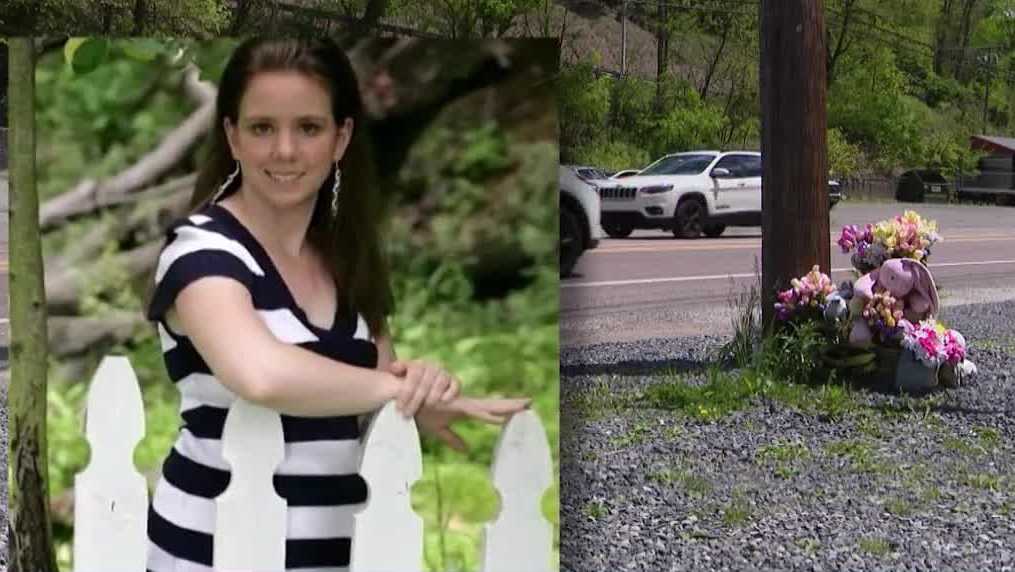
Standing near the memorial marking the spot on Babcock Boulevard where Griser was killed on Jan. 13, 2023, Chisholm said reliving the loss remains deeply painful. Griser had just gotten off a bus and was walking along the road when police said Petroski, who was driving drunk, struck her and kept going. Petroski was later tracked down and charged, and she ultimately pleaded guilty.
Chisholm said the family never felt it truly had its day in court because the plea agreement was reached without their knowledge.
“It’s obviously very hard to relive what we’ve gone through, but it’s important for the board to understand what our concerns were,” Chisholm said. “Especially when you consider that her pleading guilty was part of a plea arrangement that we had no knowledge of or input in. So it made us feel like we didn’t ever have our day in court.”
In a five-page statement submitted to the parole board, Chisholm described Griser’s love of painting and writing, her devotion to family, and the future she was beginning to build before her life was cut short. She also argued Petroski should remain behind bars because, she said, this was not the first time Petroski had driven under the influence.
“She is a repeat DUI offender who, on the night that my niece was killed, she made a conscious decision while she was sober that she was going out drinking that night, but didn’t take that step to make sure she made safer arrangements for safe transportation home,” Chisholm said. “Had she made one responsible decision that night, not 10, not 20, just one, Beth would still be alive today.”
Chisholm also said the family was not moved by a letter she said Petroski sent them from prison. She described it as focused more on Petroski’s own feelings and rehabilitation than on the life that was taken.
“When you read it, it is very focused on her, her feelings, things that she’s done, programs she’s completed,” Chisholm said. “And I’m looking for that apology. I’m looking for you to acknowledge wrong, to give a statement that is truly meaningful and acknowledging the tragedy of the life you took and how are you going to live your life moving forward in honor of the one you took. That’s not what she gave us. What we got was, ‘I’m sorry, but my life’s been affected too.’”
The parole board is expected to interview Petroski next month before making a final decision on whether she will be released. For Griser’s family, Chisholm said, the message is simple: three years in prison for driving drunk, killing a woman and leaving the scene is nowhere near enough.
LETTER TO PAROLE BOARD
To the Family of Elizabeth Griser:
It has taken me all of this time to find the courage to write this letter to you. I am not sure if you will ever read it, but it has weighed heavy on my mind for a very long time. If I was not counseled against doing so, I would have apologized when Ms. Griser first brought it up. As I said in the courtroom on the day of my sentencing, I know that there is nothing I can possibly say that can ease your pain, sadness, or grief. I have no explanation that will ever justify my actions on the night of January 13th, 2023. There is and never was an excuse for my behavior on that night. I am writing this to you to apologize for my selfish and reckless behavior. I never considered how my choices that day could affect so many others. I wake up every single day wishing I could change that night. I am fully committed to being a better woman upon my release and making better choices in the future.
I have had more than a year to reflect on my choices that have led me to where I am right now. I have sought counseling and am currently working at furthering my education, so that I may have a different career path upon my reentry into the community. I have taken a clerical position in the Correctional Industries Department at the prison and I try to be an asset every day that I am there. I also have enrolled in multiple emotional support groups. I attend weekly AA meetings and have made myself available to other women on our unit who are struggling with addictions or emotional issues. I have also started going to church again. I hope to one day volunteer in the community and spread awareness about driving under the influence.
I have years to reflect on the person I was when this incident occurred and a lifetime to ensure that I am never that kind of person again. I will be utilizing every resource available to me to make sure that I continue to build on the positive changes that I have made while incarcerated. The groups I have participated in have taught me healthier coping mechanisms to handle any situations that may come about and how to deal with stress in a positive manner. This will be a great help in guaranteeing that I never rely on alcohol or any other substance in the future. I plan on continuing to live a healthy and sober life upon my release.
I am not sure if you will read this, or if you do, if you would want to respond to me. I just want to say that I would welcome any reply from you, no matter what it would say. I just want you all to know how very sorry I am and that I keep your family in my thoughts.
Respectfully,
Erin Petroski
STATEMENT TO PAROLE BOARD
Introduction:
Thank you for the opportunity to speak with you today. My name is Sharon Chisholm, and the victim in this case, Elizabeth Griser – whom we referred to as “Beth” – is my niece. I traveled 1,227 miles to be here. Although I had several options that would have made providing my statement far more convenient, I chose to appear in person so that I could speak on Beth’s behalf and ensure that her presence and her memory are not lost in these proceedings.
Beth as a Person
Before addressing the circumstances that led to Beth’s death, I want to offer a clear sense of who she was as a person. Beth, along with two of her siblings, was raised from birth by my parents and later adopted by them.
As her aunt, I had the privilege of watching Beth grow from a sweet, innocent child into a quiet but remarkably kind, generous, and deeply caring young woman. Family was the center of Beth’s life. The children in our family adored her, and she shared especially close bonds with her nephew Anthony, my brother’s three children and his wife, along with my daughter, Danielle.
Beth and Danielle attended the same school, were in the same class, and spent nearly every afternoon together for seven years. They loved to read and were devoted Harry Potter fans. They had even planned to take time off work to buy the new Harry Potter Hogwarts Legacy game and stay up all night playing it together. The game was scheduled for release that February, but Beth passed away just weeks before.
Beth was also a talented writer and painter, with a special love for painting sunsets. She enjoyed buffalo chicken wraps and made the best buffalo chicken dip—something our entire family looked forward to at every gathering.
There is one more part of Beth’s life that I believe is important for you to know. When she was a freshman in high school, my mom’s cancer returned after 23 years in remission. While most teenagers her age were getting their first jobs or learning to drive, Beth spent her time outside of school at home caring for my mom. My mom passed away during Beth’s senior year of high school. Shortly after graduating, Beth began college, but she put her education on hold to care for my dad after he was diagnosed with Alzheimer’s. He passed away in 2020, during the COVID pandemic.
As the pandemic eased, Beth finally felt she could begin building her own future. She was excited, hopeful, and ready to pursue her career. But her dreams—and the life she deserved—were cut short by the thoughtless, careless, and irresponsible actions of one person. Something we never thought would happen to us, but we were wrong.
Beth’s Passing:
Erin Petroski entered our lives on January 13, 2023. Under any other circumstance, our family would have welcomed her without hesitation. Instead, our introduction to Ms. Petroski occurred only because she ended Beth’s life in a manner that can only be described as horrific. The impact of Ms. Petroski’s actions on our family has been profound and life-altering.
Those who were able to reach the hospital the night Ms. Petroski killed Beth witnessed something no family should ever have to see. The person lying in that hospital bed was not the Beth we knew and loved. What we saw was a person who had been traumatically injured, lying in a bed soaked in their own blood, with multiple tubes emerging from their body. The medical staff did everything they could to shield us from the worst of Beth’s injuries, but it was unmistakably clear that Beth suffered a terrible and painful death.
The experience of saying goodbye to a loved one who dies as a victim of a crime is very different. You are not allowed to touch your loved one or hold their hand to let them know you are there. Their body is a “crime scene” and family members are kept at a distance, so evidence is not disturbed. This isn’t the way to say goodbye to someone who was loved by so many.
We wanted to donate Beth’s organs so that others might live, which is something Beth would have wanted to do, but her injuries were so extensive that neither her organs nor her tissue could be donated. Even in death, the opportunity for Beth to help others as she had done throughout her life was taken away from her by Ms. Petroski.
Since Beth’s passing, our family has carried deep and lasting regret. Regret that we will never see Beth become a wife. Regret that we will never see her become a mother. Regret that she will never have the chance to watch the children she adored grow up. At the same time, we remain grateful for the years we had with her and the memories we created. I will always cherish the last conversation I had with Beth, and I am grateful for the small things I did—like sending her flowers on her birthday—to remind her she was loved.
The thoughtless, careless, and irresponsible actions of one individual ended the life of a beautiful person. Beth did not deserve what happened to her. And our family did not deserve the lifetime of pain and trauma that Ms. Petroski’s actions have inflicted on us.
Had Ms. Petroski made one responsible decision that night – not ten, not twenty, just one – Beth would still be alive today.
Seriousness of the Offense:
As you evaluate Ms. Petroski’s eligibility for parole, I respectfully ask that you consider the following information as it relates to the seriousness of the offense and whether her actions demonstrated true accountability:
Ms. Petroski is a repeat DUI offender. Despite this history, she made the conscious decision—while sober—to go out drinking on the night of January 13, 2023, without arranging safe transportation home. Given her prior conviction, she was fully aware of both the dangers and the legal consequences of impaired driving, yet she still chose to disregard them, knowingly placing the lives of others at risk.Ms. Petroski fled the scene after hitting Beth. Beth lay in the parking lot for 11 minutes before anyone stopped and called 911. Eleven minutes that would have felt like an eternity to Beth as she laid there in the cold while gravely injured and alone.Ms. Petroski struck Beth with such force that Beth’s spine was broken in half, among other devastating injuries. She then left Beth completely helpless for those same 11 minutes. It is heartbreaking to think that the last thing Beth may have seen before she died were the taillights of the vehicle that ran her over as it drove away.Ms. Petroski admitted she knew she hit “something,” yet claimed she did not know it was a person—and she took no action to find out either. She did not turn around. She did not call the police. She did absolutely nothing to find out what she hit or render any assistance. Considering the severity of Beth’s injuries, the force required to inflict them, and the damage to Ms. Petroski’s vehicle, it is difficult to accept that she was unaware that she may have struck a person.Even if one accepts Ms. Petroski’s claim that she did not know she hit a person, she became aware 42 minutes later when Ross Township Police arrived at her home. She did not cooperate, instead choosing to “lawyer up.” While I understand this is her right, these actions are not reflective of someone accepting accountability.Despite learning she had killed someone the night it happened, it took Ms. Petroski 17 days to “turn herself in”—and she did so only after being notified that an arrest warrant had been issued. Again, these are not the actions of someone demonstrating genuine remorse or accountability.
Plea Hearing vs. Trial
Following her death, we placed our trust in the court system to provide Beth the justice she deserved and to affirm that her life had value. Instead, we felt that trust was undermined when a plea agreement was reached without any discussion with, or input from, our family as the relatives of the victim. We learned about the plea deal only after noticing that the court docket had been changed from a scheduled trial to a plea hearing the day before proceedings were set to begin. Our calls to the District Attorney’s Office went unanswered, and it was not until the day of the plea hearing that we were told by the DA assigned to the case, “It’s a legal thing, you wouldn’t understand.”
With this in mind, it is difficult to view Ms. Petroski’s guilty plea as an act of accountability rather than a strategic decision to minimize her jail time. This impression is reinforced by her statement at sentencing that she “didn’t mean for this to happen, but her life has also been impacted by this.” Before that, Ms. Petroski had offered no apology.
Remorsefulness:
Ms. Petroski has not demonstrated true remorse regarding her actions on the night of January 13, 2023.
Although she sent a letter, it does not demonstrate true remorse because it focuses primarily on Ms. Petroski’s perceived personal growth, programs completed, and future plans, rather than meaningfully acknowledging the gravity of taking a life. Much of the letter centers on Ms. Petroski’s own feelings, her rehabilitation efforts, and her hopes for reentry, which shifts attention away from the harm she caused. Her “hope” to counsel people about the dangers of drunk driving is a generalized statement and not a well-developed plan of action.
The apology she offered is insincere, providing no real reflection on Beth, the impact on our family, or the irreversible nature of the loss we suffered. She also emphasizes that she was “counseled” not to apologize earlier, which makes this apology feel prompted, strategic, or self-protective, rather than self-initiated or genuine.
Overall, I find Ms. Petroski’s letter to be more of a description of her progress and aspirations rather than a sincere, victim-focused acknowledgment of her responsibility for killing Beth while driving drunk.
Conclusion:
For the reasons I have outlined today, I do not believe that Ms. Petroski has demonstrated the level of accountability, remorse, or rehabilitation necessary to warrant consideration for parole.
As a repeat DUI offender, her release would, in my view, pose a continued risk to the community—particularly given that she will be eligible to drive again upon completion of a safe-driver program. Her prior disregard for the law and for the consequences of her actions, which ultimately resulted in the death of my niece, remains deeply concerning, especially when nearly one-third of DUI arrests involve repeat offenders.
I recognize the weight of the decision you need to make. I respectfully ask that, in making this decision, you consider the profound and irreversible harm caused by Ms. Petroski and the lasting impact on my family. Your commitment to public safety and to honoring the seriousness of this crime is essential, and I trust that your decision will reflect the gravity of the life that was taken and the need to protect others from similar harm. The last thing any of us would want is for Ms. Petroski to put another family through the pain that she has put my family through.
Thank you again for the opportunity to speak with you today. I am happy to answer any questions you may have.