
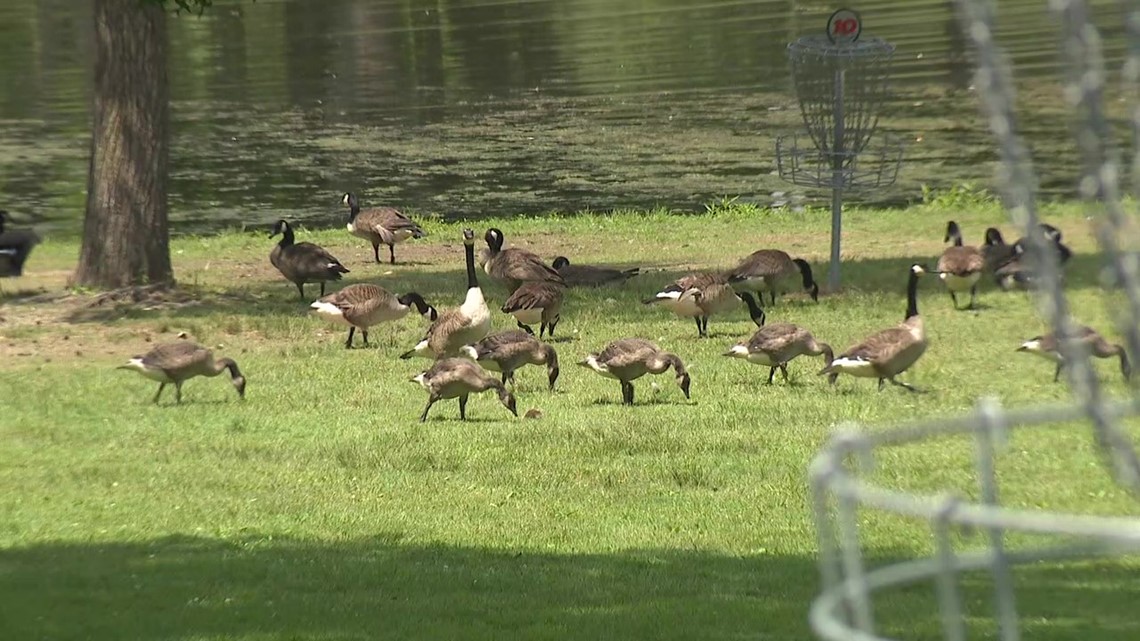
Newswatch 16’s Anthony Bordanaro traveled to Lackawanna State Park to see which birds are in peak migration and how to protect them.
LACKAWANNA COUNTY, Pa. — Lackawanna State Park near Clarks Summit is the perfect place to do a little birdwatching.
“I love hearing the birds. That’s the reason why I love coming to this park, because there are so many different types of birds. The ducks, the cranes, the geese,” said Barbara Braatz, Lackawanna County.
Barbara Braatz is one of the many across northeastern and central Pennsylvania listening to the sounds of birds this spring.
Millions of birds are currently flying through northeastern and central Pennsylvania. Not all birds are migratory, but they are still flying through the area.
“All different types of birds, from water birds to geese and ducks, shore birds. One of the things that we’re focused on right now is songbirds, we’re kind of right in the middle of it right now,” said Dr. Robert Smith, University of Scranton Professor of Biology.
Dr. Robert Smith teaches biology at the University of Scranton. He says one of his favorite topics to research is bird ecology. He tells Newswatch 16 that it is about peak time for songbird migration.
And you can track them live. If you look at the radar and see a certain green pattern like this overnight, it is not raining. The green specs you see are birds.
“In Lackawanna County, a good night, 50,000 or more,” said Smith.
Dr. Smith says migrating birds are very weather-dependent, and they fly at night to avoid predators. “They’ll adjust their altitude. Songbirds are usually migrating 1,000 to 3,000 feet in the atmosphere.”
He says songbirds use stars and the magnetic field to help guide them as they travel along. Some come from southern states, others come from South America. He says about half do not make it back each spring. “Energy cost and other costs of migration are extreme.”
But there is a way you can help, Dr. Smith suggests shutting off your lights at night to keep the birds from becoming disoriented.
To view a live bird migration map, click here.