
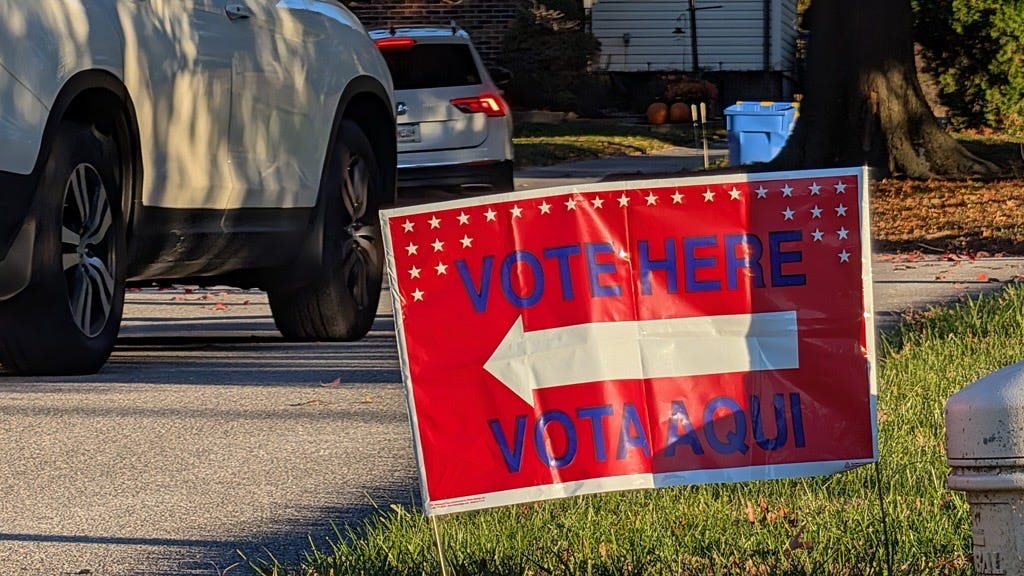
Pennsylvania voters have more rights at the polls May 19 primary than just the ability to cast their ballots.
The Department of State, which oversees elections, offers tips regarding voter rights in Pennsylvania, including information for first-time voters, people voting by mail and voters requiring assistance at the polls.
More: How to vote in Pennsylvania if a mail ballot does not arrive on time
The state also provides information on intimidation, harassment or discriminatory conduct at the state’s several thousand polling locations. That conduct is illegal and should be reported to a polling place’s judge of elections.
Voters are encouraged to know their rights before voting in the May 19 primary election.
Here are some important tips from the Department of State regarding voter rights in Pennsylvania:
Only first-time voters, or those voting for the first time in a new precinct, must show ID. Acceptable ID includes both photo and non-photo ID. Registered first-time voters who do not bring ID to the polls can return with identification or must be offered a provisional ballot.
Voters who applied for and received a mail ballot and then decide they want to vote at the polls must bring their mail ballot, including the outer return envelope, with them to be voided.
If a voter applied for a mail ballot but did not return it and no longer has the mail ballot and outer envelope, they may vote by provisional ballot at their polling place on primary day. Their county board of elections will then make a determination as to whether their provisional ballot can be counted.
If a voter applied for a mail ballot but never received it, they should vote by provisional ballot at the polls. Their county board of elections will then make a determination as to whether their provisional ballot can be counted.
Election 2026: These are races to watch in Pennsylvania’s Democratic primary
If a voter’s name is not in the poll book, poll workers can call the county board of elections to see if the voter is registered in another precinct in the county. Registered voters who are in the wrong polling place should go to the correct polling place to vote, but a voter who believes they are registered in that precinct and should be listed in the poll book is entitled to cast a provisional ballot there.
Voters who moved within Pennsylvania but did not update their address in time before the election may vote one more time in their previous precinct, but they must update their address at the polling place.
If a voter is challenged based on their identity or residency, the voter may vote normally by signing a challenge affidavit and producing a witness who is also a registered voter in the precinct to vouch for them. If the voter cannot or does not want to produce a witness, the voter may cast a provisional ballot. Identity and residency are the only bases for challenging a voter at a polling place.
Voters have the right to assistance at the polling place, including foreign language or literacy assistance. A voter may select any person to assist as long as the person is not their employer, their union representative or the judge of elections. Voters do not need to be designated as “assistance permitted” in the poll book to receive help. A person who wants assistance will be asked to sign an Assistance Declaration at the precinct unless the poll book already indicates “assistance permitted.”
Voters have the right to refuse assistance.
Voters have the right to vote without being subjected to intimidation, harassment or discriminatory conduct. A voter who experiences intimidation should report it to the judge of elections, their county board of elections, their county district attorney’s office or the Department of State’s voter hotline at 1-877-VOTESPA (1-877-868-3772).
The Department of State’s website can help voters with election-related questions and information, including:
More than 853,000 Pennsylvania voters had applied for a mail ballot by the second week of May, with more than 519,000 having already been returned, according to the state department’s Daily Mail Ballot Report. The spreadsheet shows county-by-county data on mail ballot applications including a breakdown by party.
Mark Walters is the USA TODAY Network Pennsylvania statehouse reporter. Reach him at mwalters@usatodayco.com.
This article originally appeared on Erie Times-News: Pennsylvania primary voter rights and what you can do at the polls