
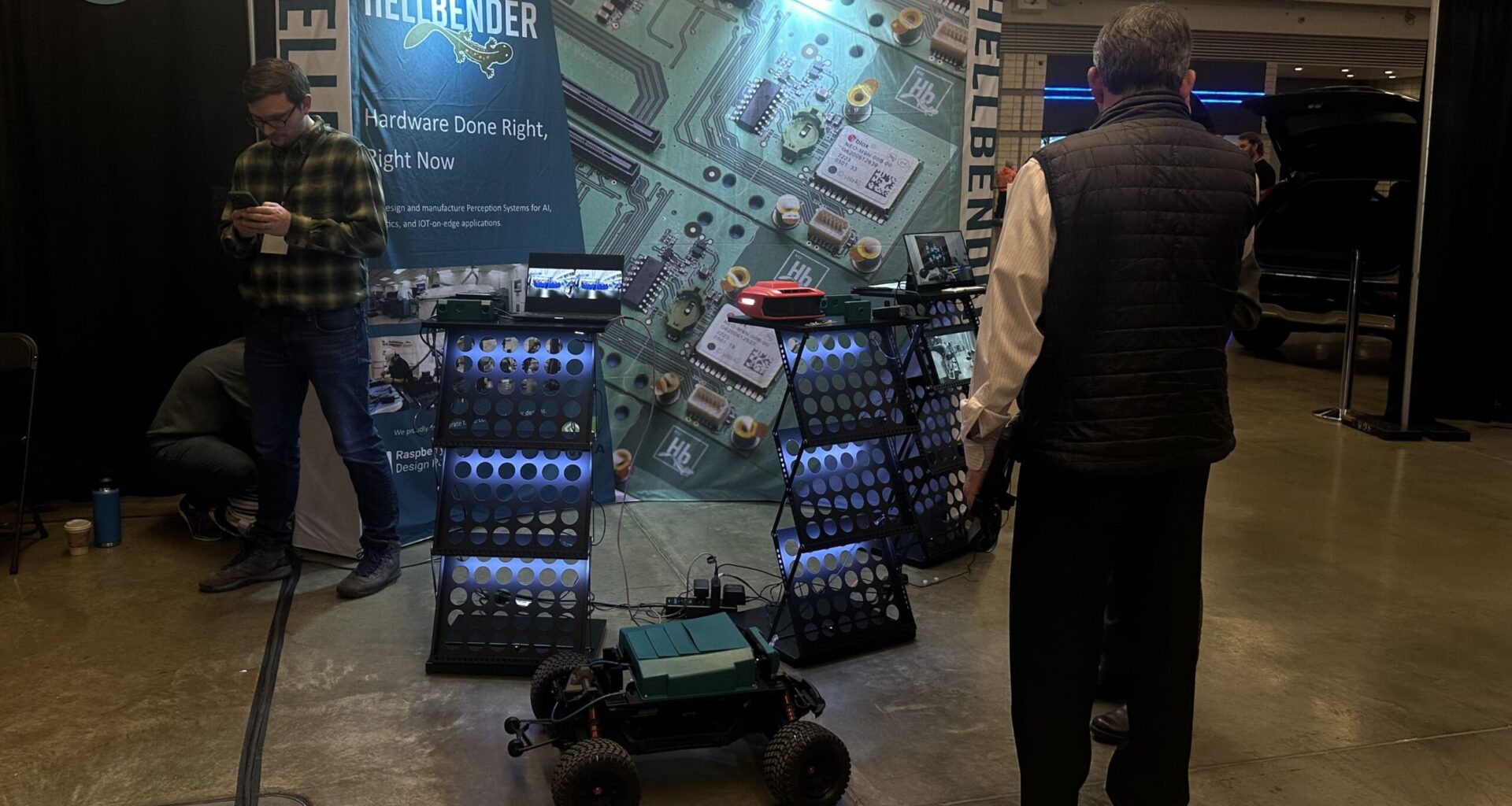
Hellbender, a Pittsburgh-based AI hardware developer, closed a $12.5 million seed round at an undisclosed valuation today.
The round, Hellbender’s first traditional venture raise, was co-led by Pittsburgh firm Magarac Venture Partners and Delaware investor Veredas Partners.
The startup, founded in 2021, makes smart camera systems for robots, machines and industrial sites. It plans to use the funding to grow its team, expand its manufacturing operations and bring its edge AI cameras to market faster, according to a recent announcement.
Hellbender’s cameras can process information in real time on the devices themselves, instead of relying on the cloud. That makes the technology useful across industries, including healthcare, transportation, retail, energy and manufacturing, according to David Tusick, the company’s chief growth officer.
The round, Hellbender’s first traditional venture raise, was co-led by Pittsburgh firm Magarac Venture Partners and Delaware investor Veredas Partners, with significant participation from Mana Ventures, Gaingels, Sum VC and local group Active Angels Network.
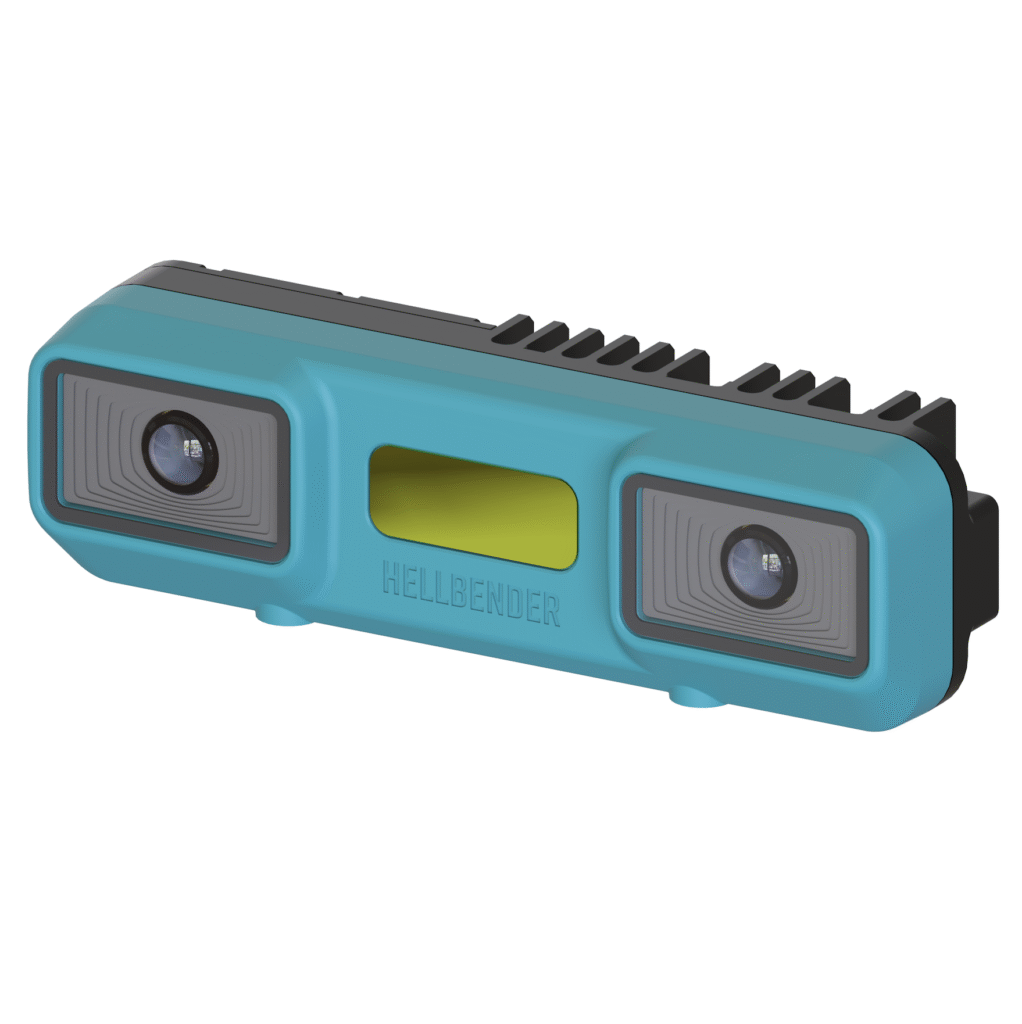 Hellbender’s Stereo AI Camera (Courtesy)
“We primarily focus on computer vision and perception systems, so therefore the applications are almost endless,” Tusick told Technical.ly. “Anything that needs to engage in the physical world needs to understand how to see and interpret that physical world.”
Current use cases for Hellbender’s cameras range from wound care in hospital settings to autonomous navigation systems and industrial safety monitoring for electrical infrastructure.
Its product line includes a Stereo Camera primarily for robots and machines that need depth perception, a Vine Camera System for monitoring large facilities with many connected cameras and a compact Tadpole Camera that can be embedded into custom hardware, insurance technology and security systems.
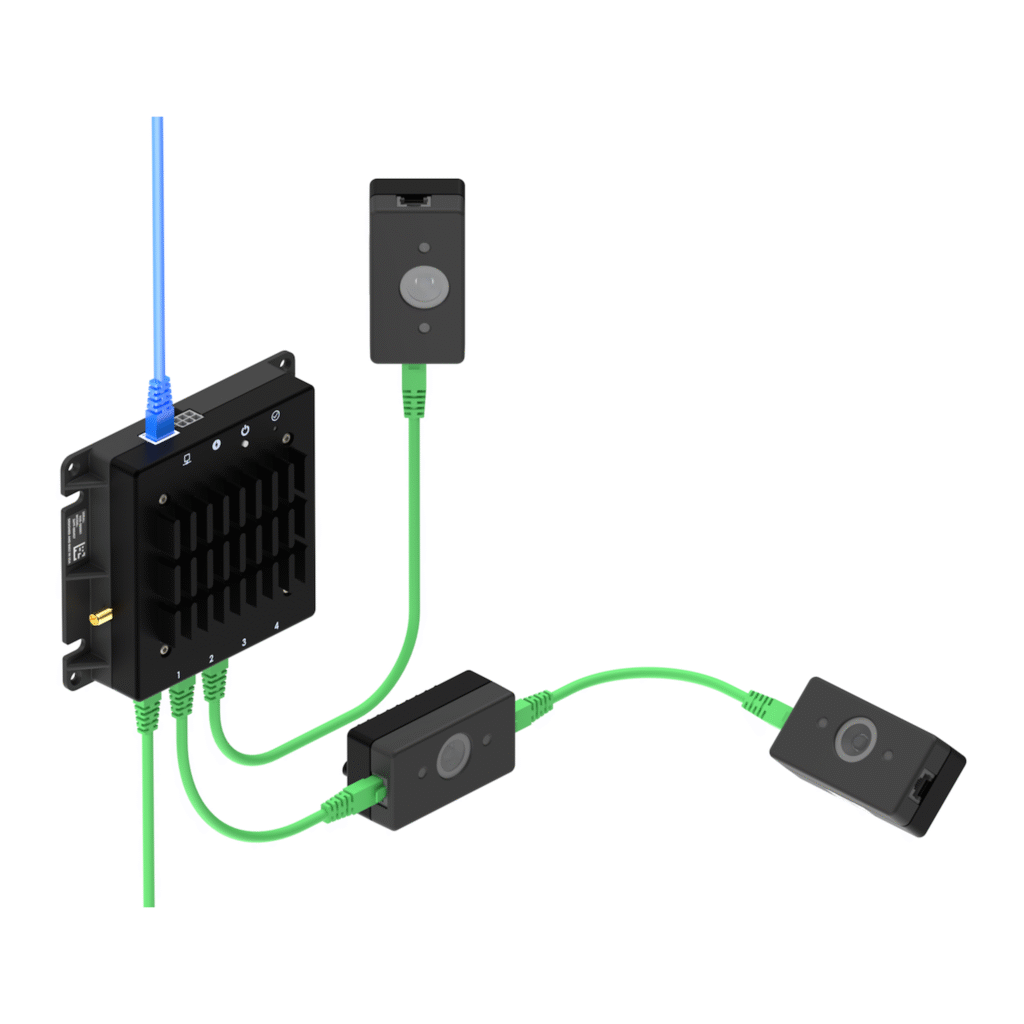 Hellbender’s Vine AI Camera System (Courtesy)
“As AI and robotics move from research to real-world deployment, the need for secure, onshore engineering and production has never been more important,” Jay Katarincic, partner at Magarac Venture Partners, said in the announcement. “Hellbender is uniquely positioned at the center of that shift. Their ability to nearly double revenue each year since founding reflects both strong execution and accelerating demand.”
The company’s team has grown to nearly 90 employees over the last five years. The growth of Pittsburgh’s physical AI scene is playing a role in Hellbender’s success, too, according to Tusick, as the firm works closely with other startups in the region that are looking for a completely domestic manufacturer of this tech.
“It’s absolutely essential that we’re in Pittsburgh,” Tusick said. “There is such a strong community here and it’s like nowhere else.”
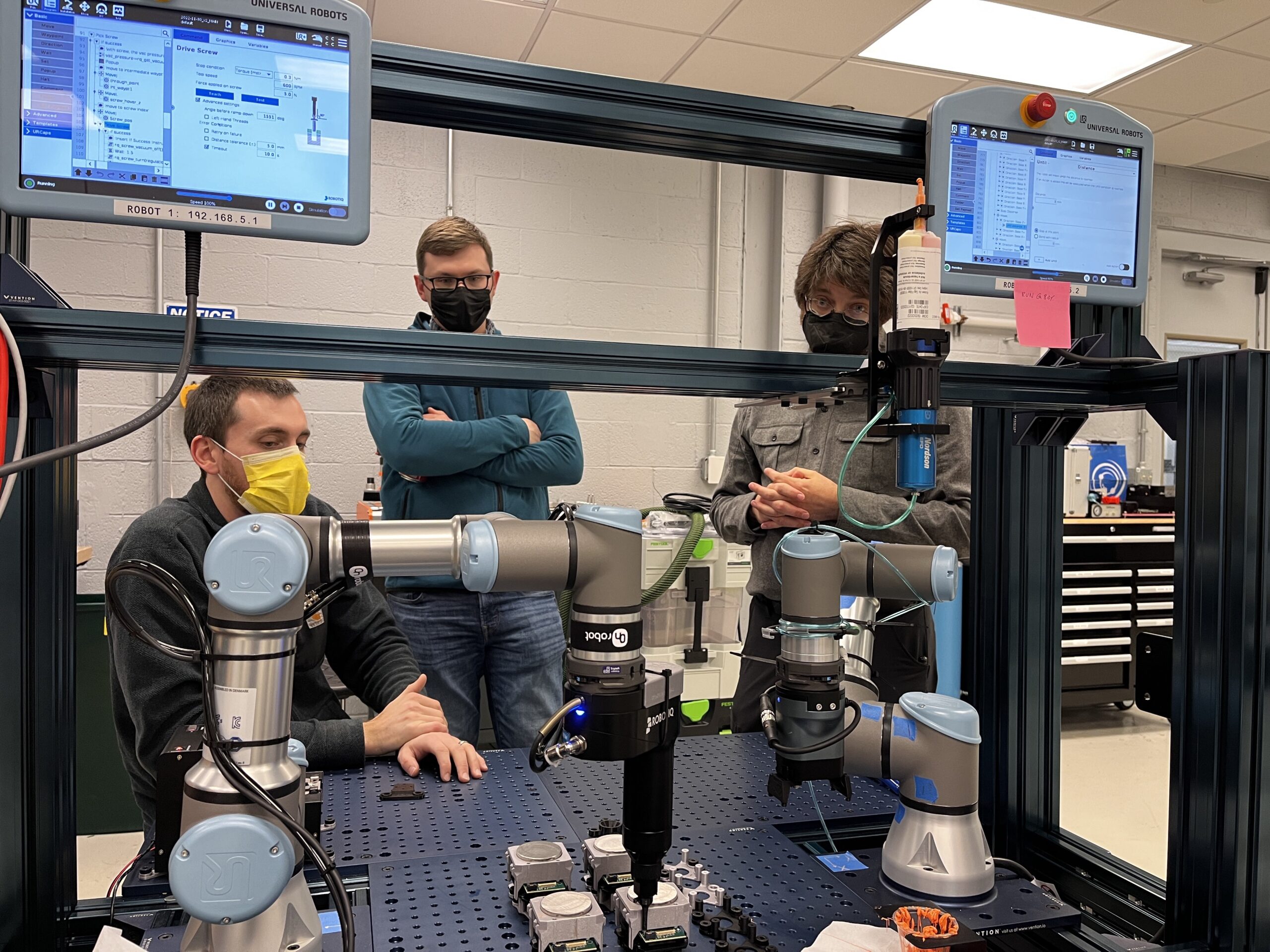 Hellbender’s engineering team (Courtesy)