
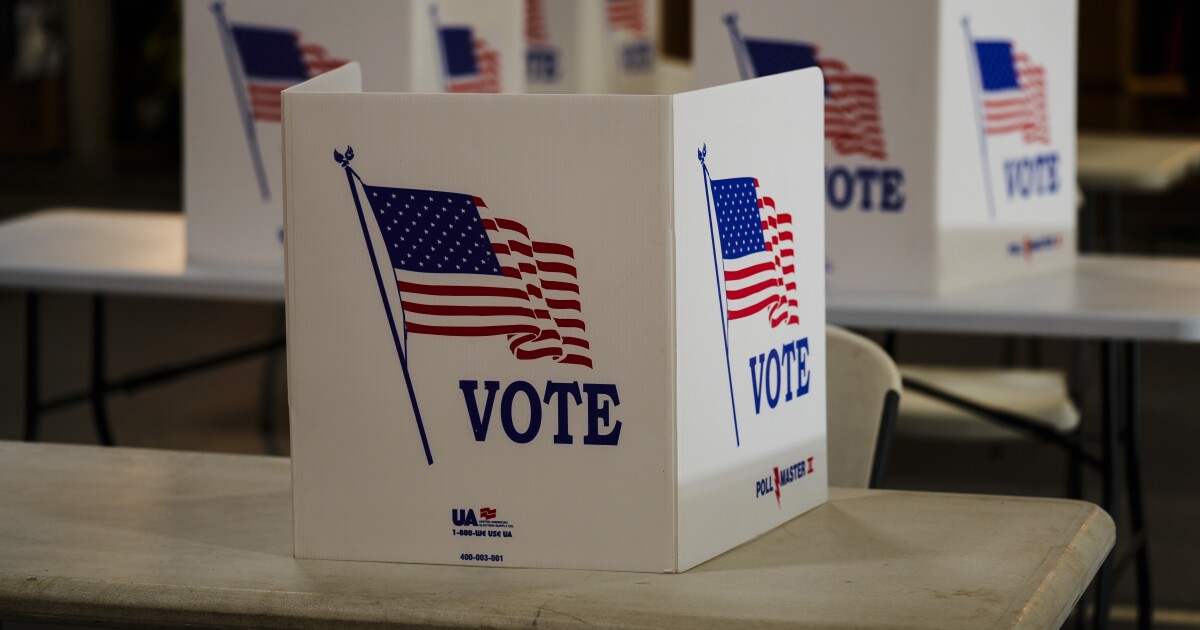
The polling places used in the May 19 primary may be closed, and the bar tabs at the election night parties may have been settled, but the general election ballot hasn’t been completely set.
There are still the write-in ballots to reckon with, and a handful of races in Allegheny County showed the kind of unusual activity this week that may affect the ballot this fall.
Write-in ballots usually amount to little more than rounding errors, with voters using them to express dissatisfaction with a candidate, or with the absence of one. But it can be dangerous to write them off entirely: In 2023, a coordinated Republican write-in campaign adopted Allegheny County District Attorney Stephen A. Zappala Jr. as the GOP nominee. That move provided him with a lifeline when he lost the Democratic primary to Matt Dugan. Zappala, though a longtime Democrat, won as a Republican that fall.
And in at least four local state House races this week, Allegheny County Republicans cast enough write-in votes to have an impact.
The most notable activity was in the 30th District seat held by North Hills Democrat Arvind Venkat. More than 3,200 write-ins were cast there, nearly half as many votes as Venkat received in his own uncontested primary.
“Obviously, there was a lot of interest in my state legislative race,” he said. “I do know that the Republicans were putting forward a candidate.”
That candidate appears to be Libby Blackburn, a North Allegheny School District board director. She did not respond to requests for comment Wednesday, but she is one of four candidates that, for the past month, a weekly county Republican newsletter has been urging voters to write in on their ballots.
Venkat didn’t betray much anxiety about the groundswell of Republican write-ins. That’s in part because he’s been asking Republicans to write him in, too.
“I believe I have a very strong, unifying bipartisan record,” he said. And “when there was no Republican candidate filed to run against me, I decided I would campaign actively to unify our community.”
(One Republican did file to run in the district originally, but Ehab Akkary was removed from the ballot after a judge found he didn’t meet the state’s residency requirement. Venkat himself initiated the lawsuit.)
While candidates sometimes arrange write-in campaigns surreptitiously to conceal their efforts to clear the field, Venkat did so openly, describing it as an effort to bring people together at a time when “our tribal politics mean that seeking common ground is difficult.”
A Blackburn campaign website seems unimpressed by such claims, warning voters that Venkat “votes against everything we as Republicans believe in,” even as he sought to gain their votes.
Blackburn has competed for the 30th District the old-fashioned way before: In 2020, she lost a Republican primary to Rob Mercuri, who went on to hold it for Republicans that November. And Venkat said that Blackburn “and I have worked on issues together, and I will be candid and say I am a bit disappointed that she is seeking to be written in.”
But he said that he was “very proud of my record on behalf of my neighborhoods, and I’m happy to take that record into a general election.”
It may be some time before it’s clear how many write-ins he or Blackburn earned. Tallying write-in ballots is far more time-consuming than totaling up conventional votes; county officials say the process typically takes weeks.
But the hurdles for becoming a nominee as a write-in candidate are not especially high, as long as there is no rival on the party’s ballot. Write-in candidates must be the top vote-getter, but otherwise they must merely receive votes from the same number of registered voters as would have been required to sign their election petitions. (In a state House race, that means 300 write-ins).
County Republicans have made something of a habit out of using write-in bids to secure a position on the ballot in recent years, a comparatively low-cost tactic that can keep Democrats guessing.
Having voters put your name on the ballot can be less time-consuming than going out and collecting petition signatures from the voters who support you.
Plum resident Gary Motor, who is seeking to be the GOP nominee to challenge state Rep. Joe McAndrew in the 32nd House district, said that in his case, “I couldn’t get enough doors knocked in time, so I went this route instead.”
Motor said he is a conservative who tries to consider both sides of issues, and he said he is running because, “I think a good democracy always requires choices, and seeing nobody running always rubbed me a little bit the wrong way.”
More than 950 write-in ballots had been counted on the Republican ballot in the 32nd district — more than three times the number required.
The number of Republican write-ins reached the high-three-digit range in at least two other House races: the 20th House District held by Democrat Emily Kinkead, where Republicans have been urging their voters to back Ross Township resident Joseph Aguglia as a write-in challenger to Kinkead; and the 27th District seat held by Dan Deasy, who the GOP hopes to challenge with Ed Brosky, of Carnegie. Neither could be reached by WESA Wednesday.
Write-in candidates in a primary who officials deem eligible are sent a letter notifying them that they can appear on the ballot in November. Accepting that invitation requires completing a Statement of Financial Interest required of all candidates.