
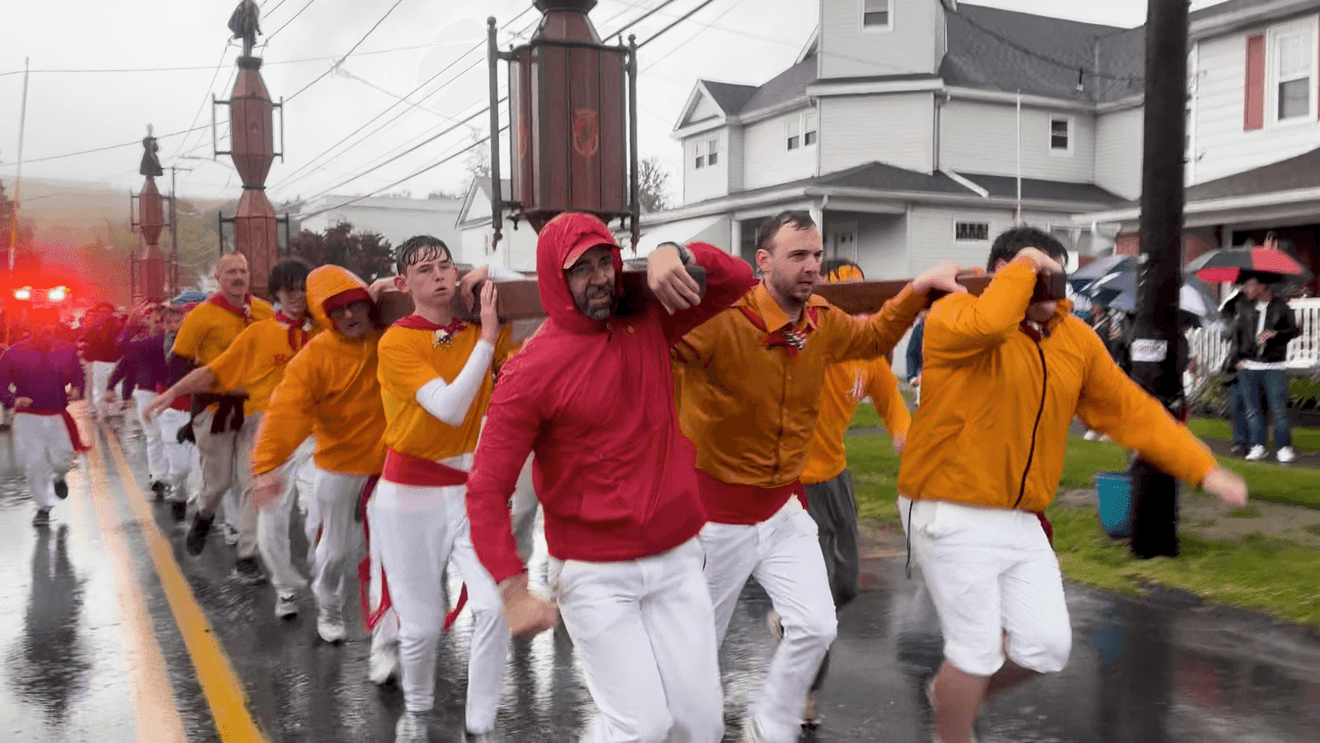
JESSUP, LACKAWANNA CO. (WOLF) — In Jessup, hundreds of runners filled the streets, but they weren’t the ones racing.
The Race of the Saints is an annual Jessup tradition that usually sees thousands crowd the streets to watch as groups take turns shouldering big wooden platforms holding depictions of saints; and Jessup residents weren’t going to let a little rain ruin their parade.
“The town will still be out,” said Saint George runner Jeff Scagliotti before the race. “It doesn’t matter. They poured in Gubbio, and there was more people there than you would ever imagine. And I think we’re gonna have a great crowd today.”
Gubbio is the town in Italy where the tradition originated, and for over a hundred years the race has been a staple celebration for Jessup’s Italian community that immigrated over the generations.
Jessup is the only other place that hosts the Race of the Saints, drawing people like Cecilia Pirotti, who is from Gubbio, to drive from Connecticut and watch an aspect of her culture thousands of miles from home.
“They are still full in the tradition of our origin, and this is amazing,” Pirotti said under her umbrella. “It’s something that makes the feeling stronger, so it’s really nice.”
Saint Anthony in black, Saint George in blue, and Saint Ubaldo in yellow don’t actually race – in fact, St Ubaldo wins every year. It’s more to celebrate Saint Ubaldo, Gubbio’s patron saint, and honor the Italian history and tradition that Jessup is steeped in. For people like Frank Farina, who has been running since he was 7, over 40 years ago, it’s the legacy and tradition that makes the race timeless.
“You carry on family tradition and carry the memories of those that ran,” explained Farina, a Saint Anthony runner. “That ran in the race before us and pass it on to our children and just to remember the homelands in Italy, where we came from.”
The Race of the Saints and the celebration of Saint Ubaldo is testament to America’s melting pot and the importance of tradition. Honoring a community’s immigrant roots and the celebration of their culture that shows no signs of getting washed away – even in the pouring rain.