
Fact checked by Vikki Velasquez
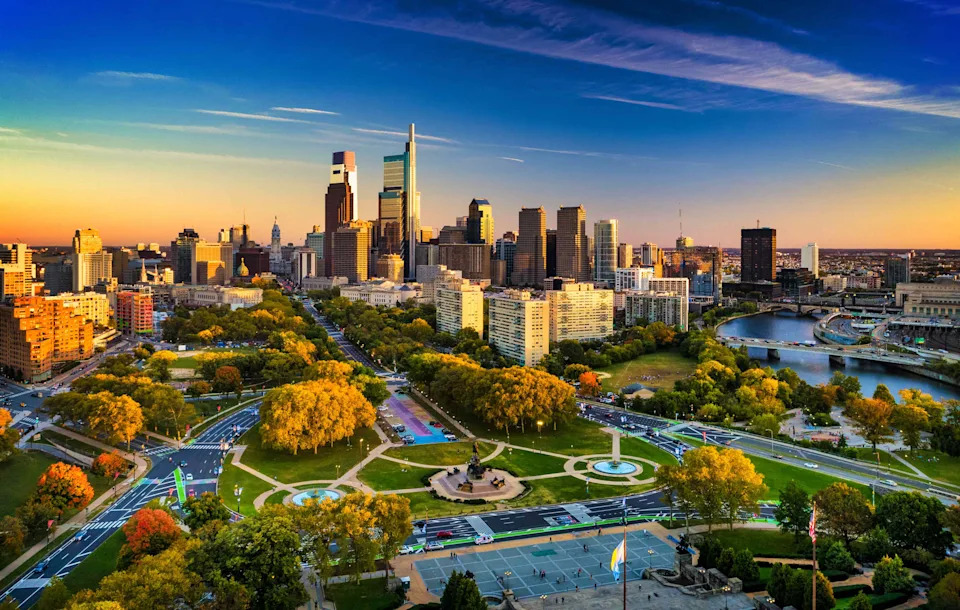
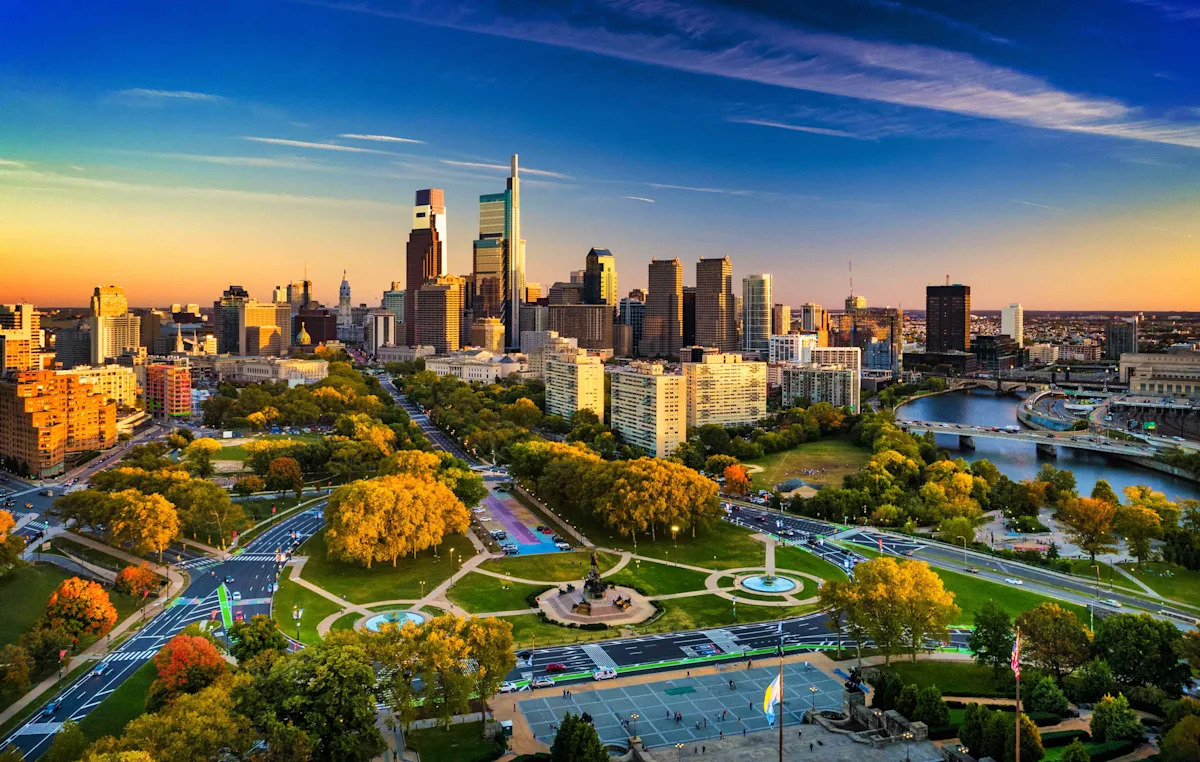
Downtown Philadelphia skyline with the Oval Plaza, Benjamin Franklin Parkway, and Schuyllkill River in the foreground.
Credit: Dee Liu / Getty Images
Key Takeaways
Philadelphia offers retirees affordable housing and tax-friendly policies, making urban living financially feasible.
The city provides walkable neighborhoods, robust public transit, and access to cultural and educational institutions.
Retirees benefit from top-ranked healthcare systems and proximity to major cities, beaches, and outdoor recreation.
Philadelphia has always been known for its importance in U.S. history, but it’s also recognized for something more practical: it’s one of the few major East Coast cities where urban living still feels financially feasible. And it’s one of Investopedia’s top 100 places to retire in America. Philadelphia offers a strong alternative for retirees who want walkable neighborhoods, strong public transit, culture, and everyday livability without the price tags of New York or Boston.
Cost of Living and Housing
Philadelphia has an interesting financial position because, while it’s an important East Coast city, it hasn’t reached the high price levels of New York, Boston, or Washington, D.C.
In fact, the average home price in Philadelphia is about $229,000. That’s significantly less than New York City (about $813,000), Boston ($769,000), and Washington, D.C. ($574,000). On our list of best places to retire, Philadelphia scores highly for home value.
Residents can choose from a wide mix of housing styles, including classic rowhomes, modern condos, apartments in converted historic buildings, or quieter residential streets removed from the city’s core.
Taxes are another big boost for retirees. Pennsylvania does not tax Social Security benefits, pensions, or withdrawals from retirement accounts, such as 401(k) s. This allows retirees to keep more of their income yearly, which can be used to travel, pay down debt, help fund college for grandchildren, or just provide a general feeling of financial ease.
The affordable housing market, combined with the tax-friendly policies of Pennsylvania, makes Philadelphia a strong value for retirees seeking city living without luxury-market pricing.
Culture, History & Arts
Philadelphia’s history is woven into its streets. Historic landmarks mix with modern restaurants and galleries, and entire neighborhoods feel shaped by the stories they’ve carried for hundreds of years.
The city is home to the Philadelphia Museum of Art, the Franklin Institute, the Ensemble Arts Philly, the Academy of Natural Sciences, and many theaters, music venues, art institutions, and smaller galleries.
Like many big cities, cultural programs are accessible year-round, from performances and concerts to exhibitions and festivals to neighborhood events.
Living in Philadelphia makes all these institutions accessible without having to plan a special outing. The city’s cultural side is part of its everyday life, whether that’s walking past historic sites, sitting in for live music, or exploring a neighborhood known for its food scene.
Each of Philadelphia’s neighborhoods offers a unique identity. Old City is historic, Fishtown feels creative, and neighborhoods like Chestnut Hill or Mount Airy provide a quieter, more residential feel. This diversity makes it easier for retirees to find a place that suits their lifestyle and pace.
Walkability and Transportation
Philadelphia is easily walkable in many parts, making it convenient to get around without a car. Plenty of neighborhoods have homes that are a short walk to grocery stores, cafes, parks, and services.
The city’s public transportation system is operated by SEPTA. It offers buses, subways, trolleys, and regional rail lines that connect neighborhoods and the surrounding suburbs. Philadelphia is also well-connected regionally. Amtrak service from 30th Street Station provides access to New York City and Washington, D.C., and the city has an international airport, making it convenient for retirees who love to travel. Philadelphia has a high score for affordable transportation on our list of retirement places.
For retirees who are on the move, whether to visit family or see the world, the city’s transportation network adds flexibility and ease that smaller locations can’t offer.
Lifestyle and Community
Philadelphia’s daily life tends to center around its neighborhoods, with each providing its own atmosphere and rhythm. Areas like Rittenhouse Square, Chestnut Hill, and Mount Airy offer a mix of cafes, local shops, and residential streets, where routine and community feel familiar.
The city also offers an intellectually stimulating environment not found in many traditional retirement locations. Institutions like the University of Pennsylvania, Temple University, and Drexel University, along with libraries, lectures, and cultural programming, offer retirees access to talks, classes, and events to keep them mentally engaged.
UPenn regularly hosts lectures, panels, workshops, and more. The Kelly Writers House hosts hundreds of readings, talks, and literary events each year, and Temple and Drexel also offer a variety of programming.
Philadelphia’s strong sports culture also plays a role in daily life. The city’s professional teams draw a loyal following, and game days bring a noticeable energy, with fans, including many retirees, gathering in neighborhoods and around stadium and field areas.
Green spaces are also plentiful. Parks like Fairmount Park, one of the largest urban park systems in the nation, along with riverfront trails along the Schuylkill and Delaware Rivers, provide space for walking, biking, and other outdoor activities.
Being able to stay engaged daily, whether that be visiting the local market, attending a neighborhood event, or simply being outside, makes daily life feel more fulfilling for retirees.
Healthcare Access
Philadelphia is home to many nationally ranked hospitals and major medical systems, including the University of Pennsylvania Health System, Jefferson Health, and Temple Health.
These medical institutions provide all the healthcare services retirees need, from advanced care to specialized treatments to routine services, all within the metropolitan area. Philadelphia’s hospitals consistently rank as some of the best in the country.
The ease of access to this type of healthcare is important for retirees because it reduces the need to relocate later in life for medical purposes. It provides confidence that top-notch care is right around the corner when needed.
Location and Access
Philadelphia’s location is one of its many draws, being positioned right along the Northeast Corridor. The city is a launching point for travel to other major destinations in the region, such as New York City and Washington, D.C., which are easily reachable by train.
The Jersey Shore is also close by, offering beach access for the summer, and the Pocono Mountains provide a range of outdoor recreation year-round, from hiking to skiing. Philadelphia makes it easy without logistical difficulty for retirees who want to remain central to family, travel, or different environments.
The Bottom Line
Philadelphia is a dynamic city, offering retirees history, culture, and an everyday life that is accessible. It’s not the quiet destination that some retirees may prefer, but it’s a fit for those looking to stay connected to people, ideas, and activities within an urban lifestyle at a fraction of the costs of many of its peers.
Read the original article on Investopedia