
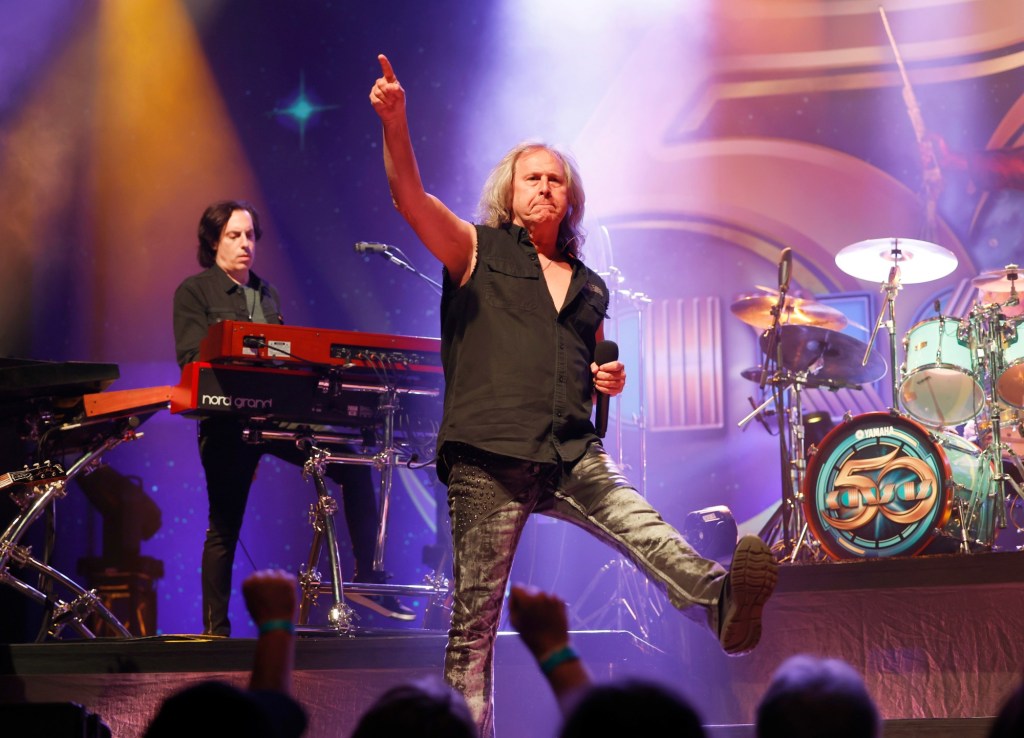
With a career that spans more than five decades, Kansas has secured its place as one of the most enduring and influential acts in American rock history.
Since their formation as a garage band in Topeka in the early 1970s, Kansas has sold more than 30 million albums worldwide and produced a catalog of songs that remain staples of classic rock radio and pop culture alike. Anthems such as “Carry on Wayward Son,” “Dust in the Wind,” “Fight Fire with Fire” and “Point of Know Return” continue to resonate with generations of fans.
The band’s remarkable documentary, 2015’s “Miracles Out of Nowhere,” chronicles the band’s rise from the Midwest bar circuit to international fame. Even after decades on the road and in the studio, Kansas continues to push forward creatively. Their 2020 studio release, The Absence of Presence, debuted at No. 10 on the Billboard charts, ushering in a new era in the band’s legacy.
On Friday, Kansas returns to the Lehigh Valley for a performance at Wind Creek Event Center in Bethlehem, for a show that promises familiar favorites, deep cuts, and the musical virtuosity that’s defined Kansas for more than half a century.
I recently spoke with Kansas keyboardist Tom Brislin about the band’s return to the region and how the band continues to keep its music alive for longtime fans while inspiring a new generation of listeners.
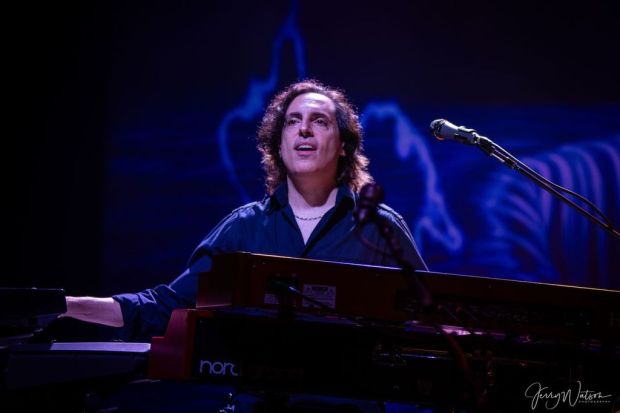 Rock band Kansas, including keyboardist Tom Brislin, perform Friday, May 29, 2026, at Wind Creek Event Center in Bethlehem. (Jerry Watson)
Q: How did you become a member of Kansas?
A: A few of the members of the band were familiar with me through my work with Yes and a few of the other 70s rock acts I had played with. In 2018 I was working with a group called The Sea Within and we were label mates of Kansas. So it was also our label that brought me to their attention, and when they needed someone they gave me a call.
Q: What was it like for you to be asked to join such a legendary band and did you feel you were ready for such an endeavor?
A: It was really unexpected, as have all the calls I’ve gotten through the year have been. I was fortunate that one of the first big calls I received was from Meat Loaf back when I was 24-years-old. That was the one that really set me on a path of playing big stages. He really took me under his wing and helped me become calibrated to that type of touring and work. I’ve taken my music seriously ever since.
Q: To what do you attribute Kansas’ longevity?
A: When you look at the music, it’s really powerful and people remember it. But there’s more to it than just simple rock and roll. There are deeper levels and I think that’s what keeps it fresh and moving forward through the generations. It respects you as a listener but it also gives you a good time.
Q: Kansas has more than a 50-year history. How does the band determine which songs to include in the set?
A: It’s something we’re always thinking about. Of course there are songs that are no brainers because they’re the biggest songs in the band’s history. But there’s a rich catalog of music from so many different albums and eras including our current one. We really pay a lot of attention to the set and show to give it a good flow as well as some surprises.
Q: I’m going to put you on the spot — what are your top three favorite Kansas songs?
A: It varies. “Song For America” is probably my favorite, and not just because it’s got a lot of stuff for me to do as a keyboard player. It has everything I love about Kansas like great melodies and hooks. But it’s also uplifting and has some adventure in it as well. And how can you not like playing “Carry on Wayward Son?” It’s just such an eternal song and to be a part of those vocal harmonies is pretty special. I also love playing the new stuff too from our most recent album, The Absence of Presence, that I was a part of writing. I love that we have a chapter that links back to this lineage of the band and that we get to do that as well.
Q: You’re also the musical director for the group. How did that role come about?
A: When I first came into the band they really set me on a great path. I’ve always endeavored to do the music justice and when Phil [Ehart] and Richard [Williams] decided to start scaling back on how many shows they would play, they entrusted me to take care of the music, rehearse the band and do a little bit of the arranging. We have a great band of musicians and every one of us has our own way of doing things. But the music is the common ground that guides us. As long as we stay true to the music everything runs smoothly.
Q: Are there any other projects you’re currently involved with that we can discuss?
A: Touring is the main event but we’re always writing for whatever might be on the horizon. I also write instrumental piano music of my own and may be putting some of that out at some point as well.
Q: What’s the best bit of advice you can give to an aspiring artist just starting out?
A: I would say to any musician thinking of getting into this world to really think about what you love about music and what you want to do and then commit to it. Whether you want to write songs or work in a band playing someone else’s music. Just go for it, keep your eyes open and enjoy the process.
Q: Is there a message you have for Lehigh Valley fans prior to the band’s performance?
A: I want to thank all the fans that have stuck with this band over the years. It’s touching to see people who’ve been with the band from the beginning and are still behind us and what the new guys have done to keep the legacy alive. I’m grateful to fans who realize we are stewards of this music, and we want to keep it going as long as we can. And not to overuse the cliché but … we carry on.
James Wood is a freelance entertainment writer. His new music-themed novella “Beyond What We Know” is available now. You can contact him at jimmywood@gmail.com.