
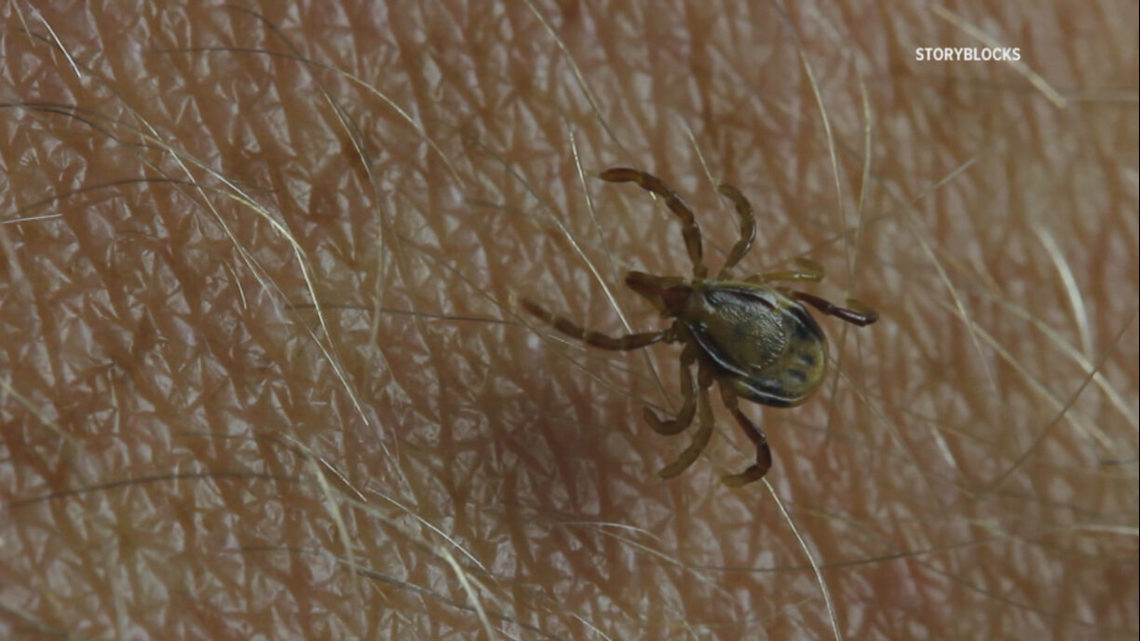
Social media videos about lone star ticks are raising concerns, but Pennsylvania experts say Lyme disease remains the state’s biggest tick-related threat.
YORK, Pa. — Videos about the lone star tick are spreading rapidly across social media, with many users sharing concerns about a rare allergy linked to the bite of the insect.
The tick has gained attention because it can trigger alpha-gal syndrome, a condition that may cause people to develop an allergy to red meat and other mammal-based products after being bitten.

This story continues below.
“What’s, I think, got everybody worried is that you can be exposed to the syndrome called alpha-gal that causes an allergy or allergic reaction to any mammalian products,” said Anthony Guarracino, with UPMC.
Experts say those allergic reactions can range from mild symptoms like hives, itching, nausea and vomiting to severe and potentially life-threatening reactions known as anaphylaxis.
“That allergic reaction can be mild — just some hives or itching, or some nausea or vomiting — or it could be what we call anaphylaxis, which is life-threatening,” Guarracino said.
According to the Centers for Disease Control and Prevention, lone star ticks are expanding across parts of the Northeast, South and Midwest, including Pennsylvania.
But health officials in Pennsylvania say the much bigger concern in the state continues to be deer ticks, which are the primary carriers of Lyme disease.
“On an annual basis, there are probably 18,000 confirmed deer tick exposures or bites, and comparatively, a very small amount, only 300 lone star bites. And that’s within Pennsylvania,” Guarracino explained.
Lyme disease can cause fever, fatigue, headaches and the well-known bullseye rash. If left untreated, experts warn it can also lead to more serious complications affecting the heart, joints and nervous system.
One Pennsylvania case highlighted the potential severity of untreated Lyme disease.
“This person was in their 50s or 60s. They had reported a tick bite a couple of months prior. They just thought it was a dog tick,” Guarracino said. “They removed the tick and then ignored it, and lo and behold, they were positive for Lyme disease, so they needed a pacemaker at such a young age.”
Health officials say regardless of the type of tick, prevention remains the best defense. Experts recommend using insect repellent, wearing long sleeves and pants in wooded or grassy areas and checking for ticks after spending time outdoors.