
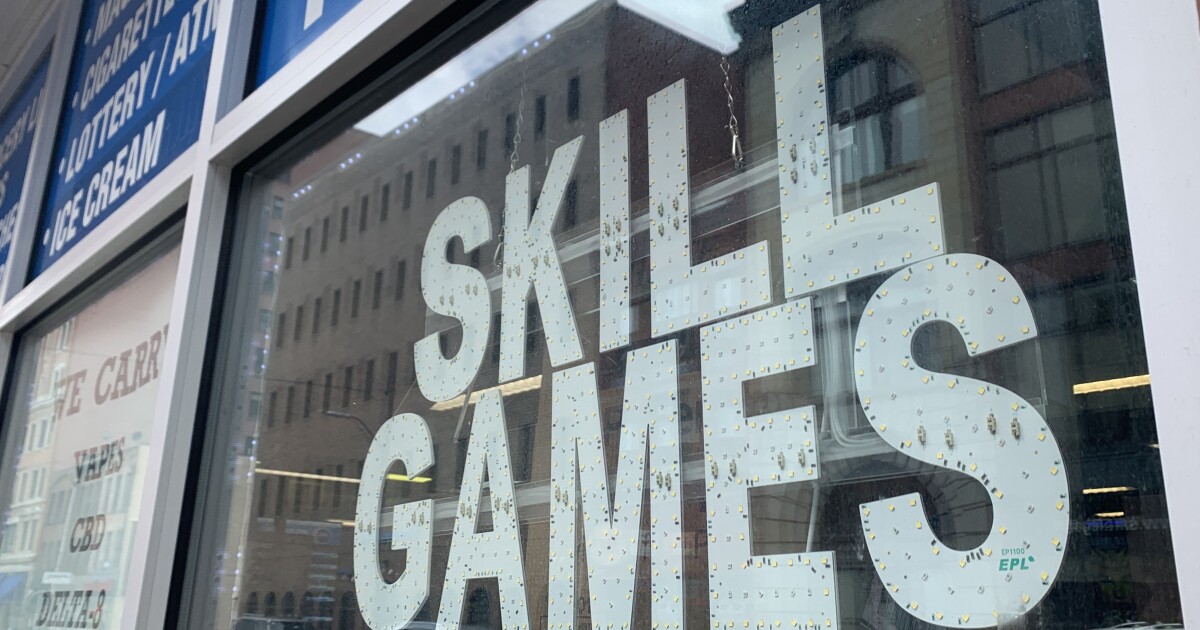
Pittsburgh City Council is considering levying a tax on mechanical games and entertainment machines, a category encompassing a range of devices like pinball machines, jukeboxes and skill games consoles.
The “mechanical amusement device” tax, introduced at a meeting on Wednesday, would take the form of an annual license fee. City Councilor Anthony Coghill sponsored the bill, and says he was motivated by concerns about the city’s financial standing.
“ It costs a lot of money to run the city of Pittsburgh. We’re small by population, but we’ve got big-city expenses, whether it’s bridges, public safety, public works, you name it,” Coghill said. While he is typically an opponent of raising taxes — he opposed a 20% property tax hike passed last year — he said Wednesday that “I’m convinced we need alternative measures to generate revenue.”
According to a report from City Controller Rachael Heisler earlier this month, the city spent $44.7 million more than it brought in in 2025. It has also used up $39 million more in the first quarter of 2026 than at the same time last year. Council approved a slate of budget amendments put forward by Mayor Corey O’Connor this spring that drew down more funds to pay rising healthcare, fuel, and snow removal bills.
Amid those financial pressures, Coghill argued a tax on mechanical amusements would be less painful for Pittsburgh residents. He anticipates it could bring in $2 to $3 million in revenue annually.
“ I take a lot of pride in being financially and fiscally responsible,” he said. “ This is just one small step and one little thing that we can do.”
How the tax would work
The mechanical amusement device tax would have three price tiers that encompass different categories of machine. The most expensive licenses — $1,000 a year — would be for skill games machines, including poker machines and video slots. Claw machines and other devices that reward the player with prizes would be taxed at $100 a year; simpler devices like jukeboxes, pinball machines, and electronic dart boards would pay $10 a year.
Coghill says he was inspired to write the policy by similar taxes that exist in other municipalities around the state and within Allegheny County. His proposal has been okayed by the city’s legal department, he added.
Coghill hopes to hold a final vote on the bill around the end of June, so it can be ready in time to be included when officials begin to compile the city’s 2027 budget.
“ We’re gonna be on warp speed trying to get this through,” Coghill said.
While he hopes to pass the bill quickly, Coghill also foresees some outstanding questions about the tax’s particulars. Namely, he said, Council still needs to figure out how to ensure the license requirement is enforced. Coghill also hopes to work out a cap or other exception to lessen pressures on businesses like arcades, whose entire business model is based on mechanical amusements.
Councilor Barb Warwick said at Wednesday’s afternoon meeting that she had heard preliminary concerns from small bar owners in her district about the proposal. But she said the $10 annual tier for simpler machines sounded “modest.”
“I’m excited by any opportunity that we have for new revenue,” said Councilor Bob Charland. Charland, whose district includes the South Side, said he plans to talk to bar owners about the potential impact of the tax. But he also registered concerns about the addictive potential of skill games as a whole.
“This is really a tax on an addiction,” he said. “This isn’t like a night out with friends and playing a little blackjack. This is really a scary industry.”
Council will hold a public hearing on the proposal in the next several weeks.