
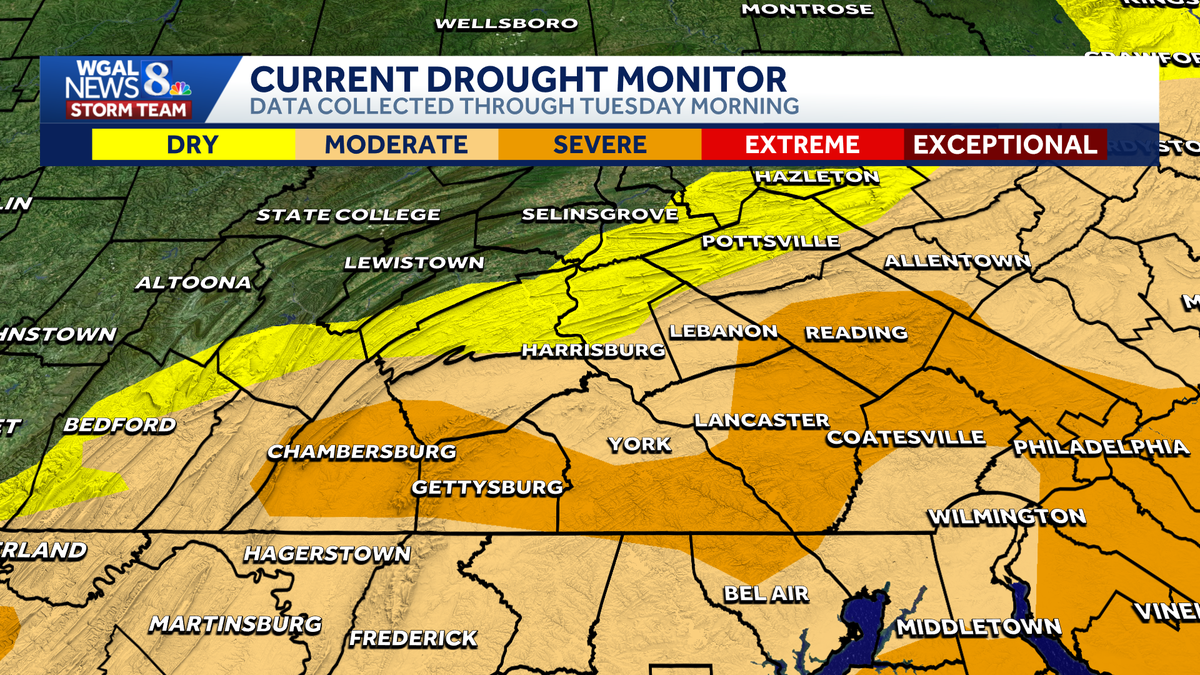
Drought Monitor Shows Some Improvement Across South Central Pennsylvania
The latest drought monitor, released on Thursday, shows the Susquehanna Valley is trending in the right direction after last week’s soggy weather.

Updated: 9:52 AM EDT May 29, 2026
This week’s U.S. Drought Monitor shows dry conditions are still hanging on across parts of central Pennsylvania, although there has been some improvement compared to last week.Statewide, 21.9% of Pennsylvania is in drought, down from 24.6% last week. Another 8.4% of the state is considered abnormally dry, which is also down from last week. The latest map shows 9.3% of Pennsylvania remains in severe drought, while 12.6% is in moderate drought.In central Pennsylvania, the worst dry conditions have generally been focused in the south-central part of the state, while other areas remain in moderate drought or abnormally dry.Earlier National Weather Service assessments for central Pennsylvania highlighted severe drought in Bedford, Fulton, Franklin, Adams, and Schuylkill counties, with moderate drought in counties including Centre, Snyder, Mifflin, Juniata, Perry, Dauphin, Cumberland, York, and Lancaster.The recent rain has helped chip away at the drought, but it has not been enough to fully erase the longer-term rainfall deficit, which is over 6 inches of rain so far. In fact, in central Pennsylvania, we would still need 8.5 inches of rain to end the drought for just this month. To end the drought by August, it would need to rain over 18 inches. That is why some drought is still showing up on the map despite a recent wetter stretch of weather.The Drought Monitor is updated every Thursday and takes into account rainfall, soil moisture, streamflow, and other indicators. Please note that the data collected is valid through Tuesday at 7 a.m. EST. For central Pennsylvania, the takeaway this week is that conditions are improving, but more steady rain is still needed to bring broader relief.
, Pa. —
This week’s U.S. Drought Monitor shows dry conditions are still hanging on across parts of central Pennsylvania, although there has been some improvement compared to last week.
Hearst OwnedWGAL News 8 Storm Team
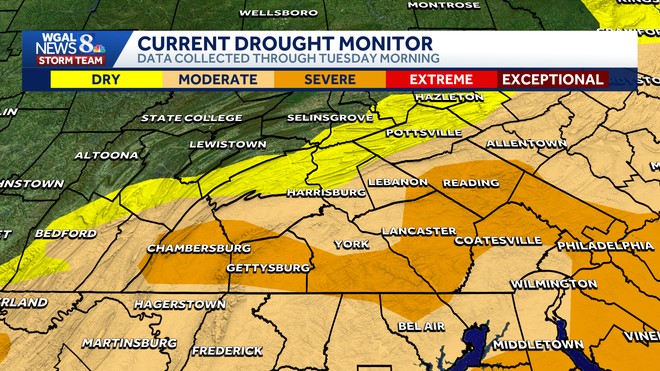
Drought Monitor for the Lower Susquehanna Valley as of Thursday, May 28, 2026.
Hearst OwnedWGAL News 8 Storm Team
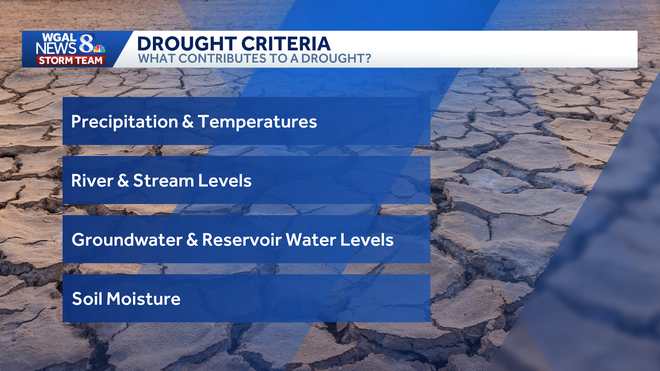
Multiple factors can lead to drought across an area.
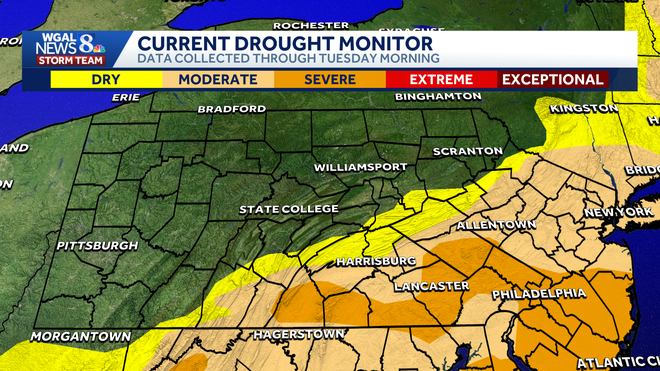
Statewide, 21.9% of Pennsylvania is in drought, down from 24.6% last week. Another 8.4% of the state is considered abnormally dry, which is also down from last week. The latest map shows 9.3% of Pennsylvania remains in severe drought, while 12.6% is in moderate drought.
Hearst OwnedWGAL News 8 Storm Team
Drought monitor for Pennsylvania as of Thursday, May 28, 2026.
In central Pennsylvania, the worst dry conditions have generally been focused in the south-central part of the state, while other areas remain in moderate drought or abnormally dry.
Earlier National Weather Service assessments for central Pennsylvania highlighted severe drought in Bedford, Fulton, Franklin, Adams, and Schuylkill counties, with moderate drought in counties including Centre, Snyder, Mifflin, Juniata, Perry, Dauphin, Cumberland, York, and Lancaster.
The recent rain has helped chip away at the drought, but it has not been enough to fully erase the longer-term rainfall deficit, which is over 6 inches of rain so far. In fact, in central Pennsylvania, we would still need 8.5 inches of rain to end the drought for just this month.
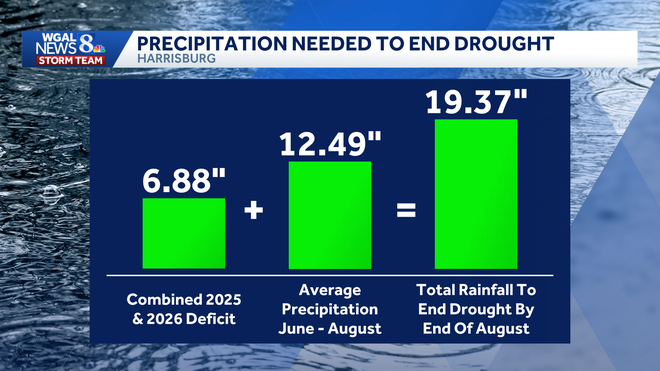
To end the drought by August, it would need to rain over 18 inches. That is why some drought is still showing up on the map despite a recent wetter stretch of weather.
The Drought Monitor is updated every Thursday and takes into account rainfall, soil moisture, streamflow, and other indicators. Please note that the data collected is valid through Tuesday at 7 a.m. EST.
For central Pennsylvania, the takeaway this week is that conditions are improving, but more steady rain is still needed to bring broader relief.