
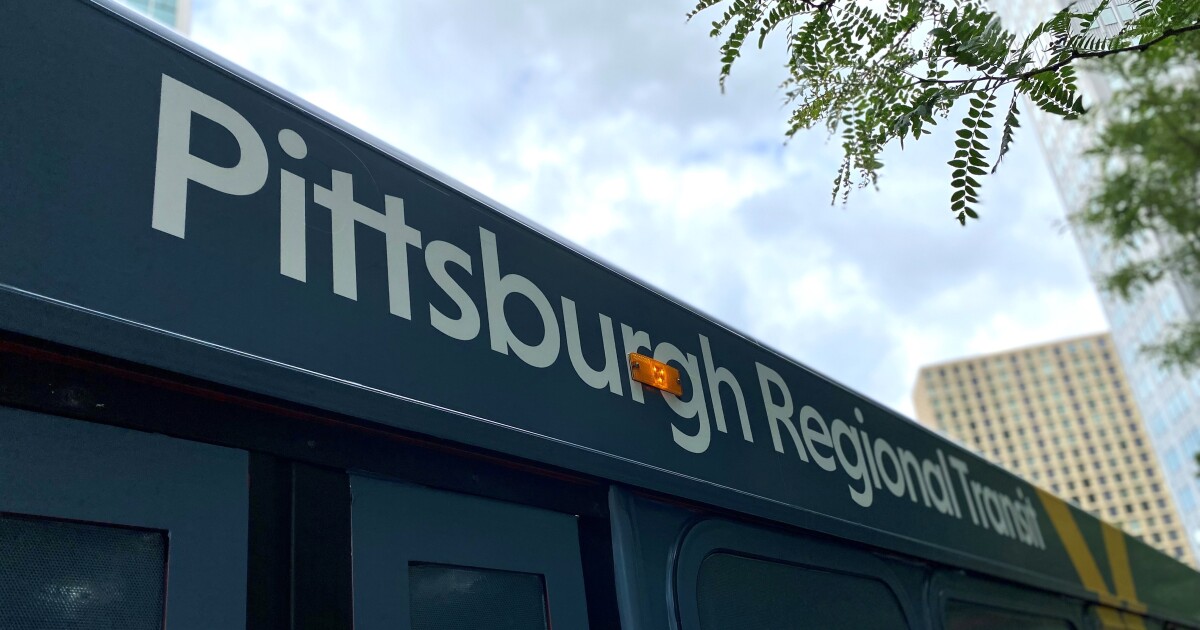
Riders of Pittsburgh Regional Transit won’t see fares increase or routes cut in the year ahead due to terms of operating and capital budgets approved Friday, agency officials said.
The transportation agency’s board members approved a $595.7 million operating budget and a $211.6 million capital budget, and in doing so preserved current fares and services for 2026-2027. In a statement, however, PRT officials warned that without consistent and sustainable sources of funding, the agency will continue to face long-term financial challenges that could threaten transportation service and projects.
“Public transit connects people to jobs, healthcare, education and opportunity every day,” PRT CEO Katharine Kelleman said in the statement. “While this budget preserves current service and fares, it also highlights the urgent need for a long-term funding solution that recognizes transit as a critical investment in our region’s economic future and competitiveness.”
To balance its operating budget, PRT said it is using $44.8 million in capital funds and an additional $15.4 million drawn from its operating reserves. Its capital budget includes nearly $51 million in federal funding, $155.5 million in state funding and approximately $5 million from county and other sources of funding.
The spending plan comes in the second and final year of a two-year waiver granted in 2025 by the state Department of Transportation, which allowed PRT and the Philadelphia area’s SEPTA transportation system to transfer funds set aside for capital projects to pay for operating expenses instead.
In 2025, PRT sought and received permission from the state to move money intended for capital projects to its operating budget, which ran a steep deficit after a 10-year boost to transit funding lapsed and federal pandemic-relief money dried up.
But that step also caused the agency to put non-essential capital projects, such as new bus purchases, on hold, Kelleman said then. PRT on Friday said it anticipates using its remaining operating reserves in 2028-29.
PRT noted that it and transit agencies in Pennsylvania and other states face rising operating costs for fuel, materials, services and employee healthcare, while post-pandemic travel patterns have changed and ridership has dropped.
The two-year waiver on use of capital projects was intended as “temporary relief,” rather than a permanent practice, PRT officials said in the statement, and it delays but does not resolve PRT’s funding challenges or those of other transportation systems. It also reduces funds that otherwise would be spent on transportation-related infrastructure, vehicle repairs and replacements, and other capital costs.