
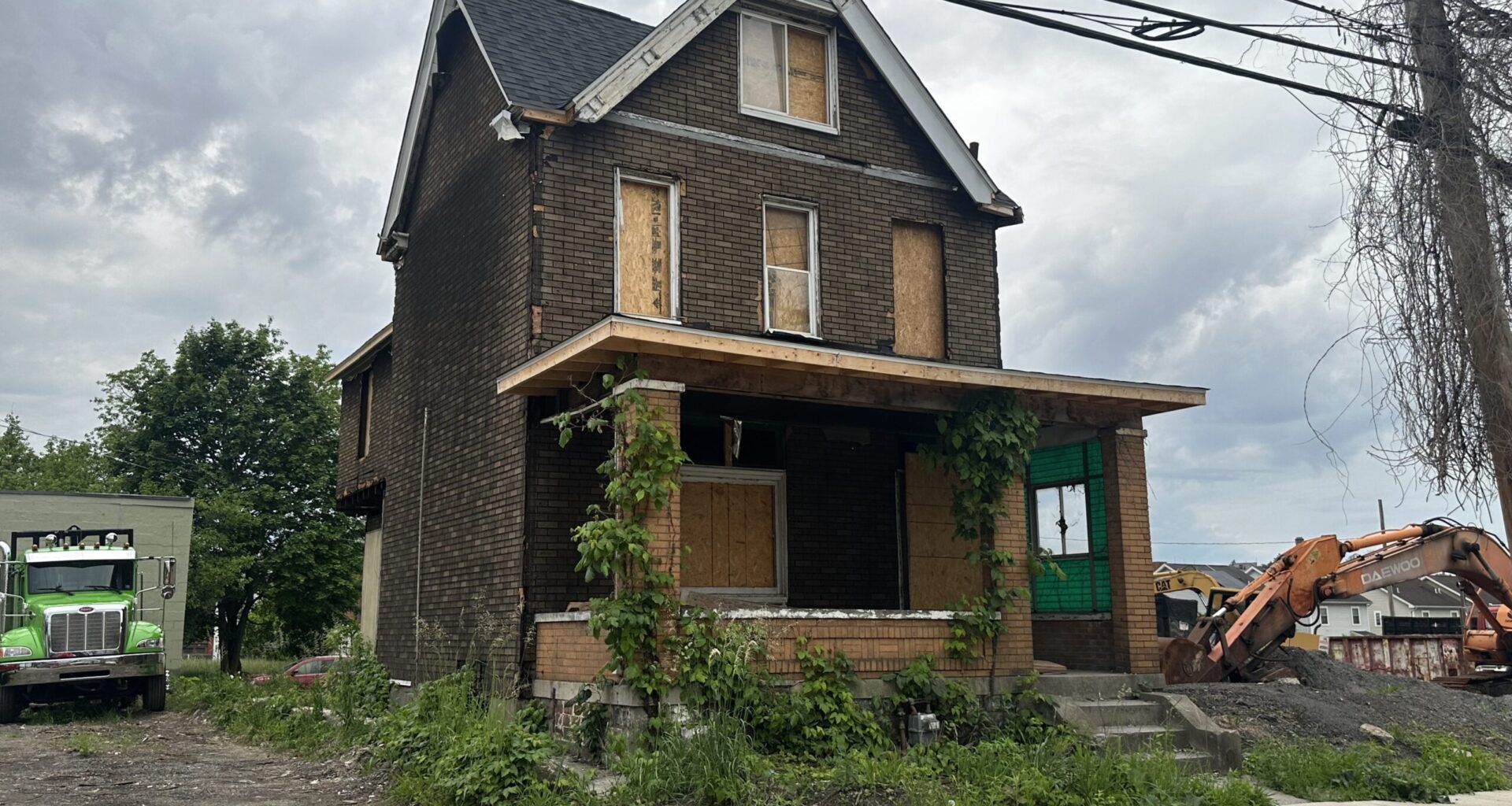
A local foundation’s $250,000 investment is bringing an affordable housing startup to Pittsburgh.
LadderUp Housing, an Ohio-based company that creates pathways for renters to become homeowners, announced a quarter of a million dollars in funding from the Richard King Mellon Foundation to support its expansion into Allegheny and Westmoreland counties.
The company is now making regular trips to the area, touring Pittsburgh proper and surrounding communities like Latrobe or Greensburg for partnerships, according to cofounder and CEO Tom Voutsos.
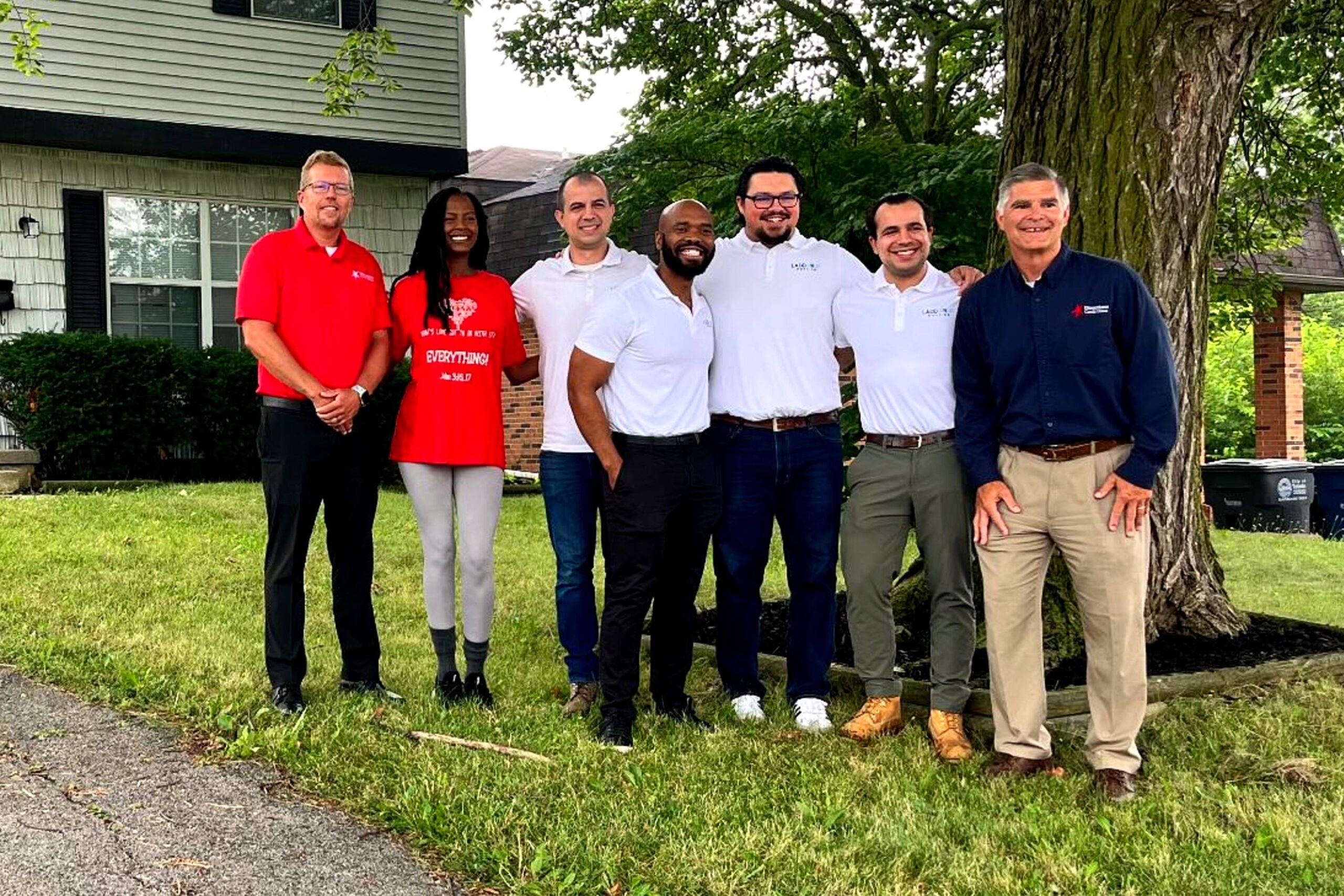 The LadderUp team (Courtesy)
“We’re currently in a pretty broad exploration phase at this point,” Voutsos told Technical.ly. “A lot of it right now is focused on meeting different potential community partners, and just trying to, on a more local, grassroots level, get an opportunity to introduce ourselves.”
The startup, which currently has five employees, plans to hire full-time staff in the Pittsburgh region once it acquires some homes in the area, according to Voutsos.
RK Mellon’s investment in LadderUp is made through its Social-Impact Investment Program, which invests in for-profit startups with a social mission. The foundation has invested more than $25 million across 76 companies as part of the program.
The foundation declined to comment on why it selected LadderUp for this investment.
How LadderUp’s model works
LadderUp purchases, renovates and constructs single-family homes to rent to low-to-moderate-income families.
The startup typically buys homes for about $90,000 and sells them to tenants for around $120,000, Voutsos said, though the company expects those costs to be higher in the Pittsburgh market.
Then, it connects tenants to external nonprofits that provide financial coaching and mortgage-readiness support, helping them eventually purchase the homes they’re already living in. This is also where LadderUp’s business model comes in. It makes money from the rent it charges and the eventual sale of the homes to those tenants.
This process, on average, takes about two to three years, Voutsos said, and has led to an average credit score improvement of 75 points for tenants.
Founded in 2021, LadderUp has acquired nearly 90 homes and renovated more than 65 in the Ohio area. The initiative has helped six families become homeowners so far, according to the announcement.
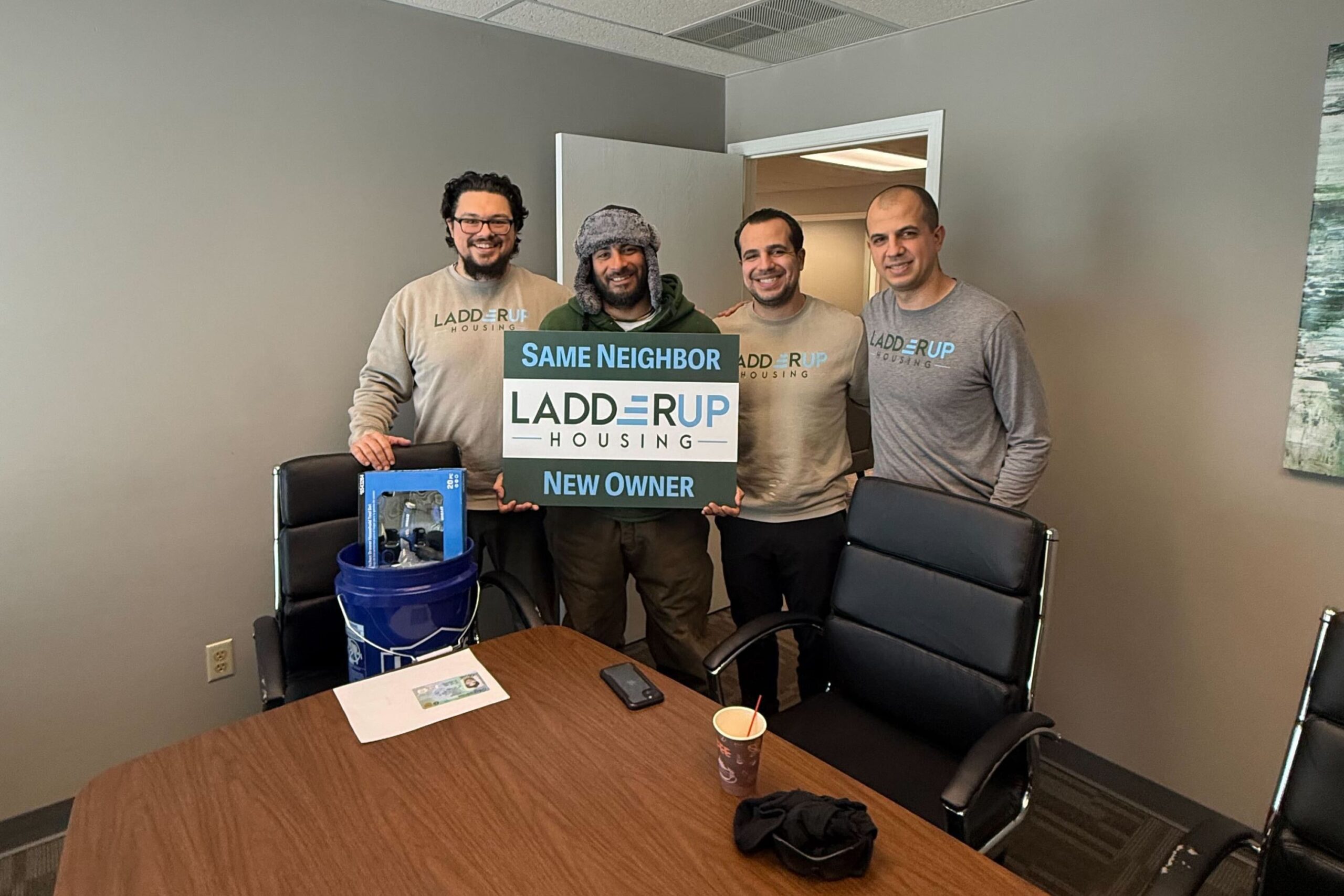 The LadderUp team with a new tenant-turned-homeowner (Courtesy)
Unlike some traditional rent-to-own models, LadderUp doesn’t require tenants to pay into a down-payment savings program or sign a multi‑year lease. Instead, the company targets households that can pay rent on time but can’t yet qualify for a mortgage and helps them get there. If they decide not to buy, they can still access financial support.
“The way that we structure our leases is that we want to make sure that optionality is front and center,” Voutsos said. “Day one, [tenants] have a purchase option agreement that specifies a predetermined, transparent price, and they can execute that option at any time they’re in a lease with us,” he added.
Competing with corporate rentals
LadderUp is designed to target neighborhoods where out-of-state institutional investors would otherwise be likely to snap up affordable housing as pure rental plays, leaving residents with no route to ownership.
This has been a growing trend in the Pittsburgh area.
From 2010 to 2021, the share of Pittsburgh houses sold to corporate entities or real estate investors increased from about 16% to 25%, according to an analysis by the nonprofit membership organization Pittsburgh Community Reinvestment Group. Allegheny County saw a similar increase from about 10% in 2010 to 18% by 2021.
More recent research from the University of Pittsburgh shows non-local corporate owners have continued to buy up single-family homes in the area, leading to a reduced supply of housing for locals to own.
“Our motto is ‘Same neighbor, new homeowner,’” Voutsos said. “It reflects our belief that tenants should be able to stay in the homes and neighborhoods they already know and love.”
A Michigan native, former Marine and University of Chicago alum, Voutsos said the seeds that would become LadderUp were planted early in his life.
His grandparents, Greek and Italian immigrants, were able to purchase a 900-square-foot house in Lincoln Park, Michigan, when they came to the United States. The home was modest, but they lived there for more than 50 years, raising a family and building community. There was stability in that, something “not nearly as accessible today,” he said.
But then, during the 2008 financial crisis, Voutsos also saw how larger systems, often driven by corporate interests, eroded that stability for others in his community.
“All those things were percolating in the background,” Voutsos said, “and then coming out of the Marines, I had an opportunity to work with a social enterprise, and I got to learn that there’s not just nonprofit and for-profit, there’s these organizations that try to serve both.”