
As the golden age of television dawned across America in the early 1950s, Northeast Pennsylvania faced a frustrating isolation. Standard TV broadcasting relied on VHF (Very High Frequency) signals, but the region’s rugged, mountainous landscape blocked the long-range waves rippling out of Philadelphia and New York.
Regional coal towns faced a digital blackout because the FCC hadn’t assigned local VHF channels to the area. Refusing to be left in the dark, local broadcasters made a high-stakes gamble on Ultra High Frequency (UHF), a shorter-range, condensed band that the rest of the country considered highly volatile and commercially unviable.
On New Year’s Day 1953, WBRE in Wilkes-Barre launched its signal on Channel 28, joining WILK (which later became WNEP) to turn the region into America’s first true “UHF Island.”
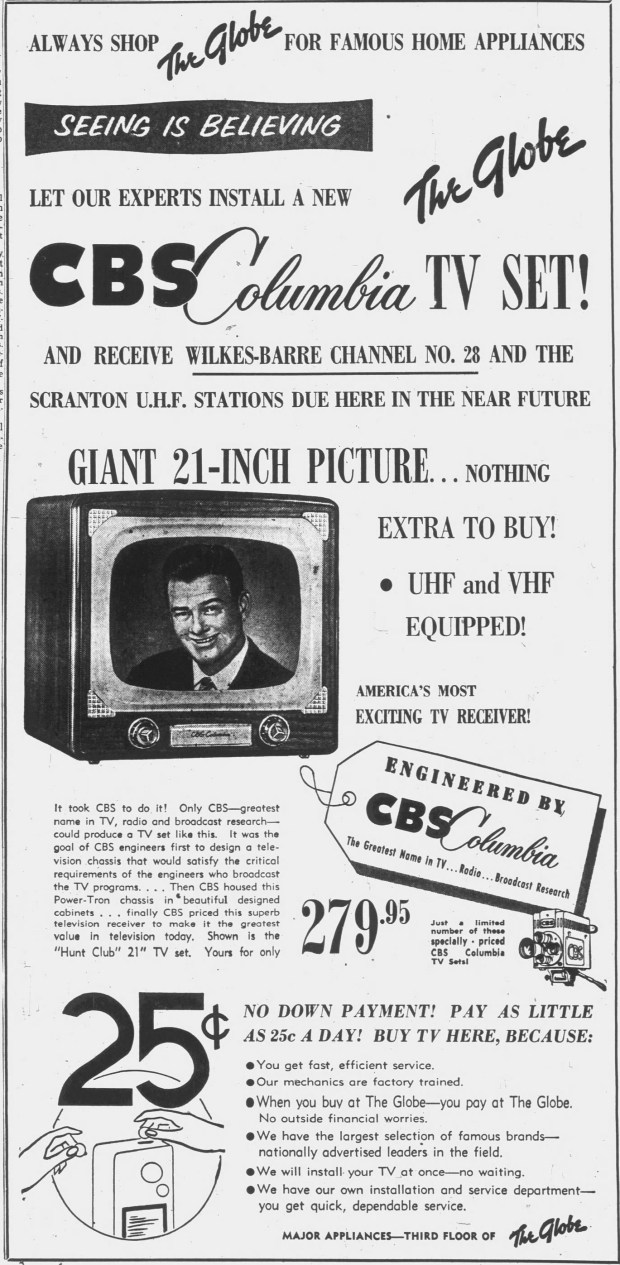 An advertisement in the Jan. 20, 1953 edition of The Scranton Times featuring a UFH-equipped TV. (NEWSPAPERS.COM)
The national ripple
NEPA’s gamble brought the Rose Bowl to Hazleton living rooms and effectively signaled the future of American broadcasting.
At the time, major television manufacturers didn’t even bother putting UHF tuners in their sets, making it nearly impossible for UHF stations elsewhere to survive. But because NEPA was a pure “UHF Island” and audiences demanded the technology, our region proved to a skeptical tech industry that UHF could not only survive, but thrive.
This local success story became the primary evidence used by advocates to push through the federal All-Channel Receiver Act of 1962. This landmark act mandated that every single television set sold in the United States must include both VHF and UHF tuners, leveling the playing field and rescuing small-market television stations across the nation.
 WBRE TV schedule published in The Scranton Times on March 20, 1953 (newspapers.com)
The living legacy
Today, every time you flip past Channel 13 on a TV or digital tuner, you are interacting with a broadcast landscape salvaged by NEPA. The call letters forged in that era — WNEP and WBRE — remain local institutions, but their historical footprint stretches far wider. The standardization of the UHF band paved the way for the explosion of public broadcasting (PBS), independent stations, and the digital sub-channels we rely on today.
Sidelights
The “UHF Island” perfectly captures NEPA’s refusal to be left behind. When geography and corporate manufacturing stacked the deck against us, local engineers and broadcasters built their own solution. We didn’t idly watch history happen. Local broadcasters forced Congress to rewrite the laws of American media.
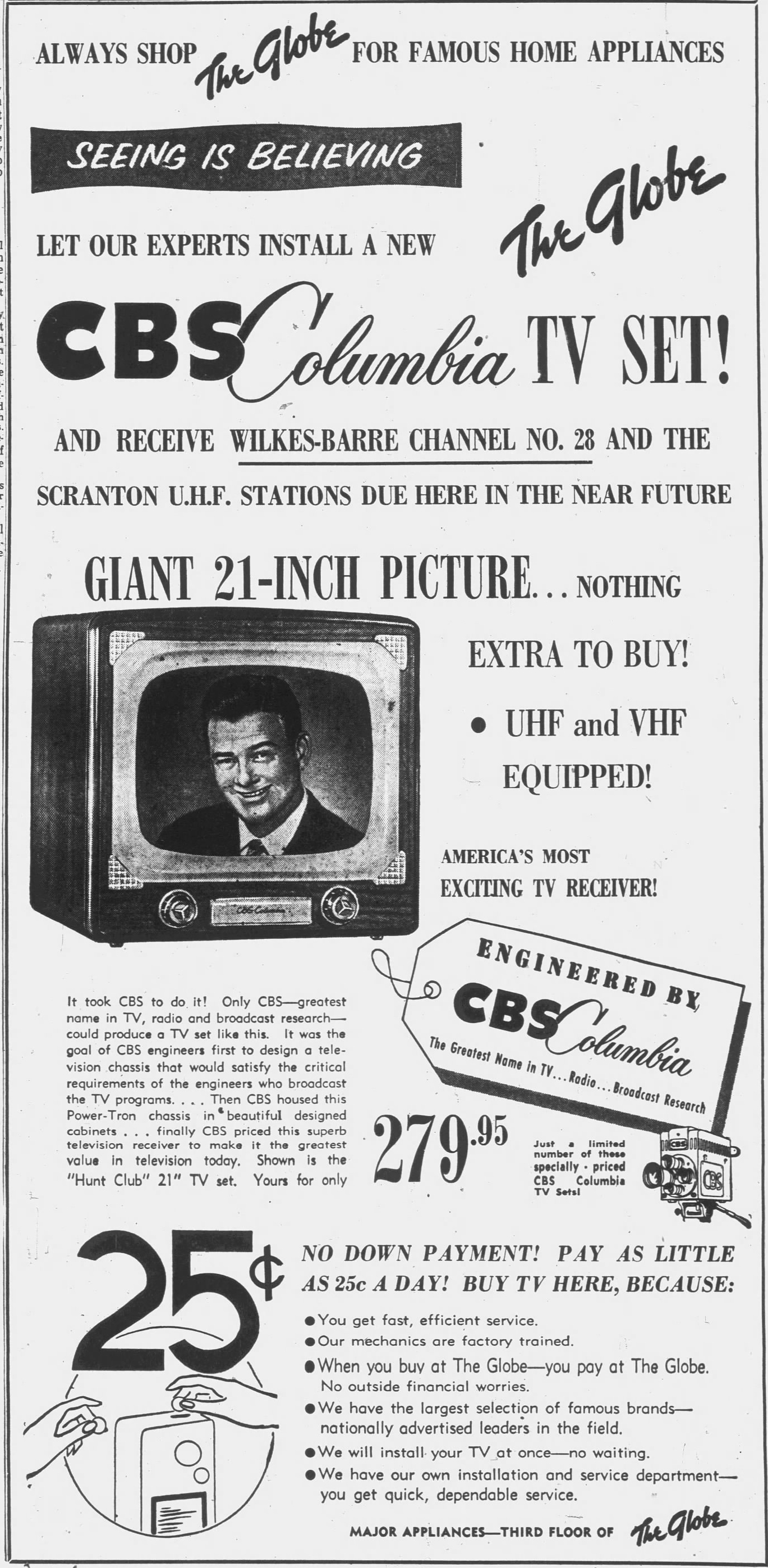
An advertisement in the Jan. 20, 1953 edition of The Scranton Times featuring a UFH-equipped TV. (NEWSPAPERS.COM)

WBRE TV schedule published in The Scranton Times on March 20, 1953 (newspapers.com)
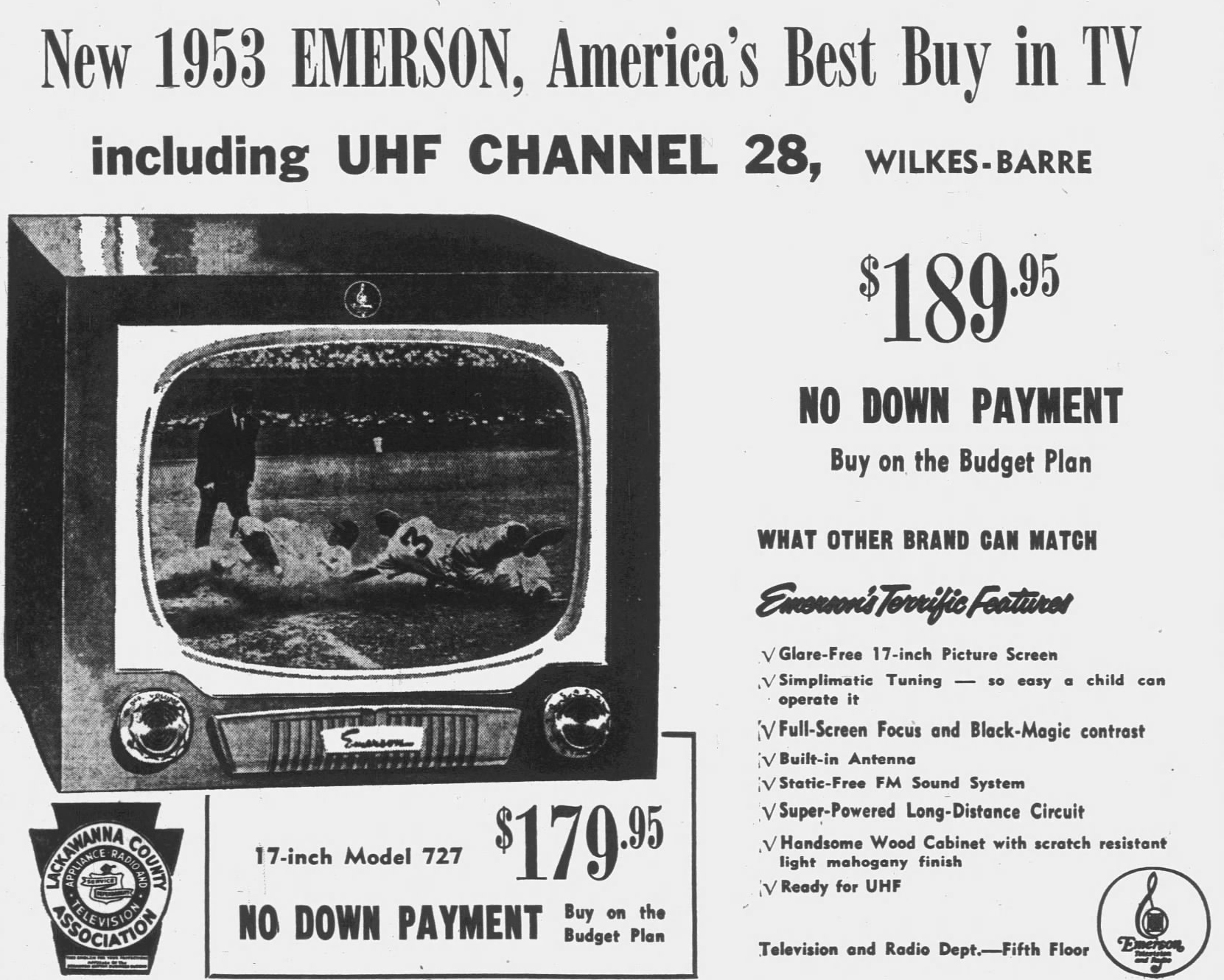
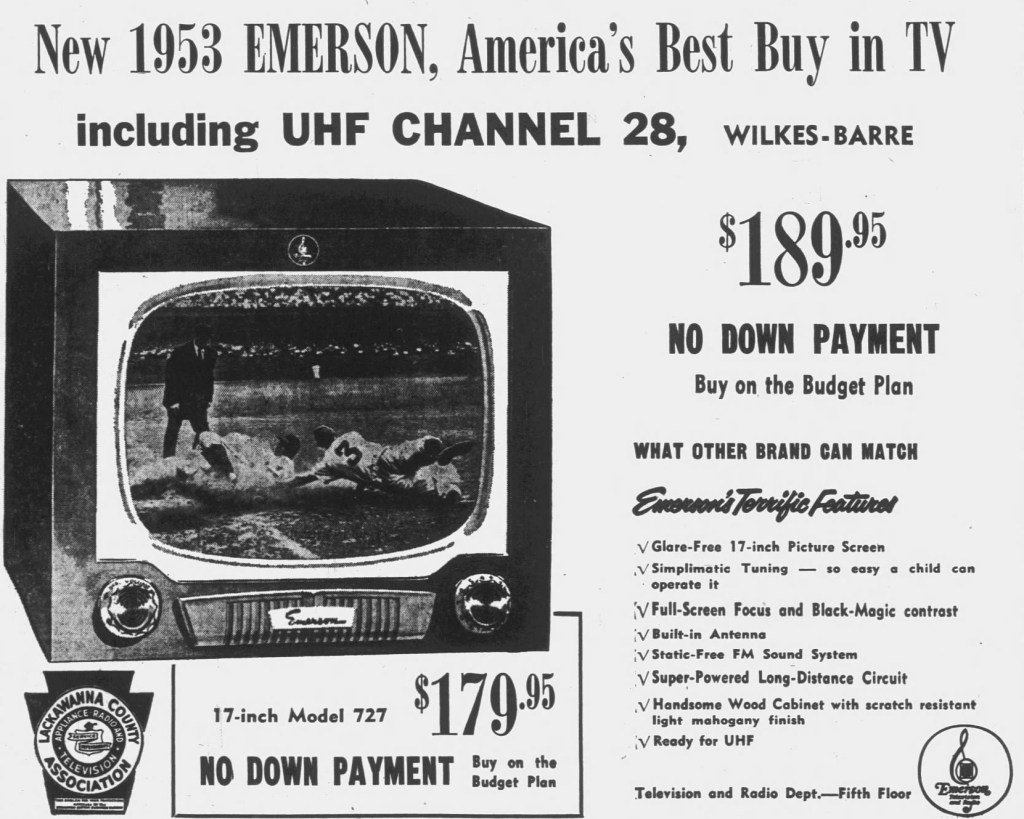
An advertisement in the Feb. 5, 1953 edition of The Scranton Times for an Emerson TV with UFH capability. (newspapers.com)
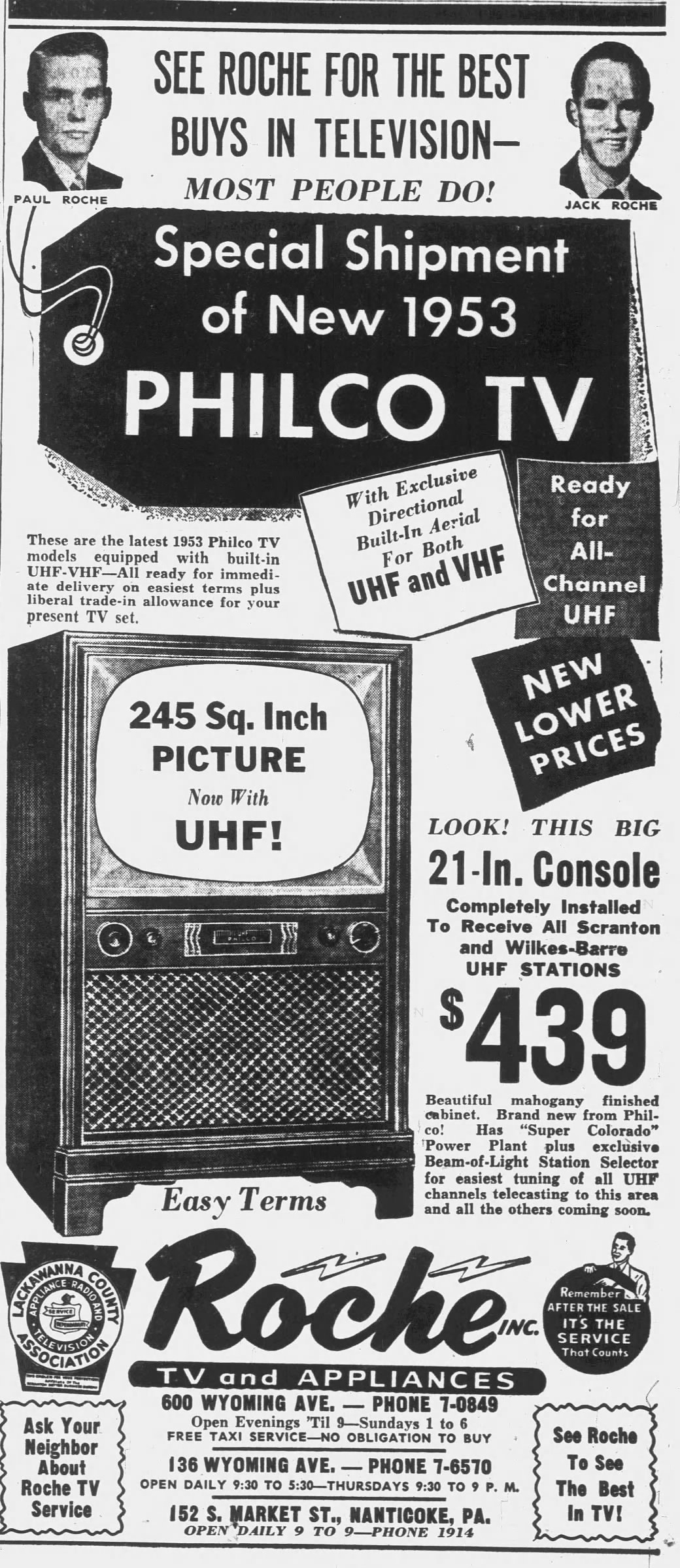
An advertisement in the Feb. 13, 1953 edition of The Scanton Times for UHF televisions. (newspapers.com)
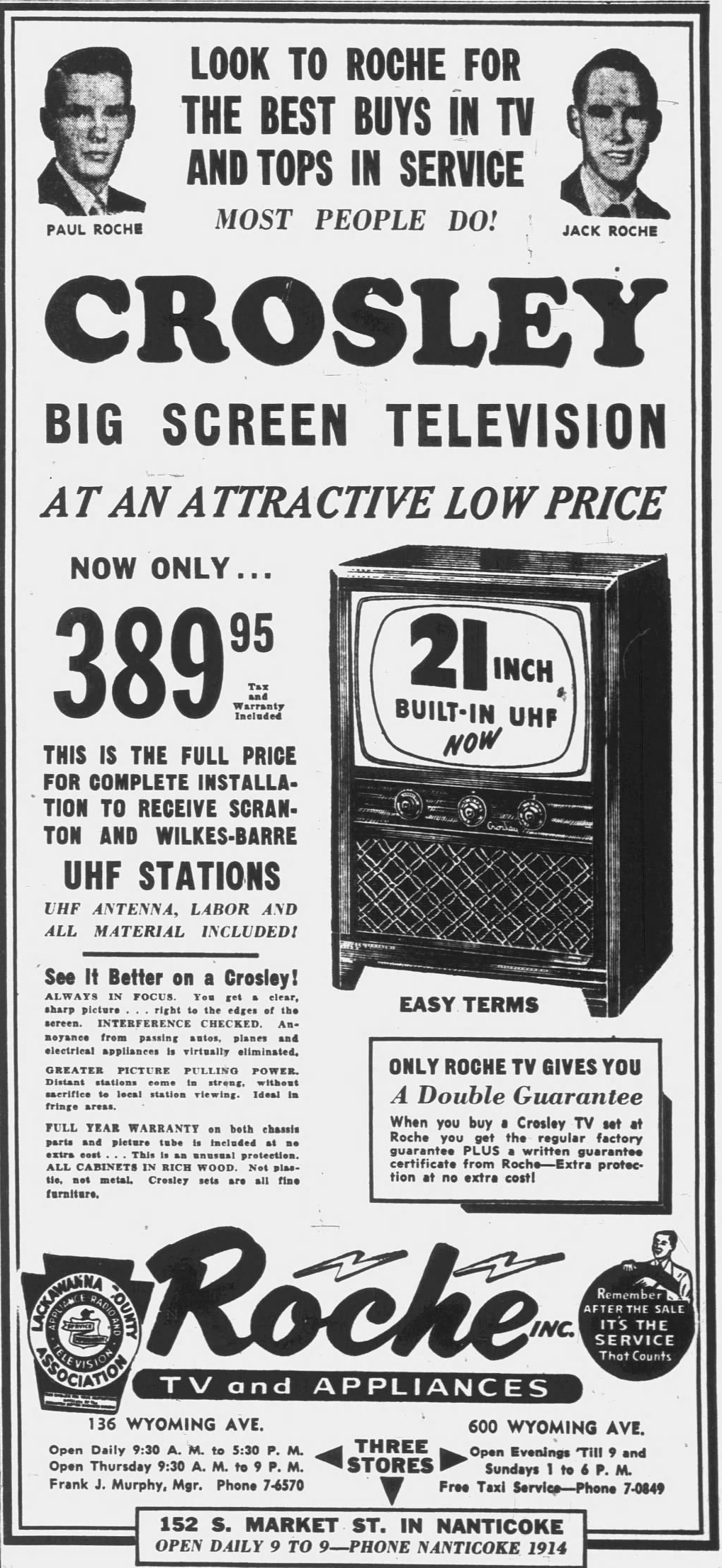
An advertisement in the Feb. 27, 1953 edition of The Scranton Times for UHF-equipped televisions. (newspapers.com)
Show Caption
1 of 5
An advertisement in the Jan. 20, 1953 edition of The Scranton Times featuring a UFH-equipped TV. (NEWSPAPERS.COM)
Expand
About the series
For 250 years, the story of the United States has been told through its biggest cities and its grandest battles. But look closer at the foundation of the American superpower, and you will find the fingerprints of Northeastern Pennsylvania everywhere.
NEPA wasn’t just a place where coal was mined; it was the “Silicon Valley” of the 19th century — a hub of engineering that sparked the railroad revolution and the “Electric City” of the 20th century that redefined how we move. It was the training ground for the labor laws that protect your weekend, the birthplace of the media models that power your living room, and the home of medical pioneers who changed the way the world saves lives.
As we approach America250, we are counting down 30 ways NEPA changed America. From the legal precedents set in our courtrooms to the literal fuel that fired the Industrial Revolution, this is the story of how our region didn’t just participate in history — it powered it.
Today, we begin at #30: From coal towns to Capitol Hill: How NEPA saved small-market TV.