
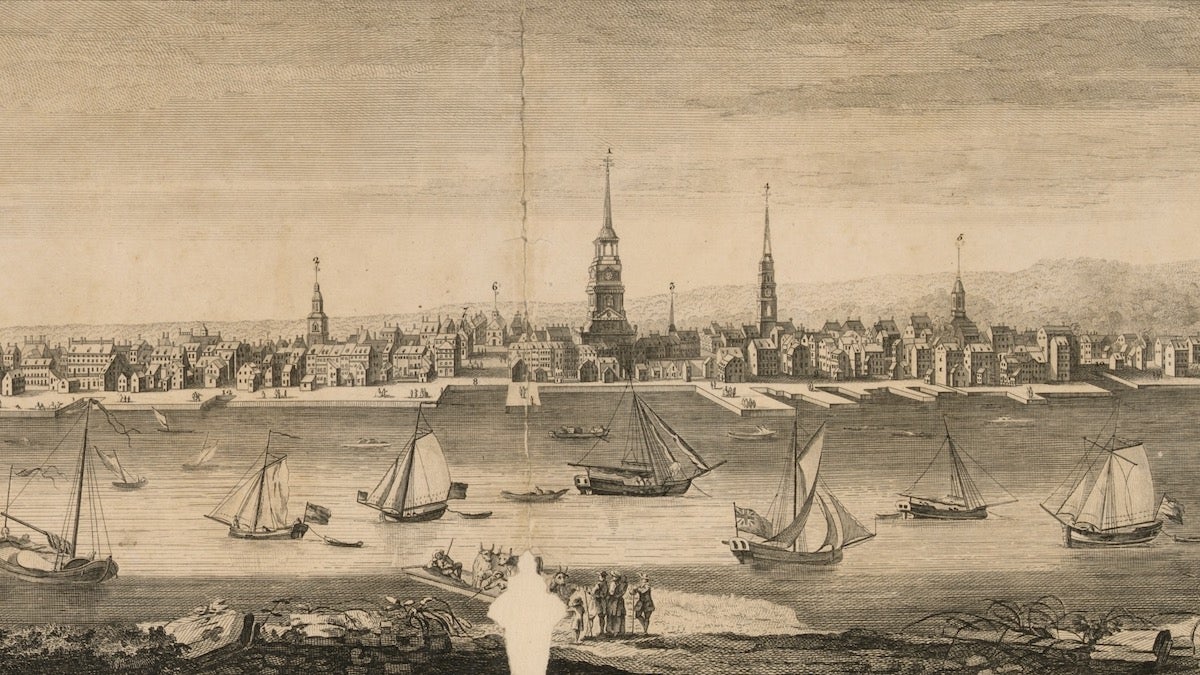
It’s time to play the music, it’s time to light the lights
The arrival of the British Army in 1777 made Philly more fun than it had been before.
Back in 1774, the Continental Congress in Philadelphia had adopted the Articles of Association, which discouraged a list of amusements that the delegates felt drained time and energy away from the ideals of revolution.
The articles imposed a ban on “horse-racing, and all kinds of games, cock fighting, exhibitions of shows, plays, and other expensive diversions and entertainments,” as well as “the giving of gloves and scarves at funerals.”
“Plays fell into this category of everything from cockfighting to horse racing to circuses,” said Peter Schmitz, author of the book and podcast “Adventures in Theater History: Philadelphia.”
 Peter Schmitz is an actor and author of ”Adventures in Theater History: Philadelphia.” (Emma Lee/WHYY)
“Theater was regarded as a pastime that was extravagant and distracting. This was a holdover from a general puritanical viewpoint that pervaded America for the previous century.”
The British Army loved theater and reveled in entertainment. Officers quickly developed their own amateur theater series, staging at least 18 performances on Monday evenings from January to May 1778, at the former Southwark Theater near what is now South Street.
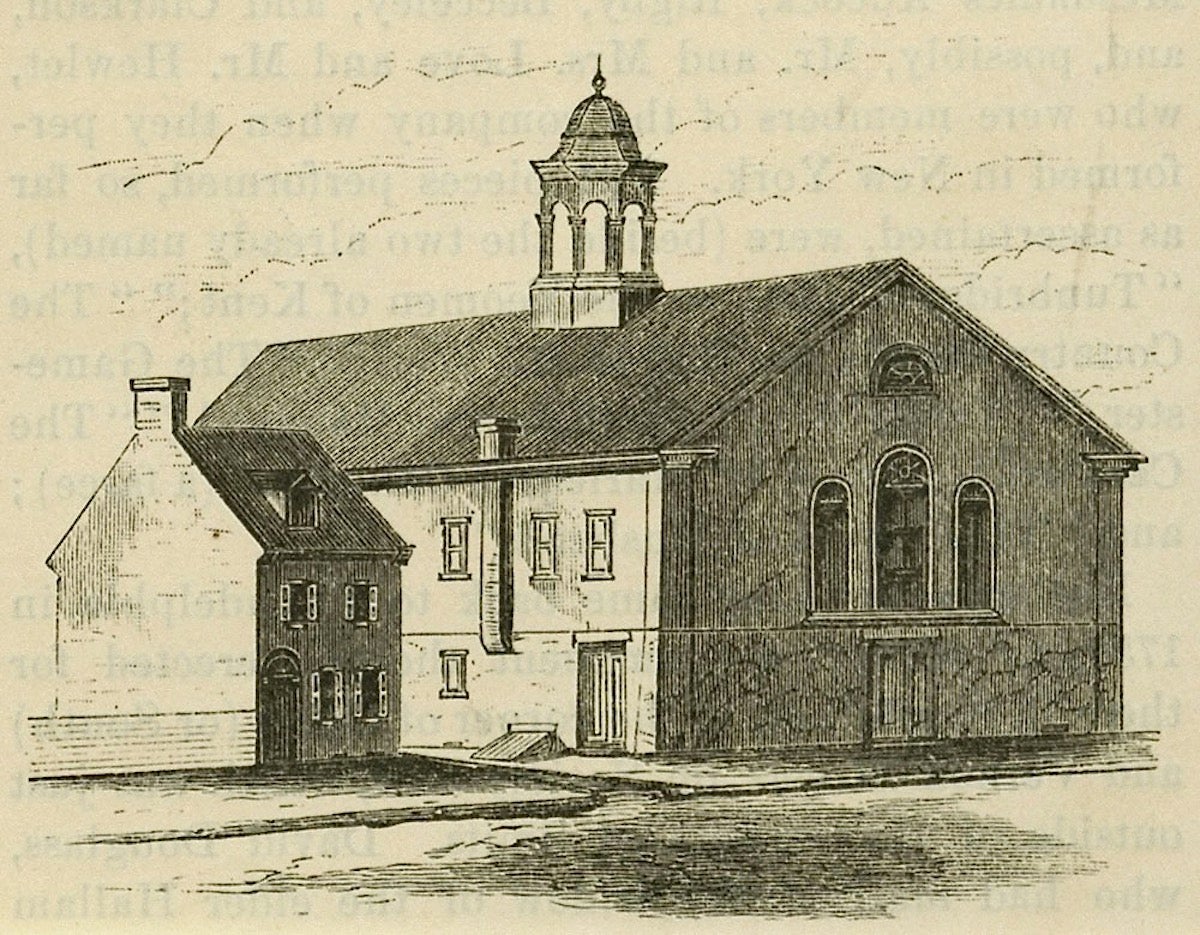 During the British occupation of Philadelphia, officers staged plays at the Southwark Theater at Fourth and South streets. (Free Library of Philadelphia)
“That’s where the British Army officers tended to put on plays for their own entertainment because that was what gentlemen did, especially if they are of any artistic or literary character,” said Schmitz, who is also a local to the Philly theater scene. “One of the main reasons that I think they put on plays was as a chance to meet girls.”
The chief producer of theater in occupied Philadelphia was Maj. John André, the head of British military intelligence, as well as an accomplished artist and poet. He later hanged as a spy for turning Gen. Benedict Arnold into a traitor.
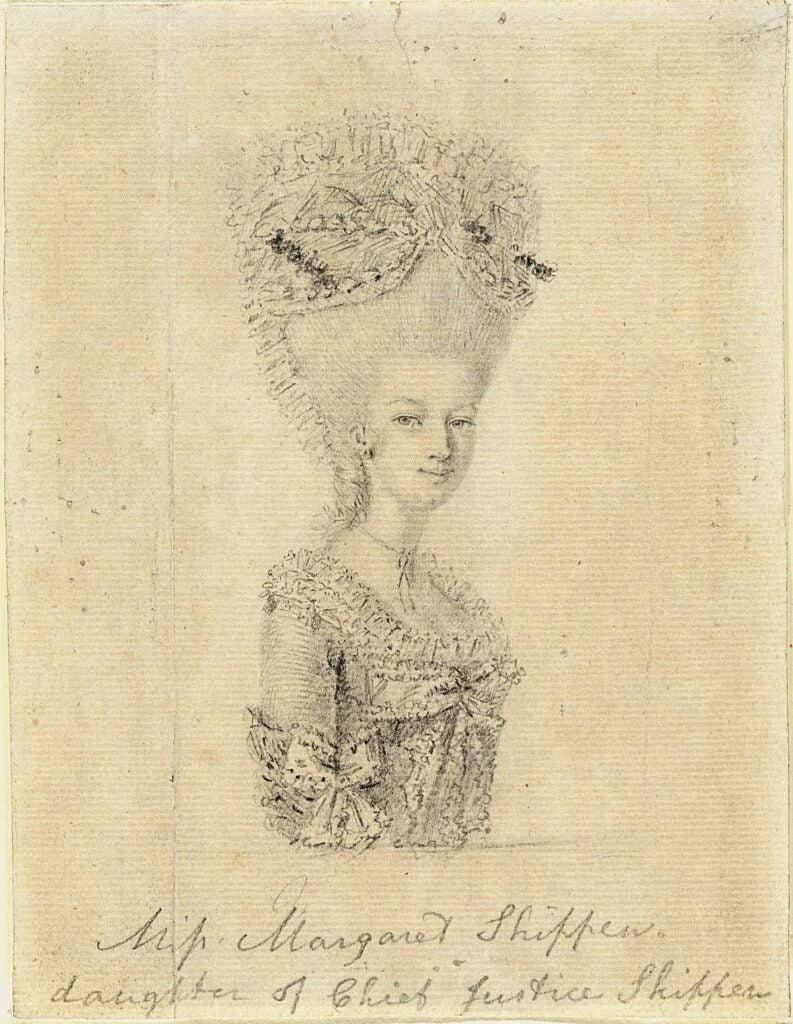 John André sketched Margaret Shippen, the daughter of Chief Justice Shippen, who would become Mrs. Benedict Arnold. (Yale University)
One of the celebrated actors on the Southwark stage, William Cunningham, oversaw prisoners at the Walnut Street jail in an infamously sadistic manner, regularly starving and beating inmates. He was noted for his comical performances on stage.
The British military doctor Dr. Hammond Beaumont reportedly “shined” as the lead in the production “The Mock Doctor, or the dumb lady cured.” He later expanded his passion for plays by operating a theater for three years in New York City while juggling his wartime duties. He died in 1782, and was remembered as a “gentleman of infinite pleasantry and humor.”
Howe was also a great fan of theater and liked to bring companions, including Elizabeth Loring, the wife of his commissary of prisoners in Philadelphia, Joshua Loring, Jr. It is widely believed Howe and Loring were lovers, for which the general was mocked by the Patriots and the Loyalists.
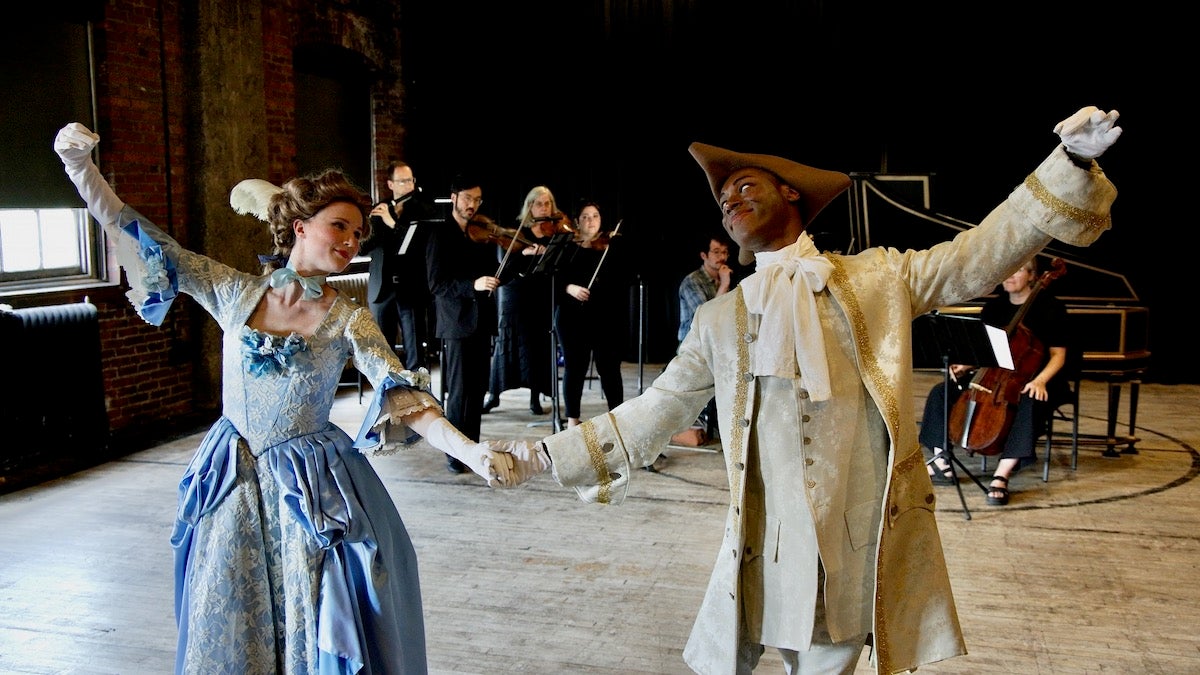 When the British occupied Philadelphia for nine months in 1777 and 1778, they indulged themselves with lavish parties and theatrical performances. Julia Bengtsson and Patrick Pride from the New York Baroque Dance Co. give a demonstration of 18th-century dance with music by The Publick Pleasure at Christ Church Community House. (Emma Lee/WHYY)
Writing in exile after the war, the New York Loyalist Thomas Jones blamed Howe’s infatuation with Elizabeth for his failure to militarily leverage the occupation of Philadelphia:
“As Cleopatra of old lost Mark Antony the world, so did this illustrious courtesan lose Sir William Howe the honor, the laurels, and the glory of putting an end to one of the most obstinate rebellions that ever existed,” Jones wrote.
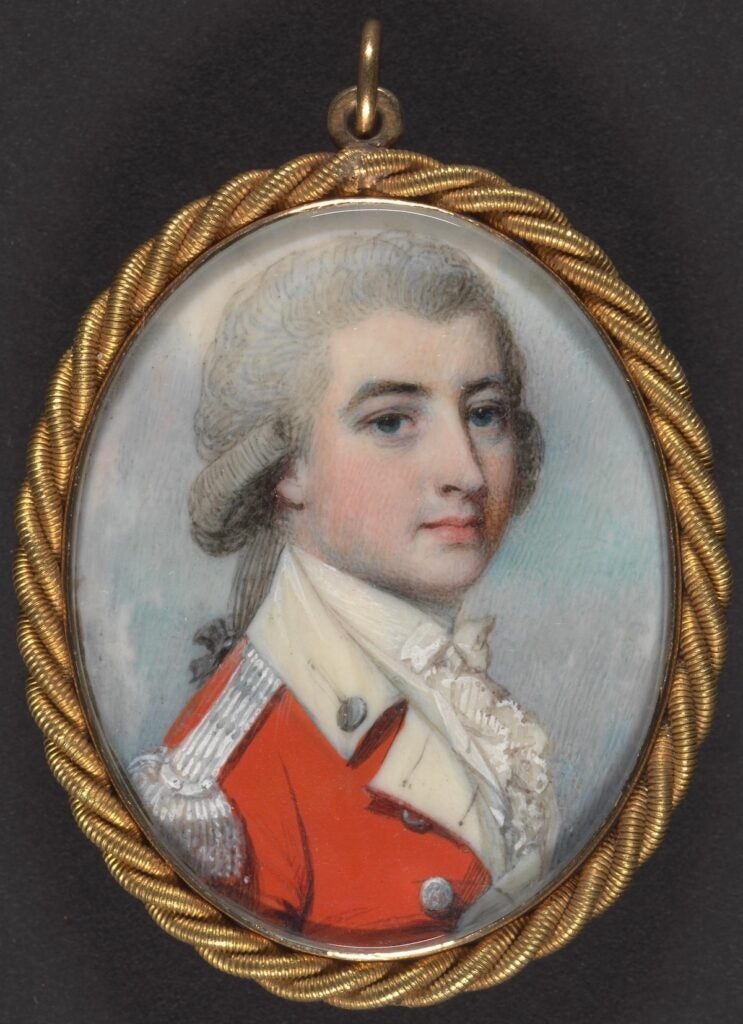 A portrait of Capt. John André made between 1771 and 1780 by George Engleheart. (Yale Center for British Art)
On the Patriot side, Francis Hopkinson, a signer of the Declaration of Independence and the unofficial poet of the Revolution, immortalized the Philadelphia affair in a satirical poem:
Sir William he, snug as a flea,
Lay all this time a snoring;
Nor dreamt of harm, as he lay warm
In bed with Mrs. Loring.