
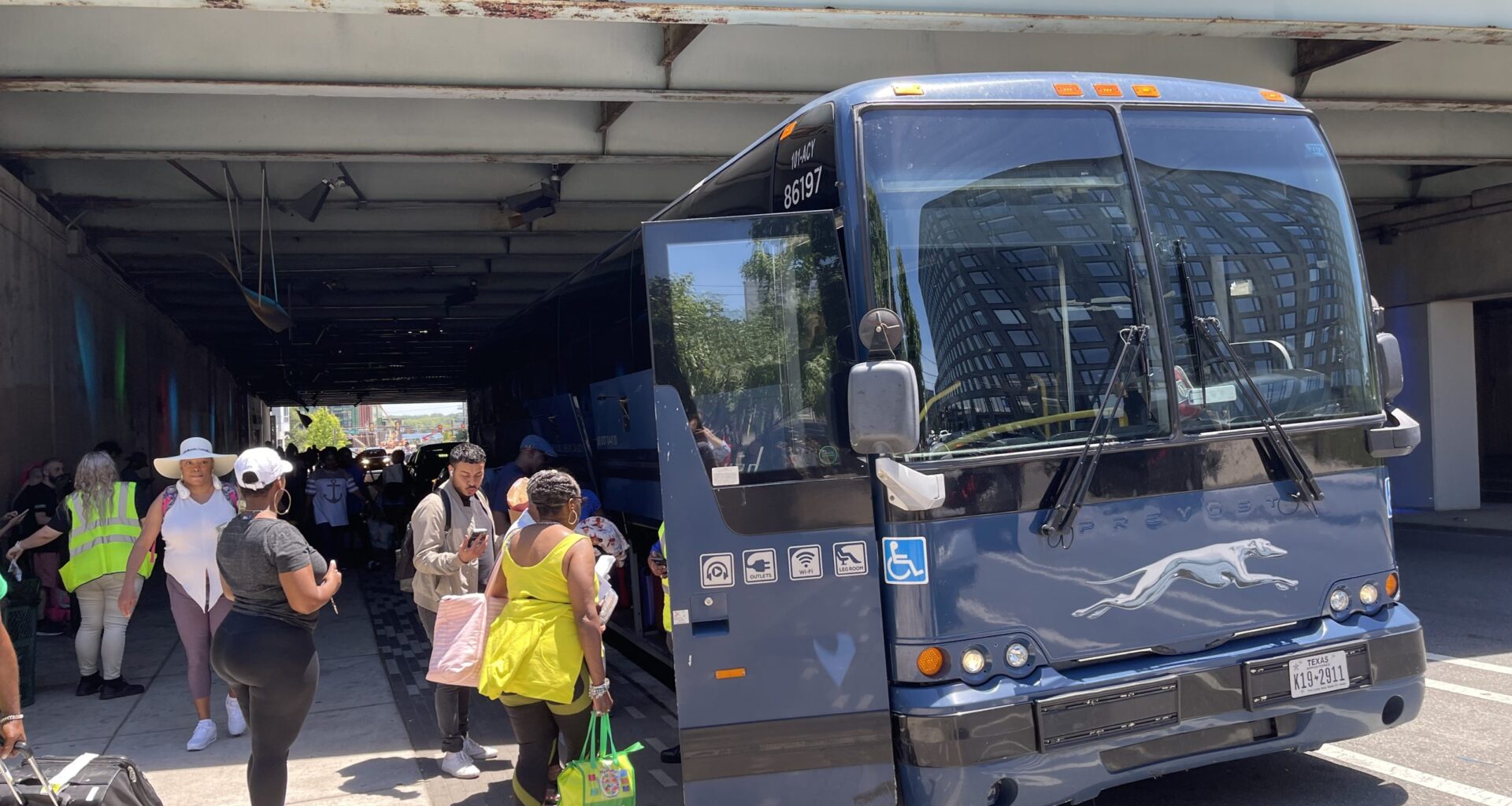
Philadelphia is poised to once again have a proper bus station for Greyhound and other intercity carriers — back in the same spot where the terminal previously operated for decades.
More than two years after Greyhound shut down its station at 10th and Filbert streets, forcing riders to wait for buses at outdoor curbside pickup locations in all kinds of weather, the Philadelphia Parking Authority announced today that it plans to lease the old space, renovate it, and reopen the building ahead of next year’s celebrations of the nation’s 250th anniversary.
“Our capital projects teams and maintenance folks are getting together a scope on what needs to be done to get it operational, and clean it up, make it safe, aesthetically nice, and do some type of Philly-themed mural on it as well,” PPA executive director Rich Lazer said Thursday. “We’re going to be on the world stage next year, and we want to make sure that the facility represents that, welcomes people from all over to Philadelphia.”
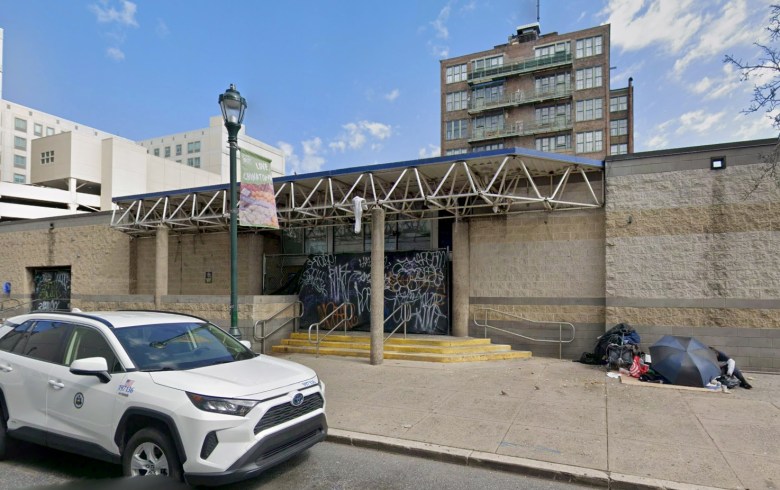 The former Greyhound bus station on Filbert Street has been boarded up since it closed in June 2023. (Google Maps)
The PPA plans to rent the building from the property owner for $100,000 a month and reopen it by next May. The cost will increase over time, adding up to $13 million over the course of a decade-long lease, Lazer said. There will be an option to renew after 10 years. The PPA board will likely approve the new lease on Monday.
The agency hopes to recoup the cost by charging companies to use the facility’s bus bays, as is done in other cities with centralized bus stations. Legislation is being introduced in City Council that will let the agency run the station on the city’s behalf and collect the fees, he said.
PPA will also spend at least $1 million to rehab the building, which has been boarded up since it closed in June 2023, as well as an undetermined amount to operate and maintain it using PPA staff and contractors, Lazer said.
City planning and transportation officials asked the PPA to take on the project as it became clear that the current intercity bus “terminal” — on a stretch of Spring Garden Street near Front Street — was not acceptable as Philadelphia prepares to welcome in millions of visitors for World Cup soccer games, the nation’s 250th birthday celebrations and other events, he said.
“Everybody can agree, the city as well for us, that the current operation is not sustainable. It’s not a great look, and with all the increase of folks that will be coming next year, it’s something that we just got to change,” he said. “The city had asked if we would be interested in working with them on it. We were happy to do that.”
Two switches, countless complaints
If the project goes ahead as planned, it would apparently end a saga that has inconvenienced thousands of bus travelers and created an embarrassing quandary for the city.
It began when Greyhound vacated the building in June 2023, as the busing firm’s new owner, which is also the parent company of Flixbus, sought to cut costs in the face of competition from rival companies that do curbside pickup and dropoffs.
The move may have also been driven in part by the 76ers’ announcement of their plan to build a basketball arena on Market Street, on a footprint that would include the former station property and part of the Fashion District mall.
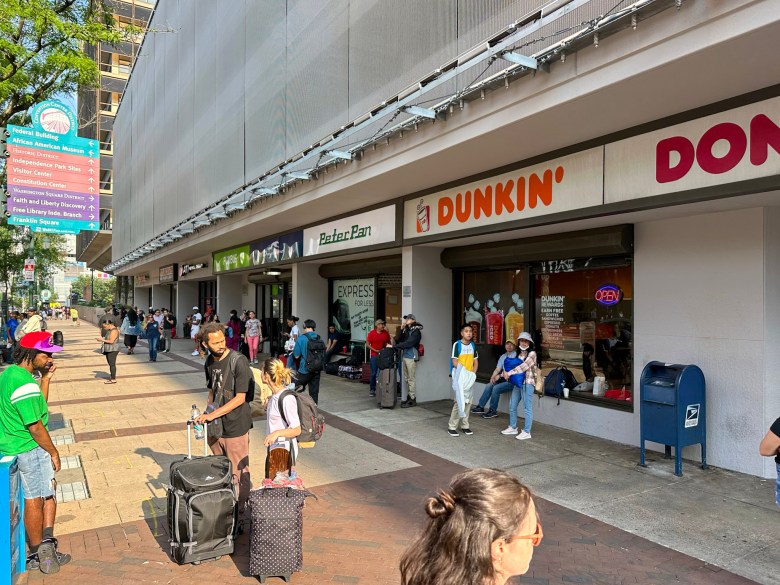 Passengers waited for their bus to arrive at the 7th and Market pickup spot shared by Greyhound, Flixbus, and Peter Pan in 2023. (Danya Henninger/Billy Penn)
The city at first directed Greyhound, Megabus, Peter Pan and other operators to switch to Market Street near 6th Street, which drew complaints about the lack of bathrooms, seating and covered waiting areas, and of disruptions to nearby businesses as passengers waited on the sidewalk.
Later that year, the bus terminal was moved to a stretch of Spring Garden Street in the southeastern corner of Northern Liberties, which is partly under a highway overpass, bringing similar complaints. The city installed a mobile bathroom nearby, but neighbors who feared it would end up serving as a bus terminal for years pressed officials to call off a plan to install a modular ticket office and waiting room on an adjoining parking lot.
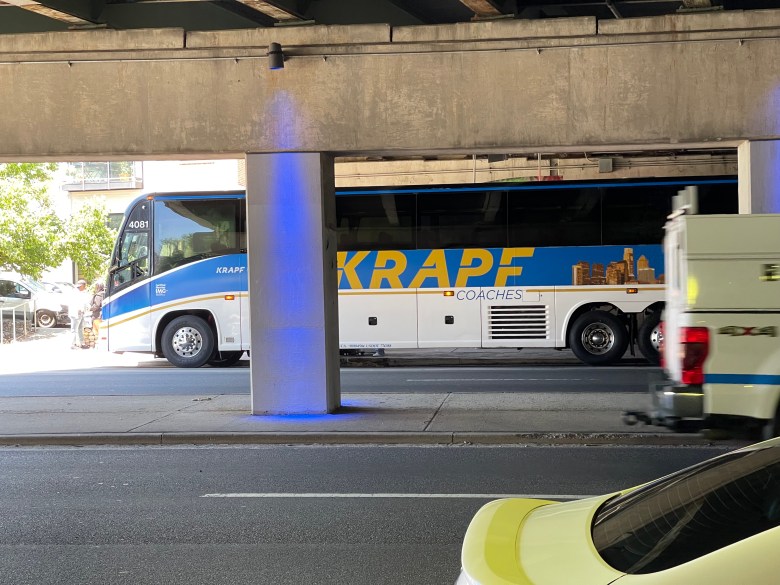 A Krapf bus picked up passengers under I-95 on Spring Garden Street. July 3, 2024. (Meir Rinde/Billy Penn)
For a time, the city’s Office of Transportation and Infrastructure System (OTIS) considered using a PPA garage on 2nd Street in Old City as an intercity bus terminal, which again provoked furious opposition from adjoining businesses and nearby residents. They argued the street was too narrow and the historic neighborhood unsuited to host a constant influx of bus travelers.
Many residents lamented the lack of a proper indoor bus terminal with amenities, with some asking why officials didn’t find a place near Amtrak’s 30th Street Station to build one. Meanwhile, in January the 76ers did an about-face on their arena plan, canceling it in favor of building in the South Philadelphia stadium district. That left the Filbert Street space once again available for lease.
Last year, the city received a grant to evaluate potential sites near the Amtrak station, and an official said in May that planners would release more information and begin community engagement this fall.
It’s unclear if that’s still going to happen.
“The city’s still doing their due diligence on the other piece, but then we’ll have a high-functioning terminal as well,” Lazer said. “Ten years from now, if this is still the best facility, then there’s pathways to continue that, and if they find something better, then again, they have 10 years to kind of work through that piece.”
Keeping buses out of Chinatown
Michael Carroll, the deputy managing director for OTIS, underlined the importance of the ordinance being introduced by Councilmember Mike Driscoll. He said it will establish a fee system for bus companies that would apply no matter where the station is located or who runs it.
Companies currently pay for inexpensive annual permits to use curb space for pickups and dropoffs. The text of the bill was yet not available Thursday afternoon, but Carroll said that once it becomes law, the city — either directly or through an entity like the PPA — will be able to charge them higher usage fees to fund bus station operations.
“That’s something we’ve needed going back a couple of years now, so that we have an ability to resource the standard that we’re trying to reach, which is for folks to travel safely and comfortably on intercity buses when they’re coming and going from Philadelphia,” Carroll said. “That’s always been a foundation of whatever else happens.”
He also emphasized that the PPA and the city are still working out the details of an agreement giving the parking agency the legal authority to operate the Filbert Street bus station.
“There’s work that has to happen, so I personally am trying to be real circumspect talking about this as a done deal. This is something that we’re moving towards,” he said. “It could be wrapped up soon, but it is not all tied up with a ribbon around it at this point in time.”
In addition, the PPA and the city will have to work out terms with Greyhound and other bus companies, he and Lazer said.
However, they both said planning was already underway to prepare the neighborhood for the return of a steady flow of large passenger buses, including signage and other changes to make sure the drivers access the renovated station via Market Street, rather than through surrounding smaller streets.
When the Filbert Station was in operation, “Chinatown had to experience a fair amount of rogue driver behavior. That’s because it was very convenient for drivers to come down from, say, Race Street or Vine Street and cut all the way through Chinatown to get into the lot on Filbert Street,” Carroll said. “When we reorganize the site and we reorient the ingress and egress, that convenience goes away.”
Carriers will be asked to train their drivers to use the correct route, and the Streets Department and city lawyers could seek penalties for those who drive through Chinatown, he said.
Praise from neighbors and advocates
The prospect of the bus station’s return to Center City was greeted with relief by the Northern Liberties Neighbors Association, which has been lobbying the city to improve conditions on Spring Garden Street and relocate the terminal to a more suitable location.
“We are thrilled, after two years of patient advocacy, working with the city and carriers to make incremental improvements to a pretty untenable and unacceptable situation that was imposed upon us, as well as plans for alternative locations,” NLNA board president Jeff Hornstein said.
“It is a shame that we had to live with this debacle for two years, both for the neighborhood and the passengers, but it is great that we have a reasonable solution,” he said.
The news was also praised by transit advocates, who had detailed the poor accessibility and other inadequacies of the Spring Garden bus zone, and supported the idea of relocating it to 2nd Street.
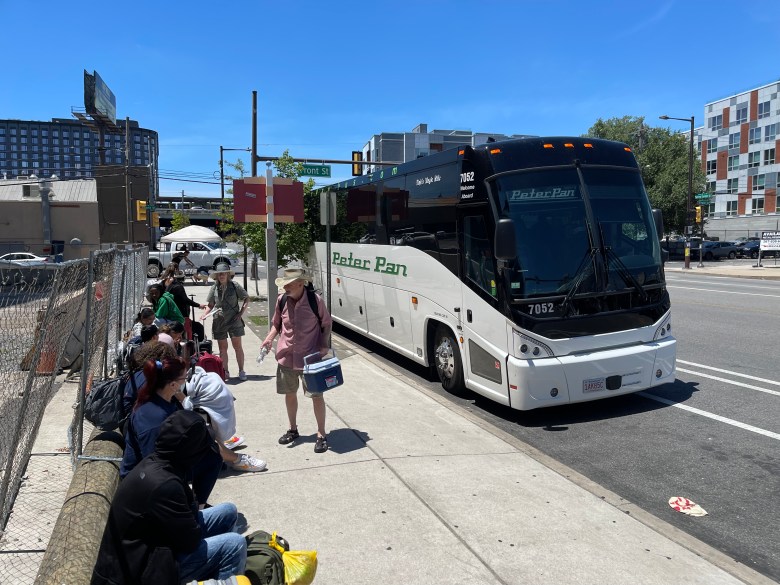 Transit activists handed out bottled water to passengers waiting in the heat at Philadelphia’s intercity bus terminal on Spring Garden Street. (Meir Rinde/Billy Penn)
The new plan “represents an important investment in people, connection and dignity. For too long, bus riders — often traveling for work, family, or opportunity — have had to navigate their journeys without the basic comfort and safety that should define every public space,” said Alex Milone of 5th Square Advocacy, a 501c4 nonprofit affiliated with the 5th Square PAC.
“A great city is one that treats every traveler with dignity, no matter how they arrive. Bringing intercity buses back to a proper terminal is a recognition that people deserve more than a curb under a highway overpass — they deserve shelter, dignity and respect,” he said.
Carroll and Lazer suggested that, since it will be operated by the city and PPA rather than a private company, the reopened station and surrounding block will be more pleasant than the old facility, which tended to attract nuisance behaviors.
New lighting and greenery will be put in around the building, and Lazer noted that the PPA’s main offices are just a block away. The city will also help staff the station.
“There’s concern that the site wasn’t kept up nicely, that there would be issues with activity that would be attracted to this site,” Carroll said. “We need to have some dialogue, to work with the neighbors and so forth. I know a lot of them are going to picture the way things were, and we’re determined that they’re going to be much better than that.”
“We expect a lot of people from around the world to be coming here for 2026, and we want to present the city in a good way,” he said.
Editor’s note: Michael Carroll’s title and the description of 5th Square Advocacy have been corrected.