
When a child is removed from their home due to suspected abuse or neglect, lots of people show up in court to tell the judge their side of the story. One voice that’s often missing, however, is the child’s, leaving the judge with an incomplete picture of their life.
In Lehigh County, a small number of volunteers are trained to fill that gap. Court-appointed special advocates visit children in foster homes, talk to their teachers and doctors, and then report back to the judge.
“They are quite literally the eyes and ears of the court,” Lehigh County President Judge Douglas Reichley said. “The close rapport they create with the child allows the CASA to see the case from the child’s point of view, instead of relying on the word of the adults involved in the case, who may have competing interests. That’s a very valuable portrayal of what’s happening.”
Lehigh County’s CASA program is in dire need of volunteers. There are 28 CASAs available now, and the court could use double that number, said Erin Colon, executive director of the program. Some children have been waiting for a special advocate since 2024, she said.
During the tumultuous months after a child is separated from their parents and a court case is underway, a CASA may be the only consistent person in that child’s life, Colon said.
The program especially needs male volunteers, since a large percentage of affected children are teenage boys. There are only four male CASAs in Lehigh County.
“A lot of the teenage boys we work with don’t have a strong role model in their life or never had one,” Colon said.
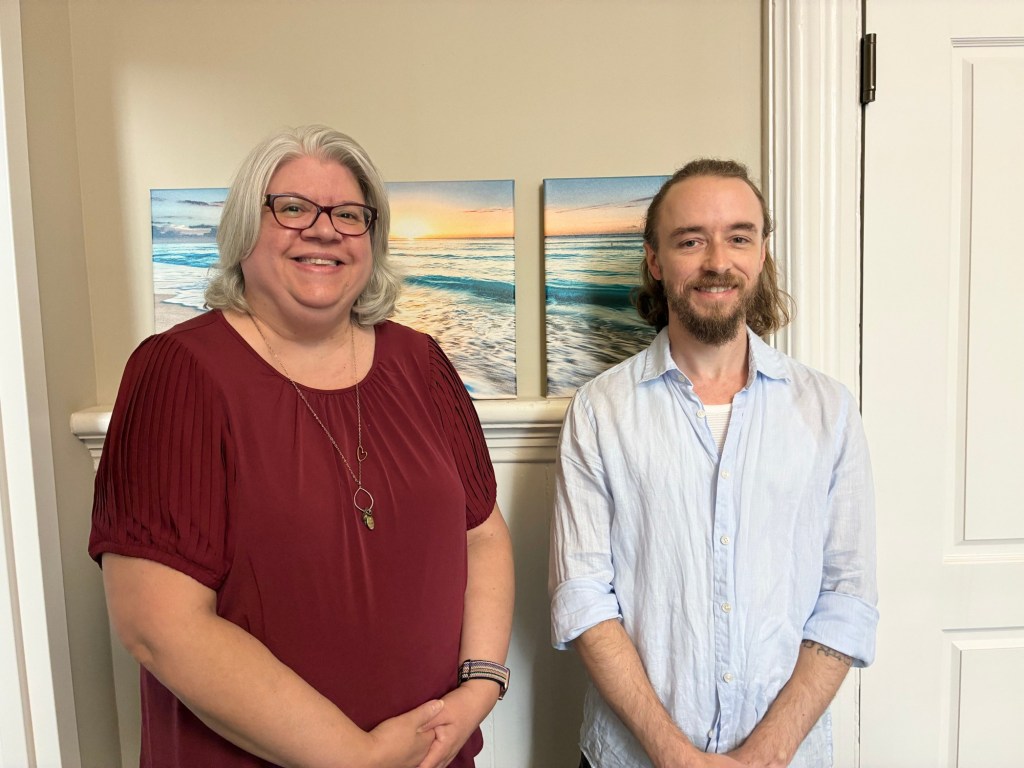
Volunteer Donnie Schultz said he was hesitant to sign up to be a CASA because he worried that his appearance would make him stand out in court.
“I have long hair, I have tattoos and I don’t fit the mold for what I thought someone who did this was supposed to look like,” he said.
Schultz, a 36-year-old localization consultant and linguist for a tech company, has been with the program for about 18 months. He said he’s had no trouble fulfilling his duties even though he sometimes puts in 60-hour weeks at his job and will soon be attending medical school.
The volunteer position appealed to him because he had first-hand experience with a similar program in Colorado, where he is from, due to a family member’s involvement in the child welfare system.
“That person was able to help us navigate the court system, and really guided us when we needed it. Being able to have a really deep impact on families and children in the same way the program had for me was my goal,” Schultz said.
Advocates are assigned only one case — a child or sibling group — at a time. They work with children who are the subject of dependency court proceedings, where a judge must decide if their parents can regain custody or if their parental rights will be terminated.
In Lehigh County, 443 children were in the foster care system in 2025, with approximately a third reunifying with their families, according to the nonprofit PA Partnerships for Children.
There are CASA programs in at least 32 Pennsylvania counties, including Berks, according to the Pennsylvania Court Appointed Special Advocates Association. Lehigh County’s program acts independently through the Court of Common Pleas and is not affiliated with the state organization. Northampton County does not have a CASA program.
Tricia Wilson, 55, of Allentown has been a CASA volunteer since 2015. She became interested in the program after taking a mission trip to Romania with the church she attended when she lived in Charlottesville, Virginia.
Wilson said she was moved by meeting Romanian children in need, and thought about returning to that country to help further. A friend encouraged her to look for more local opportunities, and she found the CASA program.
Wilson said she was struck by the chaos the children endure. One of the first foster kids she was assigned, a 7-year-old girl, ran and hid when she arrived to visit.
“She thought I was someone coming to take her away,” Wilson said. “So I really had to work hard to build a rapport. She didn’t know who she could trust, she didn’t know what was next for her.”
Wilson, who works in healthcare education, said she encourages anyone looking for a rewarding volunteer experience to consider being a CASA.
“There are times when I feel like my heart is breaking, but all the other times make up for that,” she said. “When I can see a kid who is succeeding, who is getting ready to graduate, or they’re going to prom and they’re so excited, all of these pieces of their life that you get to see and celebrate with them, that makes it worth it.”
CASA volunteers must be at least 21, be able to pass a background check, complete a 40-hour training program and commit to spending 10-15 hours a month on a case. Applications are available on the Lehigh County Court website: lccpa.org/department/casa/