
Susan Magnotta’s plight is an easy one for all Northeast Pennsylvanians to get behind.
A data center was proposed for construction just a shade more than half a mile from her property. She had concerns over what the construction would do to a stormwater runoff system she insists already negatively affects her home. She also cited the Mount Rushmore of data center concerns — potential pollution, strains on utilities, threats to nearby wildlife and decreased property values — as reasons to make sure her concerns were aired at public hearings.
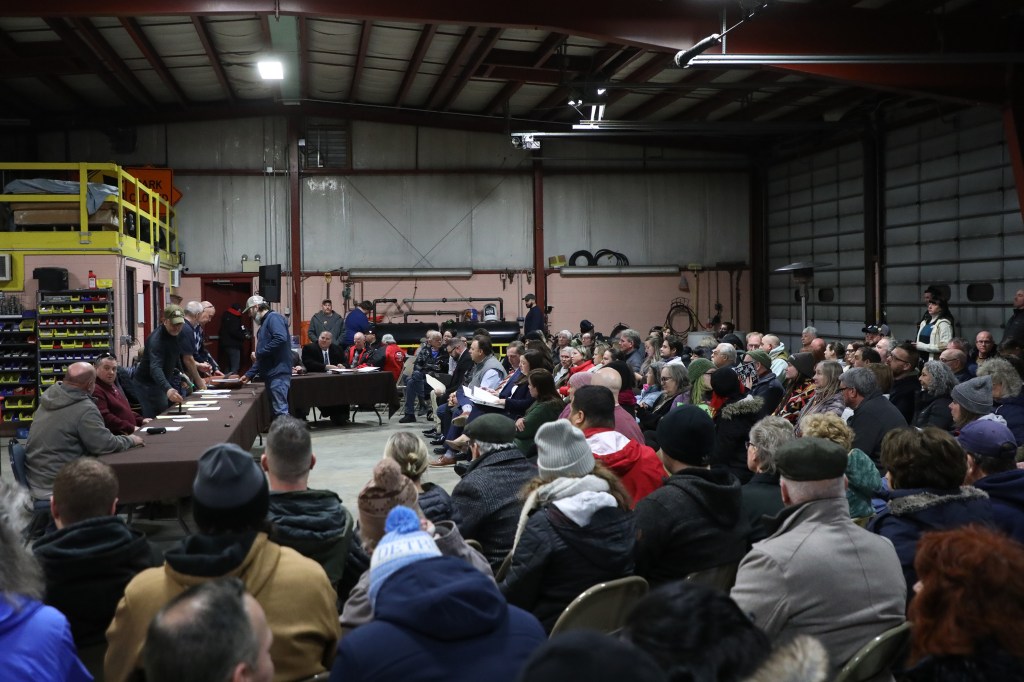
Her daughter, attorney Laura McGarry, made a motion at one of those hearings in January, asking for a dismissal of an application for a zoning change that would have permitted the proposed data center campus. And, the board in charge sided with her.
On paper, it’s a win for concerned citizens and a loss for a controversial industry trying desperately to force a presence throughout the region. But really, it is a situation that could — and should — be looked at from every different angle, through a variety of potential issues and concerns. That is why we believe any court ruling resulting from the legal challenges filed over it in the Lackawanna County Court of Common Pleas is well worth monitoring for citizens, business owners and community leaders throughout the region.
We find this to be a data center-based issue that ultimately isn’t exclusively about data centers.
Magnotta, after all, is a Scranton resident, and the six data-center campus proposed by Scranton Materials LLC would be located at 819 Newton Road in Ransom Twp. Ransom Twp. borders Scranton and looms over Magnotta’s property, but Scranton Materials LLC filed suit about the supervisors’ decision not to grant the zoning change. It argues, in part, that Magnotta had no standing to challenge the proposal, because she is not a Ransom Twp. resident or one living in close enough proximity to the proposed site to deserve a say.
As the headline in a recent story published in The Times-Tribune asked, “Can neighbors challenge data center plans in a town where they don’t live?” It really can extend even further: Should they be able to challenge plans of any kind in a town where they don’t live?
Predictably, Scranton Materials LLC argues Magnotta shouldn’t, with its attorney insisting she does not have a “substantial, direct and immediate interest” in the litigation and that “no adverse effects have been established by the proposed intervener.”
Unlike most other businesses though, it is impossible to argue that data centers don’t bring legitimate concerns for folks in communities stretching many miles beyond their proposed sites.
Data center developers operate completely different types of businesses that demand unique needs — power, water, noise and traffic considerations — be supplied at least in part at the expense of surrounding communities.Yet, they want their business to be treated like every other business that may not require that type of sacrifice from those who live outside their host communities.
We’re not sure it should work quite that way.
It should be noted that the Ransom Twp. Board of Supervisors does not oppose Magnotta’s intervention. If it did, we could have a different type of debate. It could center on governments having the responsibility to make decisions that best suit their residents, and the drawbacks of the “Not In My Backyard” stance too many folks take as a fallback at the mere proposal of many useful development projects towns need.
However, the data center debate continues to be an outlier when it comes to community action.
It breeds immense interest, compels strong feelings and it does so over wide swaths of area in regions like ours, where so many proposals have made their way to councils or supervisors over the last 18 months.
The suggestion that a homeowner in one town doesn’t have a “substantial, immediate or direct interest” in a six data-center campus proposed for a 251-acre property less than a mile away from her residence is asinine. Arguing against that right in court is self-serving, a demonstration of how little data center developers actually want to go through the trouble of convincing residents that their plans are actually beneficial for all communities.
Quelling free speech on the grounds of invisible lines drawn through backyards is wholly un-American. So, on this particular issue, it feels like the right thing to do is encourage discussion by those obviously most affected.
Borders should not restrict those worried about the effects of data centers on their property, their neighborhoods and their lifestyle from expressing those concerns to decision-makers.