
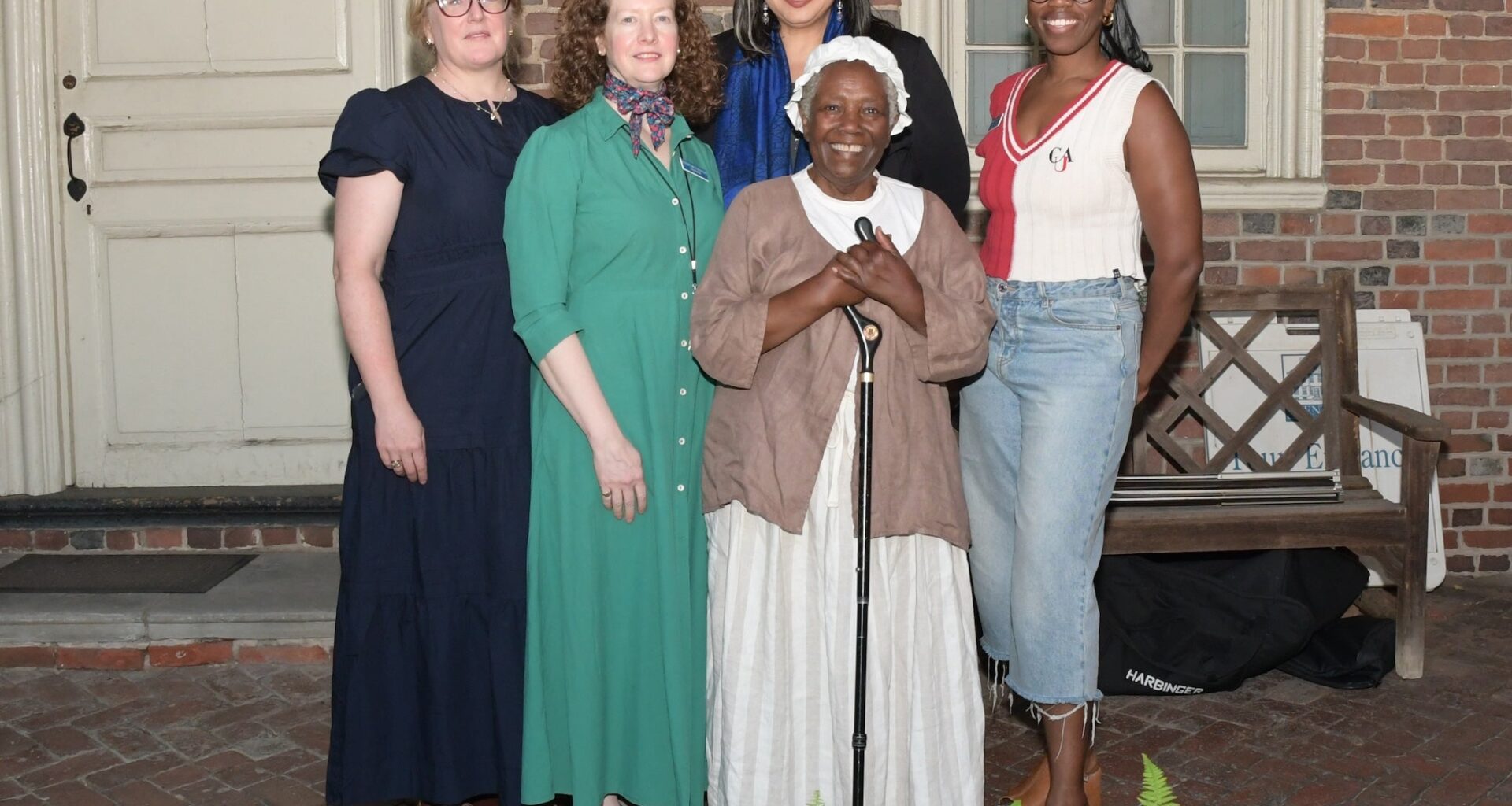
Many visitors to Stenton, Keim noted, are surprised to learn that members of the Logan family practiced slavery while they belonged to a religious community that would eventually become associated with abolition.
“We think of Quakers as abolitionists,” she said. “Many people would be surprised when they realized that the Logans were Quakers — that they were also enslavers.”
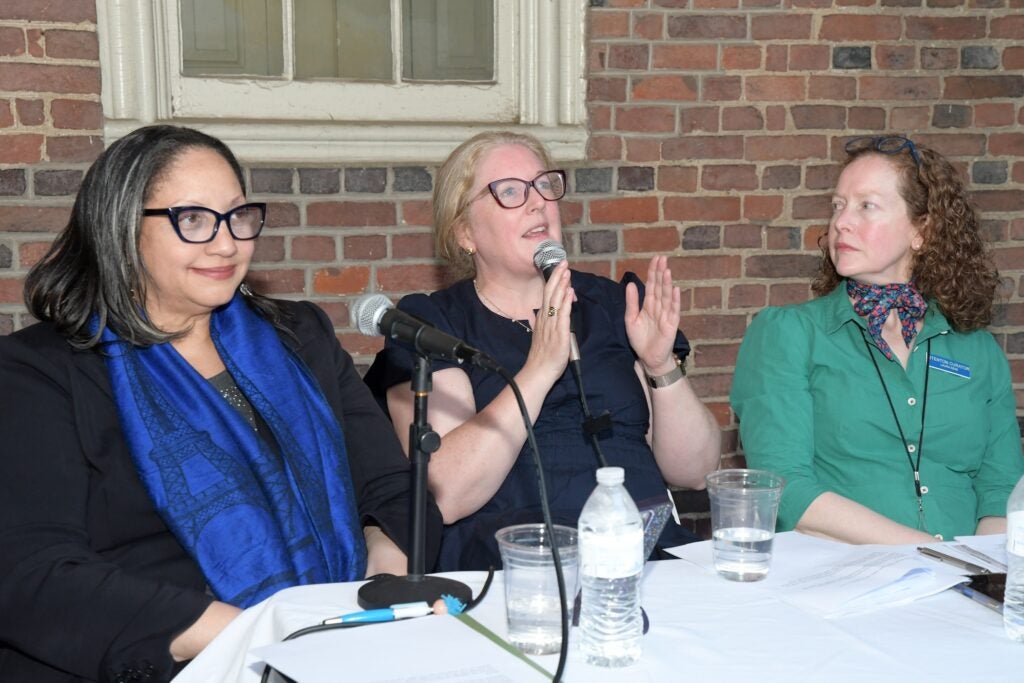 From left, panelists Sarah Glover, Emma Hart and Laura Keim discuss the impact of the Revolutionary War era on Germantown in Philadelphia. (Marissa Weekes Mason for WHYY)
In reality, attitudes toward slavery evolved slowly.
Hart described the efforts of early antislavery activists such as Benjamin Lay, a radical Quaker who publicly protested against slavery decades before abolition became a mainstream cause.
“He was too radical for the Quaker congregation at that time,” Hart said. “They ejected him for his very firm antislavery stance … I think it’s also important to say that these Quaker abolitionists were not really in majority yet by the time of the Revolution.”
‘I want my freedom’
Unlike many enslaved people who escaped or purchased their freedom, Dinah repeatedly pressed her enslavers to free her. Gardner-Hammond captured that determination in her performance.
“I want my freedom, and I want it now,” she declared. “I want to be able to come and go when I get ready. I want to wear the clothes that I want to wear. I want to have some time when I have time.”
Eventually, the Logans relented. Dinah was freed in 1776, the same year the Declaration of Independence was signed.
Historians know that from Dinah’s manumission, the formal, voluntary act of a slaveholder freeing an enslaved person.
“We have a copy of it on site here, and it literally says, ‘and William and Hannah are signing off on this, she having requested us to let her have her freedom,’” Keim said. “So she’s all about dissent, really.”
Dinah’s most famous act came later during the turmoil of the Revolutionary War. With much of the Logan family absent and military forces moving throughout the region, Dinah remained at Stenton as its primary caretaker. The estate became a strategic location during the conflict. Gen. George Washington and his troops camped there in 1777, and British forces later occupied the area.
One evening, Dinah encountered two British soldiers who arrived at Stenton with orders to burn the property.
According to the story passed down through generations, the soldiers were drunk and careless. After learning their intentions, Dinah directed them toward the barn under the pretense of helping them find hay and straw.
When they entered, she locked them inside. Soon afterward, a British patrol searching for deserters arrived.
“Yes sir,” Dinah told them. “There’s two right there in our barn.”
The soldiers were arrested and taken away, and Stenton was spared.