
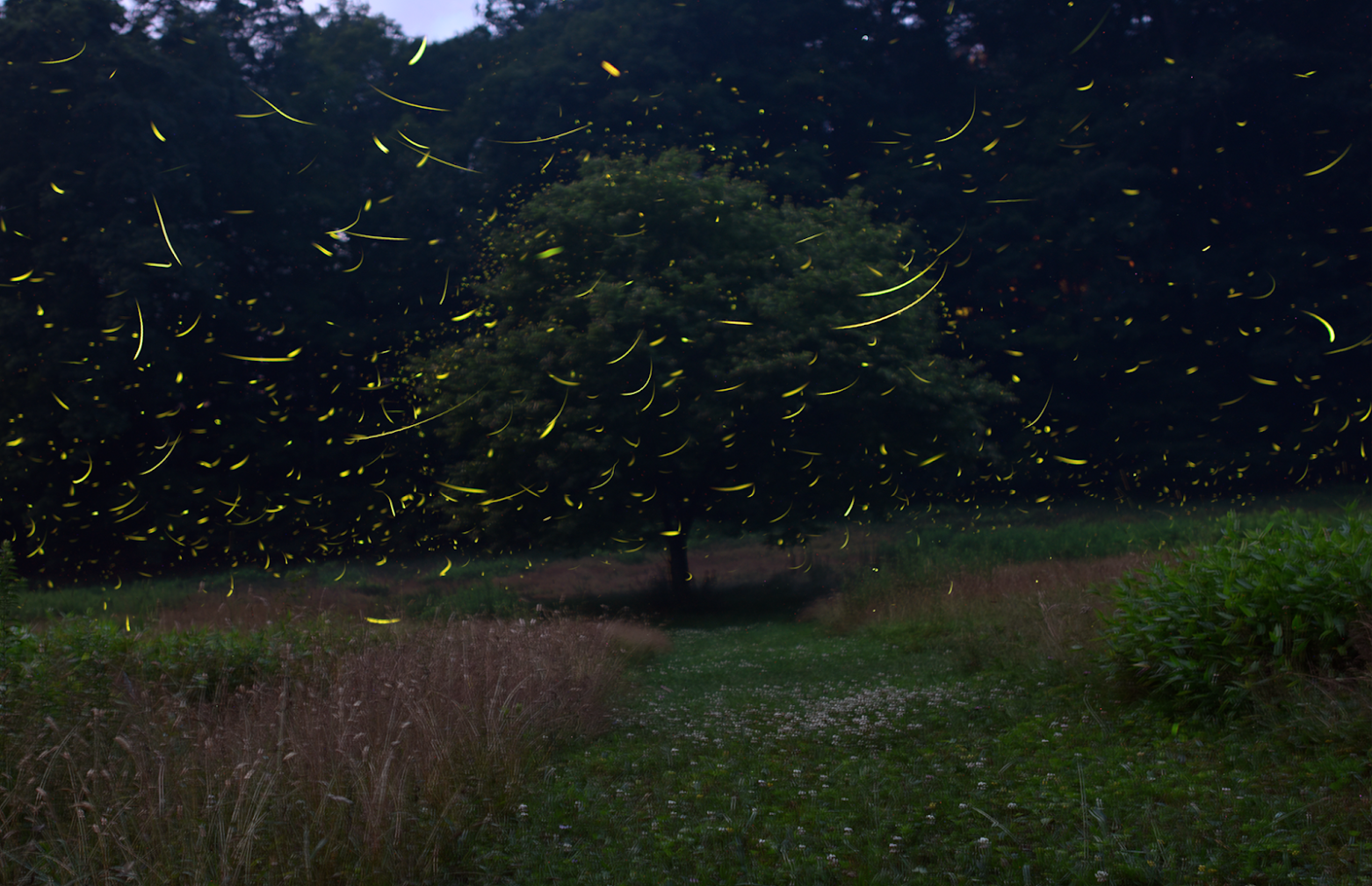
In the Allegheny National Forest, love is lighting up the night.
The forest hosts at least 15 species of fireflies, all of which spark in the dark this time of year. These lightning bugs will be the stars of the 14th Annual Pennsylvania Firefly Festival in Tionesta, Pa., on June 26 and 27. The festival’s guided nocturnal sightings are already booked up, but there’ll be free daytime nature exhibits, music and other happenings in honor of fireflies.
Peggy Smith Butler, who cofounded the nonprofit festival with her husband, Ken, marvels at the dazzle of an insect an inch long or less. “How can this little creature carry so much energy,” she asks, “and yet be so small and unassuming and gentle?”
The forest’s species include synchronous fireflies, whose males flash in unison; Chinese lanterns, which have never been found anywhere else; and Pennsylvania fireflies, the commonwealth’s official insect.
The Alleghenies are ranked by Mental Floss as one of the world’s 10 best places to see fireflies. The festival has drawn ecotourists from Africa, Asia and Europe.
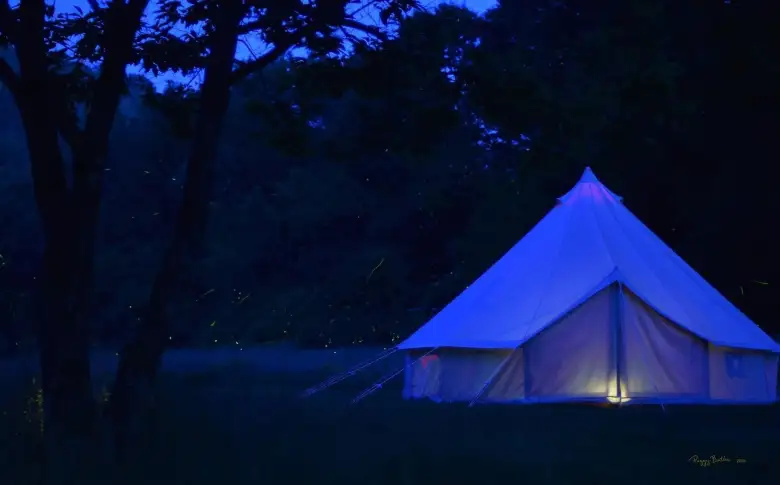 A tent surrounded by fireflies at night at the firefly festival. Photo courtesy of Pennsylvania Firefly Festival.
There are at least 2,400 species of fireflies in the six continents besides Antarctica, with new varieties still being found. But many are endangered. The Xerces Institute for Invertebrate Conservation blames development, pesticides, light pollution and climate change for reducing the number and variety of fireflies, along with many other insects.
Fireflies aren’t really flies but beetles. They make light with oxygen, a pigment called luciferin and an enzyme called luciferase, both terms alluding to Lucifer’s flames in Christian mythology.
They light up with nearly 100 percent efficiency, giving off little heat. That’s 10 times more efficient than an incandescent bulb. In some species, even the eggs and larvae glow.
The aerial show can begin in mid-May and last into September. Males tend to fly high and flash brightly. Females stay low and reply more dimly. The creatures sometimes lure not mates, but entrees. They also flash to warn predators about their paralyzing venom or unappetizing taste.
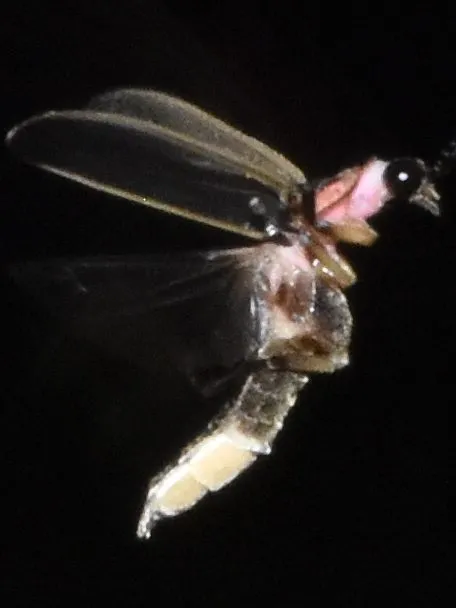 A close up of a Pyralis, one of the most common types of firefly. Photo courtesy of Pennsylvania Firefly Festival.
The Butlers started the festival on their farm after surveyors documented the wealth of fireflies there and elsewhere in the Alleghenies. Soon the festival was drawing crowds of more than 1,000 people, overburdening the habitat and its occupants. So the couple moved the event to more public, developed sites.
This year’s guided sightings will take place outside the Tionesta Lake Information Center. Fireflies prefer warmth and humidity, but not storms or fog. Some past viewings have been delayed by weather, but none have been canceled so far. Just in case, June 28 will be a makeup date.
The daytime events will take place from noon to 6 p.m. on June 26 and 27 at Market Village on Elm Street between Walnut and Bridge streets in Tionesta.
During the year, volunteers from the festival visit schools and other institutions around the state to talk up fireflies and the environment. They encourage homeowners to turn off lights at night, avoid lawn chemicals and let fallen leaves and branches lie. “The less you do to your lawns and gardens,” says Butler, “the better fireflies like it.”
Sarah Lower, one of the Allegheny surveyors, now an associate professor at Bucknell University and a festival director, says of the Butlers and ecotourism, “They’ve become real leaders in how it can benefit local communities but also environmental conservation.”
Next January through March, visitors may apply to enter an April lottery for spots in one of that summer’s viewings. Each spot costs $50 for a visitor age 12 or older. Children under 12 are free.
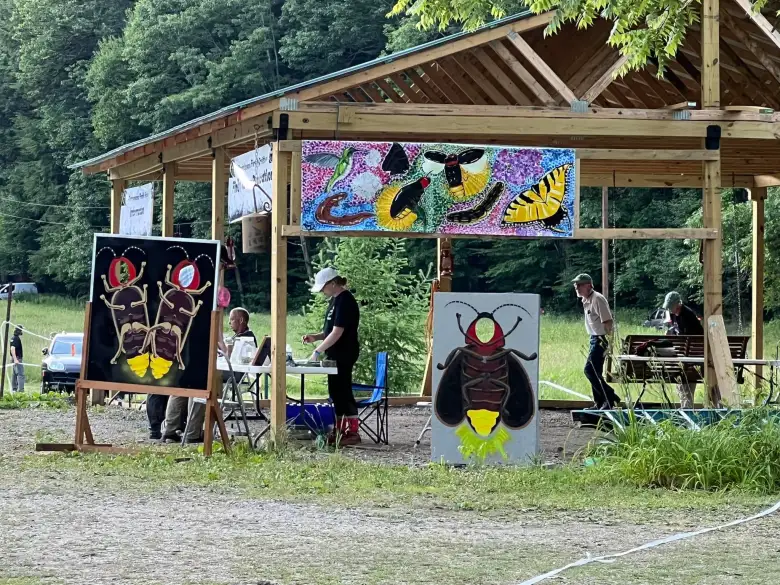 Firefly-inspired art. Photo courtesy of Pennsylvania Firefly Festival.
Much is unknown about fireflies, which are hard to find except during those brief flashes. The state of Pennsylvania recently gave $30,998 to scientists from the Conemaugh Nature Conservancy, Penn State University and the University of Florida to inventory the state’s more than 30 species.
For more about fireflies, visit Firefly Conservation & Research or see a National Geographic video. For more about their range and to help survey them, see the Firefly Atlas.