
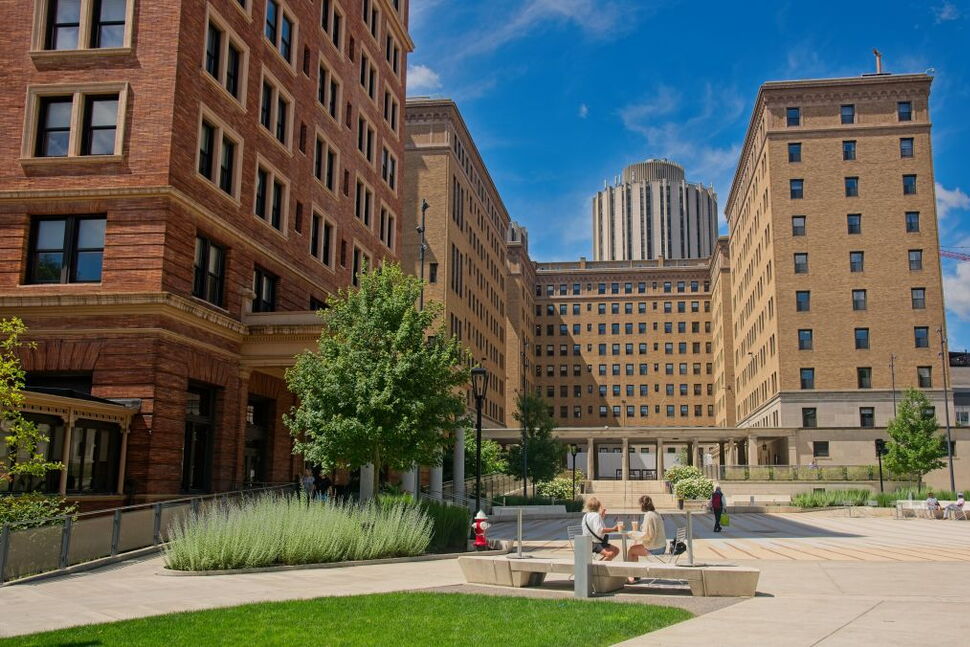
The Trend: Meticulously manicured quads are quintessential features on college campuses. But as environmental and climate concerns grow, many schools are shifting (or returning) to native plants. This “rewilding” includes introducing pollinator habitats, which are not only for bees, but also birds, butterflies, beetles and other helpful creatures.
Exhibit A: Native ecology is a significant part of a larger sustainability plan at the University of Pittsburgh. Sam Chan, assistant director of sustainability, says planting native vegetation is key to cultivating sustainable landscapes that enrich ecosystems vital to environmental and human health. “[Native plants] have evolved with our region’s climate, so they require less water and have a reduced need for additive nutrients,” Chan says. They also offer “foraging and nesting sites for wildlife species that have evolved alongside them.”
A designated Bee Campus USA, Pitt has seven pollinator gardens. In 2025, the total habitat footprint increased by 1,930 square feet. With nearly 4,000 trees and more than 38 acres of canopy coverage, Pitt is also recognized as a Tree Campus USA.
The Pros: According to the U.S. Department of Agriculture, more than 80% of crop plants require pollination. With the reported decline of honeybees, creating more habitats is good environmental stewardship. Native plants also reduce erosion and increase air quality. For urban campuses especially, biodiversity improves quality of life – for those living and working on campus and the community at large.
Rewilding also benefits the academic environment. Chan says Pitt’s campus is a “living laboratory for sustainable solutions.” In 2025, more than 1,400 students took courses with pollinator-related content. Students in GEOL 1333: Sustainability Project Management designed and planted Butterfly Bend in partnership with the grounds team. A university-wide observation of National Pollinator Month each June also builds buzz.

Get Higher Ground in your inbox each week!
The must-read newsletter for leaders shaping higher education’s future.
By clicking “Sign Up”, you will receive the latest updates, including emails, from U.S. News & World Report and our trusted partners and sponsors, and you agree to our Terms and Conditions & Privacy Policy.
The Cons: Transforming a pristine aesthetic into a wilder landscape may take some convincing. And while native plants ultimately require less maintenance, it can take years of intensive labor to establish a program. Organizations like Re:wild Your Campus and Bee Campus USA provide frameworks and resources.
Reality Check: Chan says “rewilding” and education go hand in hand: “Societal norms of manicured lawns and gardens traditionally reduce biodiversity.” She’s hopeful that, with a new appreciation of pollinator habitats, employees, students and alumni will take this knowledge into their own neighborhoods. “Through collective action, we can ensure pollinators continue to thrive and benefit future generations.”
The Upshot: Sprawling greenways are growing into sustainable landscapes at institutions across the nation. This helps ensure the survival of species vital to Earth’s ecosystem. Along the way, they beautify campuses, provide hands-on learning and educate the broader public about biodiversity.
Donna Talarico is an award-winning writer who covers higher education.