
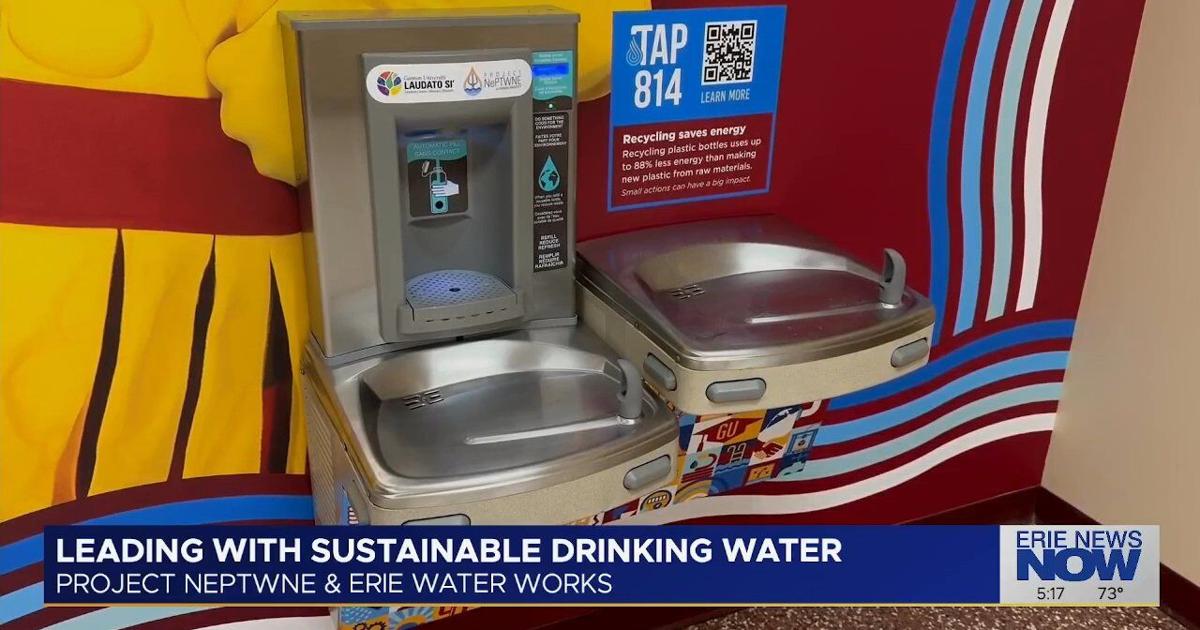
Erie Water Works and Gannon University’s Project NePTWNE have partnered to make sustainable drinking water more accessible on campus while encouraging students and staff to reduce their consumption of single-use plastics.
As part of the initiative, 5 new water refill stations have been installed across Gannon’s campus. The stations are designed to promote the use of reusable water bottles while educating users about recycling, sustainability, and the environmental impact of plastic waste.
“We need to be good stewards of our environment, our community, and promote sustainable initiatives, and that is what we’ve done here with Gannon,” said Craig Palmer, CEO of Erie Water Works.
Organizers say the project aims to reduce plastic waste and limit exposure to microplastics, tiny plastic particles that have become a growing environmental and public health concern.
“Reduce waste and eliminate, as much as we can, single-use plastics,” Palmer said. “There’s over 60 million plastic water bottles thrown away on a daily basis.”
According to Dr. Sherri Mason, Director of Project NePTWNE, choosing tap water over bottled water can significantly reduce exposure to microplastics.
“Our research lab was actually the first to look within bottled water for microplastics, and we found an average of 325 microplastics per liter of bottled water, whereas tap water only has five,” Mason said.
Mason said much of the microplastic contamination found in bottled water originates from the plastic bottles themselves.
“Our lab studies show that most of that microplastic is coming from the bottle itself, and they are being associated with all sorts of different diseases, from increases in strokes and heart attacks to increases in respiratory issues, to digestive diseases and infertility,” she said.
Project leaders say switching from single-use plastic bottles to reusable bottles and refilling them with tap water is a simple step that can benefit both personal health and the environment.
In addition to reducing waste, organizers say the refill stations help students save money, stay hydrated, and support a greener campus culture.