
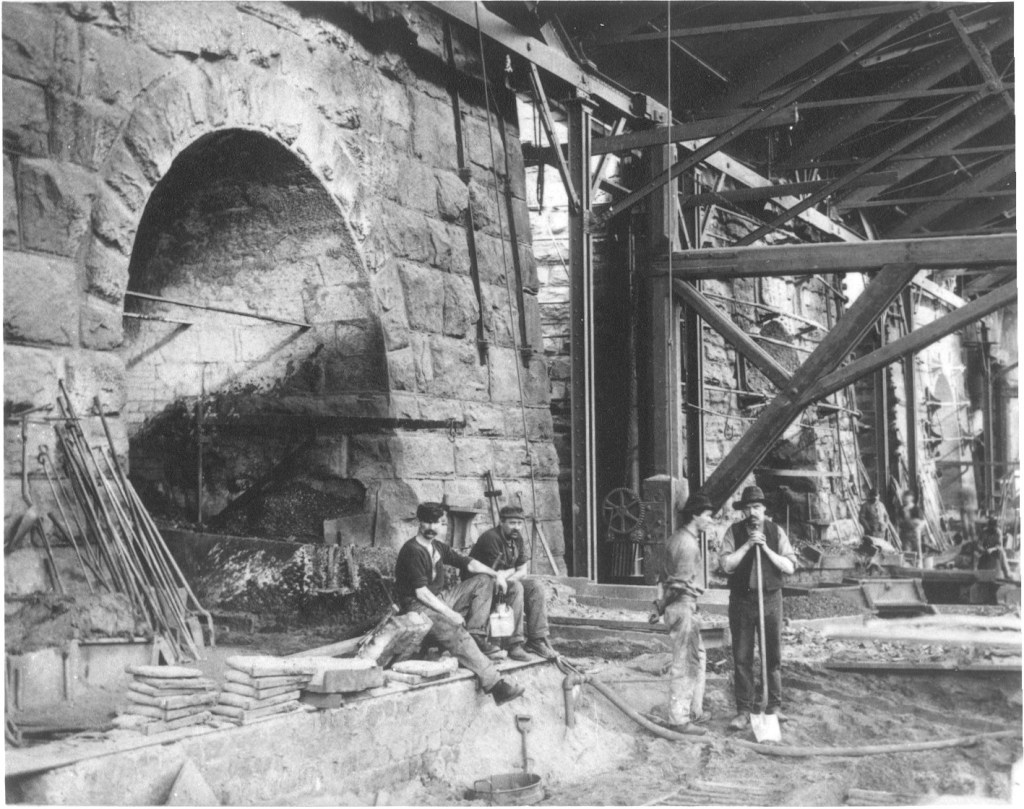
Few things show our collective history like an image. There’s an authenticity in photographs, of moments captured and preserved. Each comes with a story — some historically invaluable — others part of a tapestry left to us to stitch together, spinning the story of our region and its impact on America.
From the coal mines, to the iron furnaces, to Main streets now unrecognizable to most, photos give us a place to remember and rejoice in our accomplishments. They give us a way to see how far we have come and maybe a glimpse into how far we have to go. They show the churn of time and the remarkable progress forged by those who called Northeast Pennsylvania home.
Our story is unfinished but a glance over our shoulder can surely show us where we have been. And what a story it is.
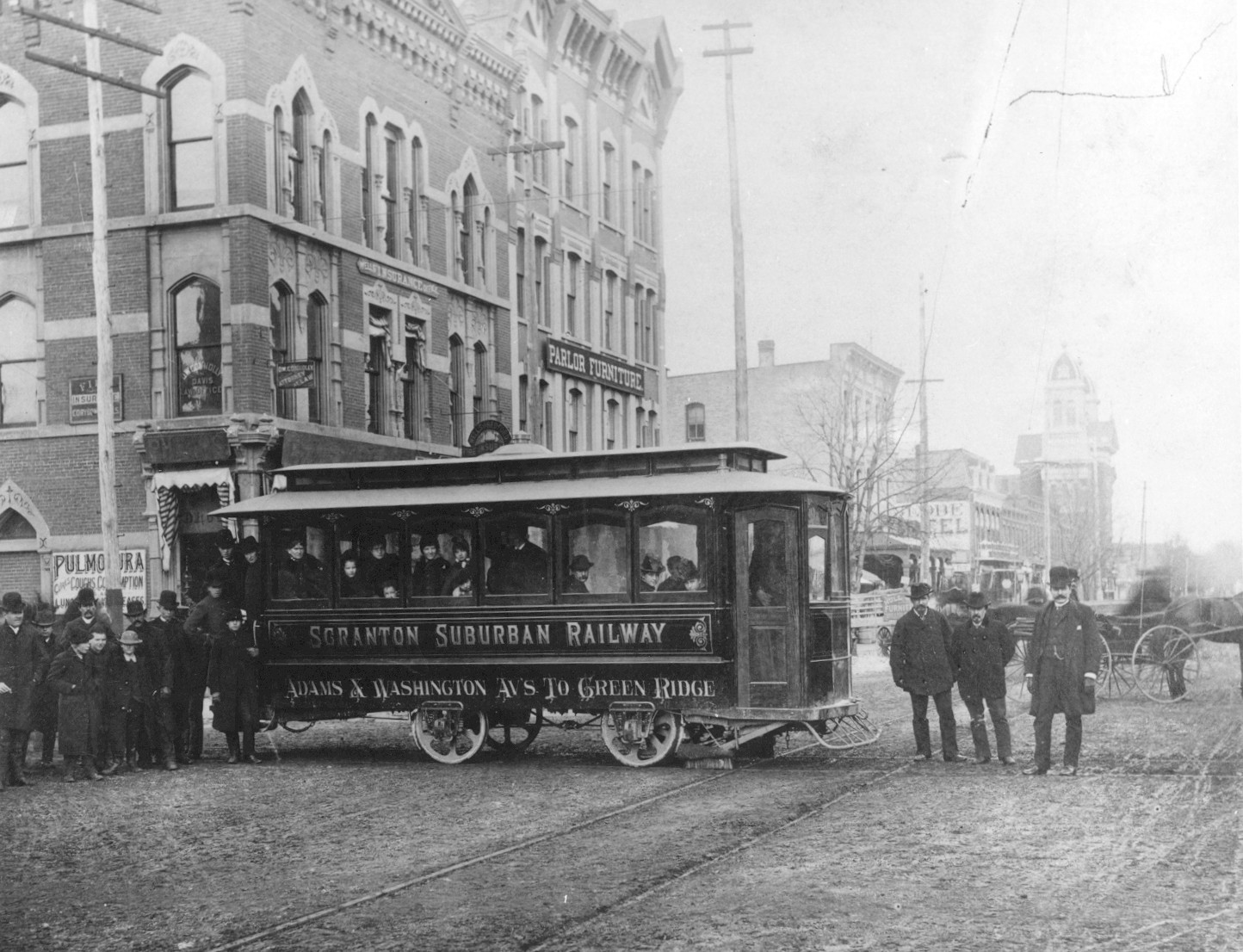
Scranton, earned the nickname “The Electric City” by launching the first continuing operating successful, all-electric trolley system in the United States on November 30, 1886. Pioneered by Edward B. Sturges and powered by Van DePoele technology, the system replaced horse-drawn cars with faster, efficient electric transit. This image shows the first city run of the street car on Wyoming Avenue. St. Peter’s Cathedral can be seen in the background. December 19, 1954, marked the last day of electric trolley service in Scranton, after 68 years of electrifying service.(LACKAWANNA HISTORICAL SOCIETY)
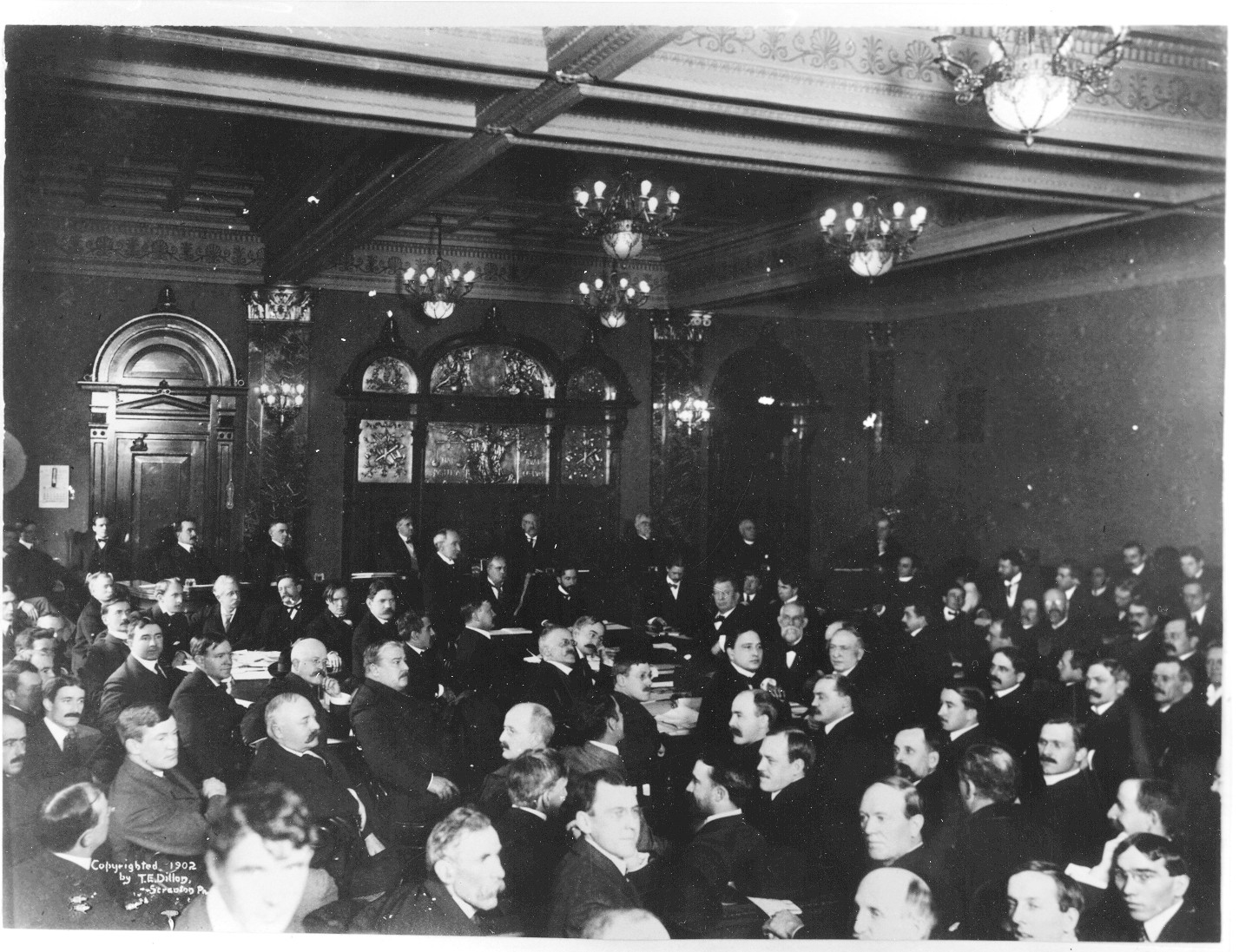
This image shows the Anthracite Mine Strike Commission in session at Scranton on November 17, 1902. The Anthracite Strike of 1902 brought national attention to the Anthracite region because it marked the first time in United State history that the federal government intervened impartially to settle labor management dispute. The formation of the Anthracite Strike Commission formed by President Theodore Roosevelt set a new standard for peaceful arbitration making the first full inquiry of the Anthracite industry. The United Mine Workers of America, under the leadership of their president John MItchell, were represented before the commission by noted attorney Clarence Darrow. (LACKAWANNA HISTORICAL SOCIETY)
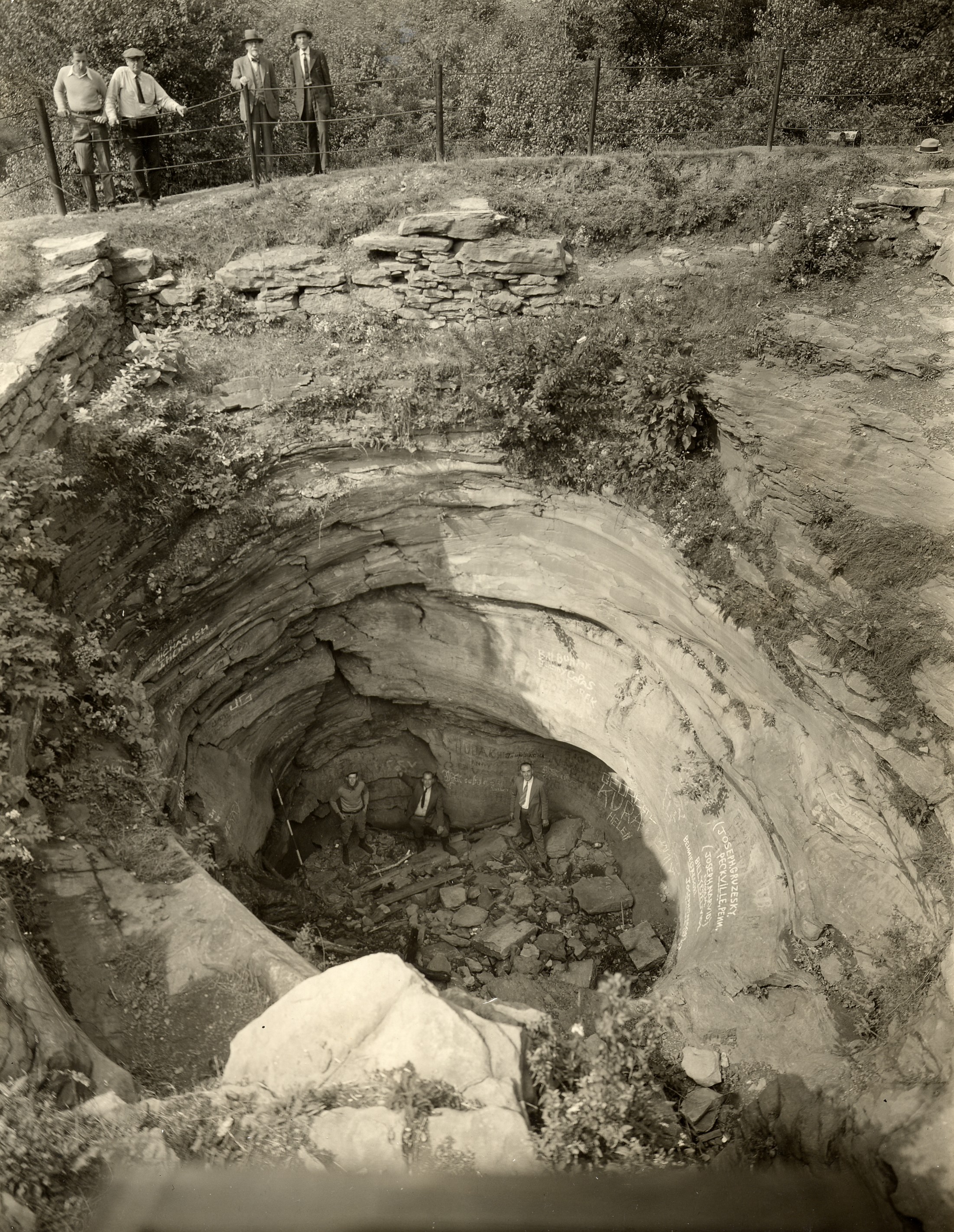
Discovered in 1884, the Archbald Pothole is considered to be one of the world’s largest glacial potholes. It was discovered by a miner on land owned by the Jones Simpson & Co. In 1914 it was donated to the Lackawanna Historical Society. For many years the Society offered tours of the site as seen in the image with Fletcher Weyburn, pictured in center at edge of the pothole with hat and beard, longtime historical society secretary leading the tour. The historical society turned it over to Lackawanna County in 1940. Today it is owned by Pennsylvania and operated as a state park. (LACKAWANNA HISTORICAL SOCIETY)
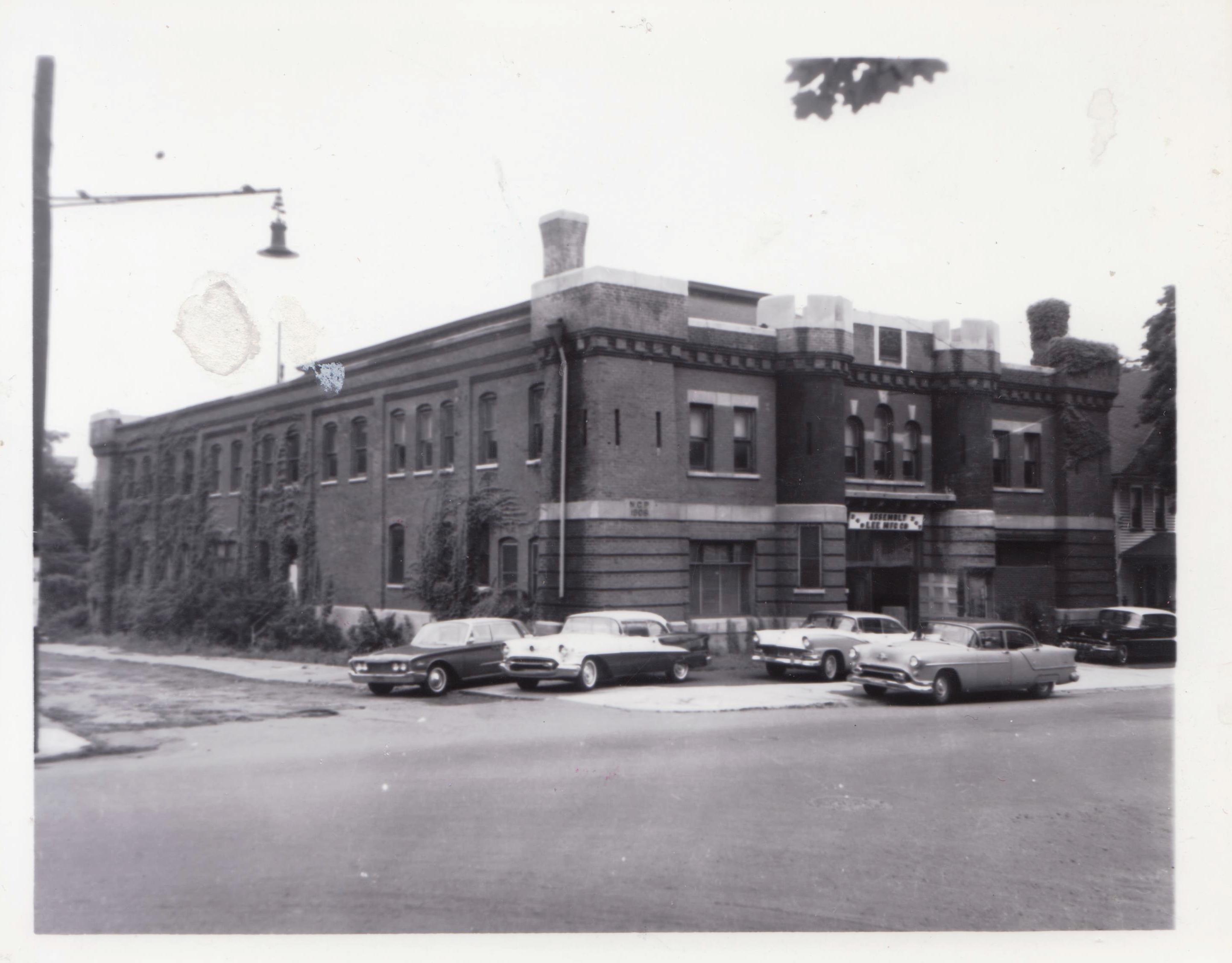
The former state armory on South Main Street early in the early 1960s. The building is now home to Sapphire Salon. (GREATER PITTSTON HISTORICAL SOCIETY)
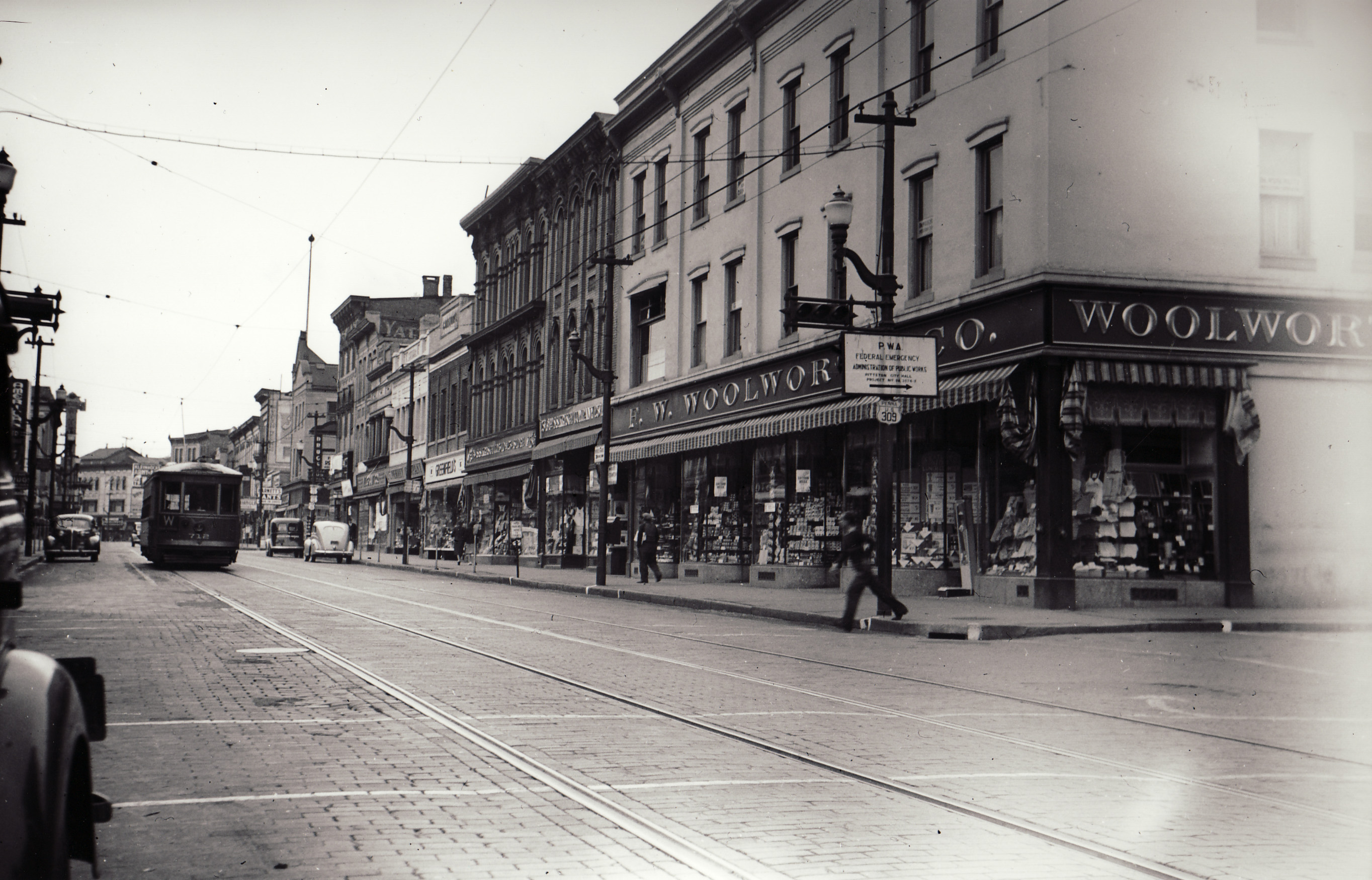
A view of the corner of North Main and Broad Streets in Pittston in 1939. (ED MILLER VIA THE GREATER PITTSTON HISTORICAL SOCIETY)
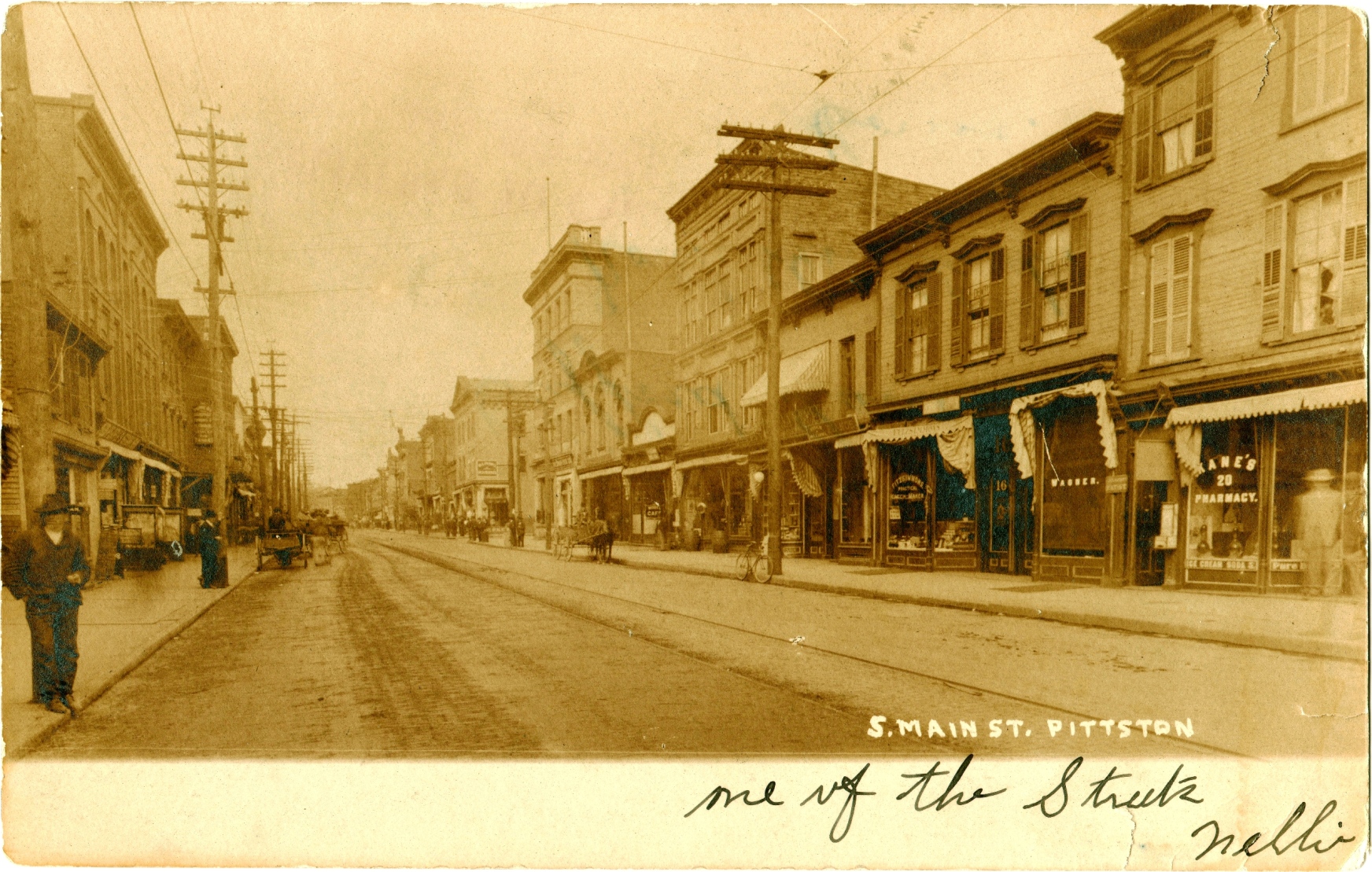
This 1907 image shows South Main Street in Pittston facing north. The photo taken across the street from the current Majestic Lunch. (W.J. HARRIS VIA GREATER PITTSTON HISTORICAL SOCIETY)
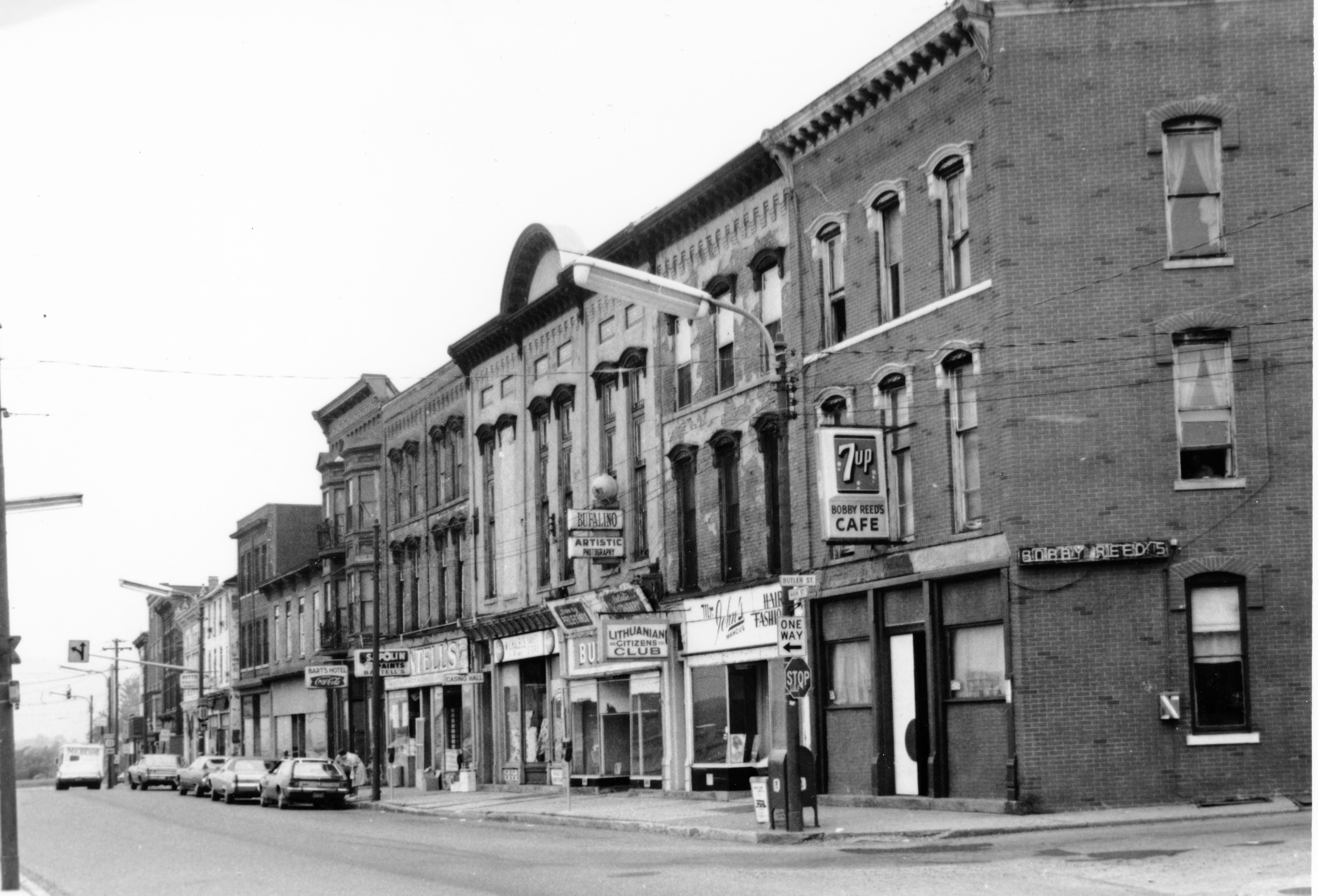
A look at the corner of North Main and Butler Streets in Pittston in the early 1970s. (GREATER PITTSTON HISTORICAL SOCIETY)

This photo from the 1960s shows South Main Street in Pittston facing north as the Erie railroad trestle crossing South
Main Street at Oak Street was being removed. (GREATER PITTSTON HISTORICAL SOCIETY)
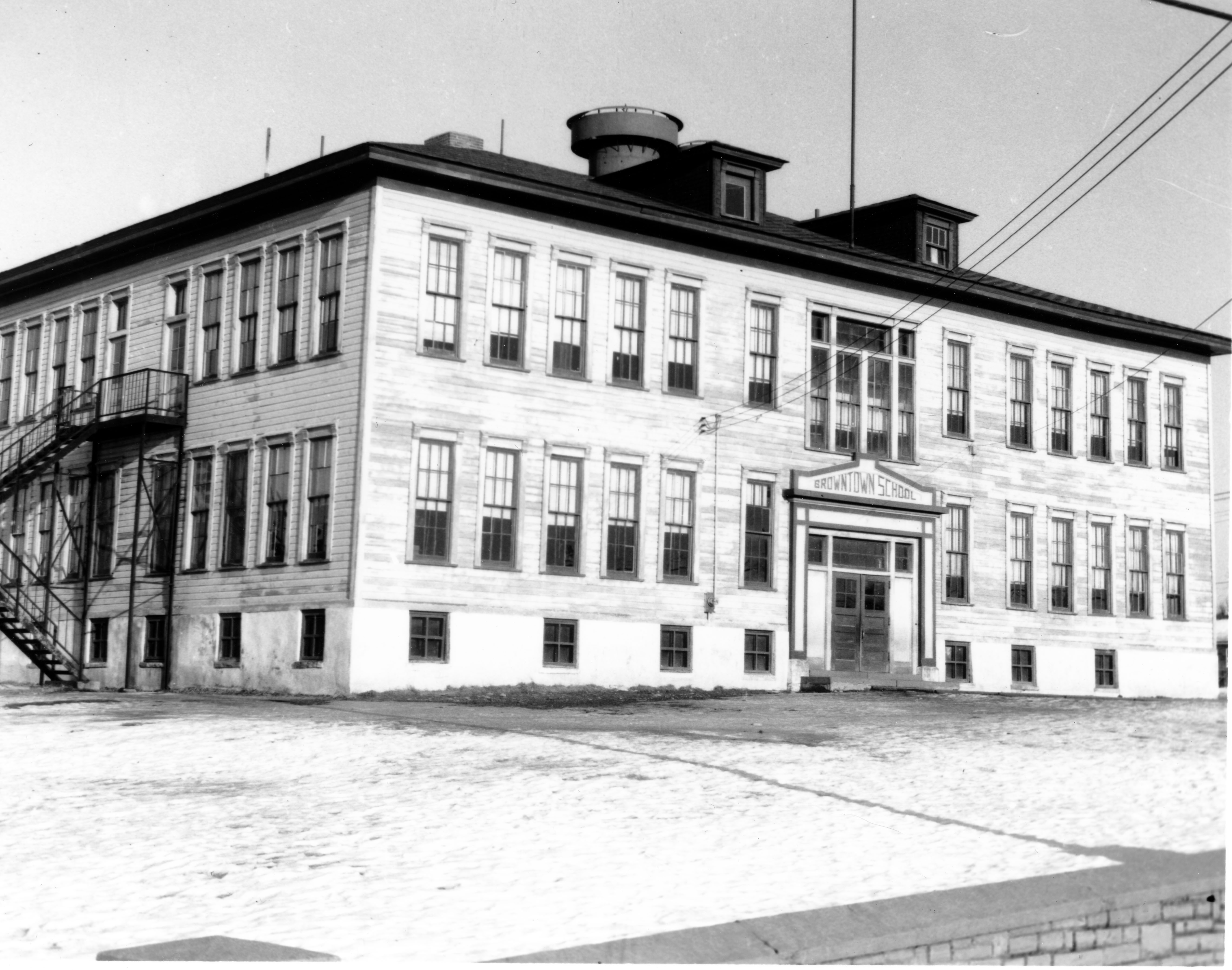
Browntown School located in Pittston Township. (GREATER PITTSTON HISTORICAL SOCIETY)
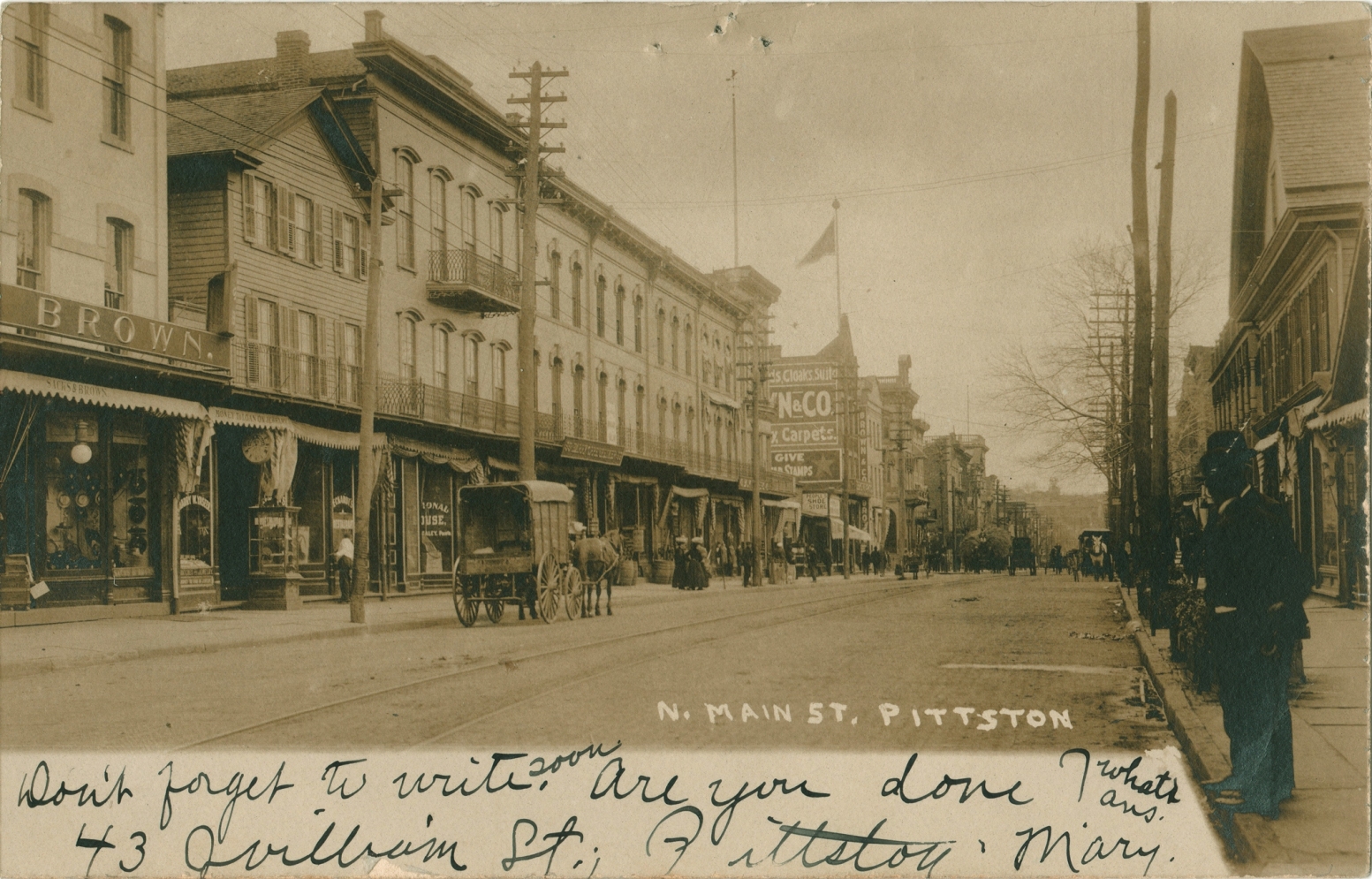
This 1907 image shows North Main Street facing south. The photo taken in front of the Eagle Hotel, later the American Theater, today the Geisinger Urgent Care building. (W.J. HARRIS PHOTO VIA GREATER PITTSTON HISTORICAL SOCIETY)
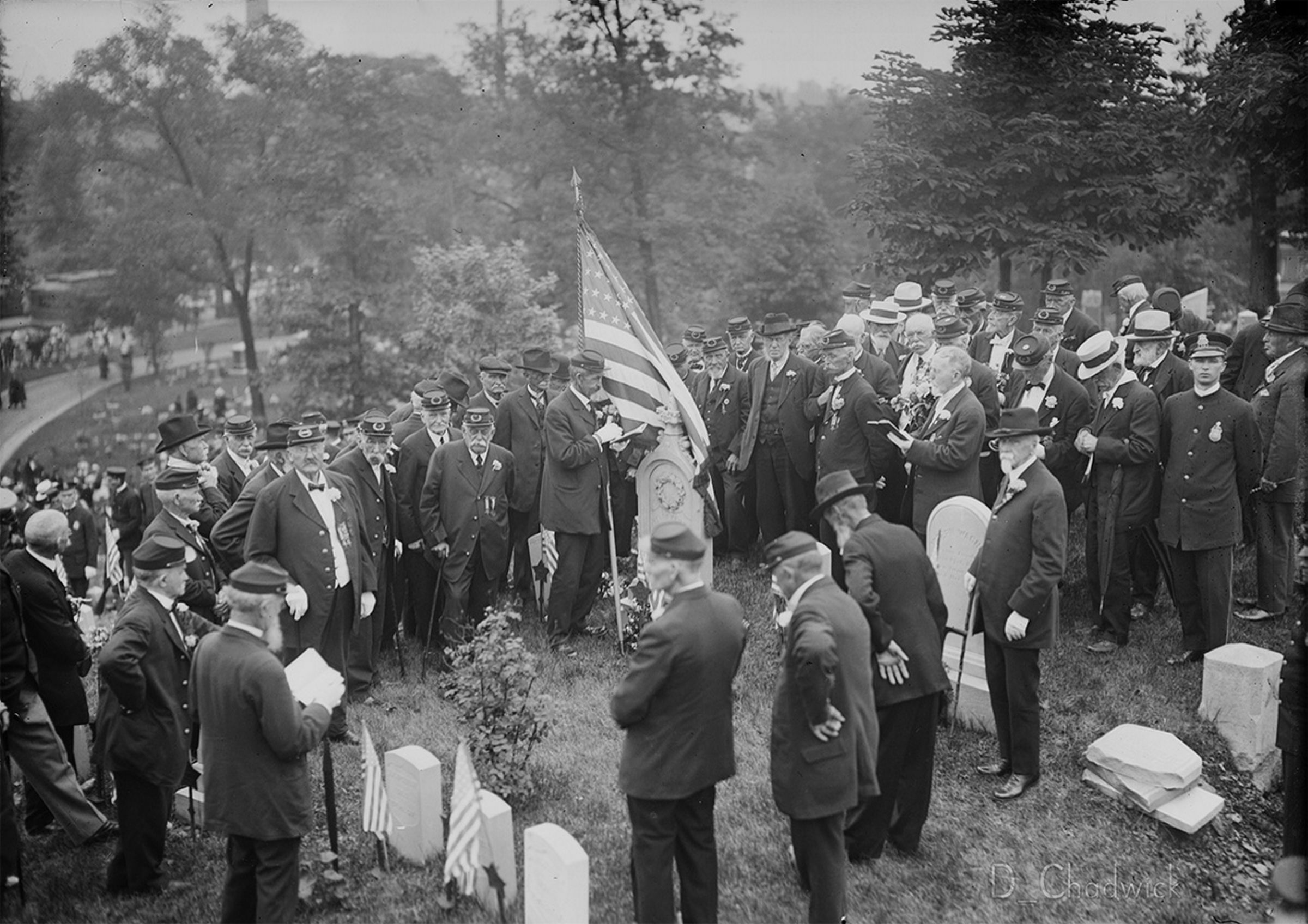
Members of G.A.R. Conyngham Post 97 in Wilkes-Barre at a reunion in the early 1920s. (LUZERNE COUNTY HISTORICAL SOCIETY)
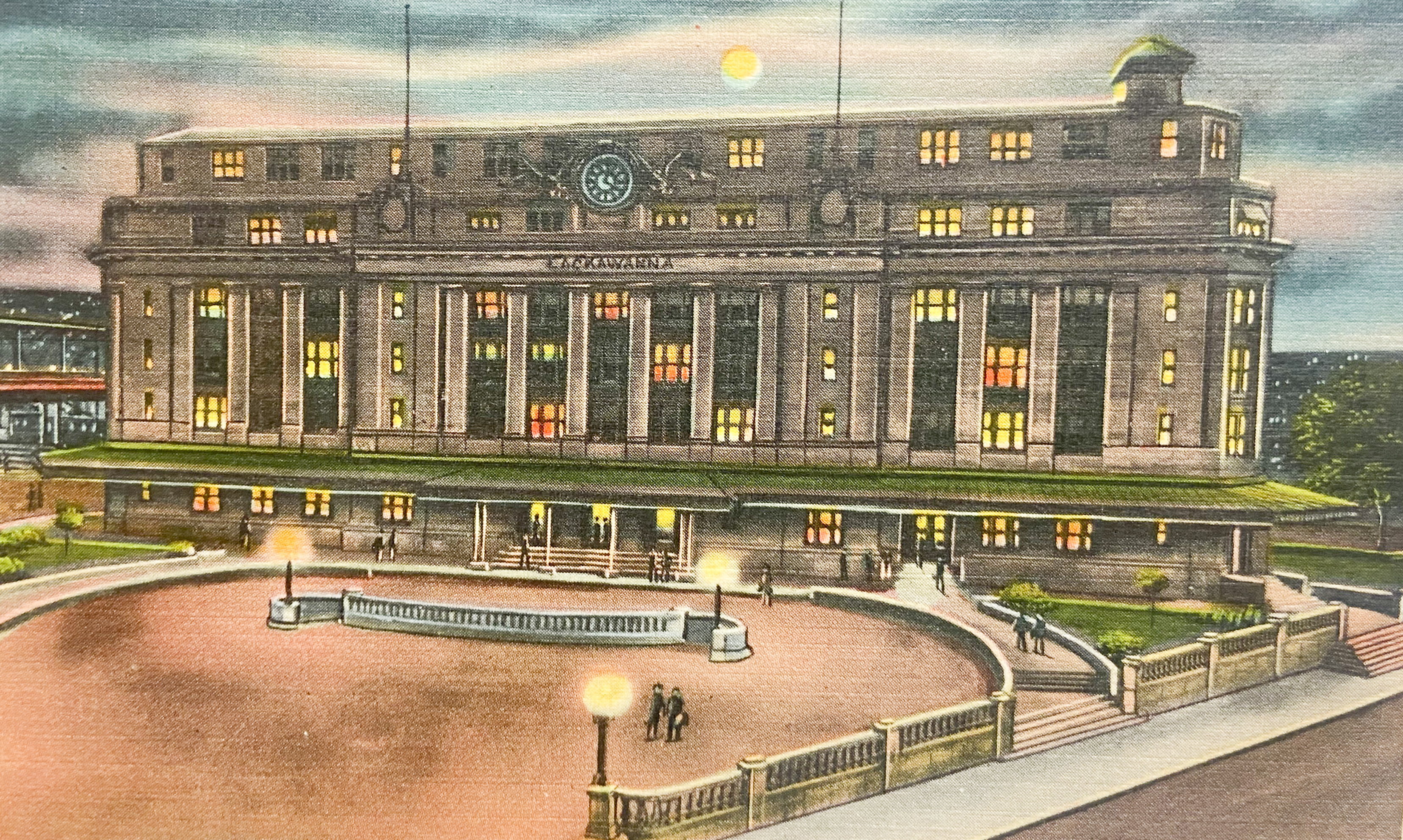
Opened on Nov. 11, 1908, the Lackawanna Station at 700 Lackawanna Ave. in Scranton was designed to be the showpiece of the Delaware, Lackawanna & Western’s line. It was designed by architect Kenneth Murchison in French Renaissance style using Indiana limestone; the main passenger areas on the ground floor were lined with tan Siena marble and green Alpine marble, and lit with Tiffany lamps. At its height, 12 passenger trains left the station daily. In the evening, the station’s warm glow welcomed passengers boarding overnight sleeper cars to New York City. (LACKAWANNA HISTORICAL SOCIETY)
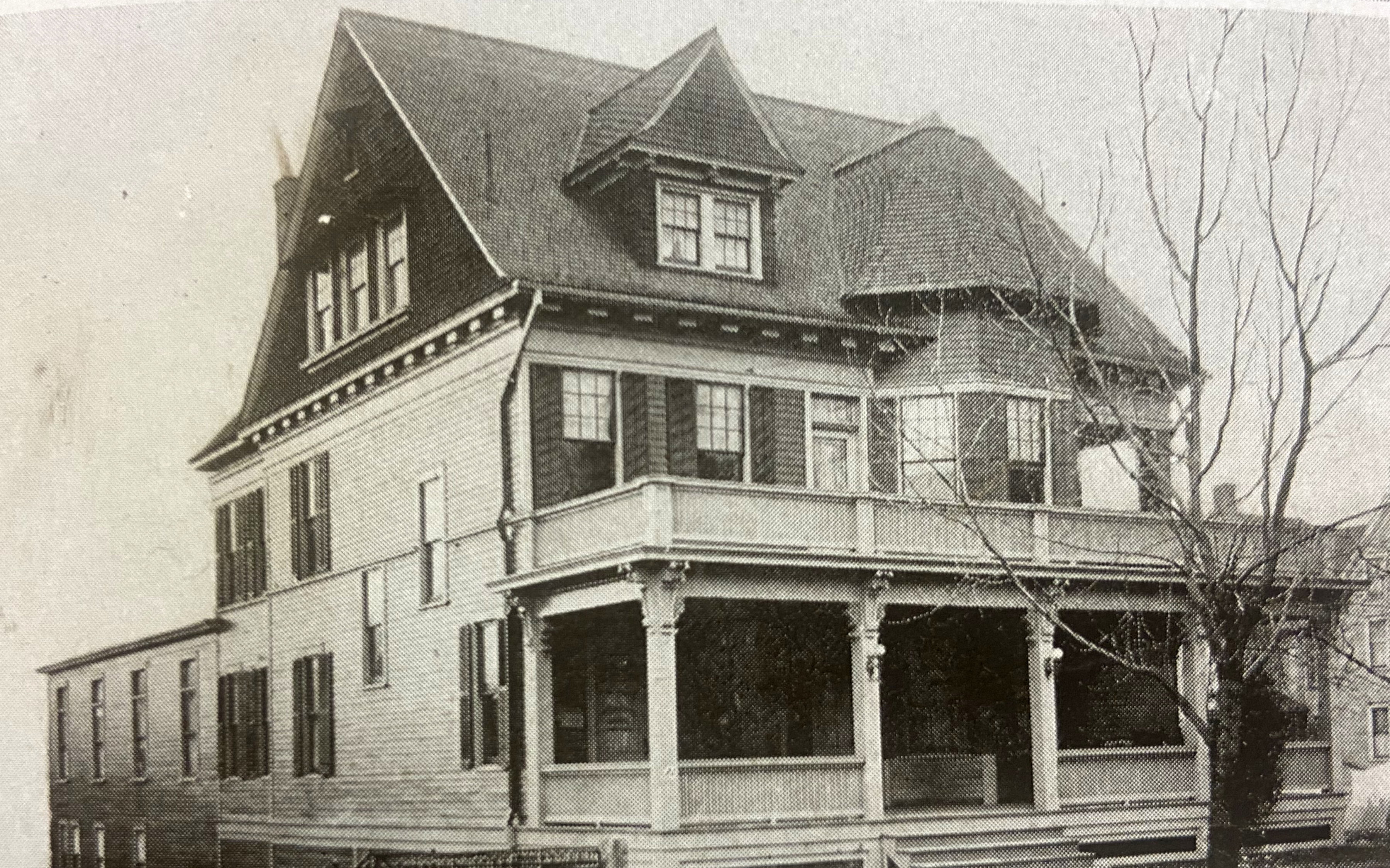
The Green Ridge Wheelmen was established in 1892 at 1645 Wyoming Ave. in Scranton as a club that admitted only cyclists. There were only 14 original members, but membership expanded to include non-cyclists after 1894. The name was changed to the Green Ridge Club in 1906. (LACKAWANNA HISTORICAL SOCIETY)
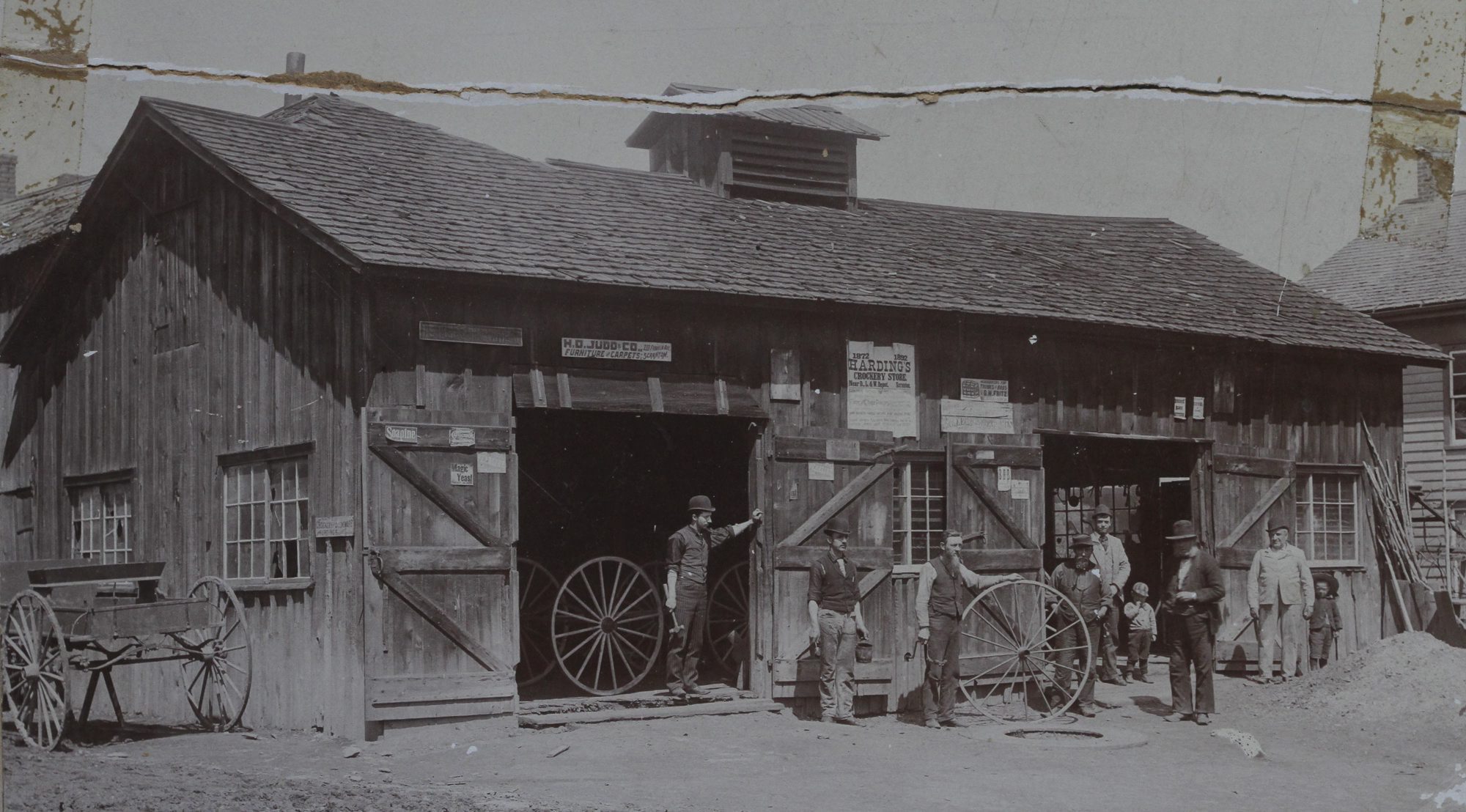
M.M. Decker & Son blacksmith shop at 1116 Lafayette St. in Scranton as it looked in 1892. (LACKAWANNA HISTORICAL SOCIETY)
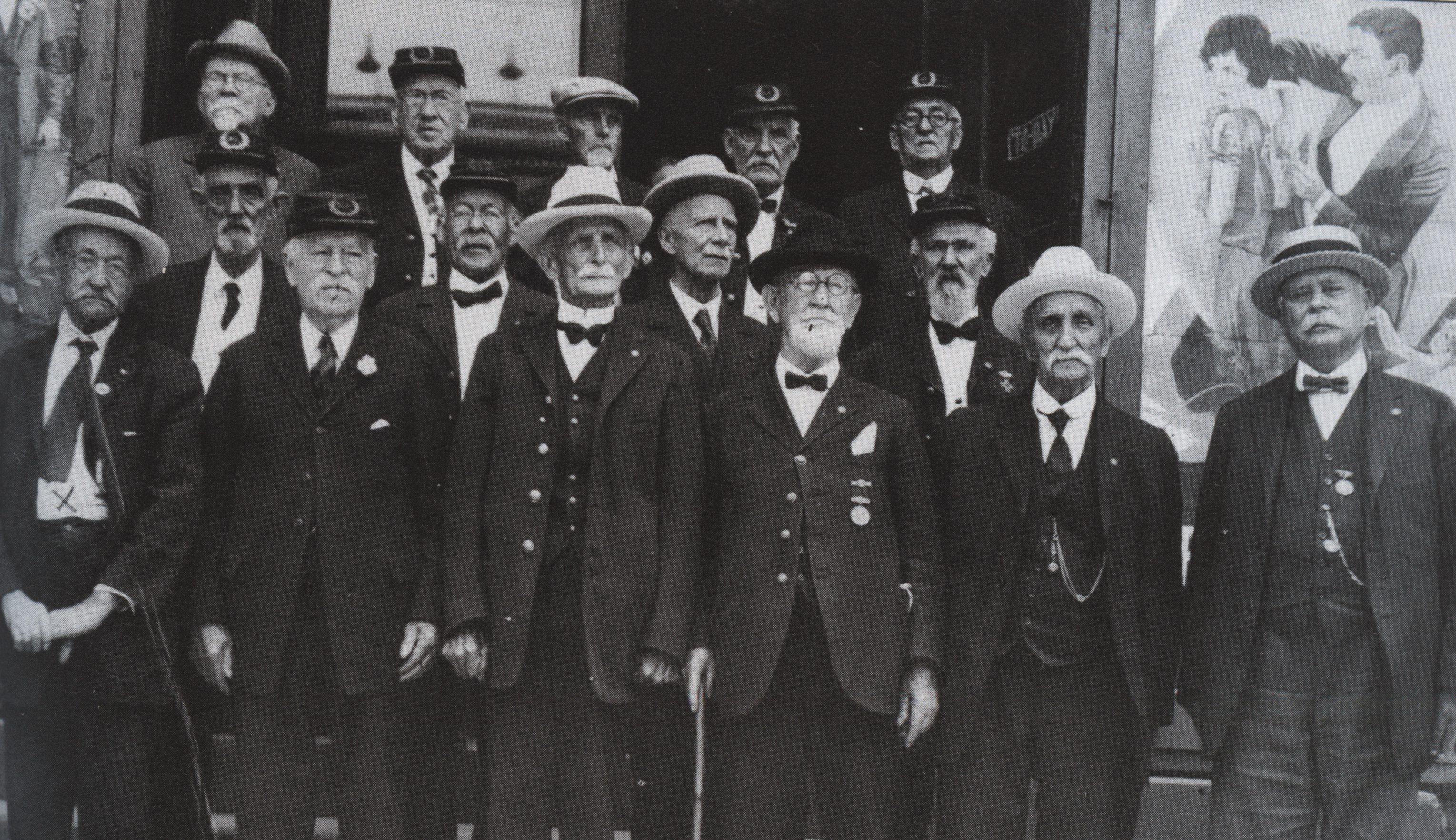
Civil War veterans from GAR Post 97 in 1925. First row, from left, are W.S. Ramsey, J. Batt, Alonzo Whitney, A.H. Brown, J.A. Baker, and L.G. Wilboner. Second row: George Detrick, S.J. Patterson, J.A. Opp and P.F. Welteroth. Third row: W.H. Swainback, John Gagin, P.M. Maxfield, H.E. Obach and Lewis Wagner. At right, members of GAR Conyngham Post 97 in Wilkes-Barre at a reunion in the early 1920s. (LUZERNE COUNTY HISTORICAL SOCIETY)
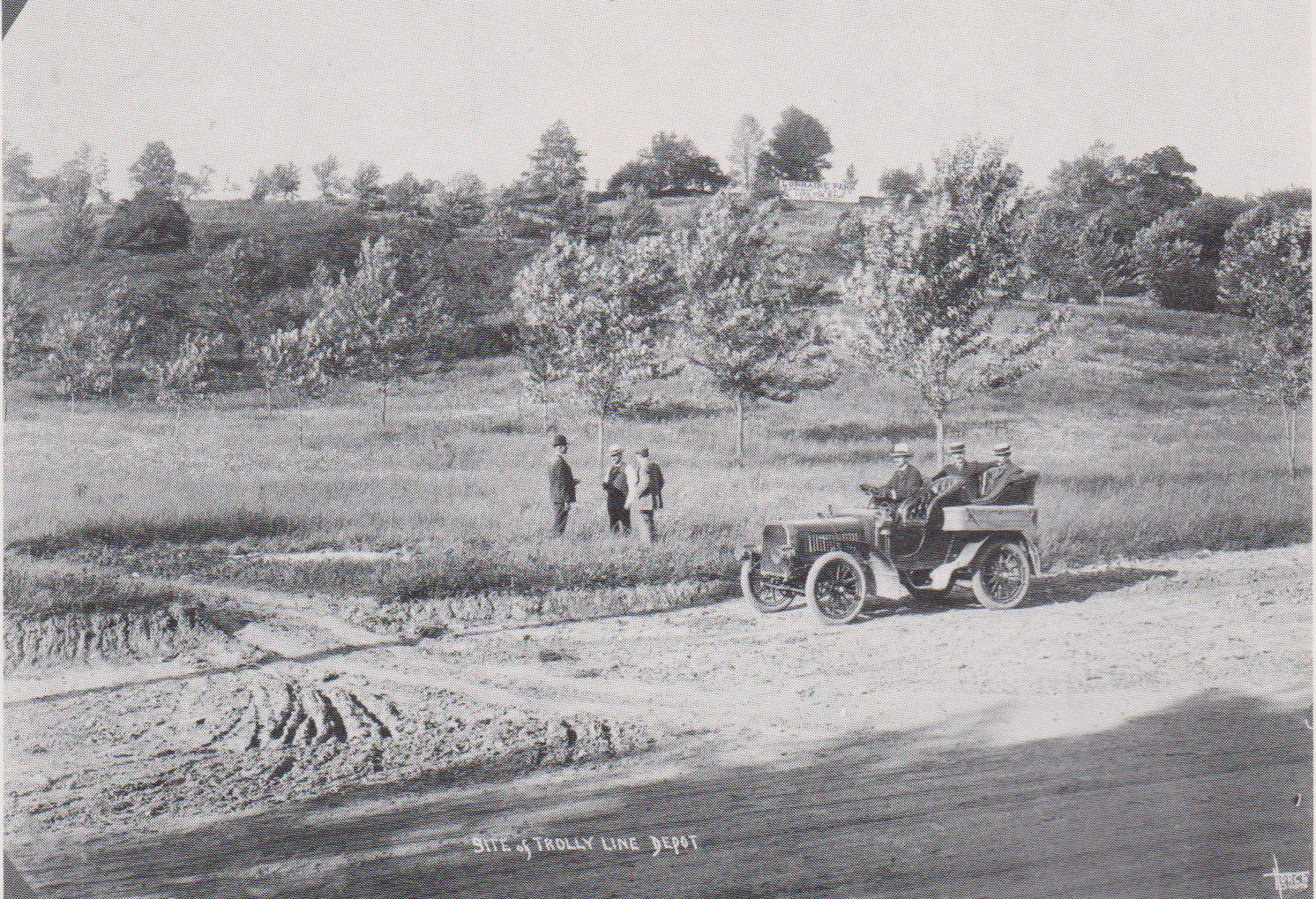
This picture depicts a time when few roads, but many fields, farms, and wooded areas existed in the Abingtons. The view from Clarks Summit, looking toward Scranton, appears on this vintage postcard, part of a collection at The Lackawanna County Historical Society. (LACKAWANNA HISTORICAL SOCIETY)
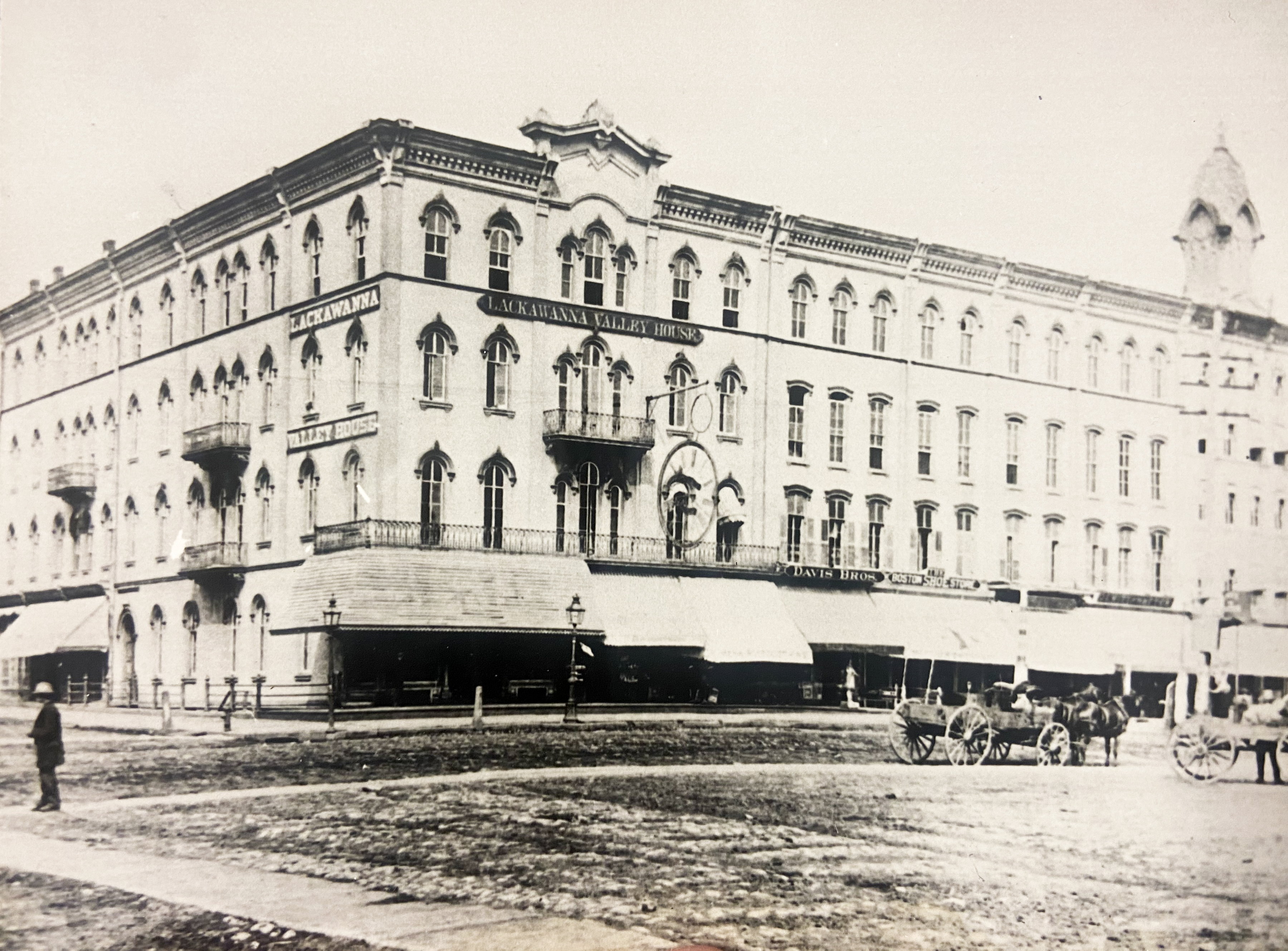
As Scranton grew into an industrial boomtown, there was a need for convenient hotels with amenities. Across from the original DL&W passenger depot, the Lackawanna Valley House opened its doors to guests in 1867 at Lackawanna and Franklin avenues in Scranton. Built by Jacob Robinson, it was managed by Edmund Burnham, a hotelier and caterer from Carbondale. (LACKAWANNA HISTORICAL SOCIETY)
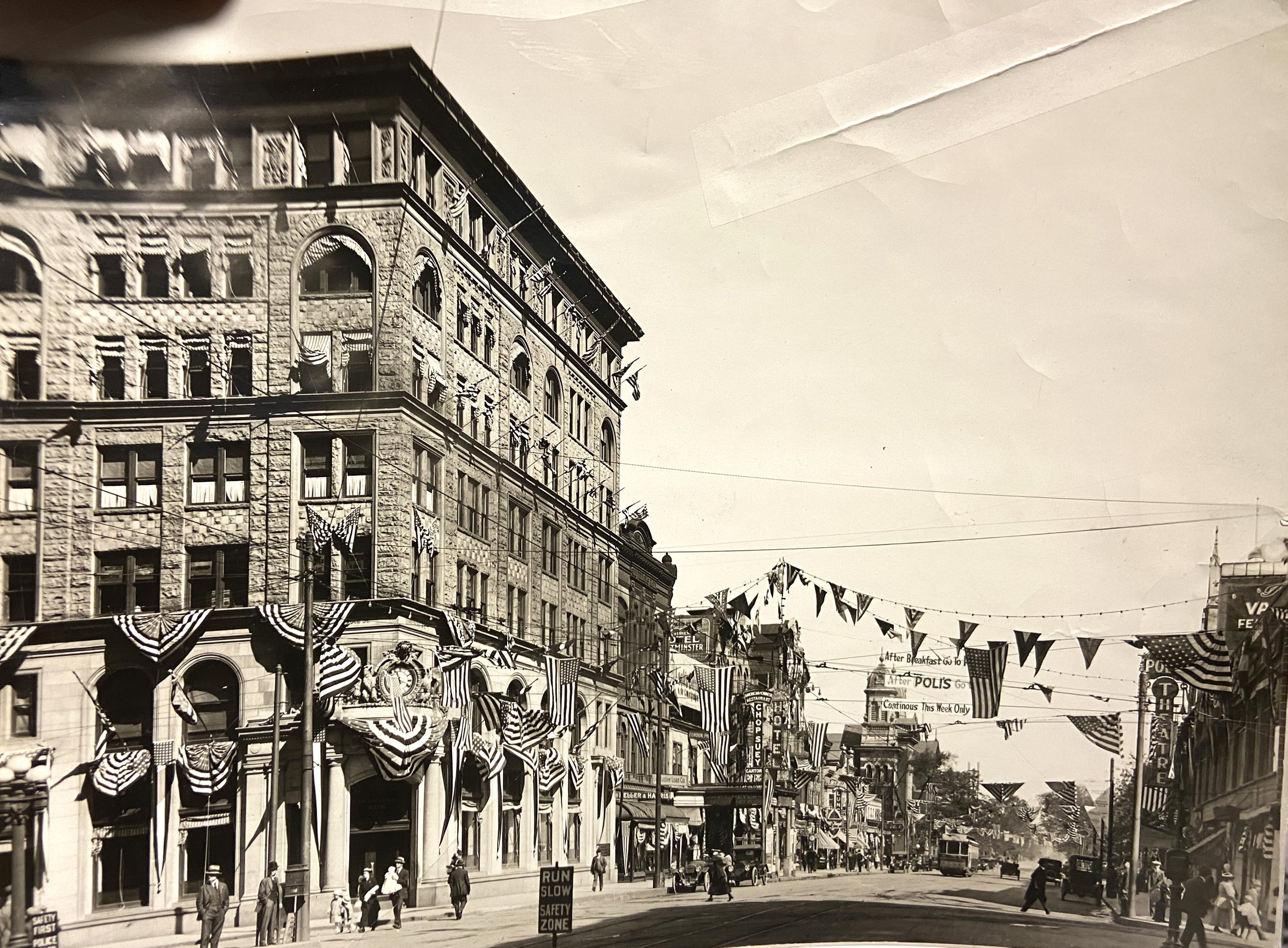
During Scranton’s semi-centennial celebration in 1916, much of the city was decked in flags and bunting, and the busy theater district was no exception. In this scene, Trader’s National Bank anchors the corner, with offices upstairs for everything from dentists and hairdressers to milliners and Kreighton’s Detective Bureau. Further down the block, two theaters faced off across the street: the Lyceum Arcade on the west side and Poli’s on the east. (LACKAWANNA HISTORICAL SOCIETY)
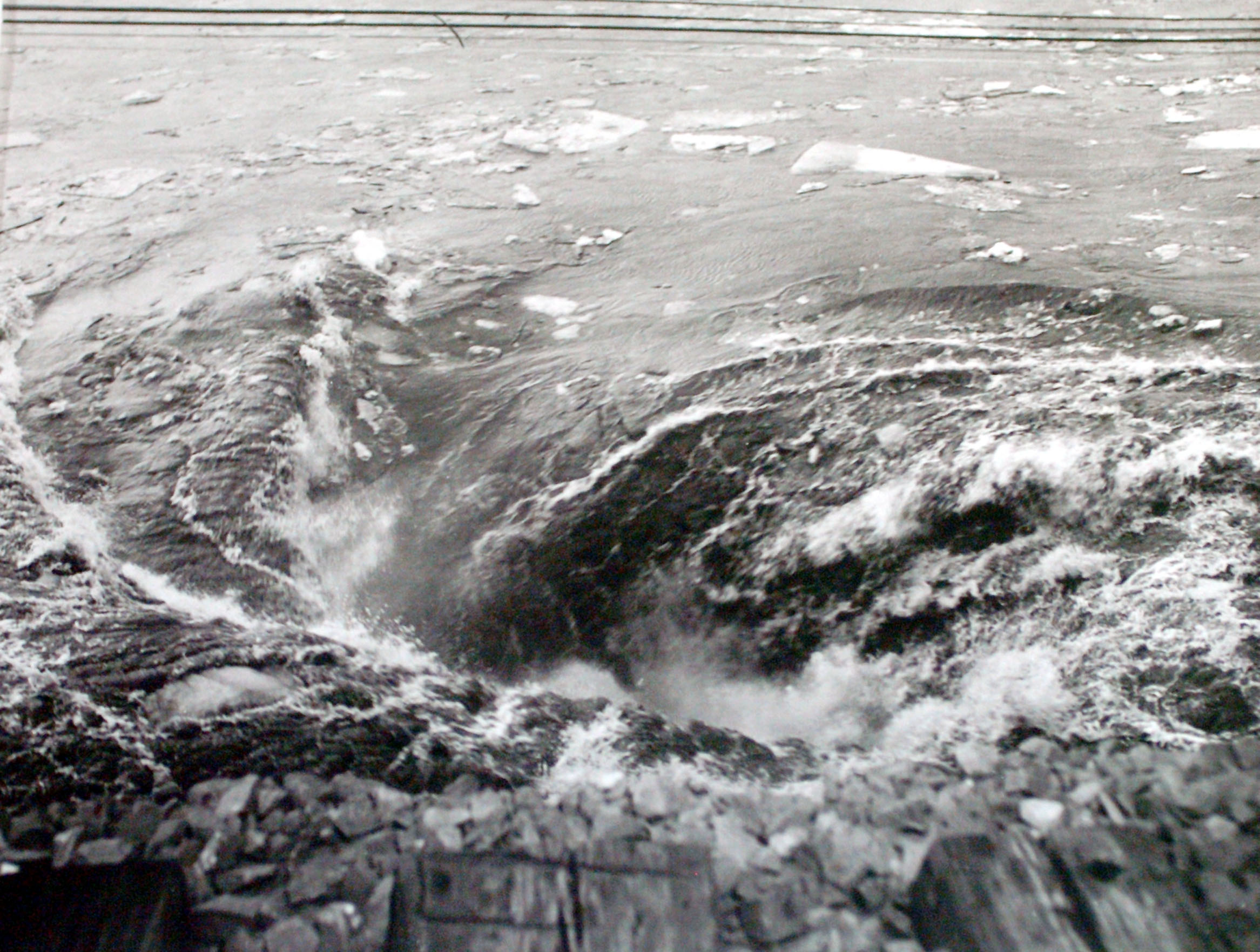
This photo by local photographer Bill Lukasik became a defining image of the 1959 Knox Mine Disaster. (LUZERNE COUNTY HISTORICAL SOCIETY)
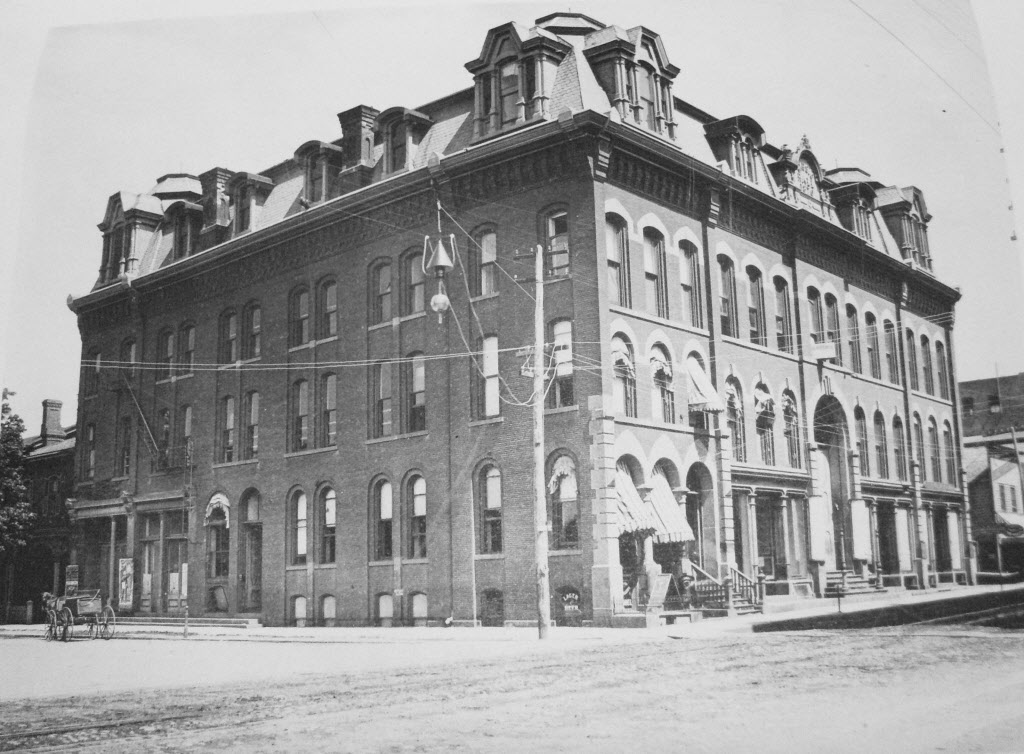
The Wilkes-Barre Music Hall was demolished to make way for the Hotel Sterling. (LUZERNE COUNTY HISTORICAL SOCIETY)
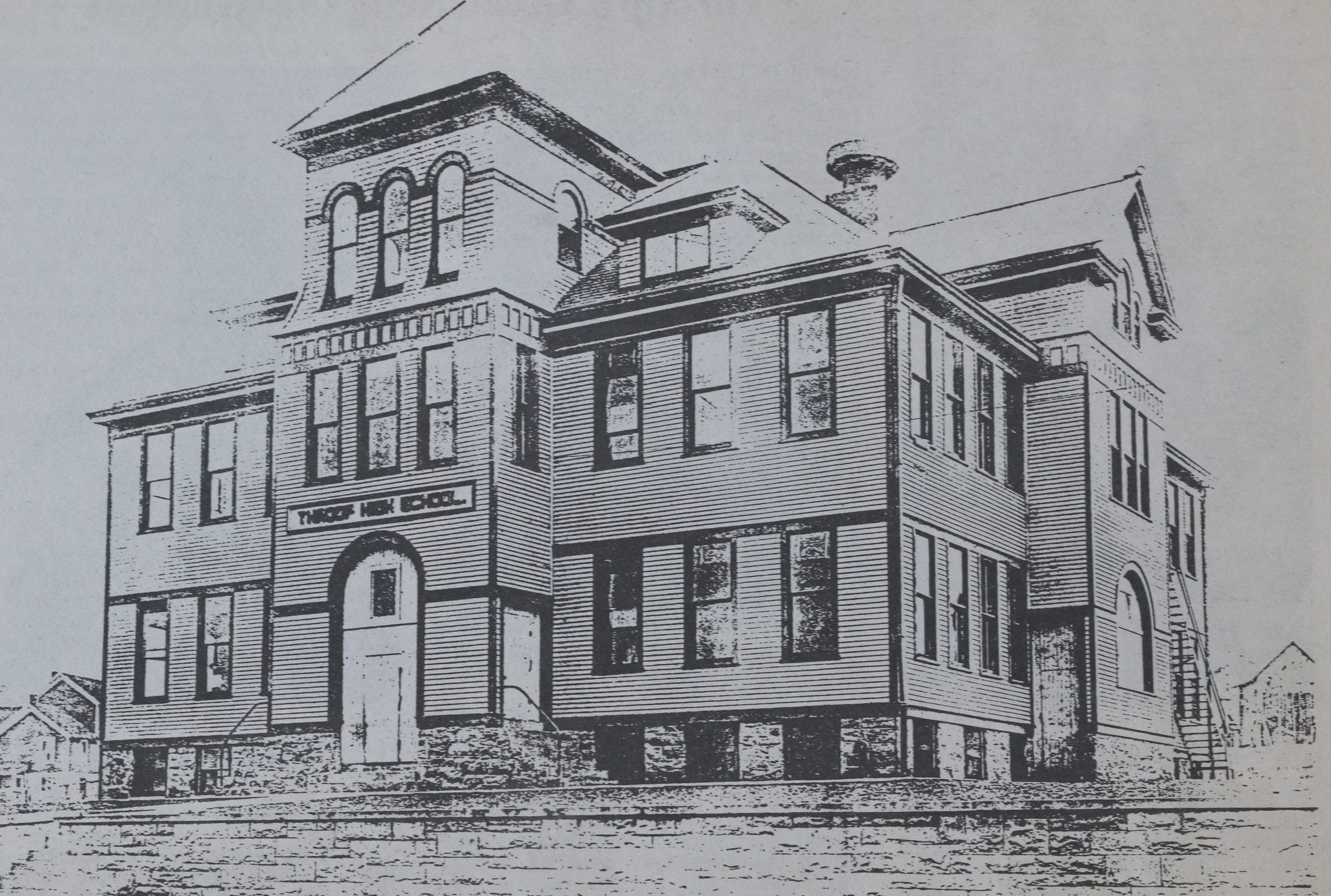
Throop High School circa 1912. (LACKAWANNA HISTORICAL SOCIETY)
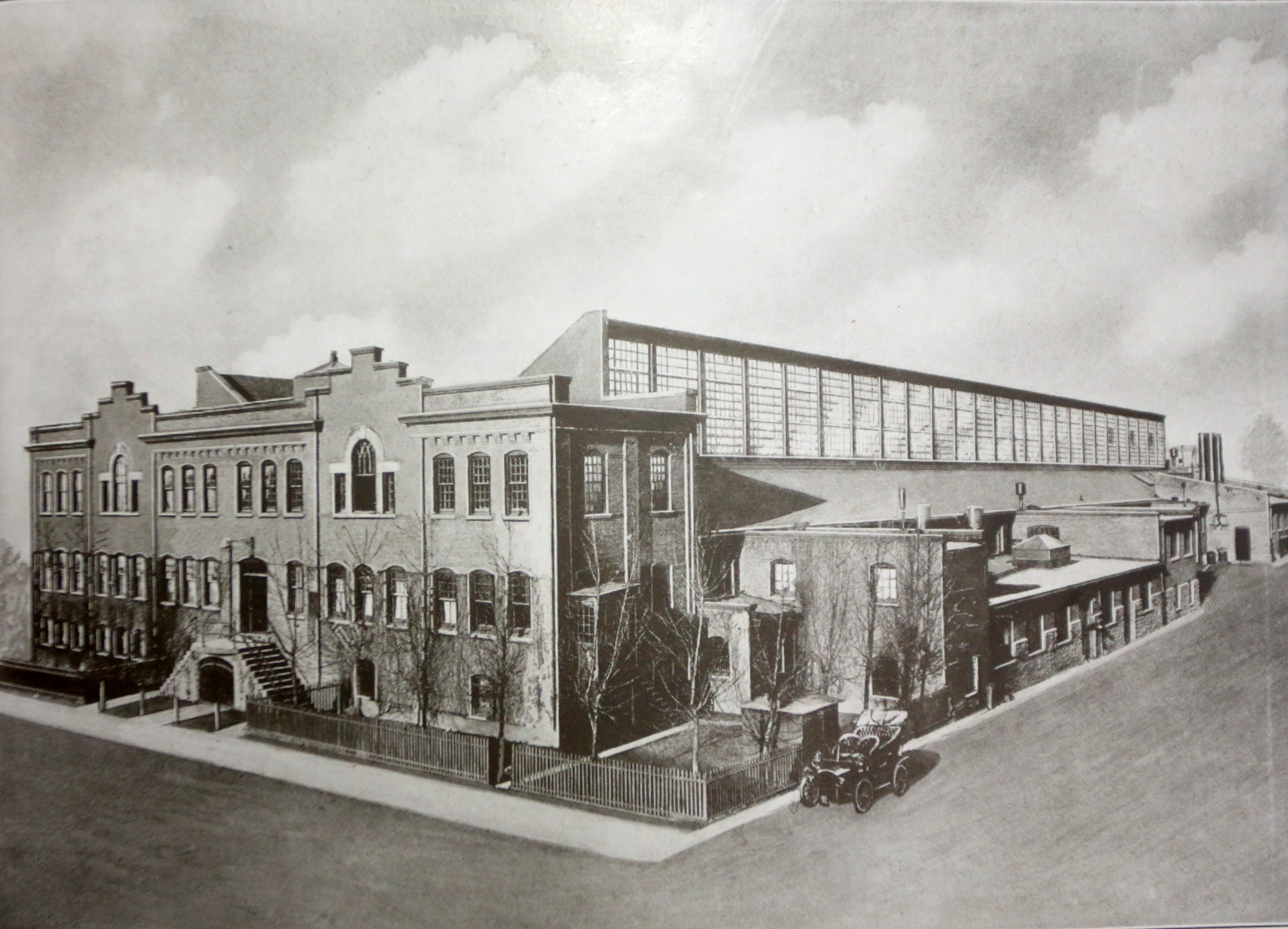
In 1895, New York businessman H.D. Klots came to Carbondale to establish a silk mill, utilizing the wives and daughters of coal miners as workers. Klots soon expanded his operation, opening mills in Archbald and Scranton. He initially leased a small space in the Mears building before building this sprawling factory on Poplar Street in 1900. By 1912, Klots’ Scranton mill employed 400 people and had a capacity of 40,000 spindles to wind silk thread. (LACKAWANNA HISTORICAL SOCIETY)
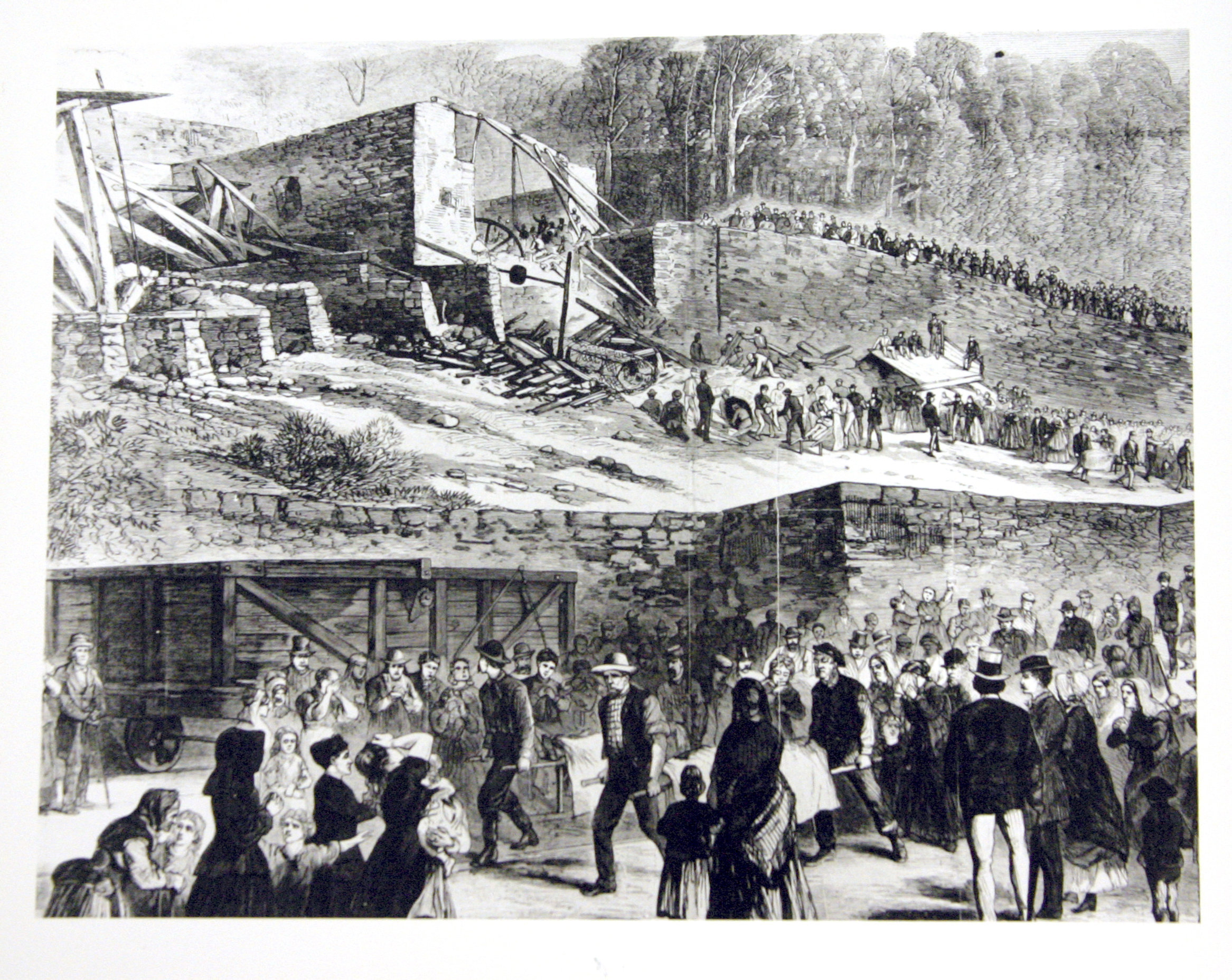
This illustration depicts the victims being taken away from the mine after the Avondale coal mine disaster in Plymouth on Sept. 6, 1869. (LUZERNE COUNTY HISTORICAL SOCIETY)
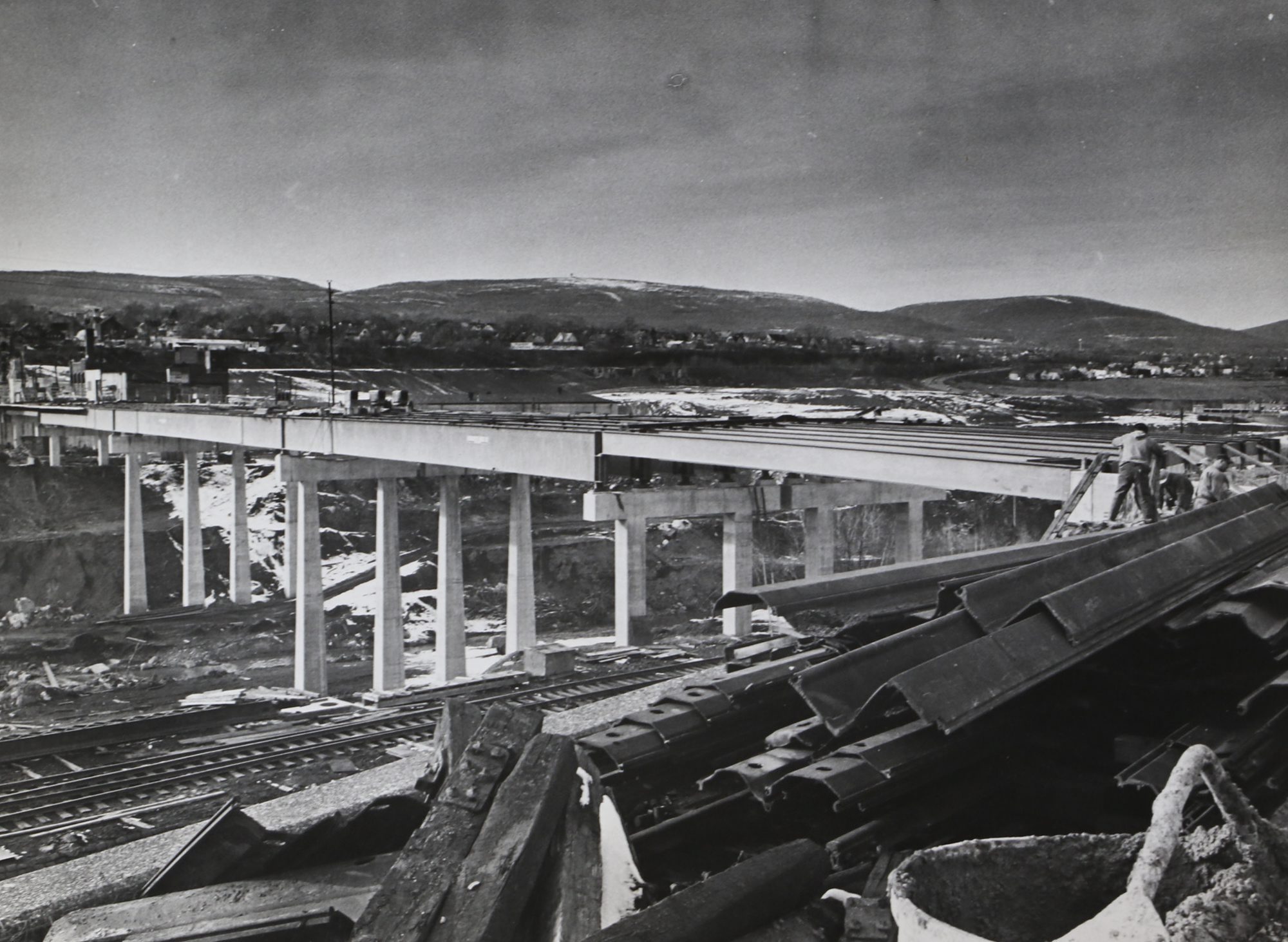
Linden Street Bridge construction circa 1969. (LACKAWANNA HISTORICAL SOCIETY)
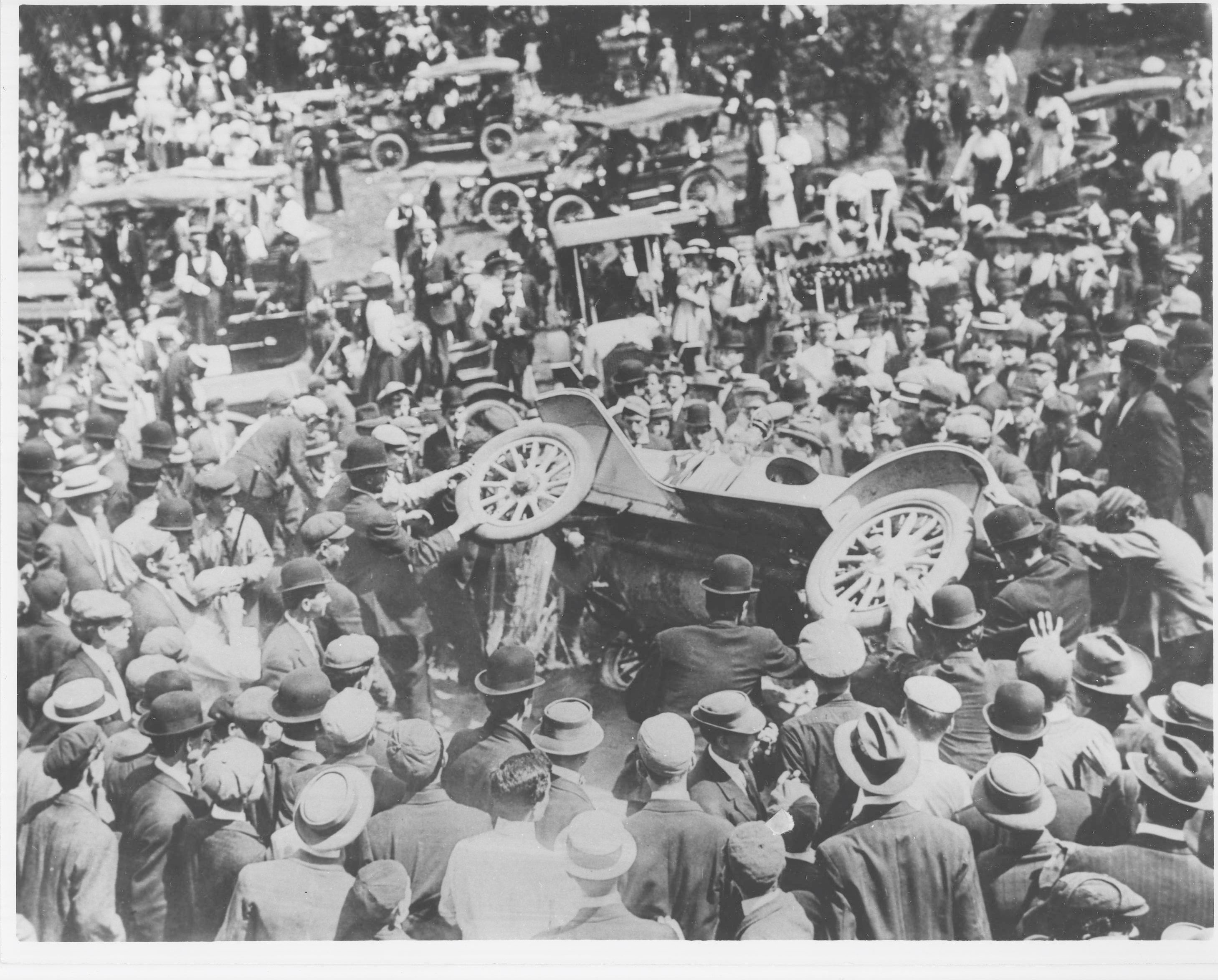
Louis Chevrolet’s overturned Buick at Devil’s Elbow, a notorious section of road at Giant’s Despair Hillclimb. (LUZERNE COUNTY HISTORICAL SOCIETY)
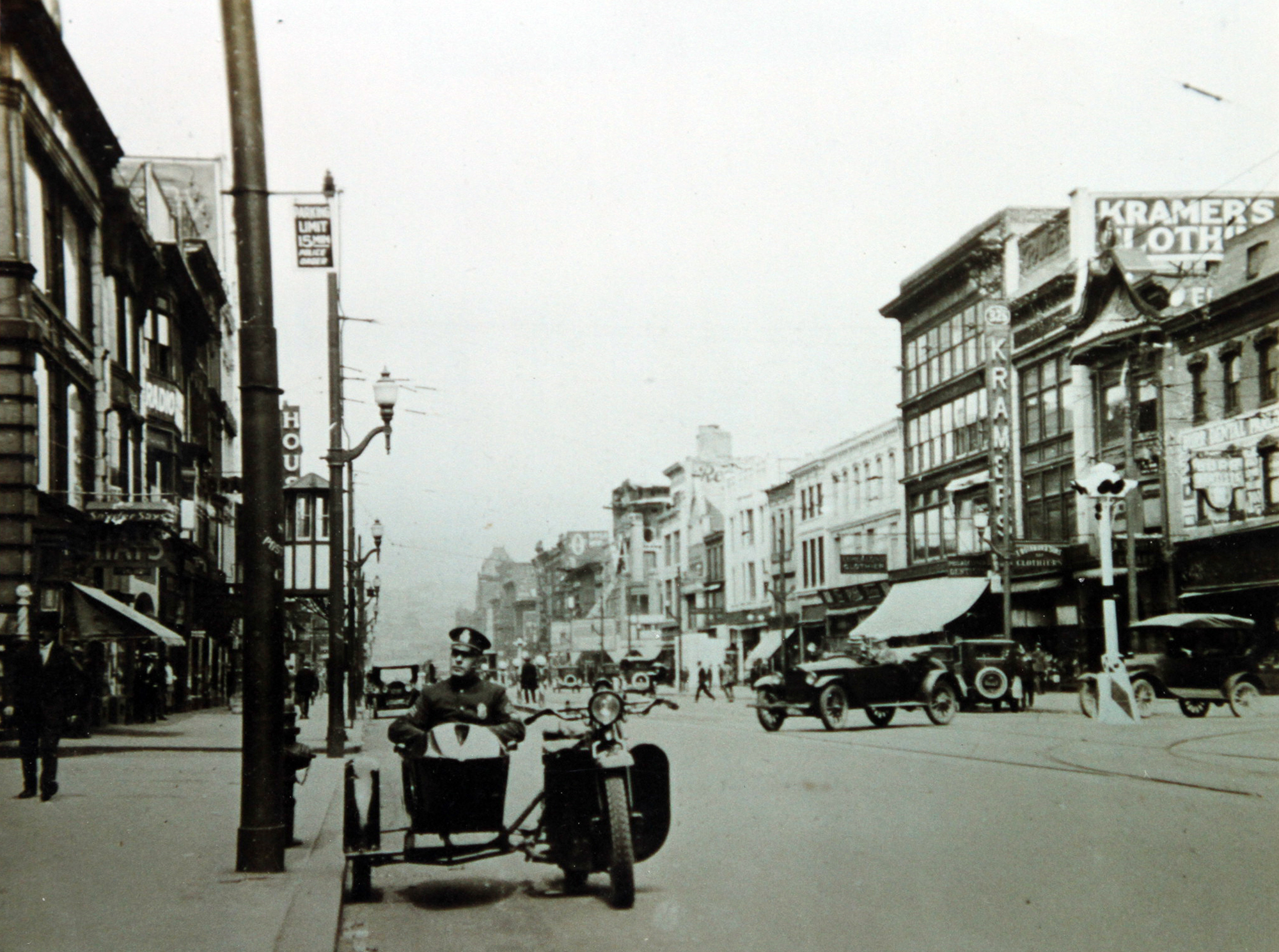
Scranton Policeman Ray Jeffers sits in a sidecar in the 300 block of Lackawanna Ave. in 1927. (LACKAWANNA HISTORICAL SOCIETY)
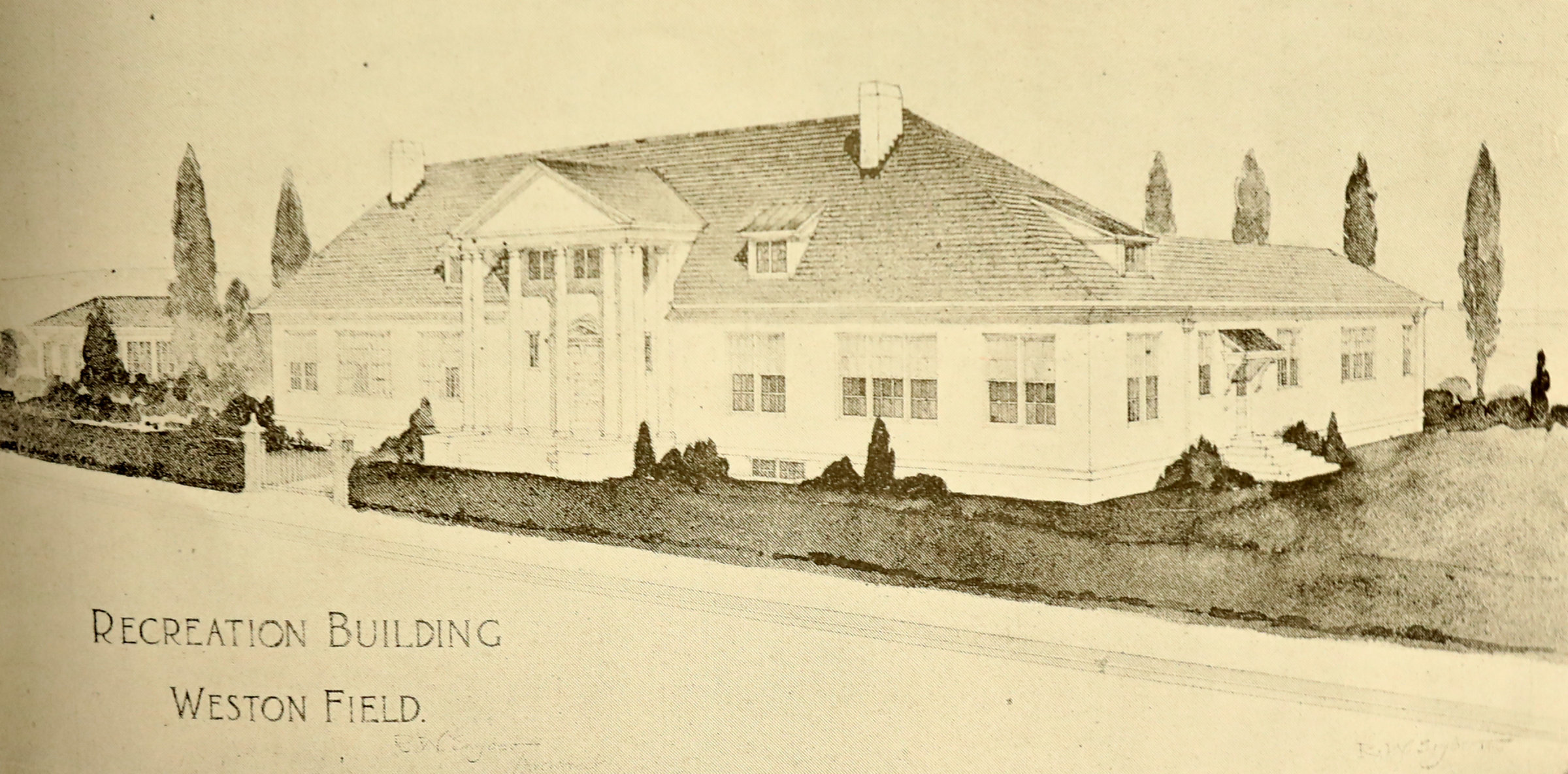
One of Scranton’s first public playing fields was the gift of Charles S. Weston and his sister, Caroline Weston Bird. In 1915, the Westons donated $50,000 to the city to purchase land to be developed as a recreational and athletic complex. The field house was dedicated Feb. 23, 1917, at Providence Road, and offered simple weights and gymnastic apparatus, as well as classes in gymnastics and dance. An auditorium space was used for performances and gatherings. Tennis courts and playground equipment were available in the park outside. (LACKAWANNA COUNTY HISTORICAL SOCIETY)
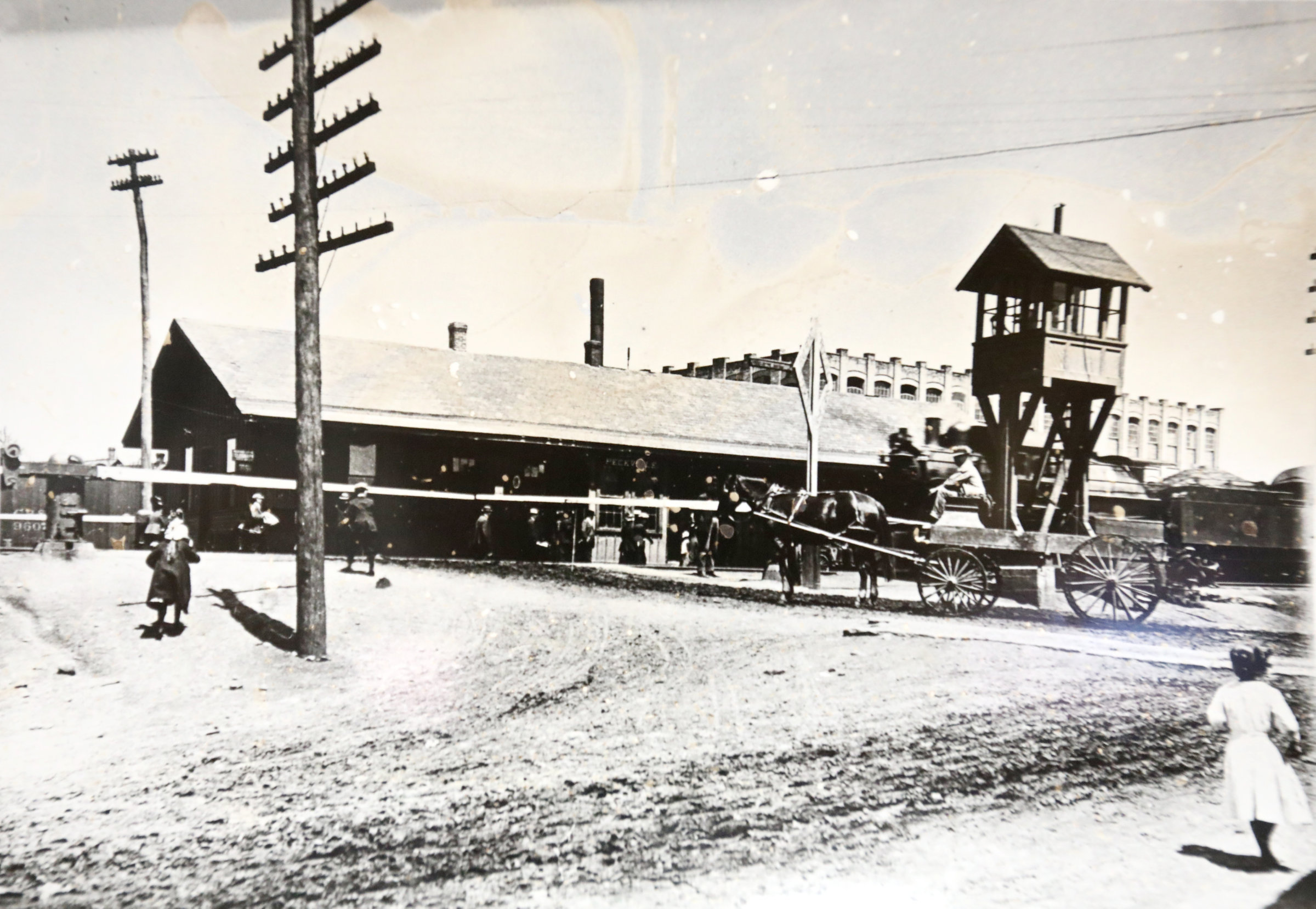
The Delaware & Hudson Railroad extended its rail line along the Lackawanna River to service coal mines in Jermyn, Archbald, Olyphant and Dickson City. A combination freight and passenger station was built to serve both Jessup and Peckville at the foot of Church Street in Jessup in 1873. The station was enlarged in 1887. (LACKAWANNA HISTORICAL SOCIETY)
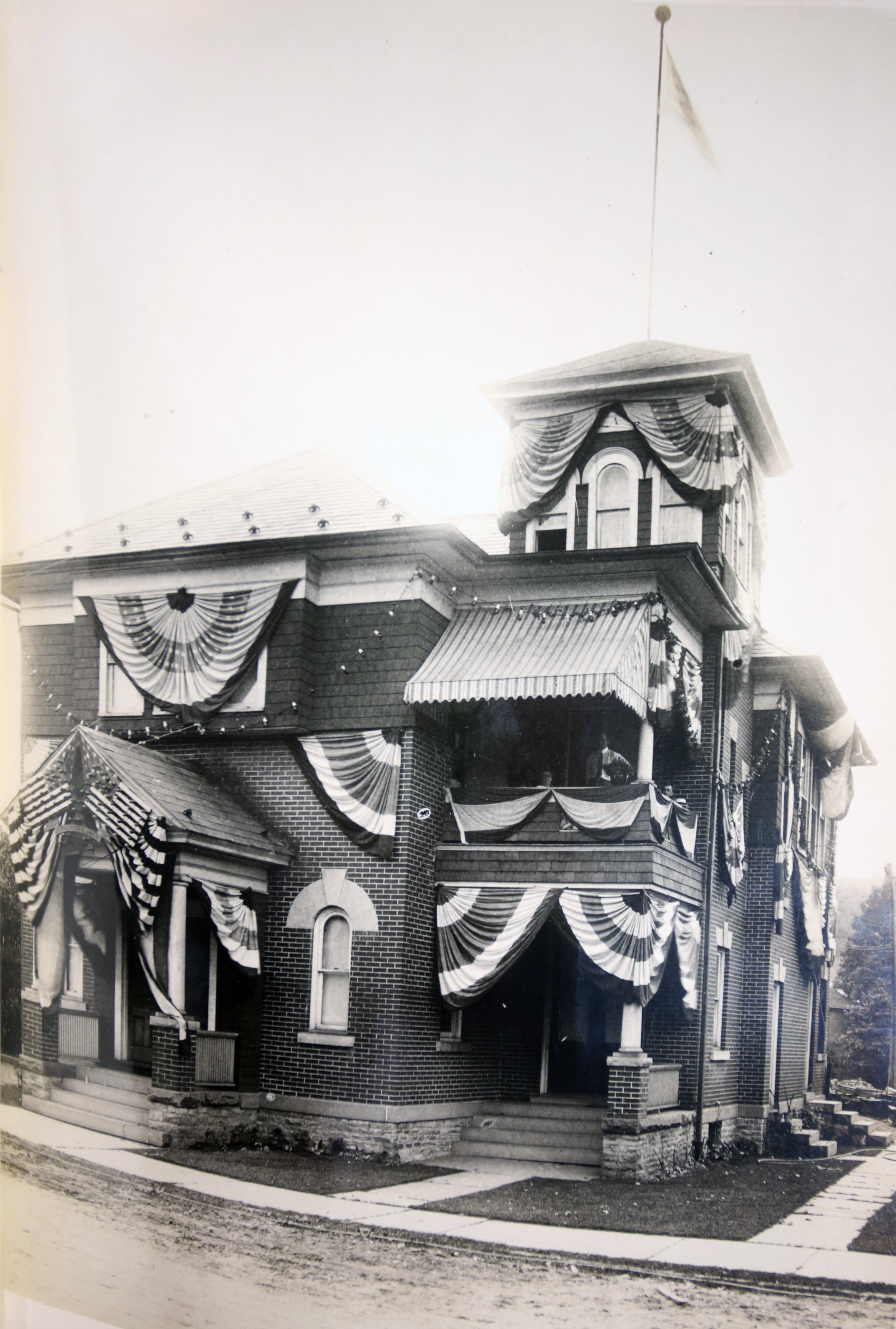
The Archbald Borough Building at 274 Laurel St. was dedicated May 30, 1910. (LACKAWANNA HISTORICAL SOCIETY)
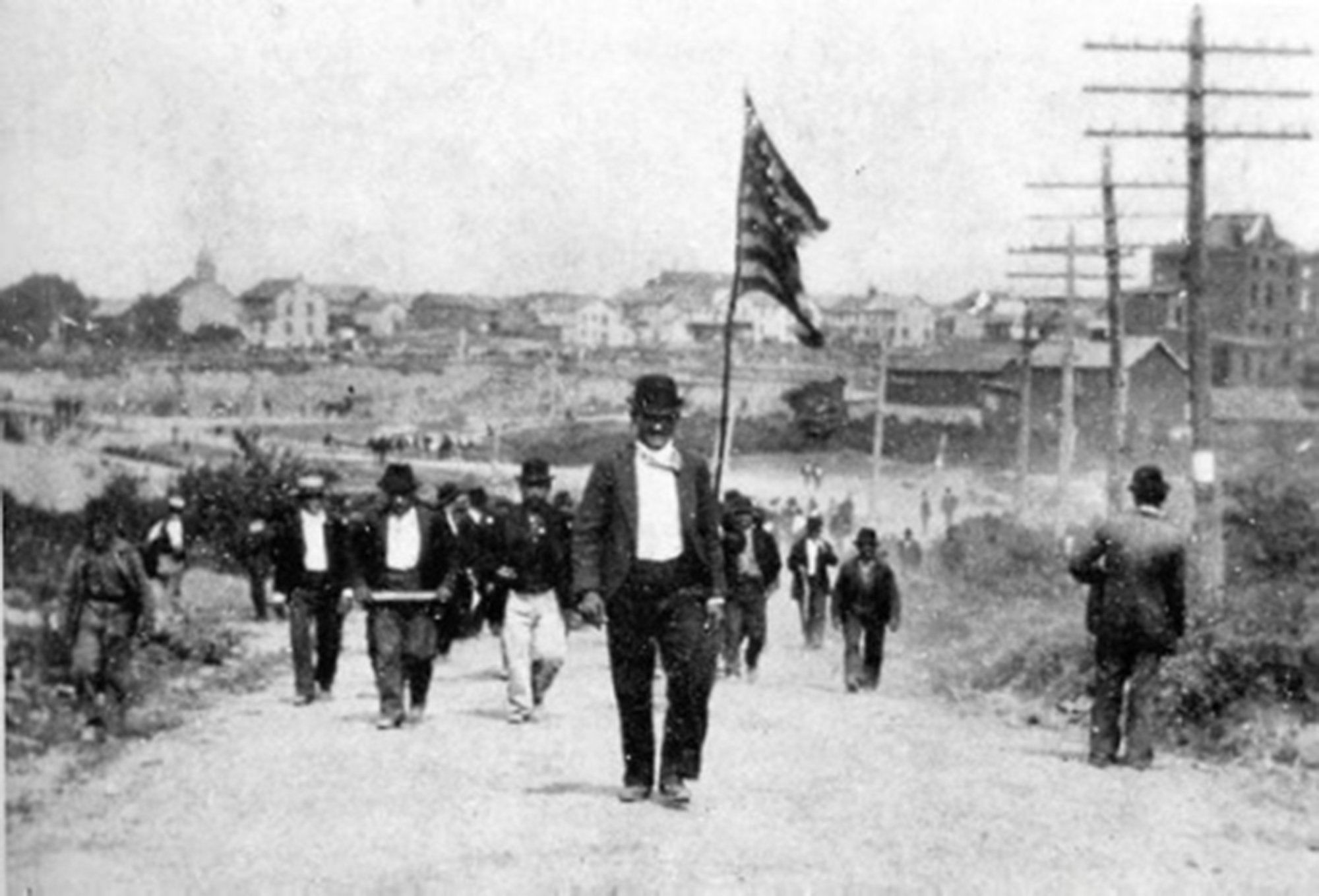
Miners marched to Lattimer Mines, secure in the protection of an American flag. Luzerne County sheriff’s deputies gunned down 19 and wounded 39 miners in the Lattimer Massacre on Sept. 10, 1897. (LUZERNE COUBNTY HISTORICAL SOCIETY)
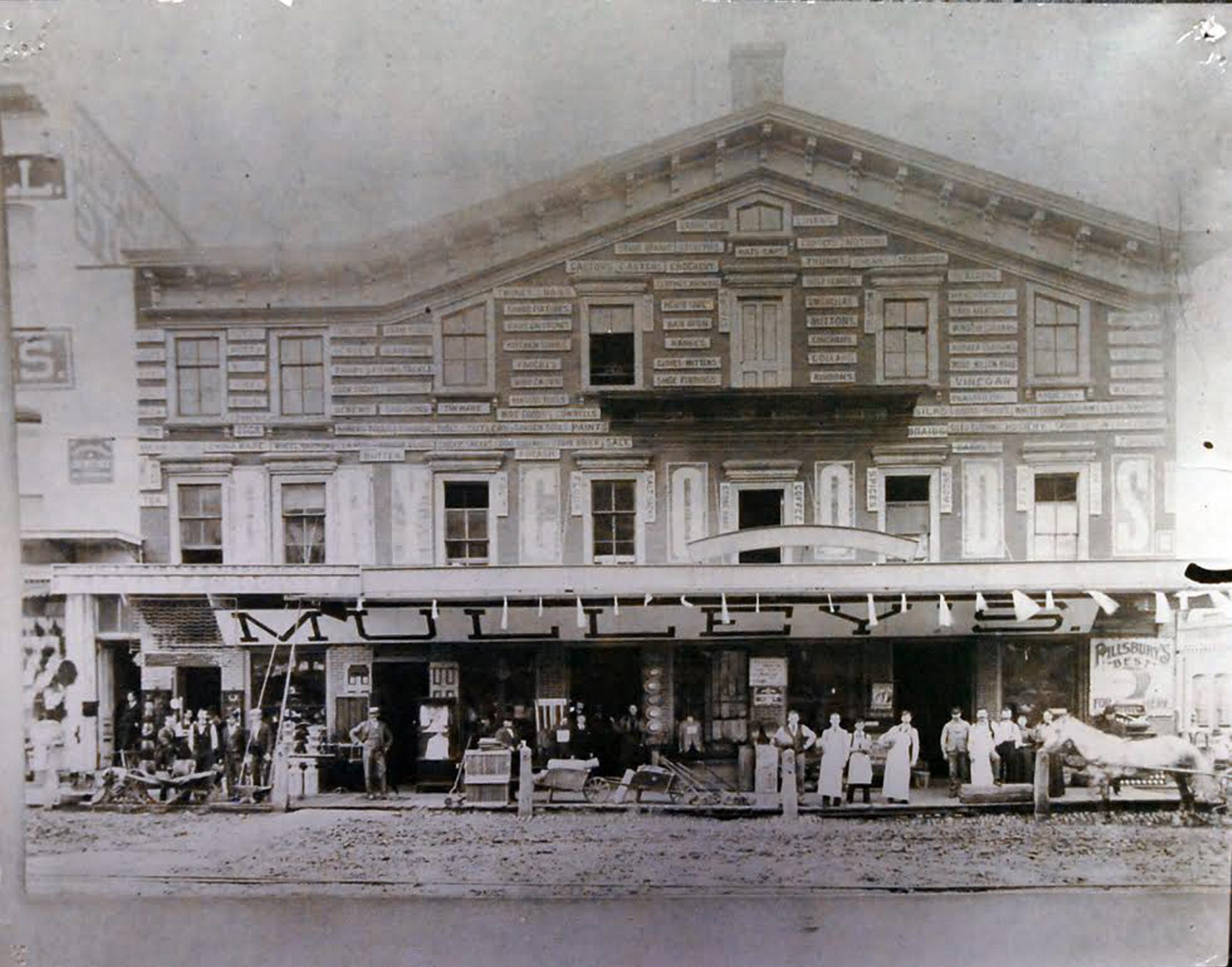
In 1856, Ambrose Mulley started a small general store in the Providence section of Scranton. By 1881, according to an ad printed in the Scranton City Directory, Mulley’s had four separate departments for hardware, dry goods, groceries and provisions, and was “decidedly the largest retail concern in the Lackawanna Valley (whose) fair an imparital dealing through all the years with the old or young, wise or othersise” made them a long-lasting success. (LACKAWANNA HISTORICAL SOCIETY)
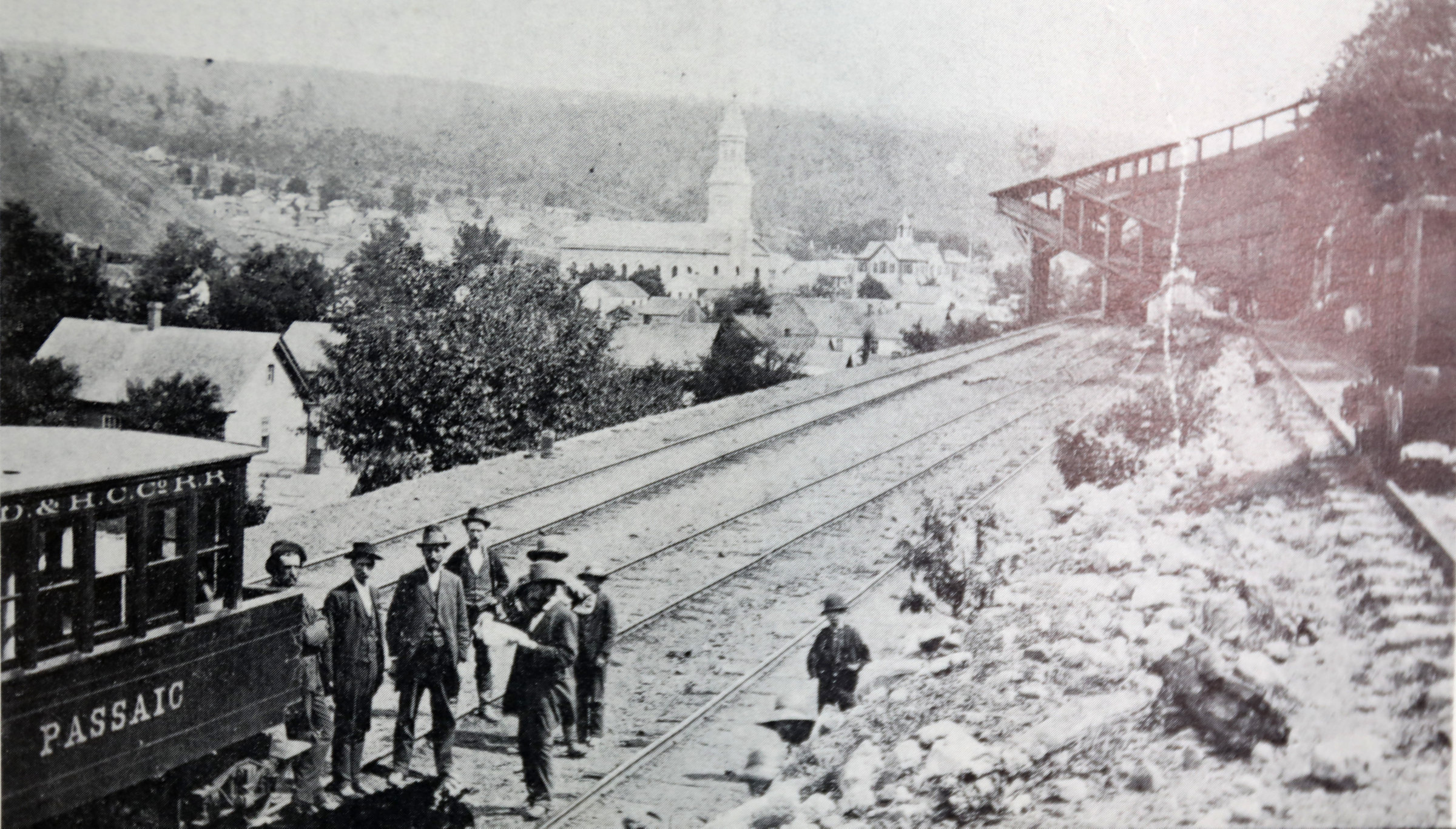
The discovery of anthracite coal near White Oak Run in 1843 spurred the development of the borough of Archbald. The borough took its name from James Archbald, the Delaware & Hudson Canal Company engineer who discovered the coal. The D&H extended their gravity railroad to the Archbald in 1846, carrying coal along the northbound track to Carbondale. This image shows one of the gravity planes climbing Number 5 Hill with Old Eaton’s breaker built over the tracks. In the distance, St. Thomas Aquinas church, dedicated in 1875, is visible in town. (LACKAWANNA HISTORICAL SOCIETY)
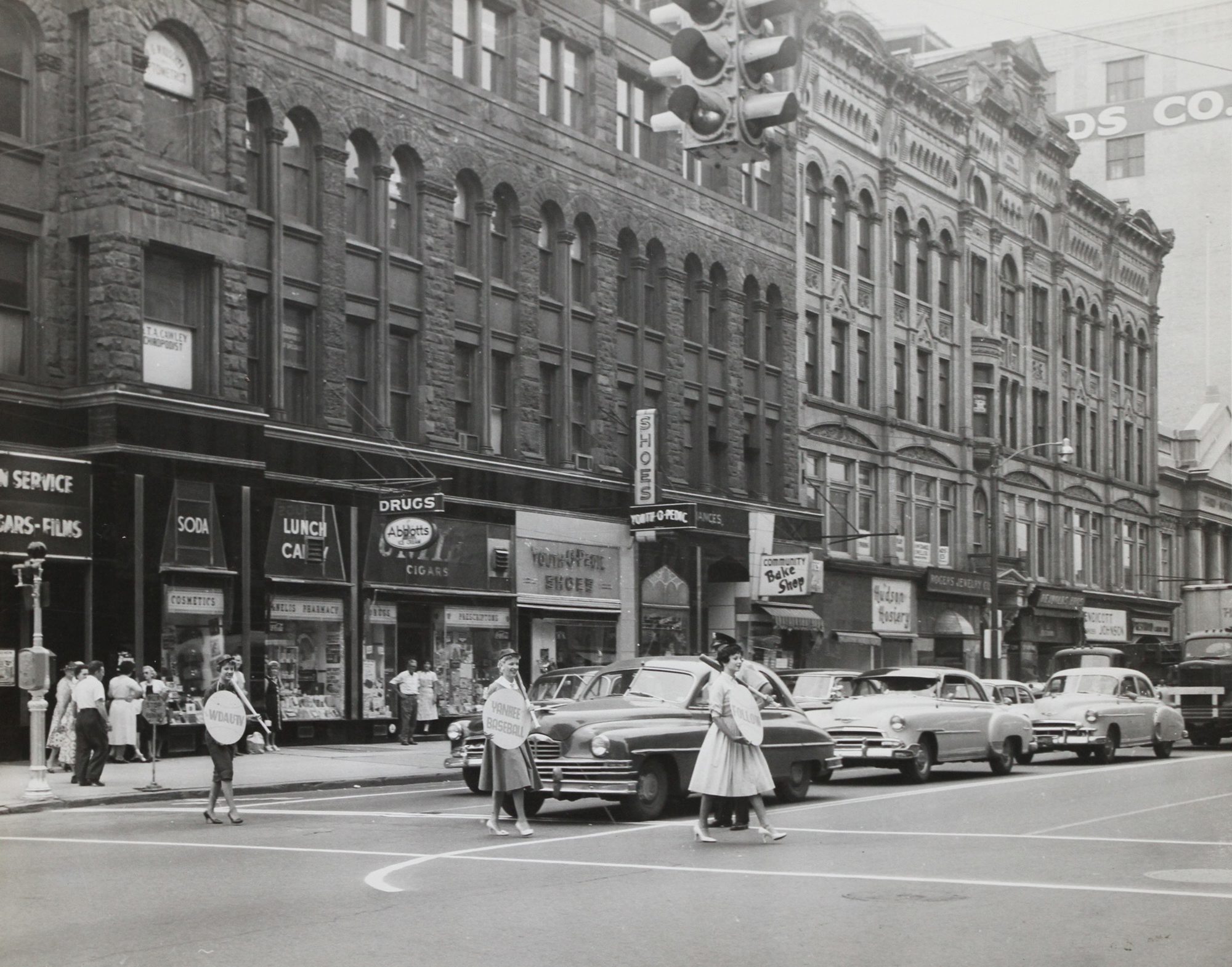
Wyoming Ave. looking from Spruce St. in 1955. (COURTESY OF NICK PETULA AND THE LACKAWANNA HISTORICAL SOCIETY)
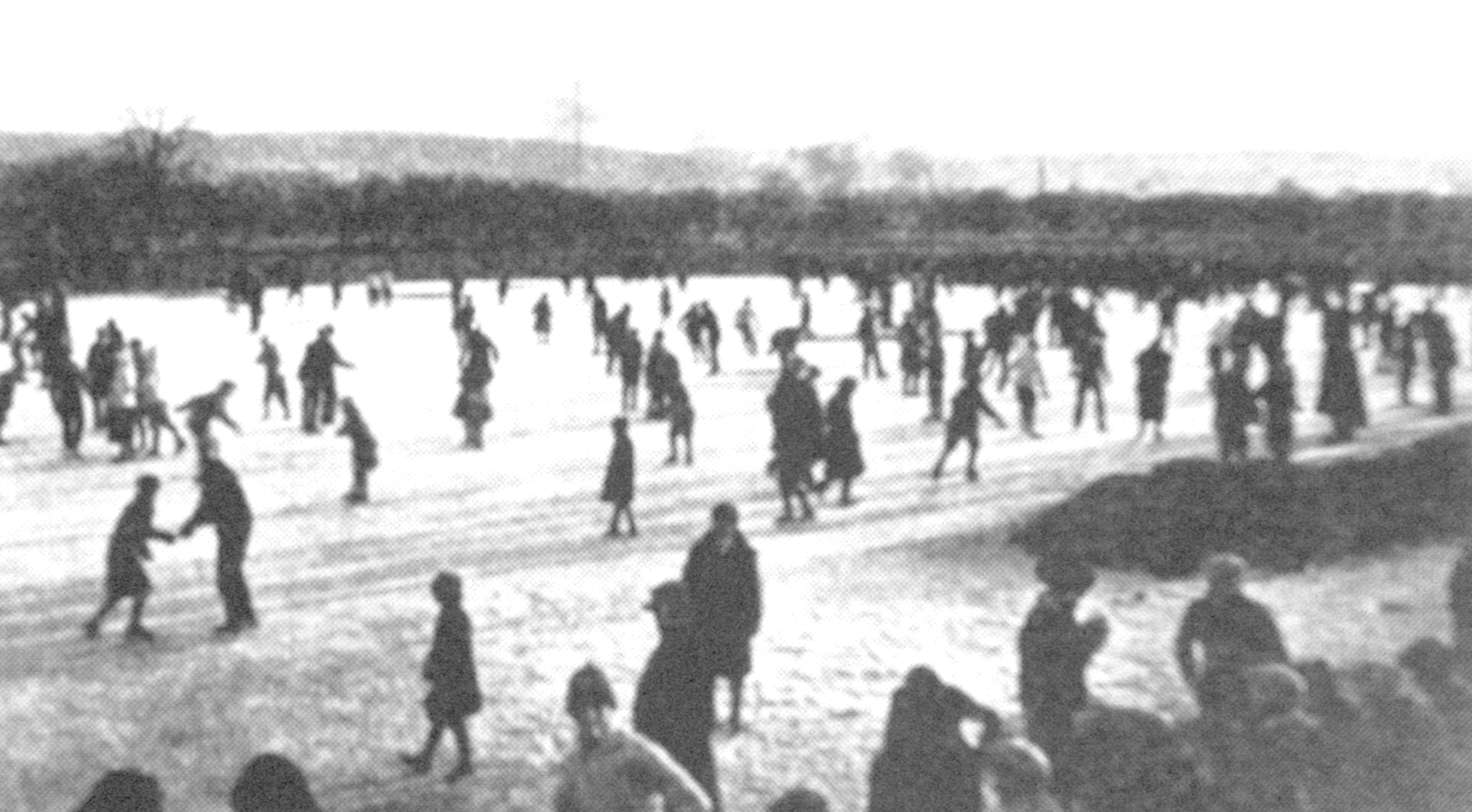
Skating at Kirby Park, 1925. (LUZERNE COUNTY HISTORICAL SOCIETY)

Photo shows the Avondale Colliery, F. Lee Coal Company, with DL&W coal car on tracks. (LUZERNE COUNTY HISTORICAL SOCIETY)
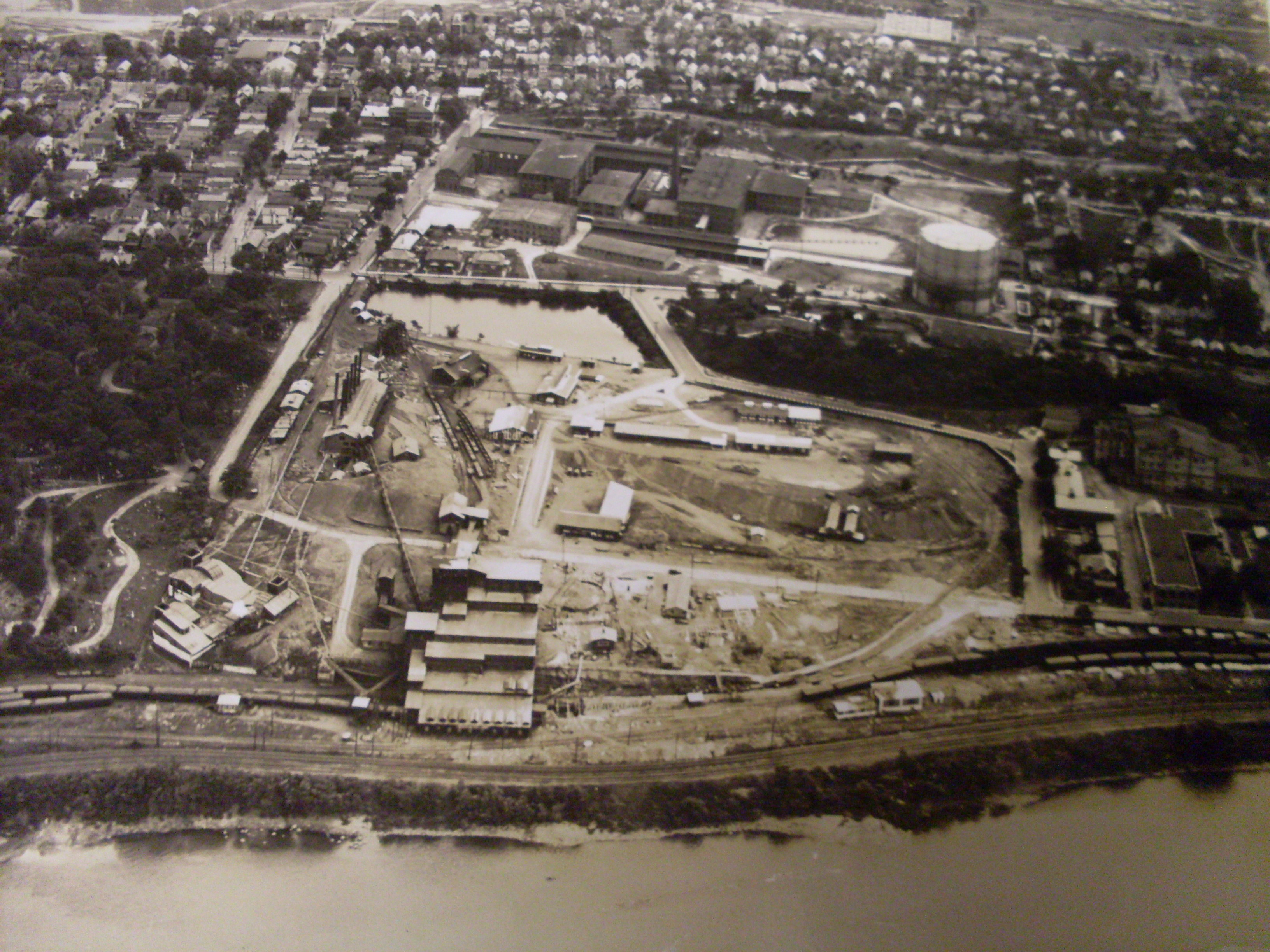
This undated photo by Ace Hoffman Studios shows the Dorrance Colliery on the banks of the Susquehanna River in Wilkes-Barre. The fan house complex is at the lower left, next to the cemetery. The large structure to the right of the complex is the breaker, which was demolished in 1983. (LUZERNE HISTORICAL SOCIETY)
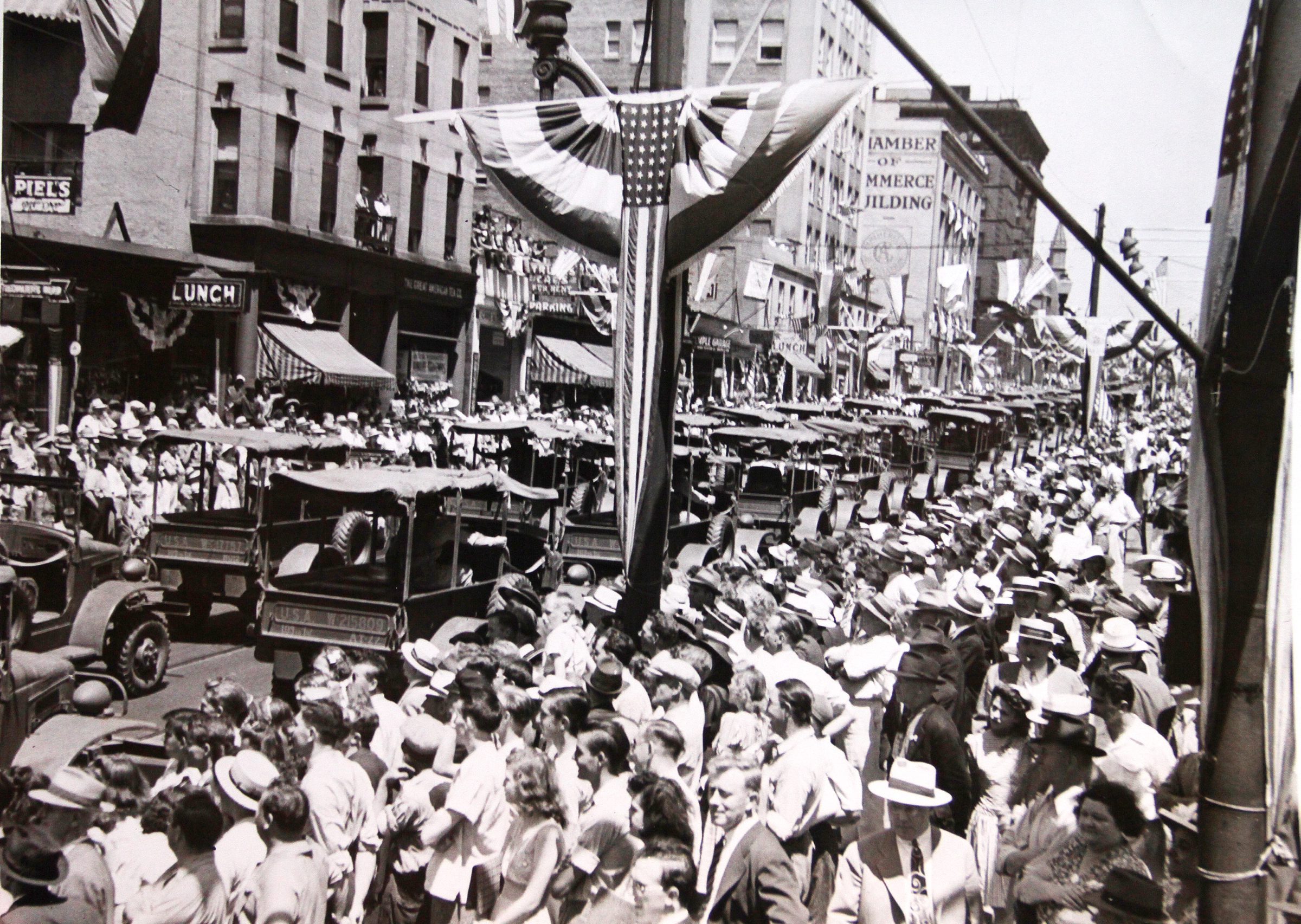
A crowd gathers to watch a procession of Jeeps travel up Washington Avenue during the 1941 Parade of Progress. The Parade was part of celebrations to mark the 75th anniversary of the founding of the city of Scranton. LACKAWANNA HISTORICAL SOCIETY
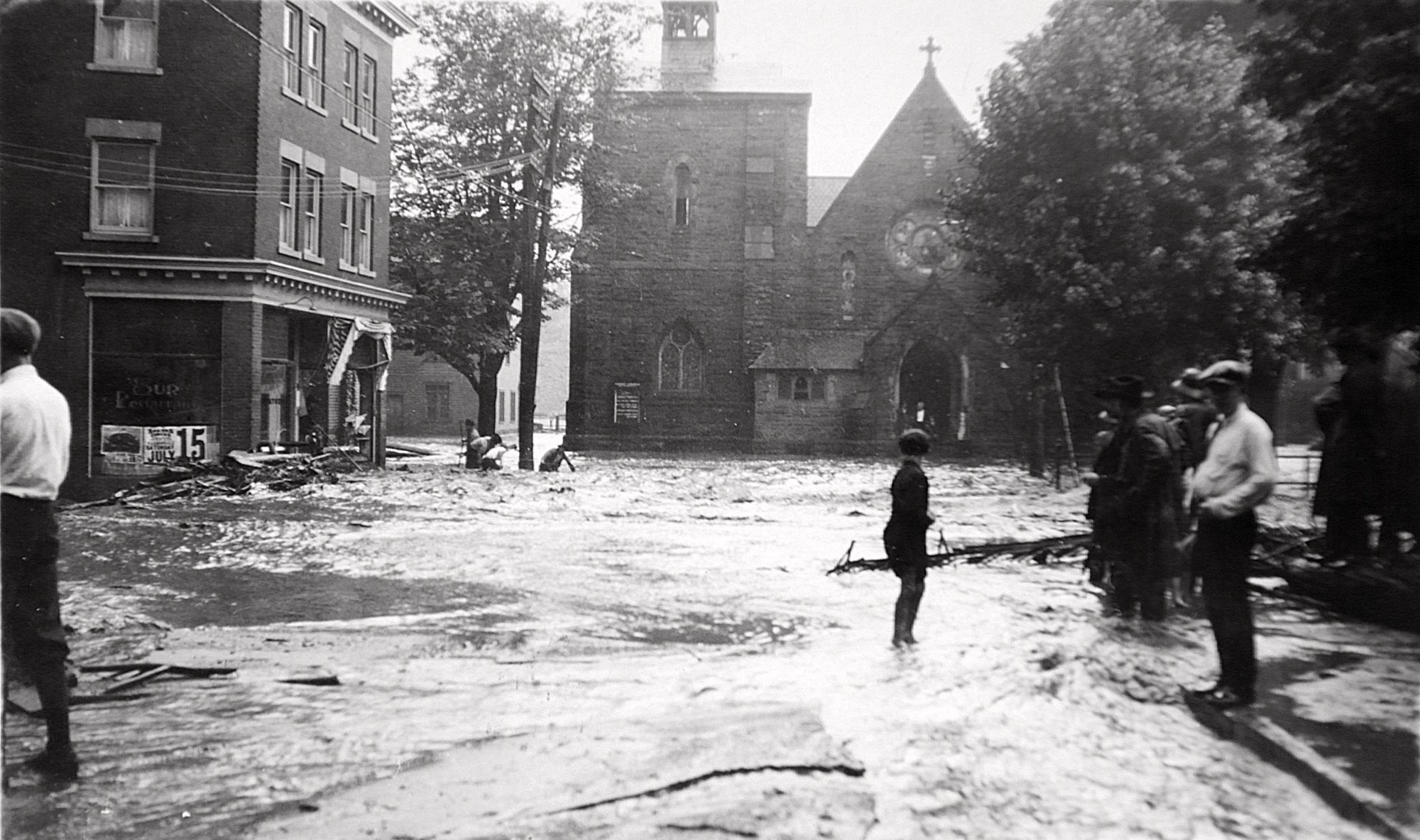
The spring of 1936 brought torrential rains to the northeastern United States, flooding rivers and streams from Massachusetts to North Carolina. Locally, Carbondale and other nearby towns were hardest hit. Damage in Carbondale was estimated at $90,000, and Red Cross and Works Progress Administration workers were sent to aid those left homeless and help with the cleanup. The Hotel Chellino, at left, was heavily damaged by logs careening down the Lackawanna River just outside the hotel’s front doors. (LACKAWANNA HISTORICAL SOCIETY)
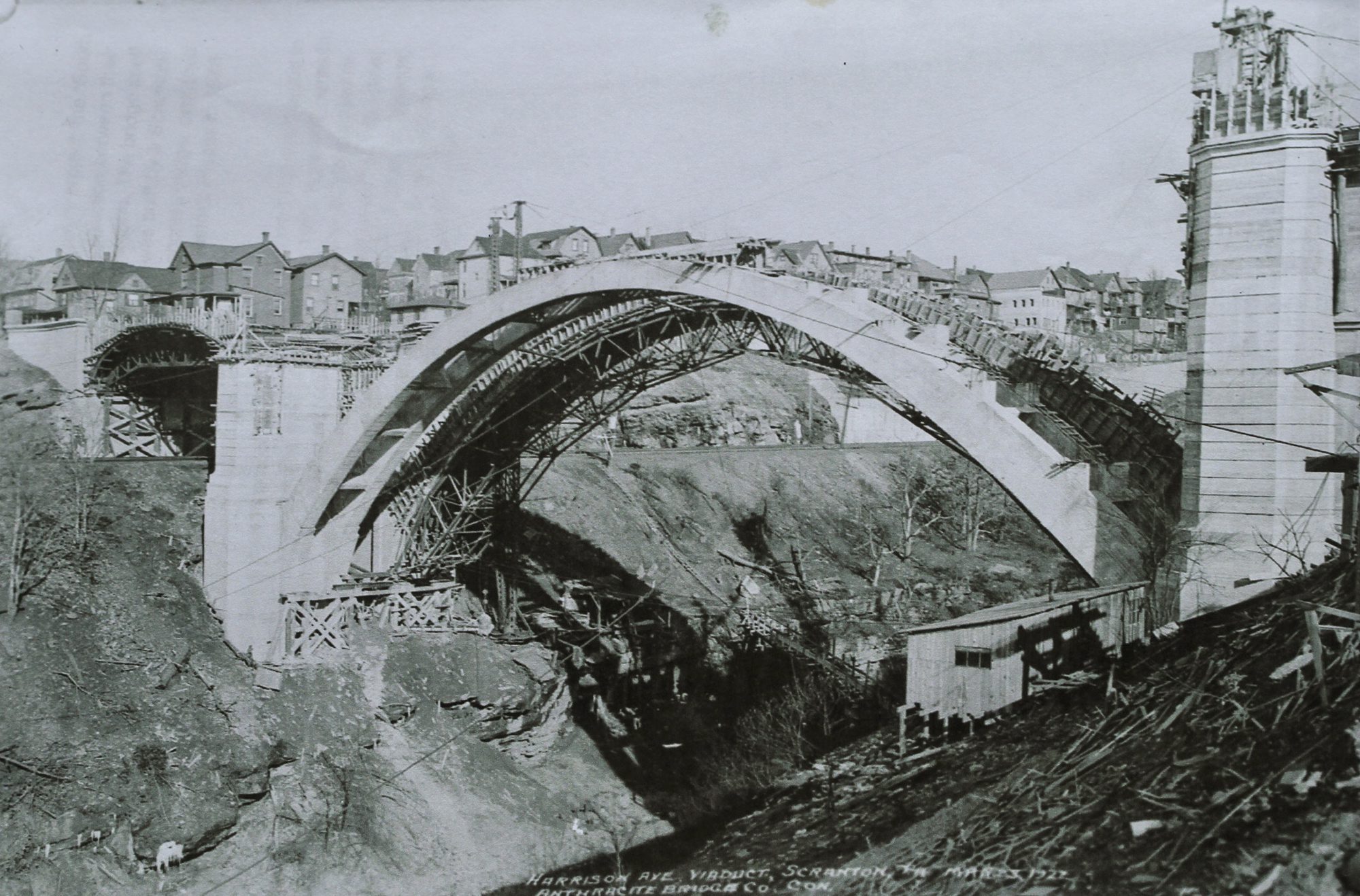
Construction of the Harrison Avenue Bridge in Scranton, circa 1922. (LACKAWANNA HISTORICAL SOCIETY)
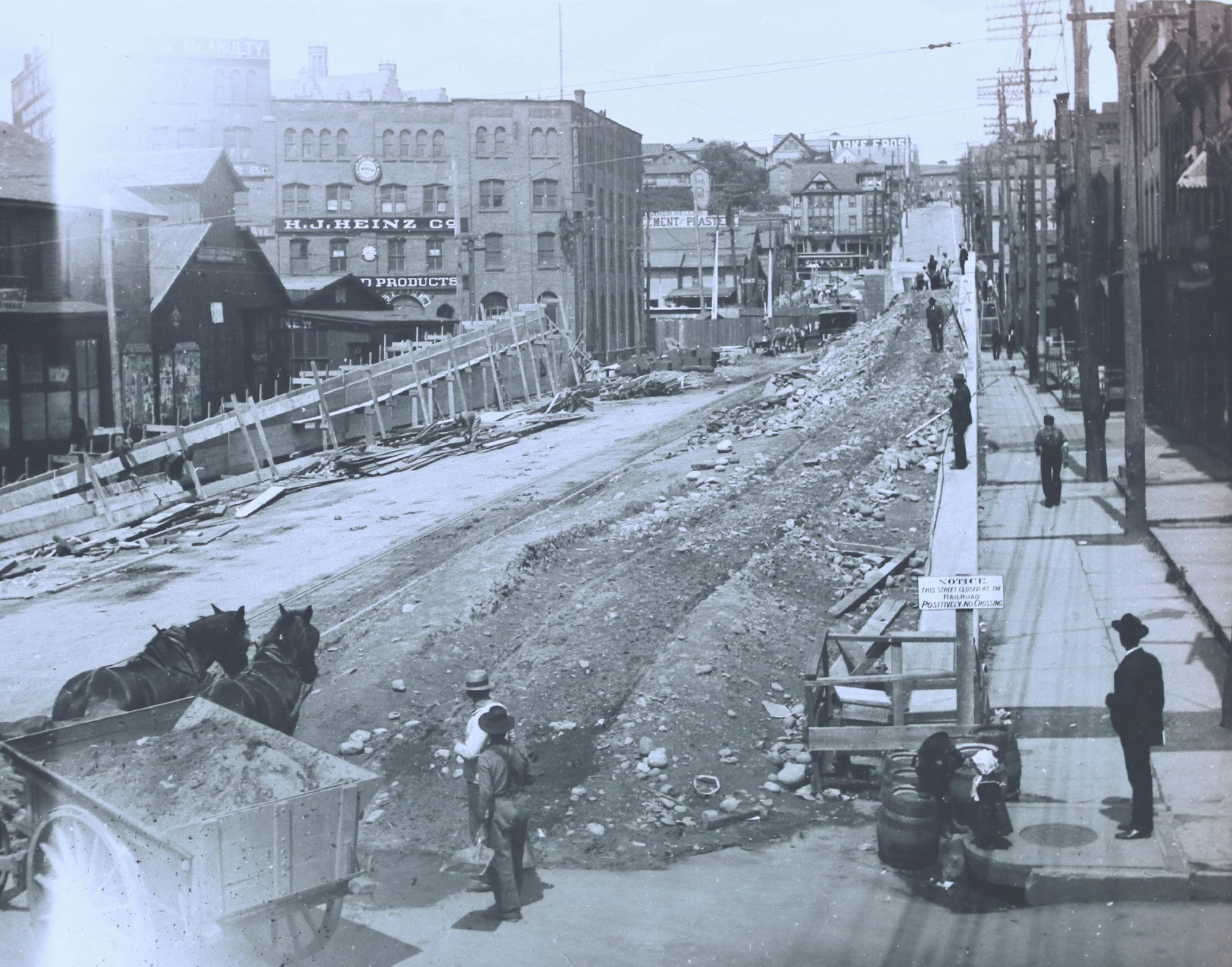
In July 1903, the DL&W Railroad was building a new viaduct across Lackawanna Avenue in Scranton to carry pedestrians, vehicles and trolleys. The new bridge would eliminate a dangerous railroad grade crossing and allow customers
easier access to the many businesses on West Lackawanna, including the Electric City Stables, H.J. Heinz Co., Porter Brothers Rag and Scrap Dealers, Berkley Cigar Shop, T.J.
Gilbride Wagonmakers, Clark & Scott Tobacco Manufacturers and the Second Presbyterian Church Mission. (LACKAWANNA HISTORICAL SOCIETY)
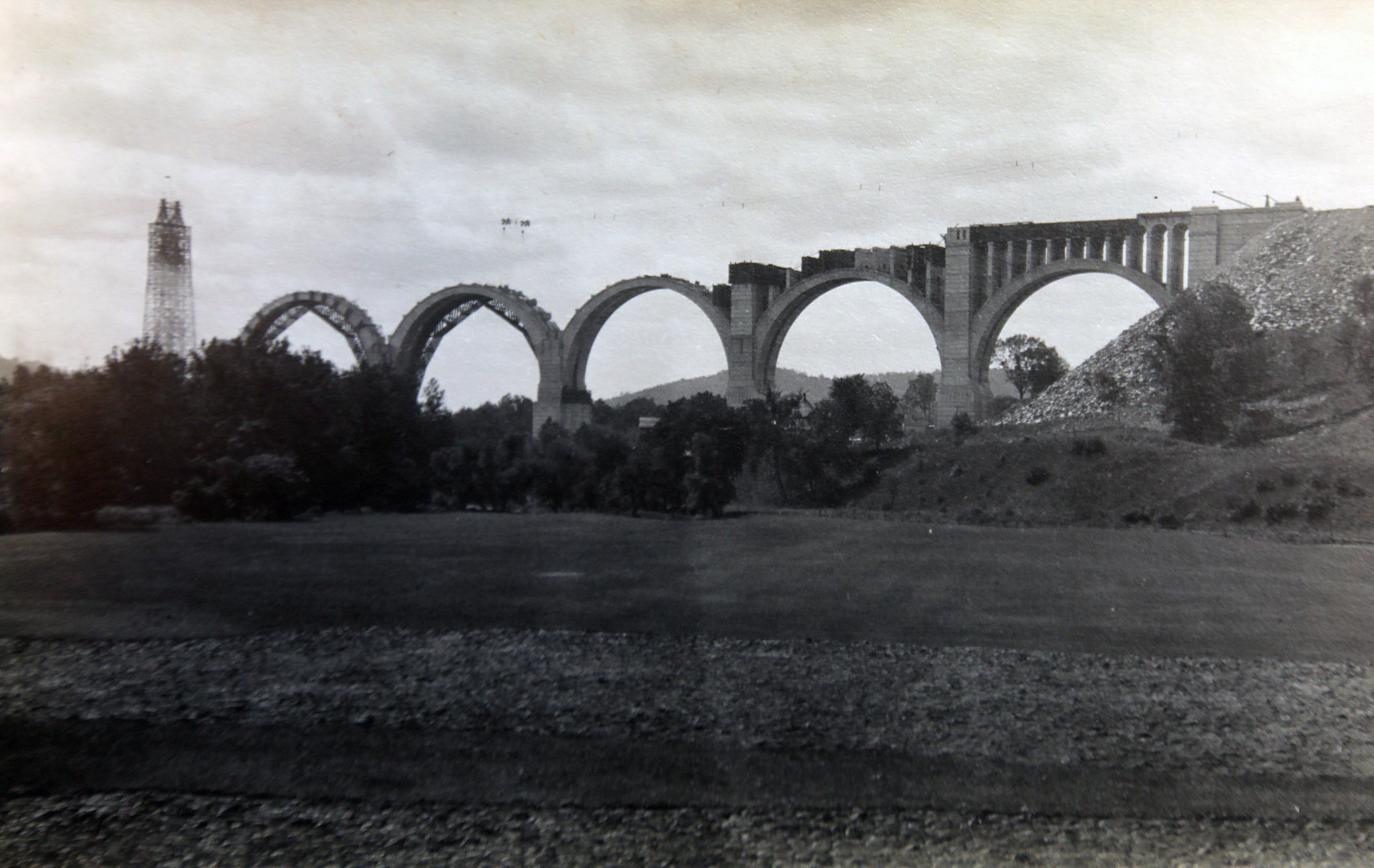
The Delaware, Lackawanna & Western Railroad began a campaign of overall improvement in 1899, roughly 50 years after the railroad was established. Under President William Truesdale, the road was widened and straightened, new passenger stations were built and immense bridges constructed. The Tunkhannock Viaduct, part of the Scranton-Hallstead Cutoff to shorten the route from Scranton to Binghamton, was begun in 1912 and completed in 1915. To build the bridge, 4,000 feet of track was laid to move supplies, and concrete and steel reinforcing rods were lifted into position by a system of cables hung from towers at each end of the bridge and a giant tower in the center. The piers were laid first, then steel arches were placed to support wooden forms for concrete. After the concrete was set, the forms were removed and the steel support moved to the next arch. (LACKAWANNA HISTORICAL SOCIETY)
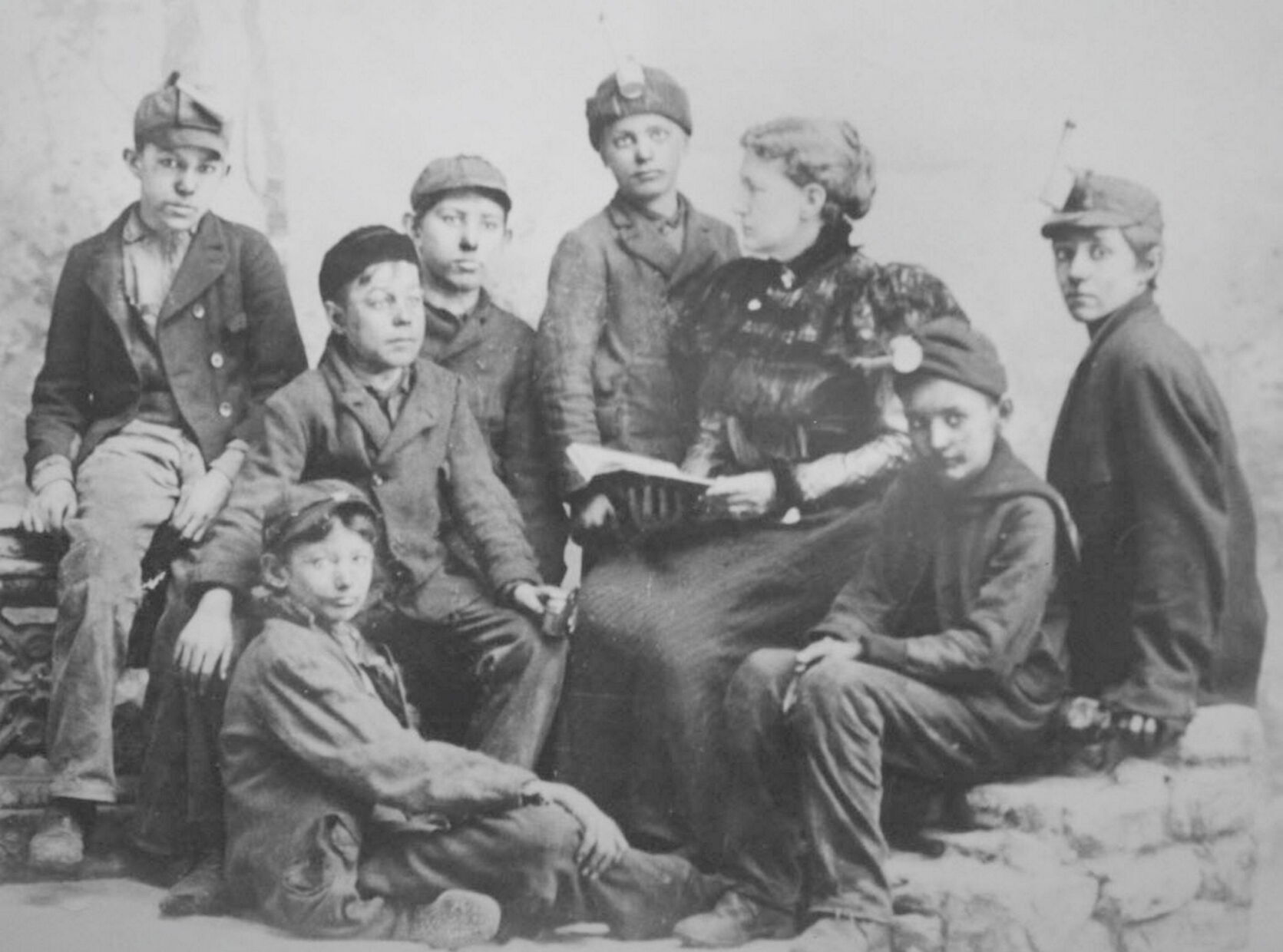
Ellen Webster Palmer, a local philanthropist who lobbied for an end to child labor in the anthracite mining industry, with breaker boys in 1896. (LUZERNE COUNTY HISTORICAL SOCIETY)
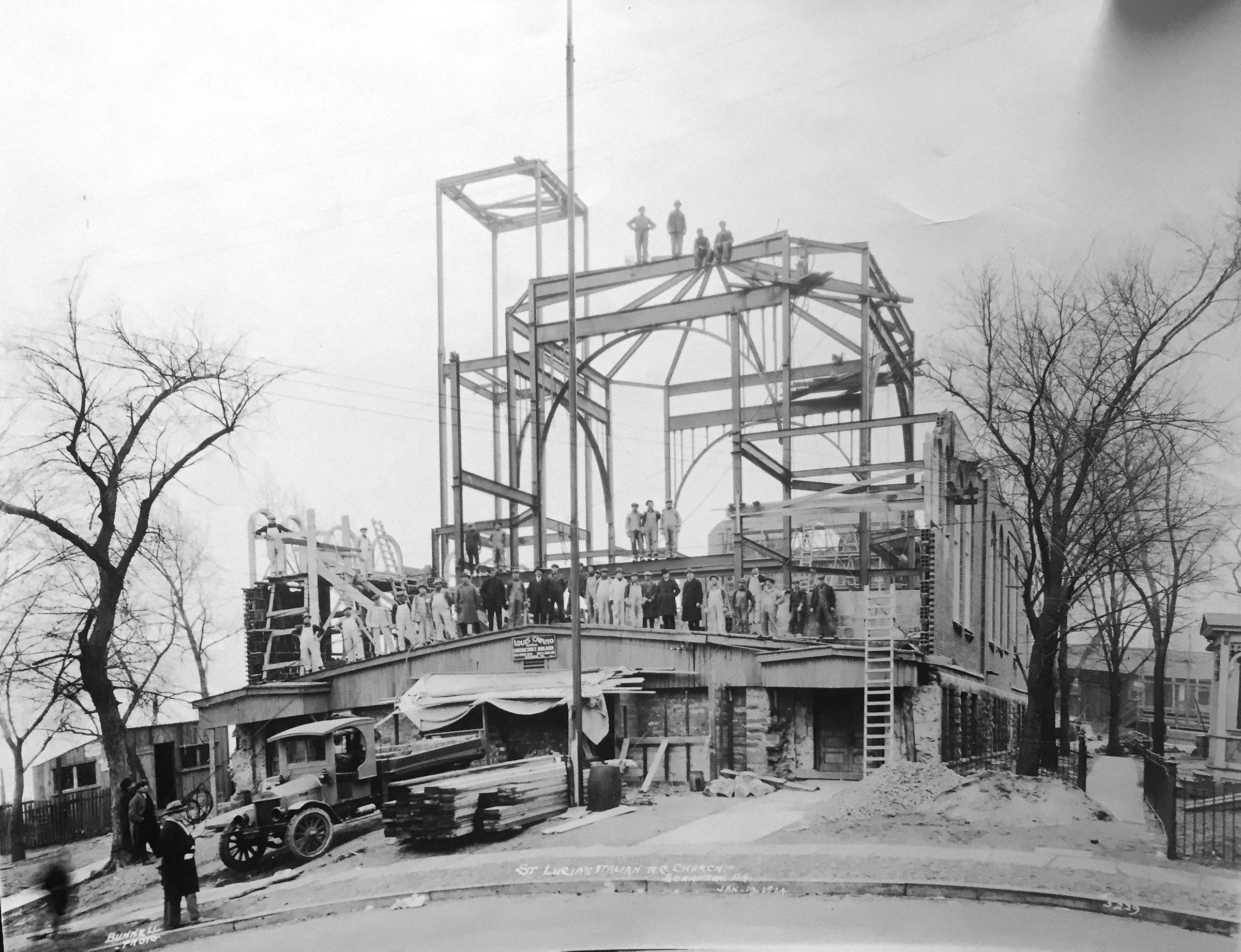
The formation of the Italian parish of St. Lucy’s in West Scranton was a long process. An unofficial congregation met at St. Cecilia’s Academy on Wyoming Avenue from 1888 until the growing population moved into the No. 16 school on what is St. Francis Cabrini Avenue in 1900. Contractor Louis Caputo began construction of the steel-framed marble-and-brick church designed by James Russaniello in January 1924. (LACKAWANNA HISTORICAL SOCIETY)
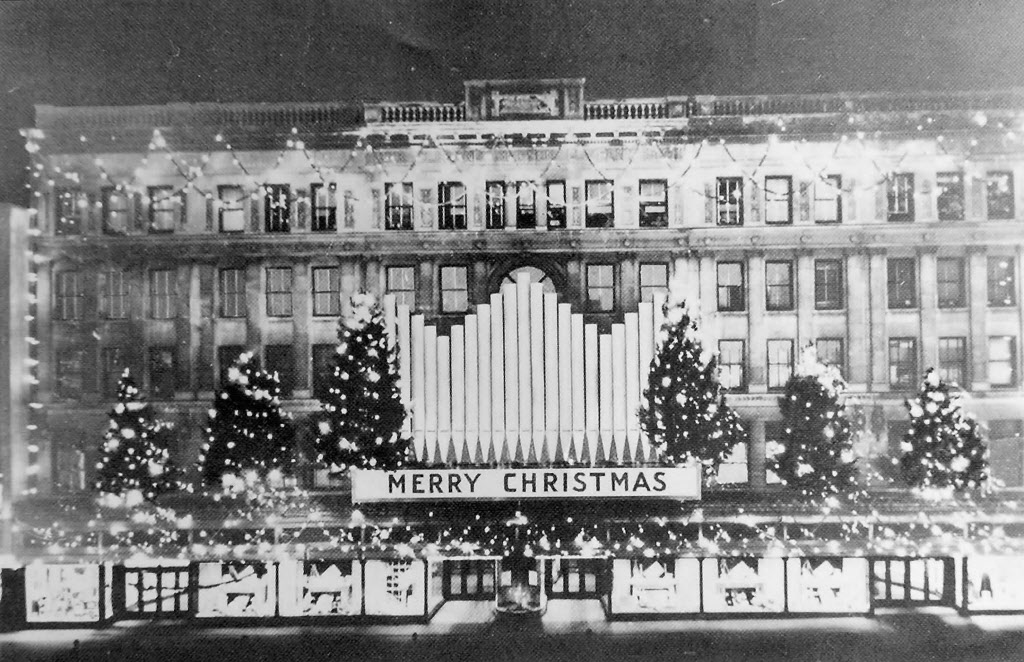
The Globe Store decorated for Christmas in the early 1940s. (LACKAWANNA HISTORICAL SOCIETY)
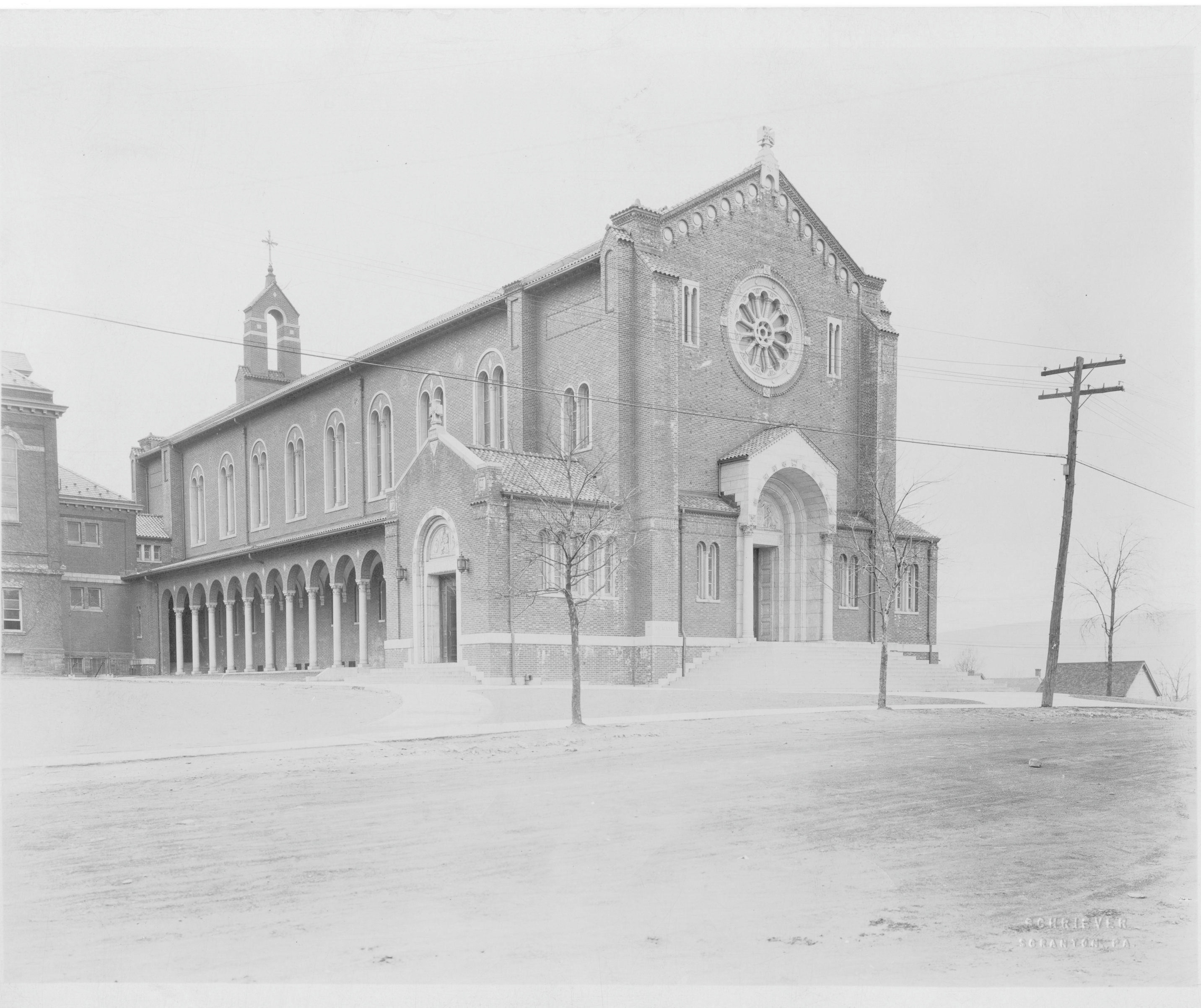
St. Ann’s Church was dedicated in 1929. The Passionist monastery was built in 1904. (LACKAWANNA HISTORICAL SOCIETY)
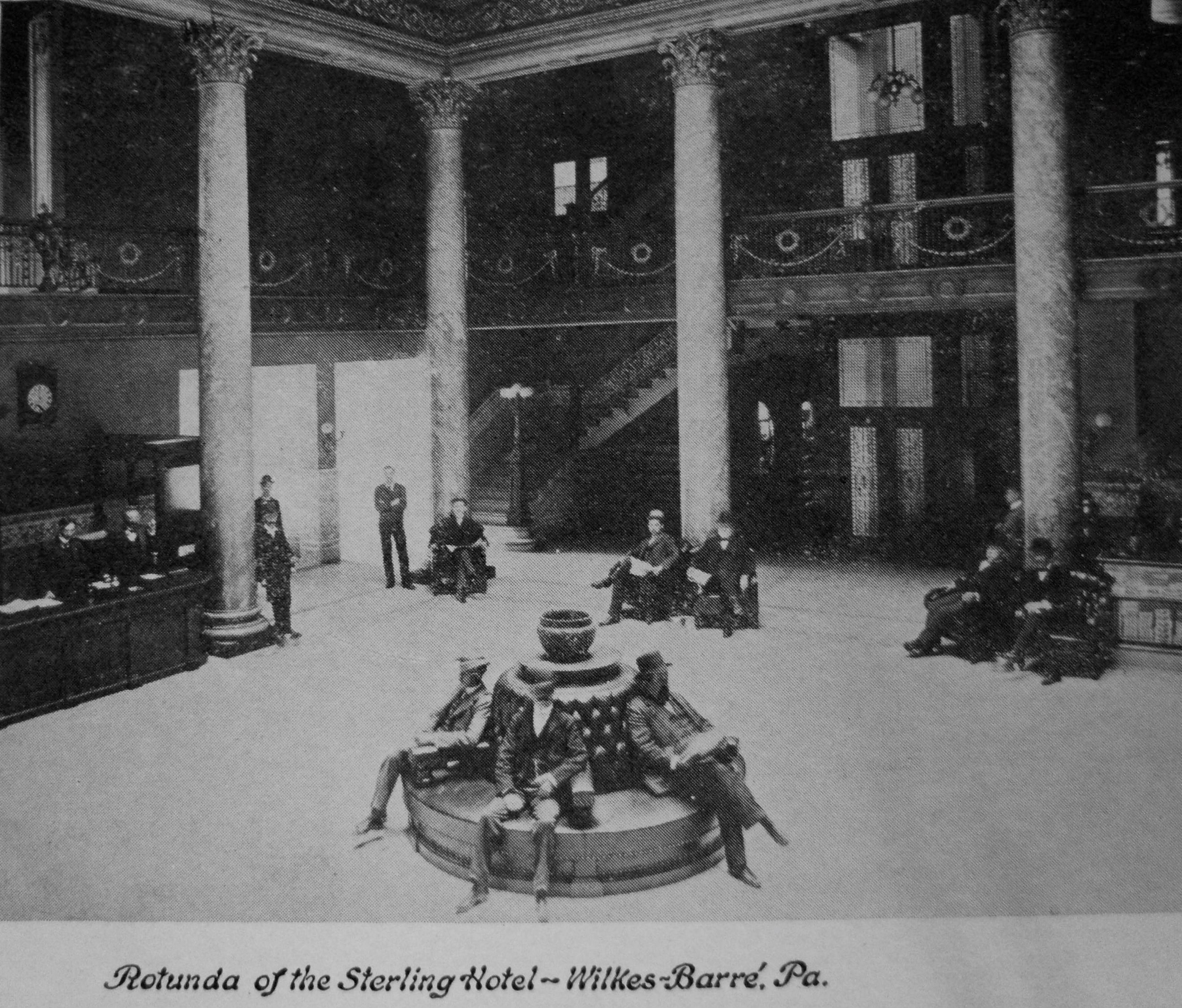
This postcard from the Luzerne County Historical Society collection shows the lobby of the Hotel Sterling as it looked in the early 1900s. (LUZERNE HISTORICAL SOCIETY)
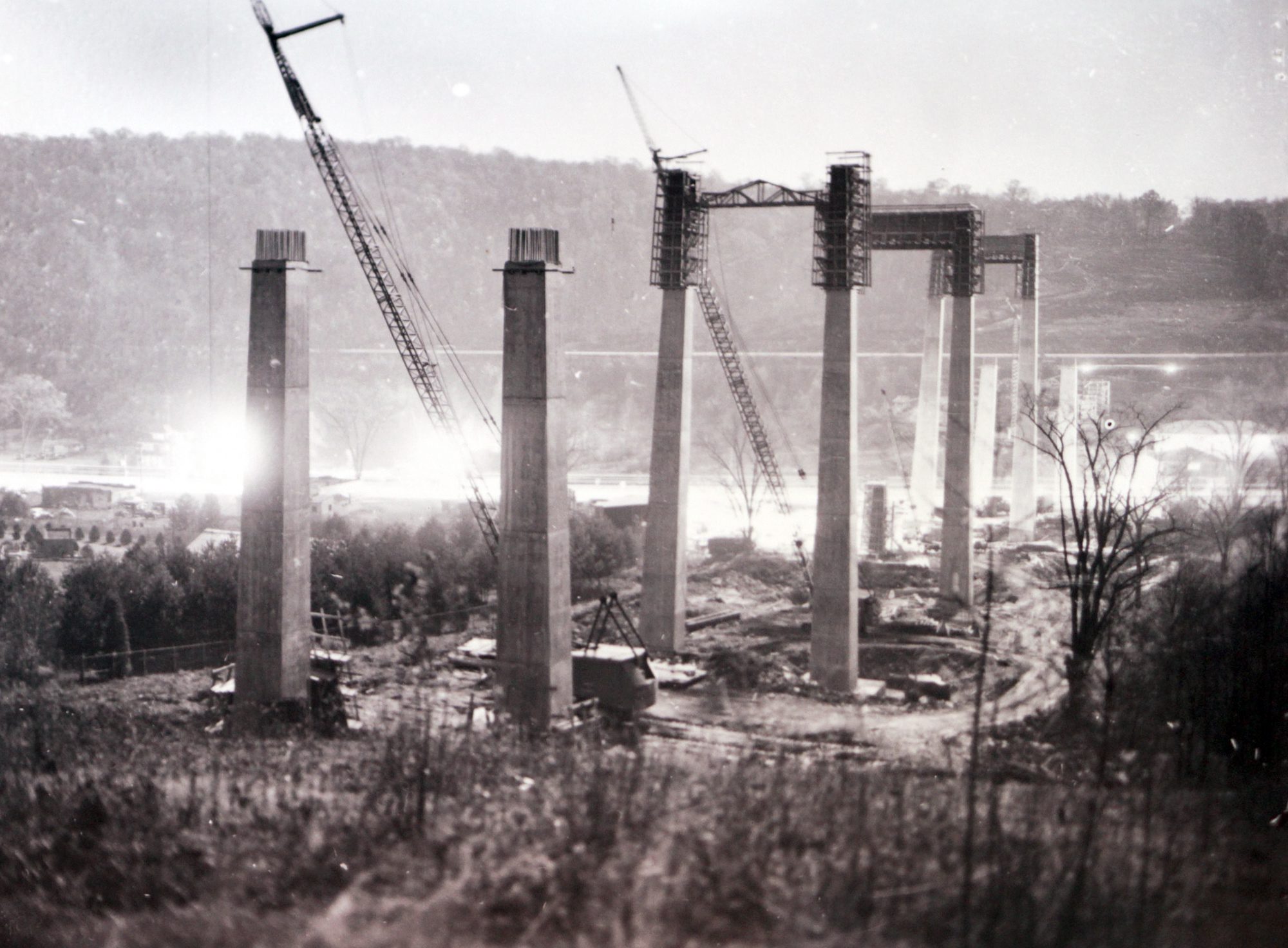
Construction of the Northeast Extention of the Pennsylvania Turnpike bridge in South Abington Township in 1956. (LACKAWANNA HISTORICAL SOCIETY)
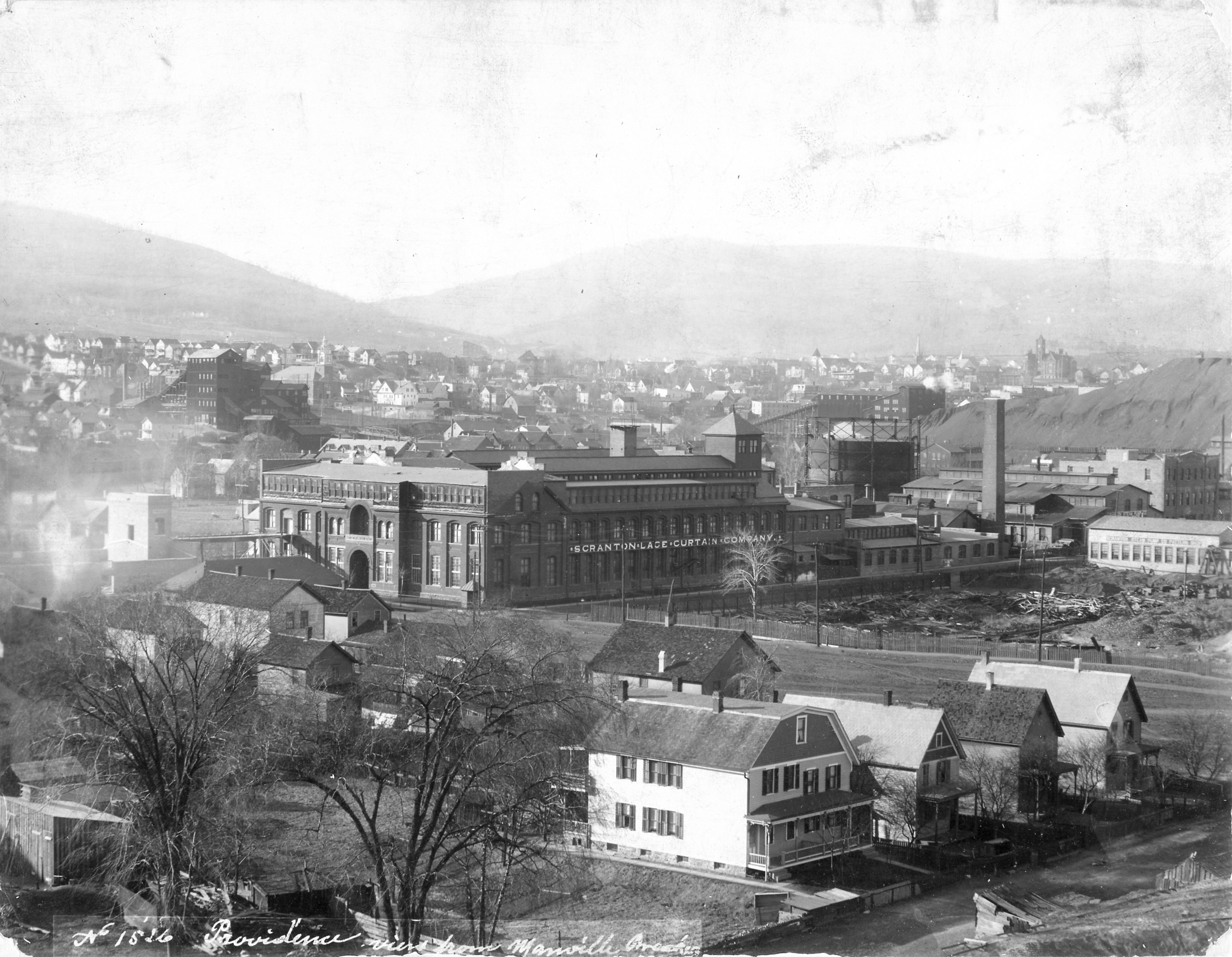
The Scranton Lace Company. (LACKAWANNA HISTORICAL SOCIETY)
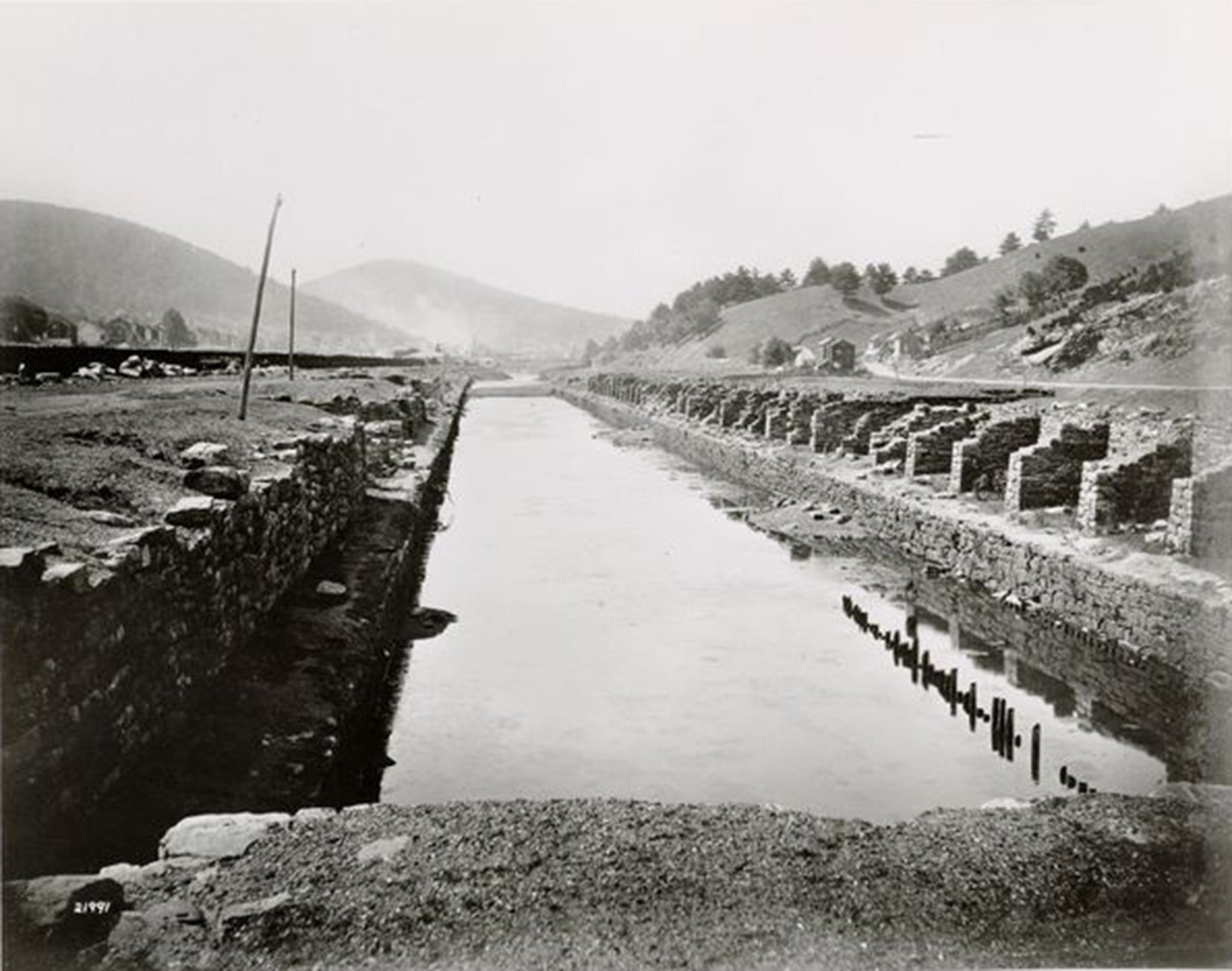
Firth Dock at Port Carbon was the starting point for coal shipments on the Schuylkill Canal from 1828 to 1871. A Pennsylvania Historical and Museum Commission marker was erected at the site in 1999. (SCHUYLKILL COUNTY HISOTRICAL SOCIETY)
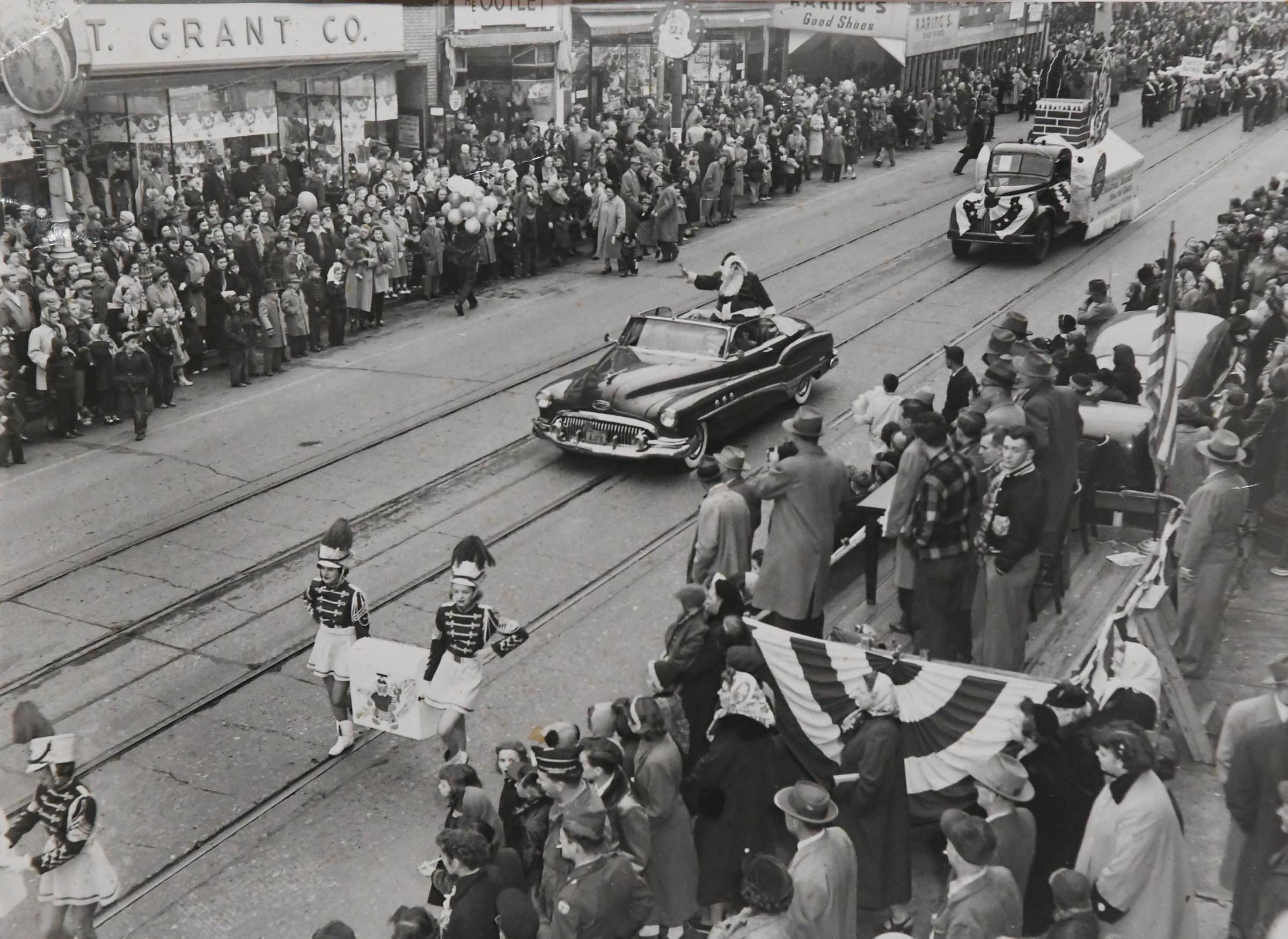
A Christmas Bond Parade attracted crowds to downtown Pottsville in 1951. (SCHUYLKILL COUNTY HISTORICAL SOCIETY)
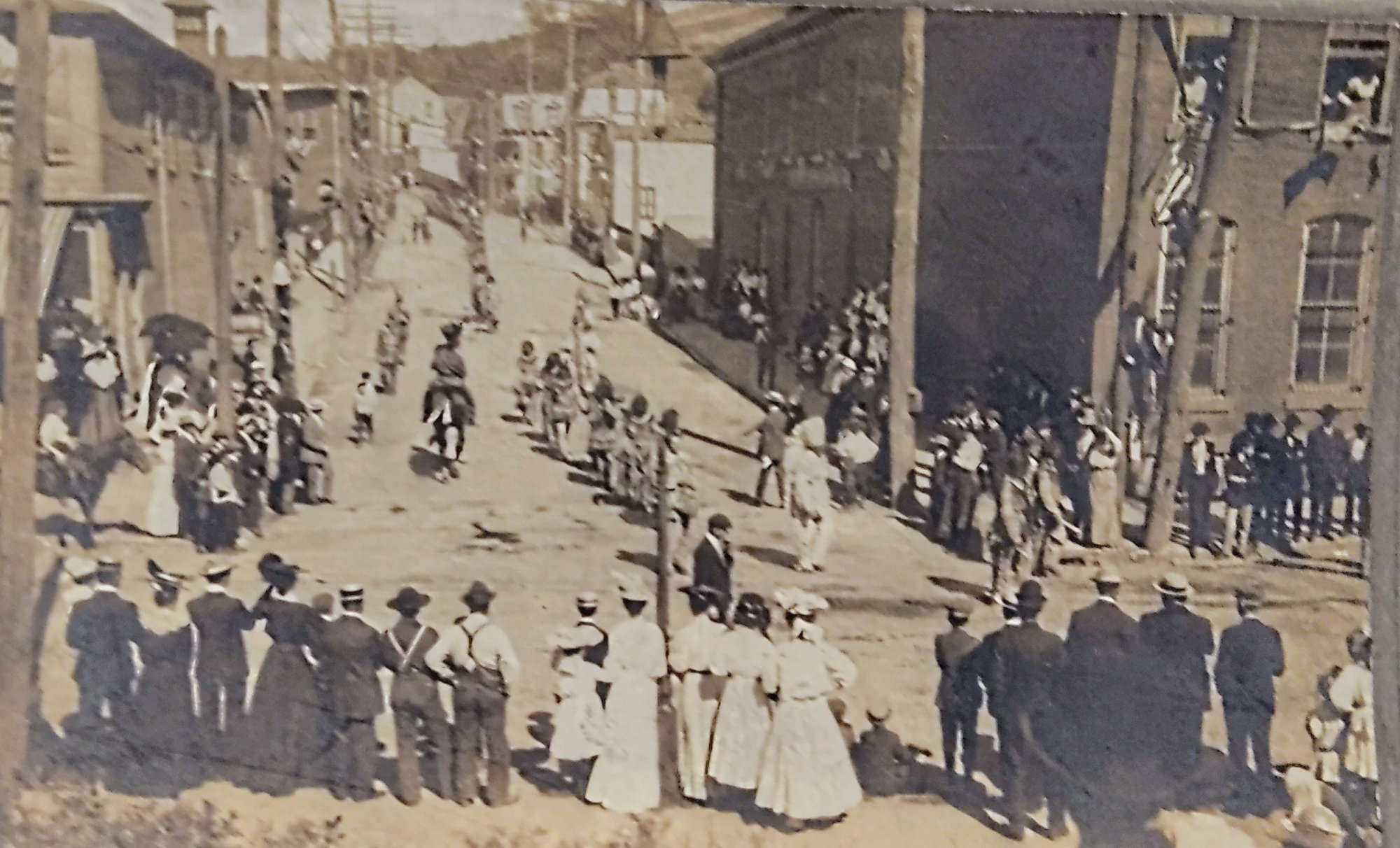
A crowd gathers at Centre and Nichols streets in Pottsville to watch the Schuylkill County Centennial Parade in July 1911. (SCHUYLKILL COUNTY HISTORICAL SOCIETY)
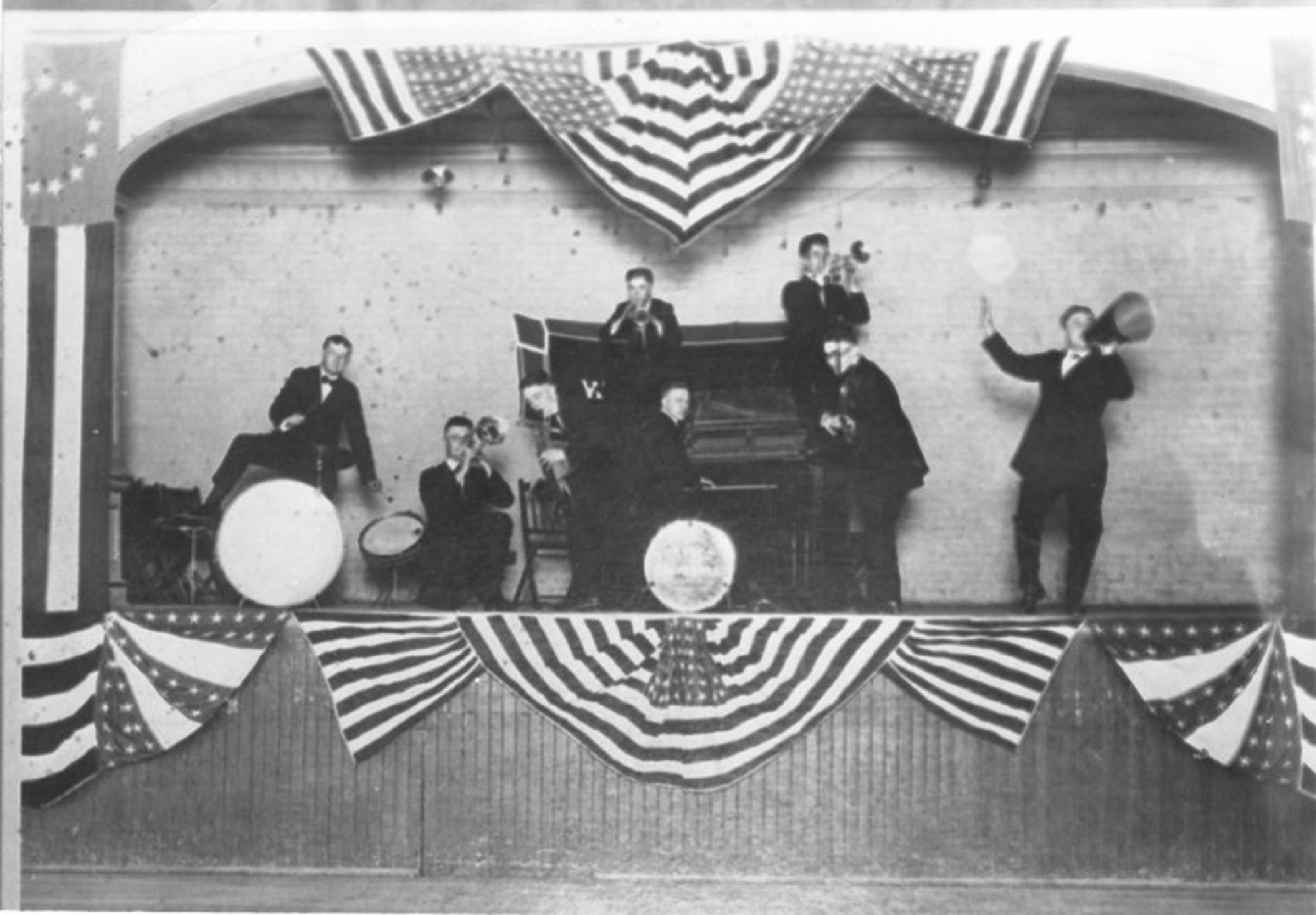
A band entertains on stage during the vaudeville era in Pottsville. The photo is believed to have been taken around 1920, but the location and the name of the band are not known. Vaudeville shows began in Pottsville in 1905 and continued to the early 1950s. The Hippodrome Theater is most closely associated with vaudeville in Pottsville. (SCHUYLKILL COUNTY HISTORICAL SOCIETY)
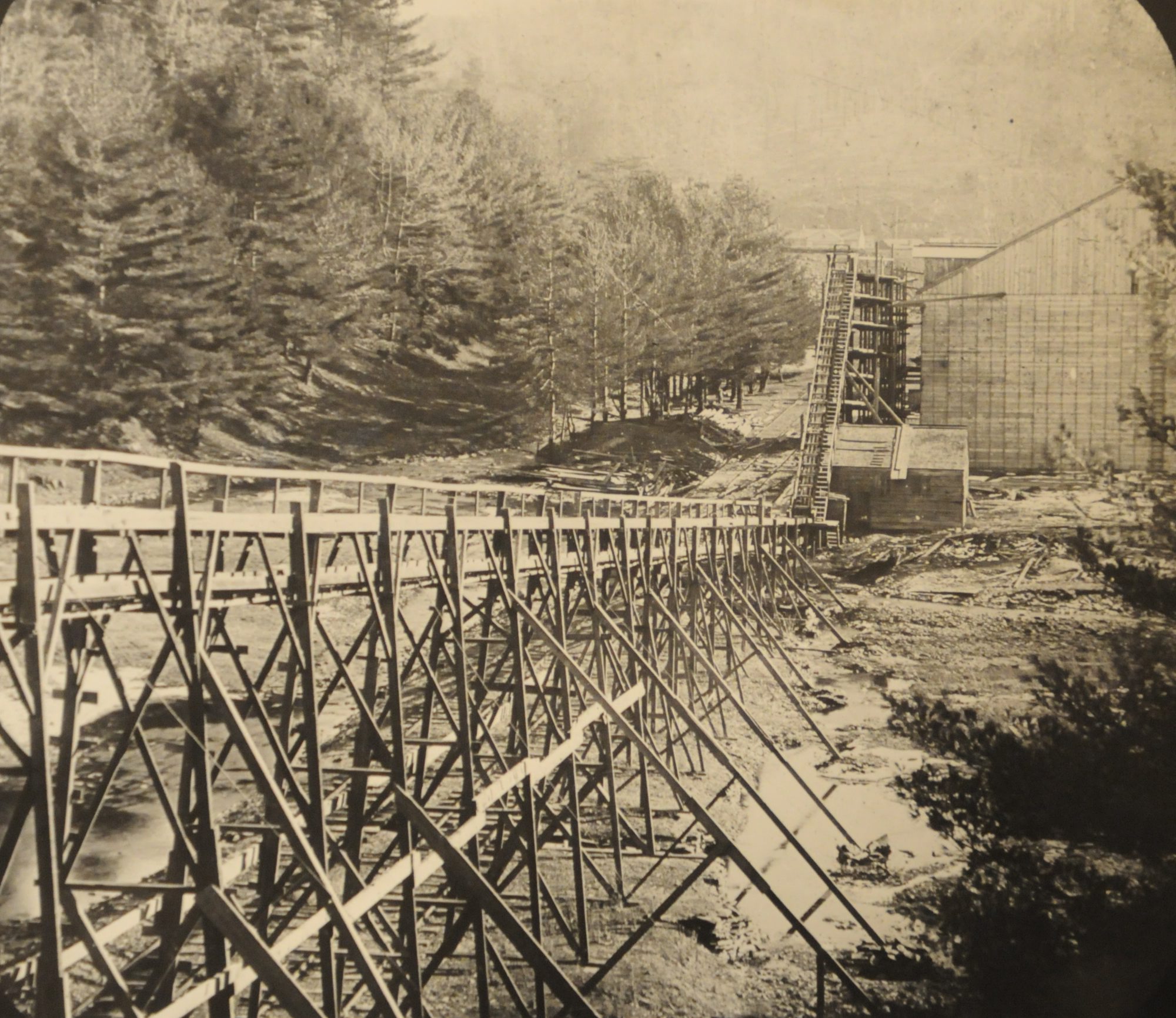
The ice chute at Tumbling Run. (SCHUYLKILL COUNTY HISTORICAL SOCIETY)
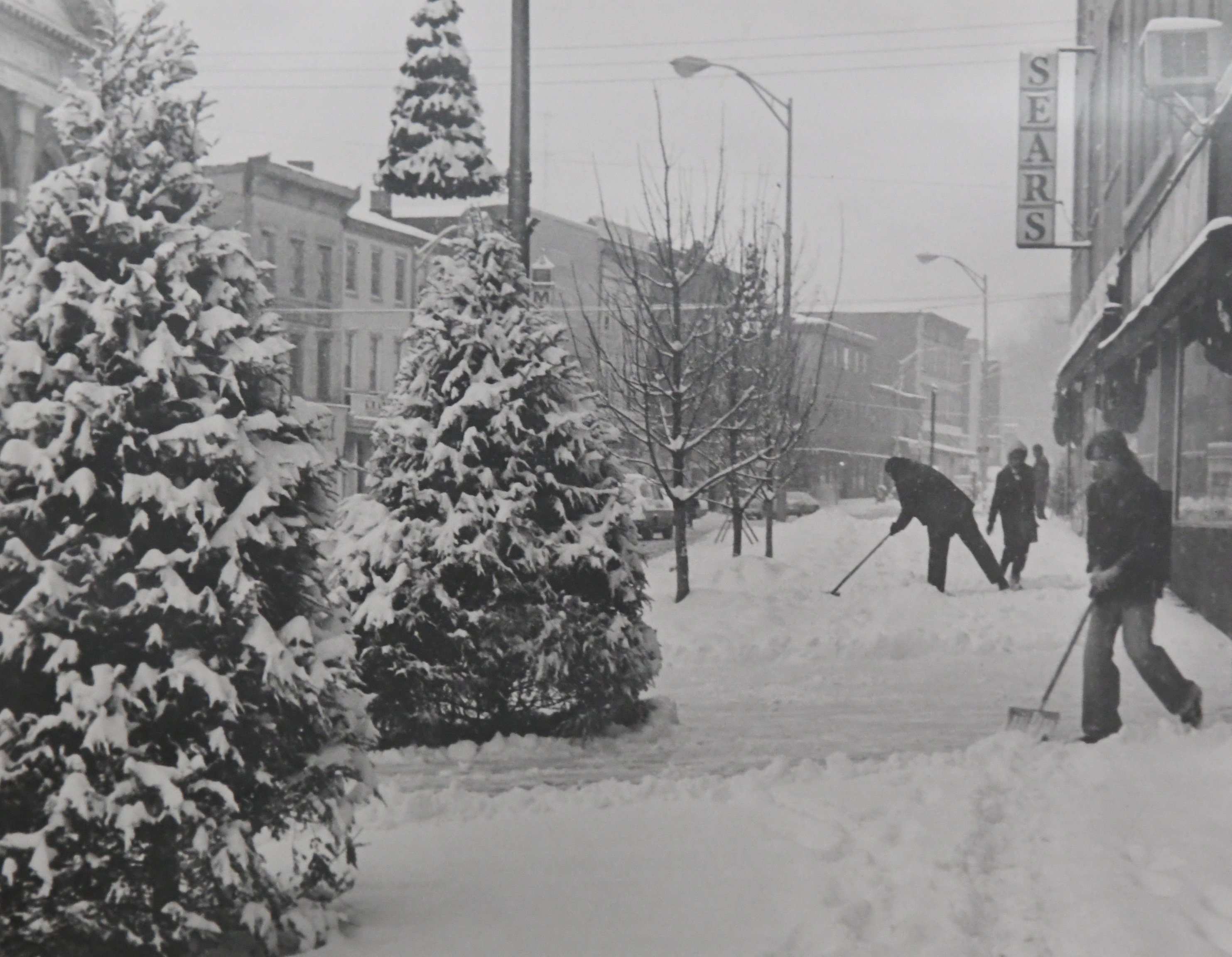
Shoveling snow on Centre Street in front of Sears in downtown Pottsville in 1977. (SCHUYLKILL COUNTY HISTORICAL SOCIETY)
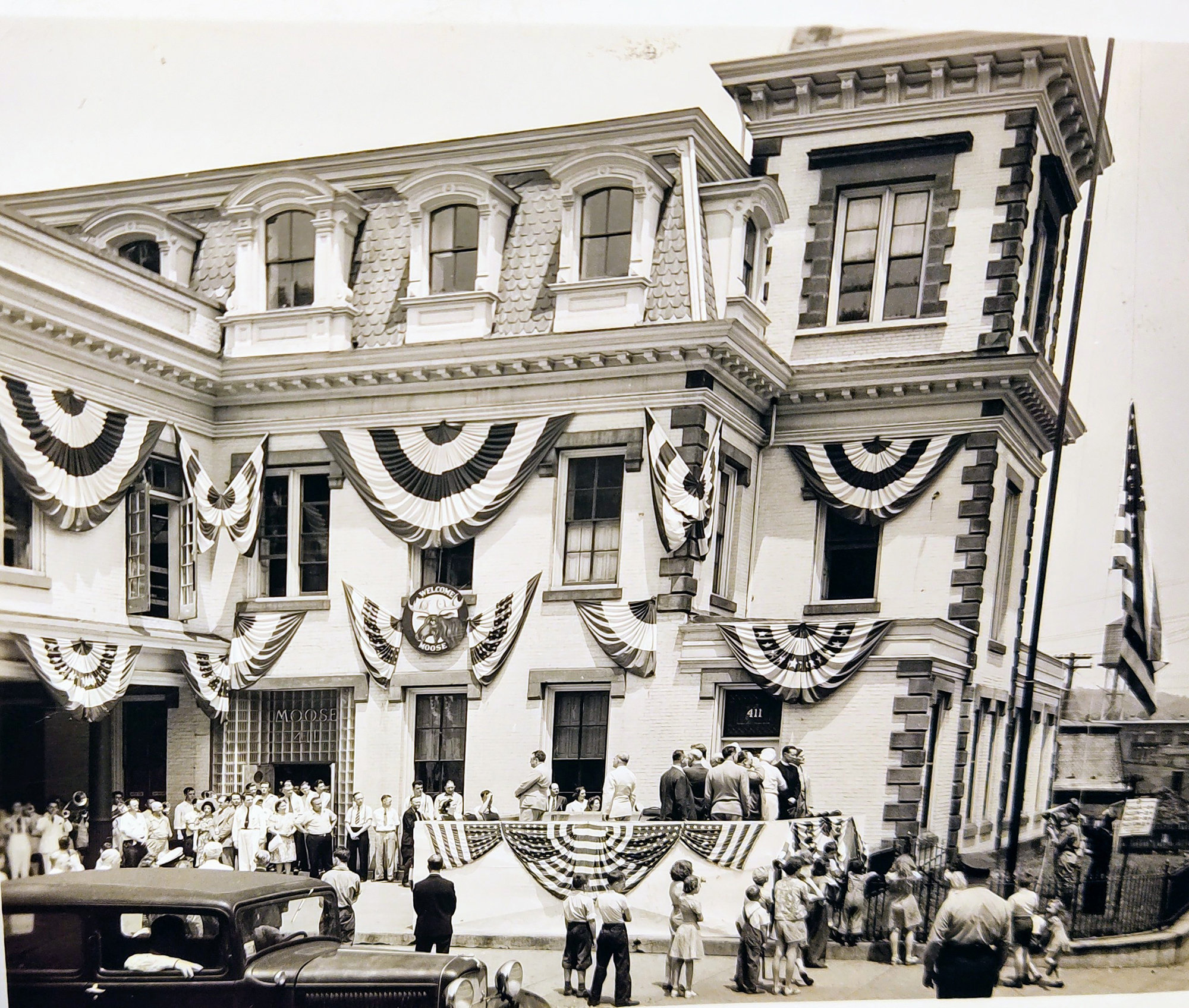
The Moose lodge was decked in patriotic splendor in 1942 during World War II. (SCHUYKILL COUNTY HISTORICAL SOCIETY)
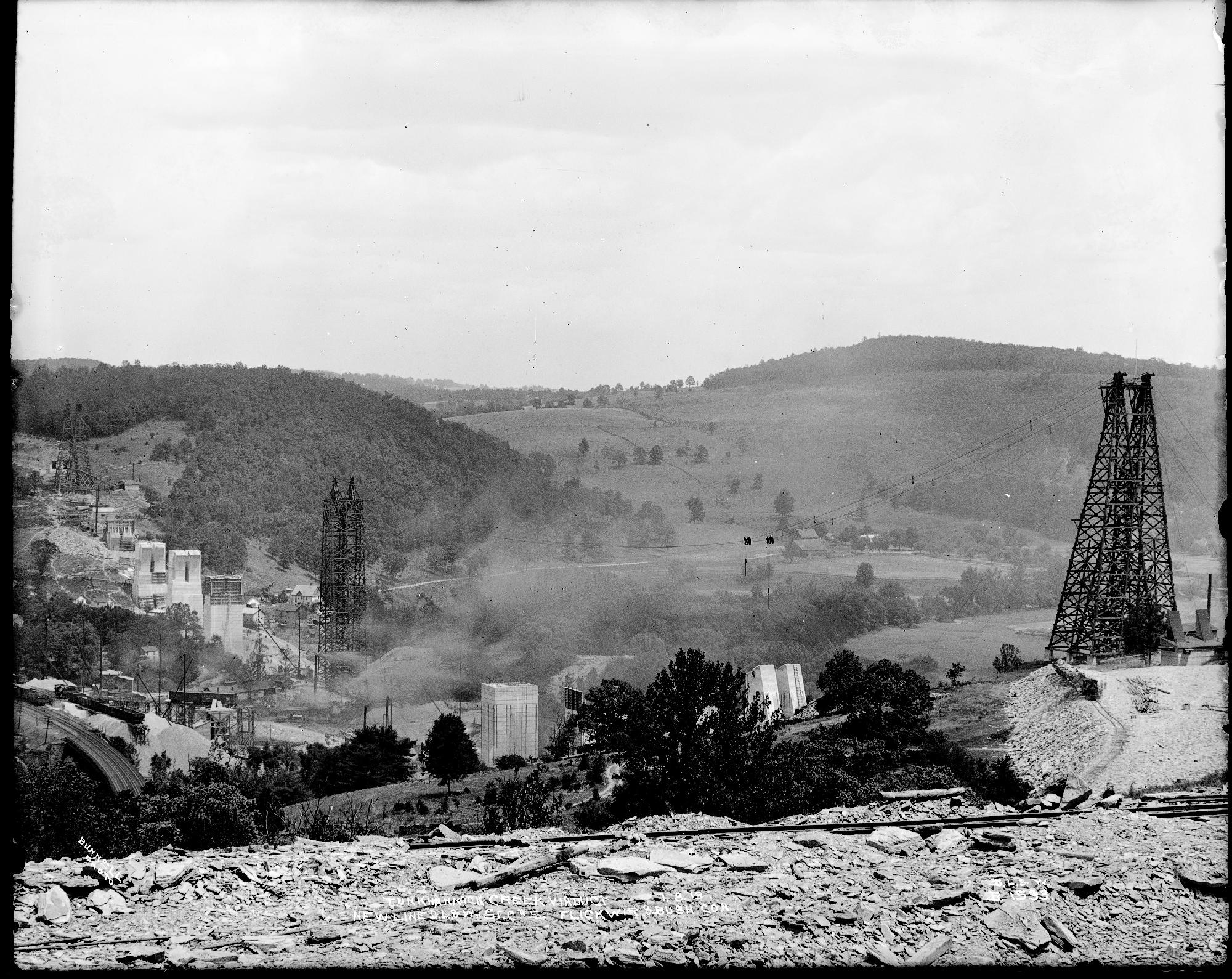
Construction is ongoing in 1913 on the Tunkhannock Viaduct, commonly known as the Nicholson Bridge. (COURTESY OF STEAMTOWN NHS, STEA 7469_B1533)
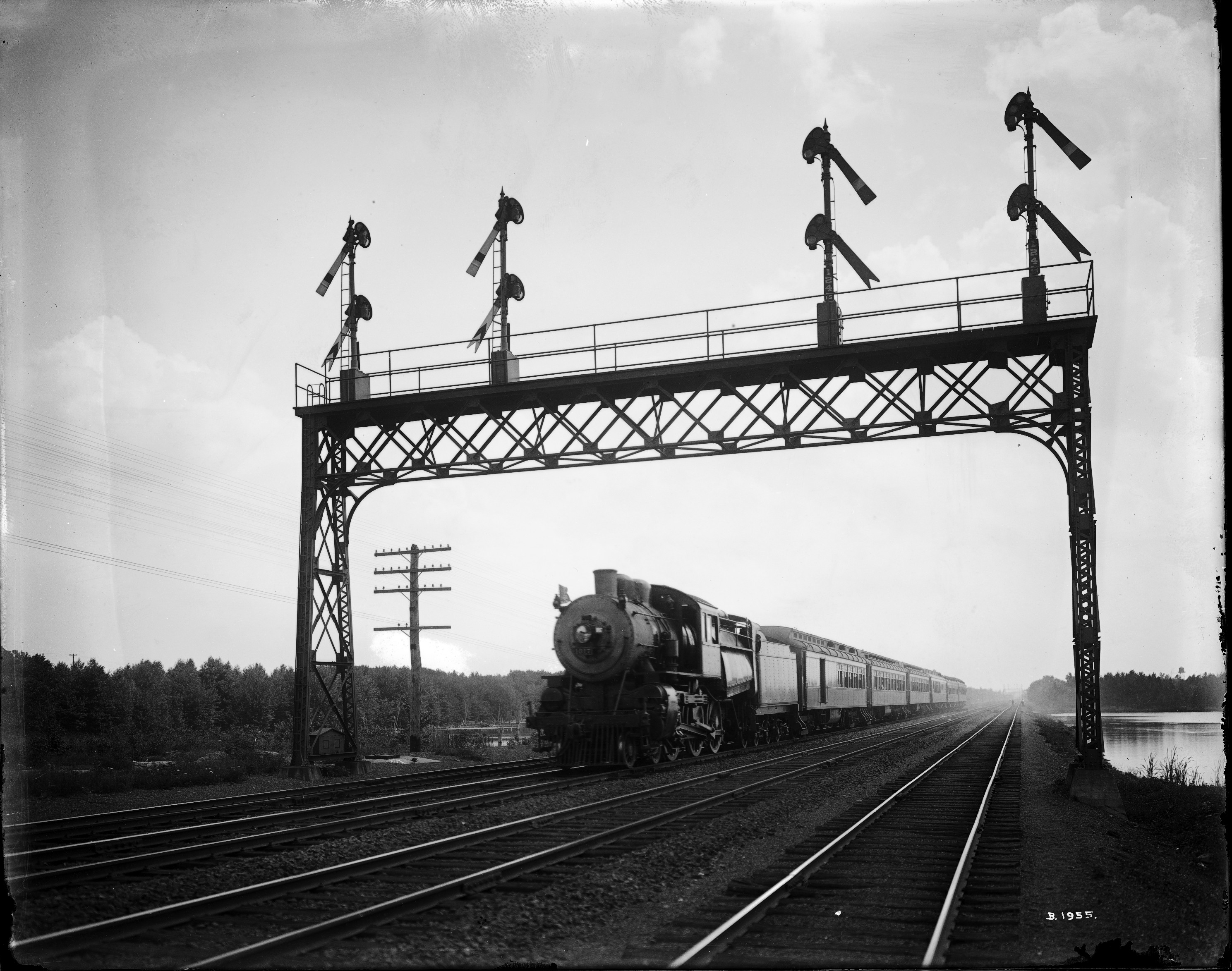
Locomotive No. 1017 travels west in Gouldsboro in 1914. (IMAGE COURTESY OF STEAMTOWN NHS, STEA 7469 _B1955)
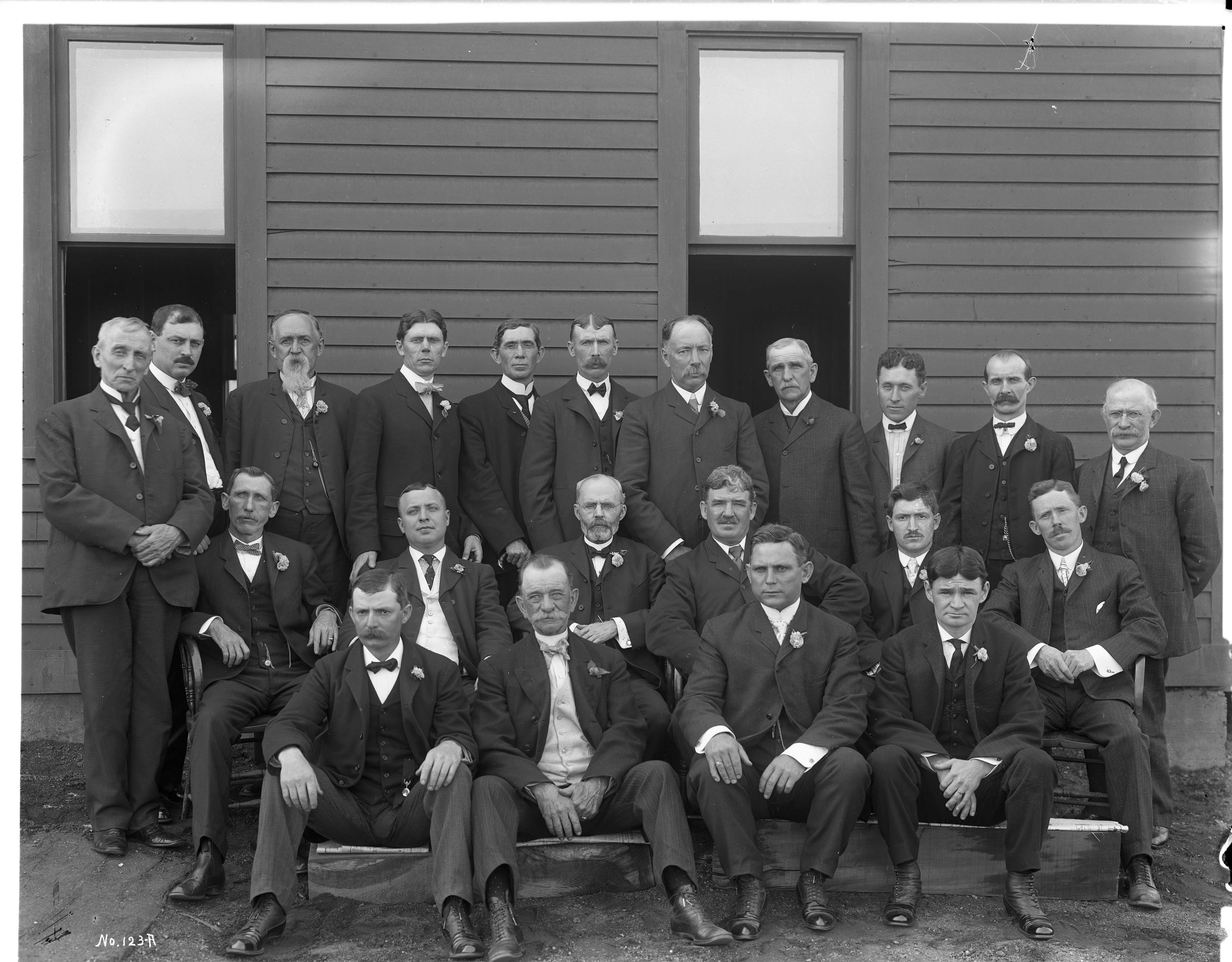
A First-Aid meeting at YMCA Gymnasium in Scranton in 1911. (IMAGE COURTESY OF STEAMTOWN NHS, STEA 7469_A0881)
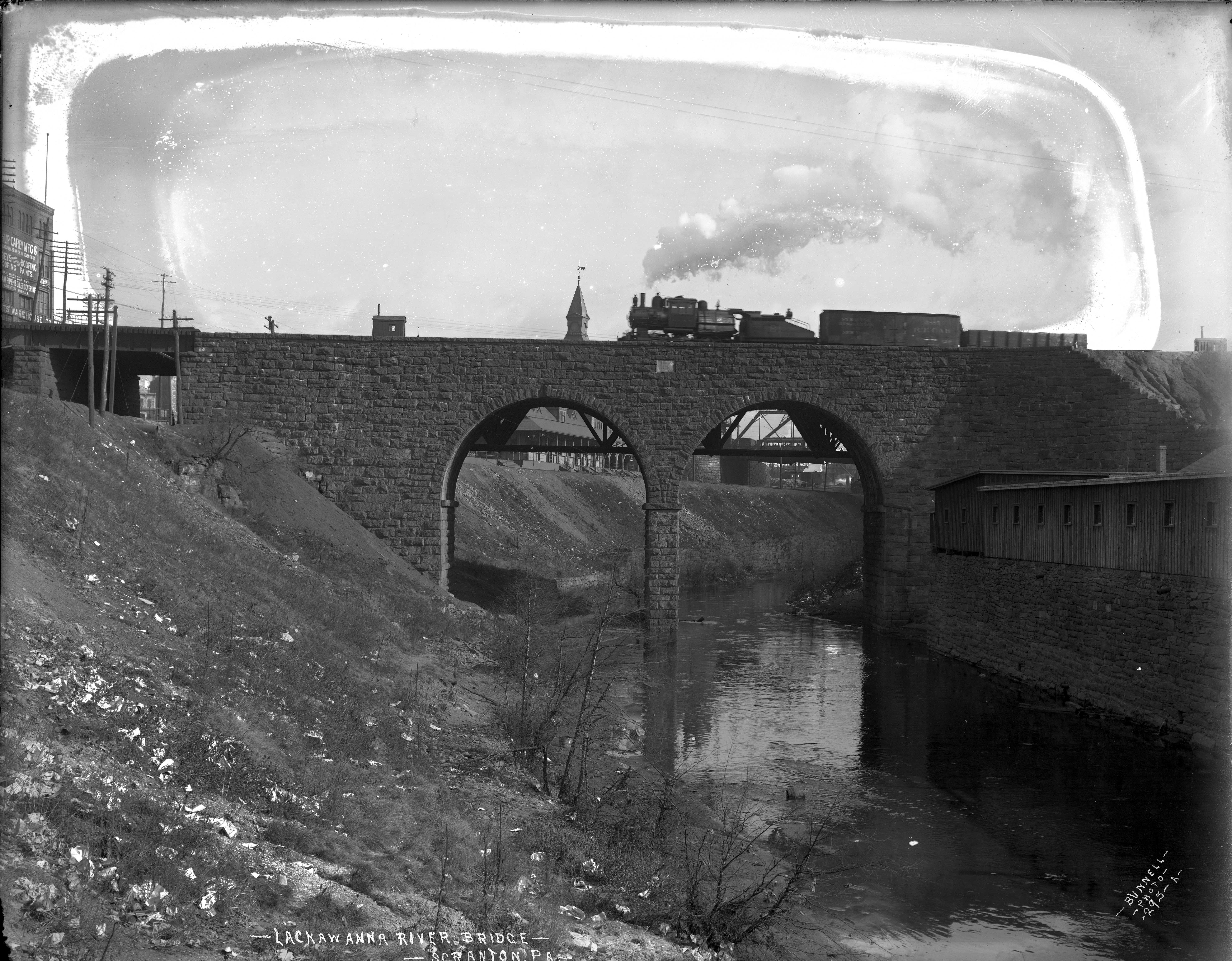
A train rolls over the Lackawanna River Bridge in 1905. (COURTESY OF STEAMTOWN NHS, STEA 7469 _A0295)
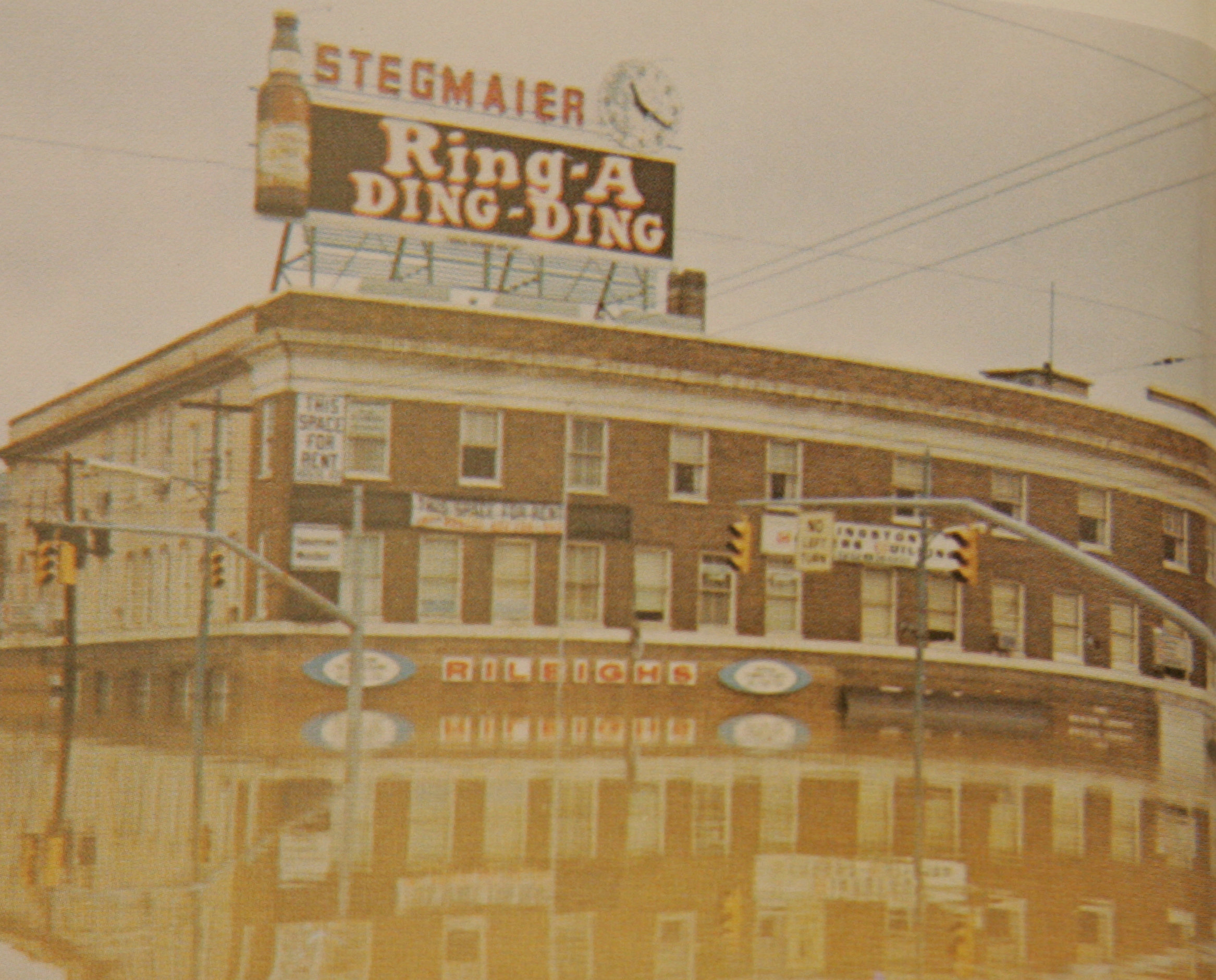
A view of the floodwaters from the Agnes flood in 1972 at Kingston Corners, Market Street and Wyoming Avenue, Kingston. (CITIZENS VOICE FILE)

A few brave citizens of the Wyoming Valley check out the Susquehanna River from the Market Street Bridge on June 22, 1972. TIMES-TRIBUNE ARCHIVES
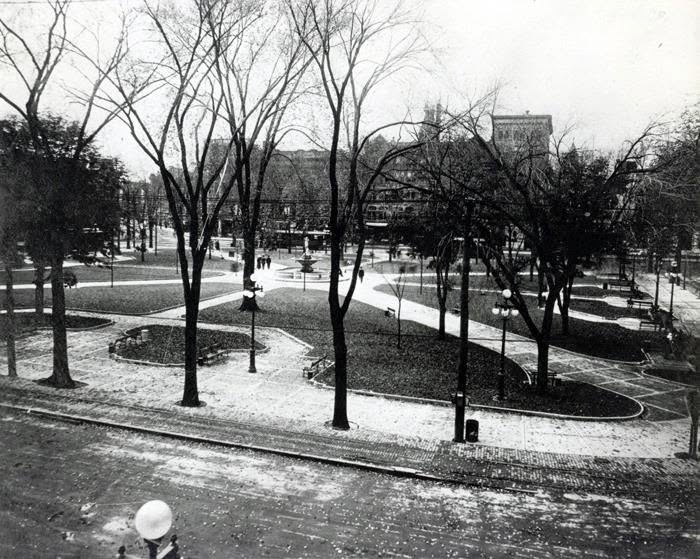
Public Square in 1912 looking from the north side toward South Main Street. Kankakee statue and water fountain was placed in the center of the square following the demolition of Luzerne County’s third courthouse. The Welles Building and the People’s National Bank Building can be seen atop the trees. (WILKES-BARRE PRESERVATION SOCIETY)
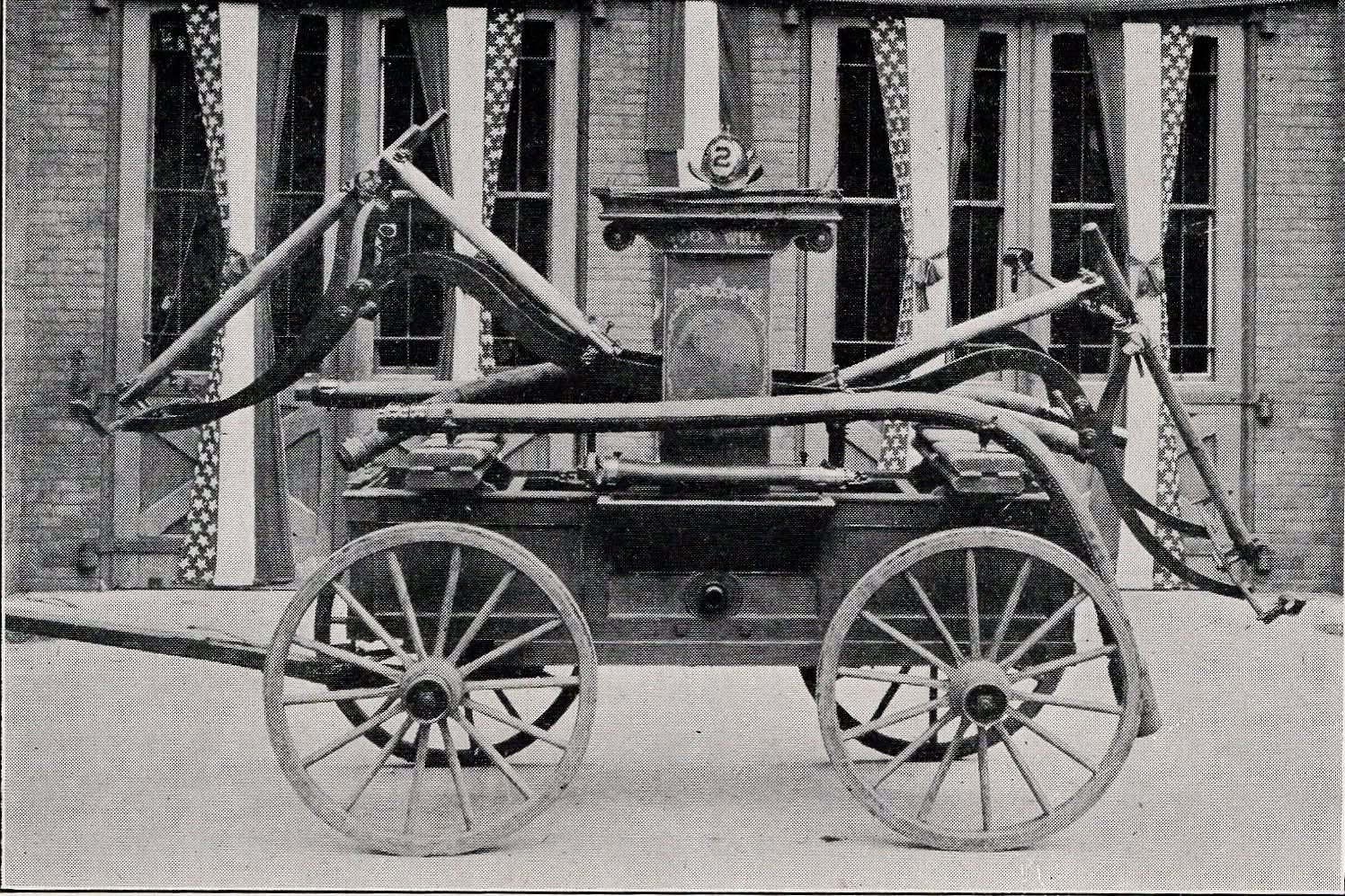
Wilkes-Barre Fire Department’s “Good Will” hand fire engine used from 1849 to 1869. Photo from Edith Brower’s book “Little Old Wilkes-Barre As I Knew It.” (WILKES-BARRE PRESERVATION SOCIETY)
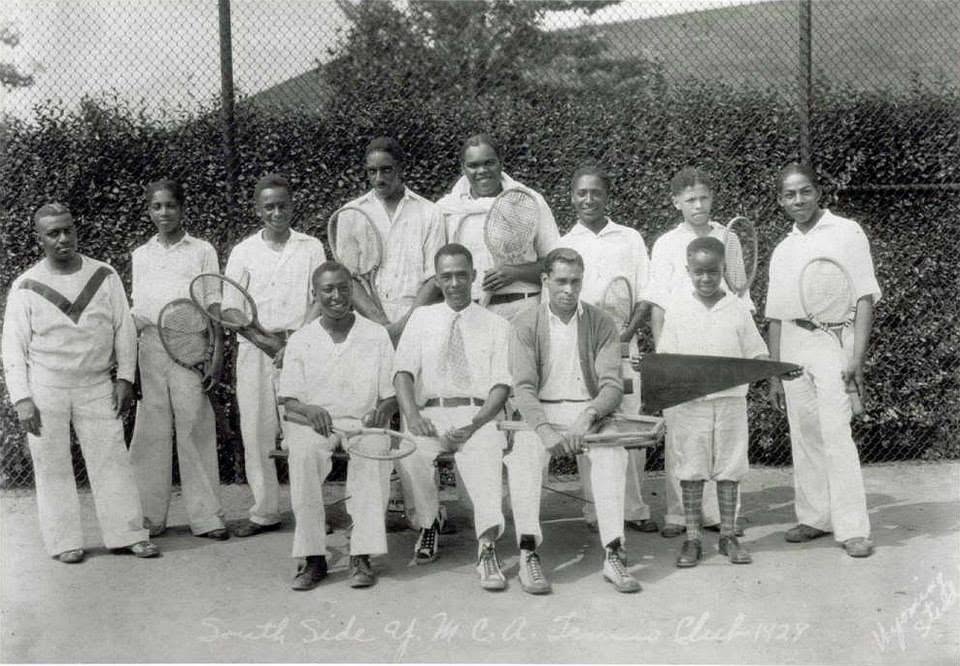
South Side YMCA Tennis Team 1928. Left to right, front row, George Hillman, Aaron Green, Executive Secretary, YMCA, Ned Brown, Carl Green; second row, Bob Patience, Harold Patience, Lawrence Moss, Fred Dwyer, Wesley Bunch, Chris Hillman, Olin Morris, Clarence Fisher. South Side Y was at 434 South Main Street and existed from the 1920s to the 1960s. (WILKES-BARRE PRESERVATION SOCIETY)
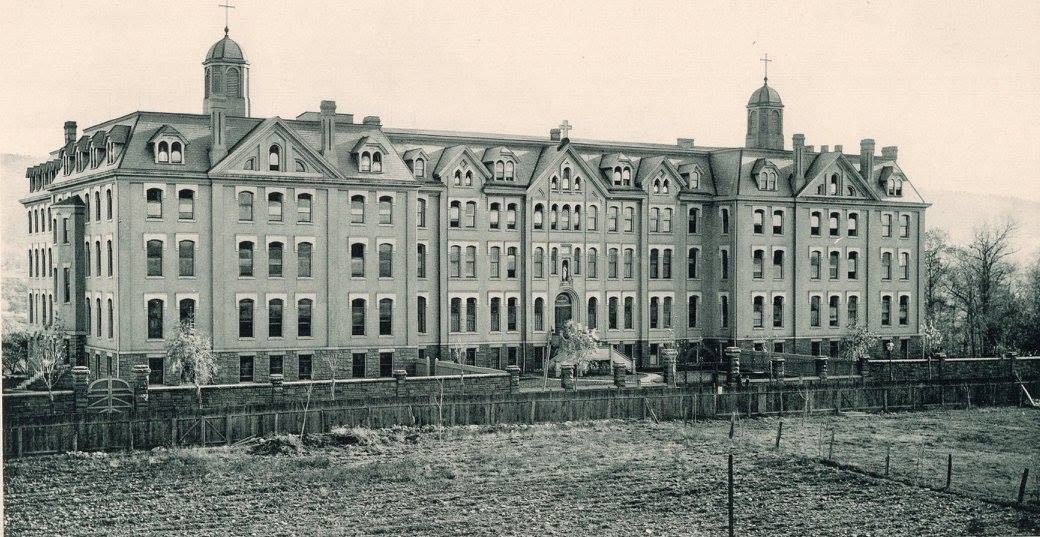
A 1896 photograph of St. Ann’s Academy on South Meade Street in the Heights neighborhood of Wilkes-Barre – where Little Flower Manor is today. Founded in 1878, the school closed and merged into Bishop Hoban (now Redeemer) in 1971. (WILKES-BARRE PRESERVATION SOCIETY)
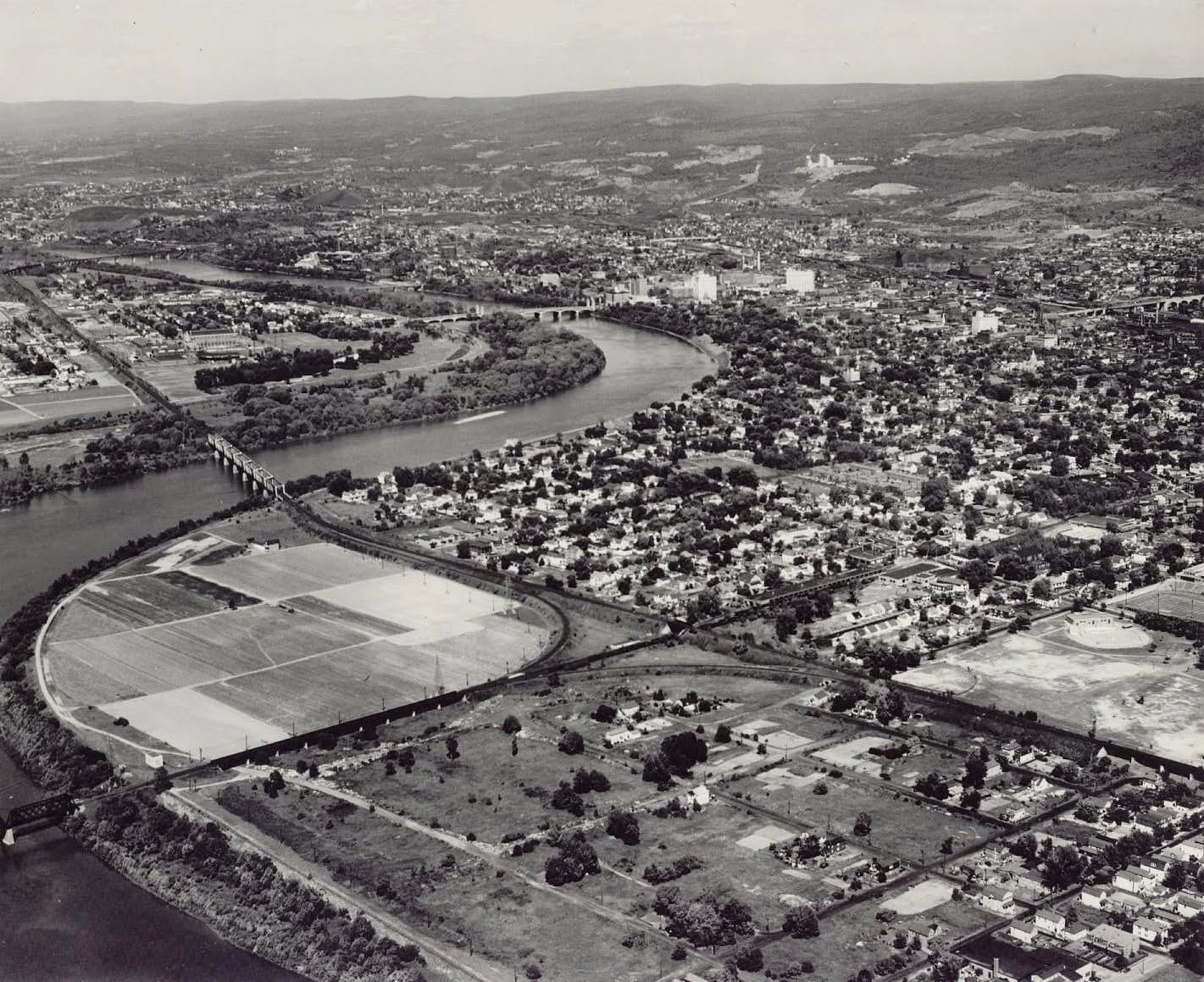
Barney Farms in South Wilkes-Barre in the early 1950s. Lesko and Eva Barney and their sons operated three farms in Plymouth, Kingston/Edwardsville and the “Firwood” section of South Wilkes-Barre. They grew tomatoes, bell peppers, carrots, corn, radishes, spinach and lettuce. They employed 150 high school boys in the summer. The part of the Kingston/Edwardsville farm became Wilkes University’s Ralston Field. The Wilkes-Barre farm became a new neighborhood starting in 1986.(WILKES-BARRE PRESERVATION SOCIETY)
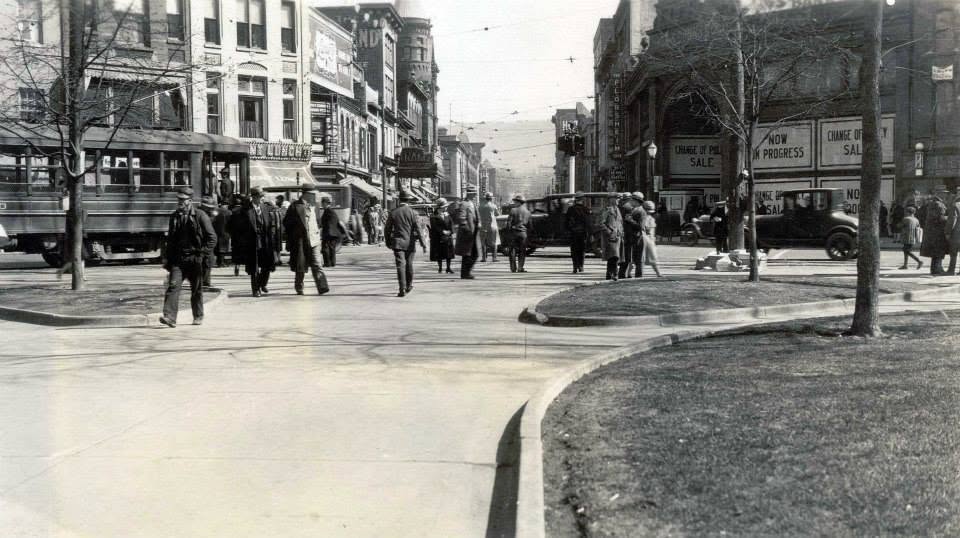
c. late 1920s photo of Public Square looking up East Market Street towards City Hall.(WILKES-BARRE PRESERVATION SOCIETY)
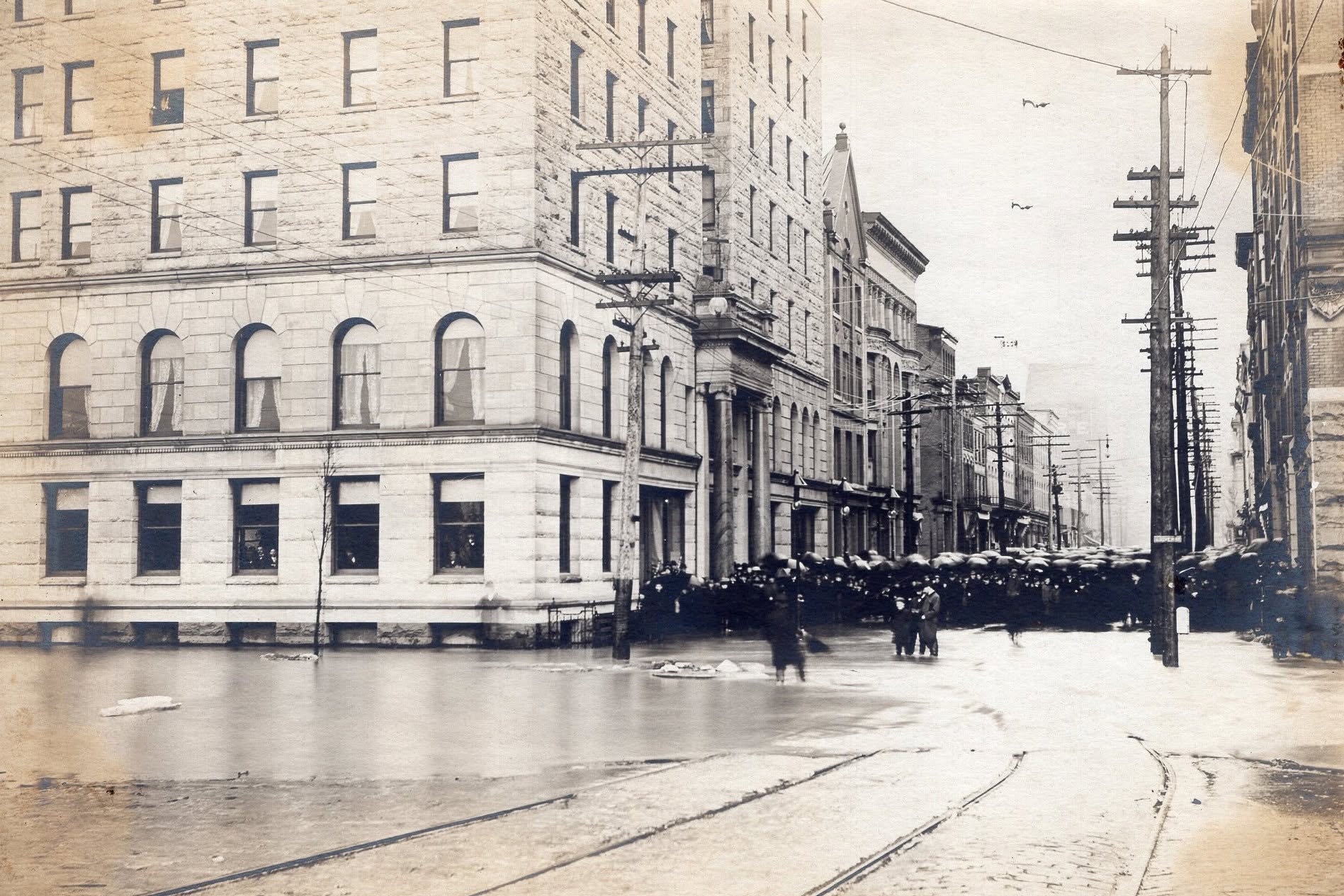
West Market Street during the March 3, 1902 flood. (WILKES-BARRE PRESERVATION SOCIETY)
Show Caption
1 of 68
Scranton, earned the nickname “The Electric City” by launching the first continuing operating successful, all-electric trolley system in the United States on November 30, 1886. Pioneered by Edward B. Sturges and powered by Van DePoele technology, the system replaced horse-drawn cars with faster, efficient electric transit. This image shows the first city run of the street car on Wyoming Avenue. St. Peter’s Cathedral can be seen in the background. December 19, 1954, marked the last day of electric trolley service in Scranton, after 68 years of electrifying service.(LACKAWANNA HISTORICAL SOCIETY)