
SCRANTON – St. Luke’s Episcopal Church’s six year journey of commitment and faith was rewarded recently with their acceptance to the National Register of Historic Places.
On Saturday the church took a moment to look back on that accomplishment and on the history of the church and the city.
Ella Rayburn, principal researcher of the project, looked back to 2018, when Rev. Rebecca Barnes met with a Louis Tiffany scholar who pointed out that the church wasn’t on the National Register of Historic Places.
Because Barnes knew Rayburn was an historian and museum curator, she asked for her help.
The inside of St. Luke’s Episcopal Church on Nov. 1, 2025. The church celebrated it acceptance on the National Register of Historic Places. (GERI GIBBONS/STAFF PHOTO)
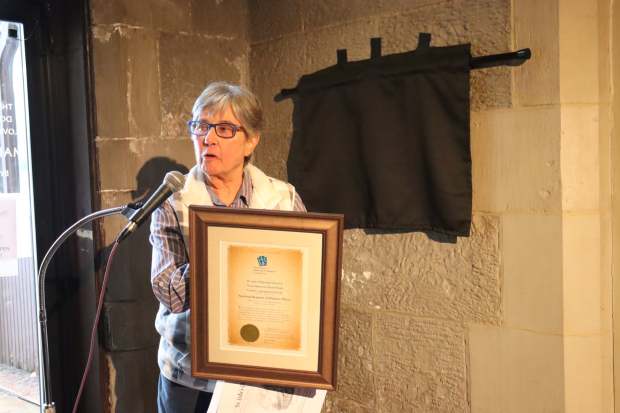
Ella Rayburn, principal researcher behind St. Luke’s application to be considered for the National Register of Historic Places, speaks before an unveiling on Nov. 1, 2025. (COURTESY CITY OF SCRANTON)
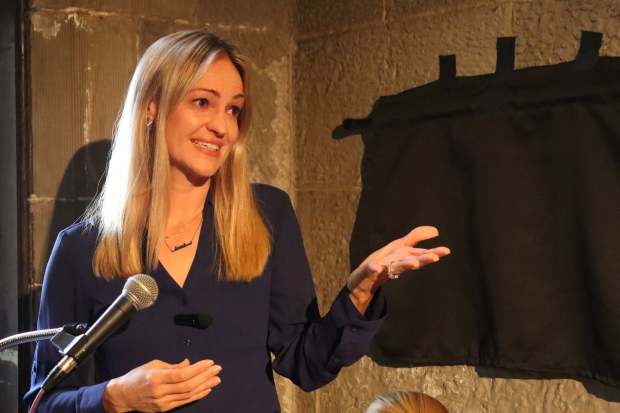
Scranton Mayor Paige G. Cognetti speaks at the dedication and blessing of a plaque honoring St. Luke’s Episcopal Church being placed on the National Register of Historic Places on Nov. 1, 2025. (Courtesy the City of Scranton)
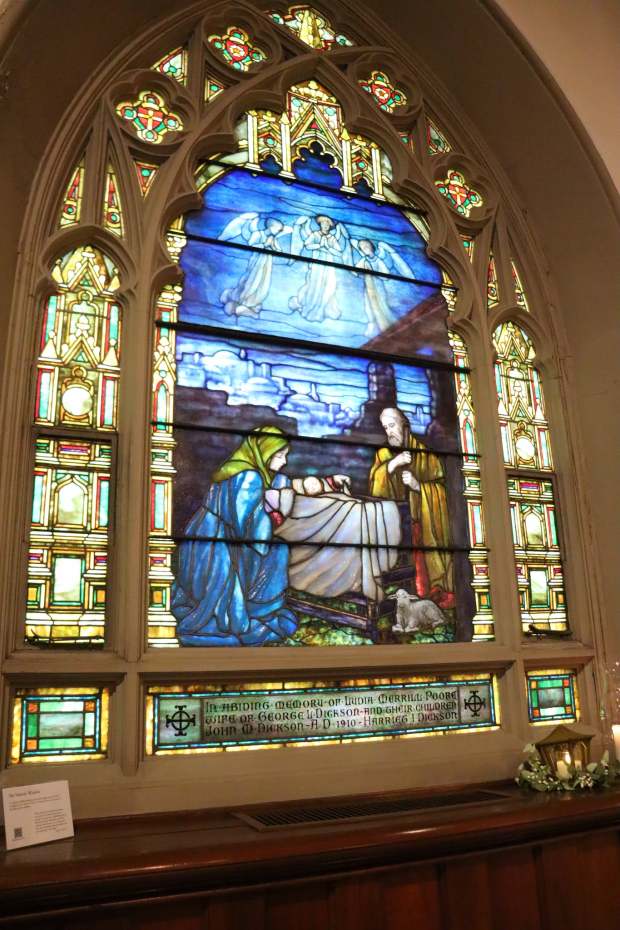
Historic Tiffany stained glass window depicting the Nativity, gifted to St. Luke’s in 1910. (COURTESY CITY OF SCRANTON)
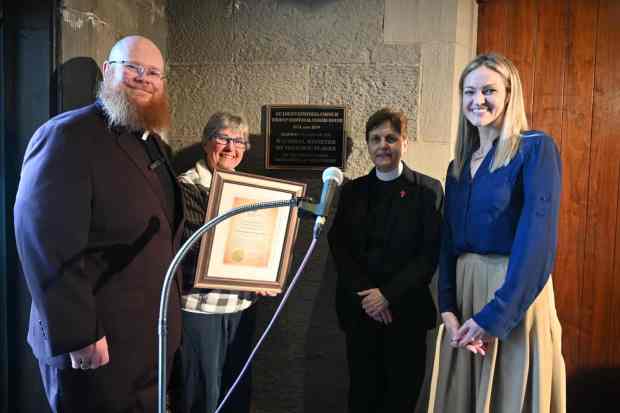
From left, Rev. Tyler Parry, principal researcher Ella Rayburn, the Rev. Rebecca Barnes, and Scranton Mayor Paige G. Cognetti stand before a plaque honoring St. Luke’s Episcopal Church’s addition to the National Register of Historic Places on Sat., Nov. 1, 2025. (GERI GIBBONS/STAFF PHOTO)
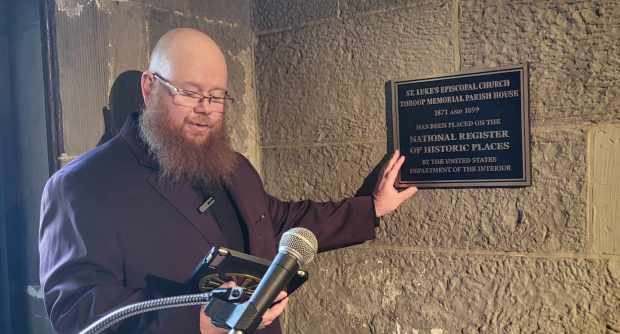
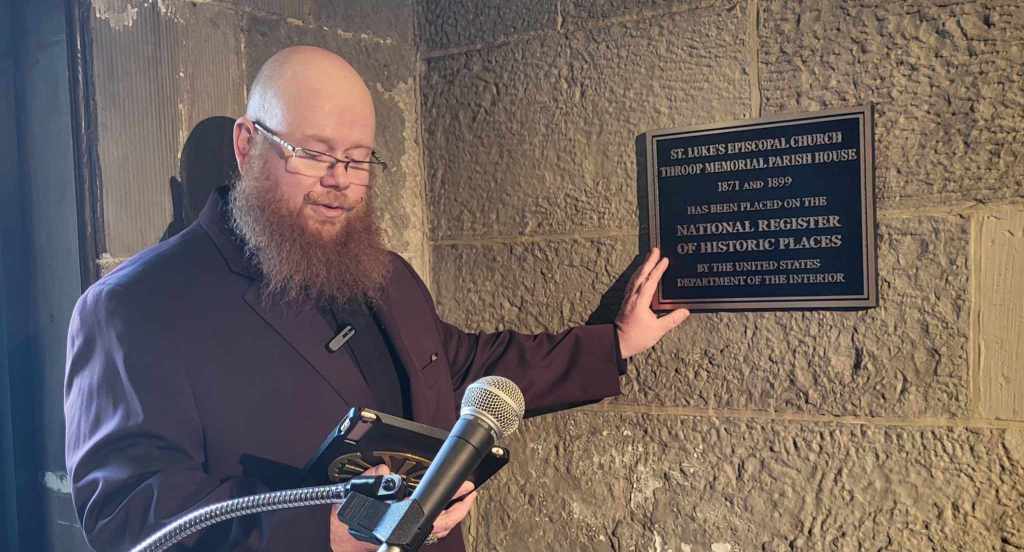
Rev. Tyler J. Parry says a prayer of dedication over a plaque reflecting the acceptance of St. Luke’s Episcopal Church to the National Register of Historic Places on Nov. 1, 2025. (GERI GIBBONS/STAFF PHOTO)
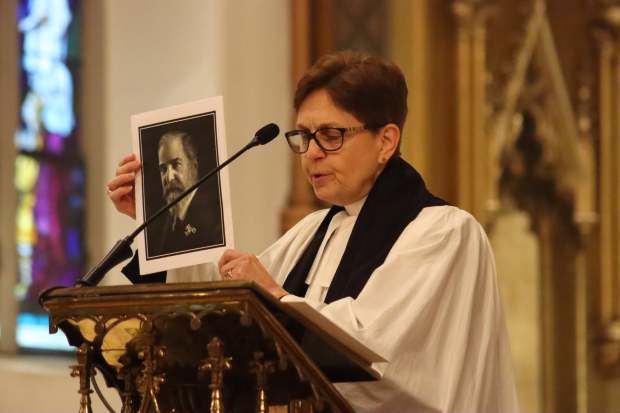
Rev. Rebecca Barnes, dean of St. Paul’s Cathedral in Buffalo, N.Y., and past pastor of St. Luke’s Episcopal Church in Scranton, displays a photo of Louis Comfort Tiffany during her homily on Nov. 1, 2025. (COURTESY CITY OF SCRANTON)
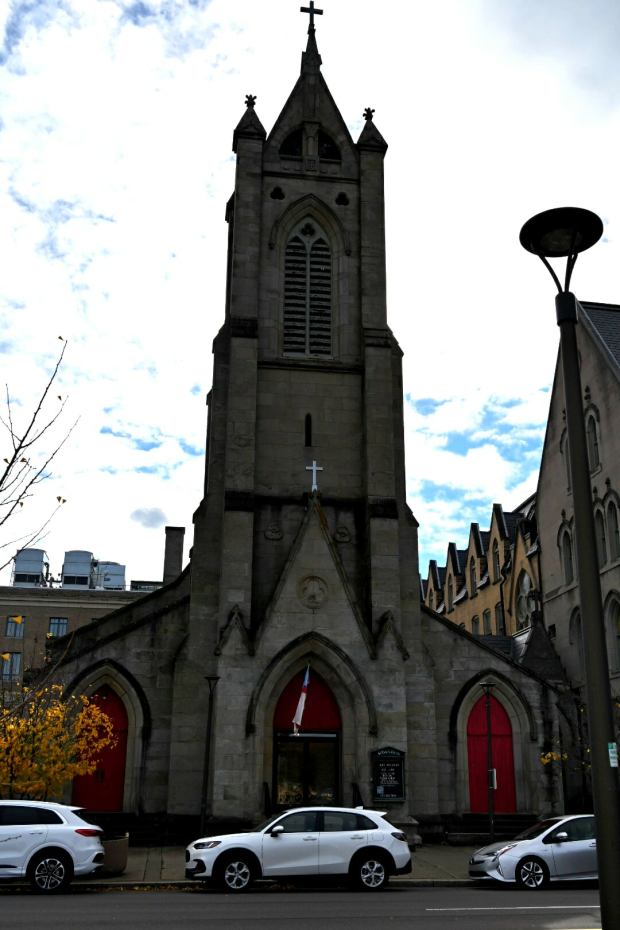
St. Luke’s Episcopal Church on Wyoming Avenue, shown on Nov. 1, 2025. The church was recently named to the National Historic Registry, (GERI GIBBONS/STAFF PHOTO)
Show Caption
1 of 8
The inside of St. Luke’s Episcopal Church on Nov. 1, 2025. The church celebrated it acceptance on the National Register of Historic Places. (GERI GIBBONS/STAFF PHOTO)
“I said I wasn’t doing it. I said it was too hard,” Rayburn said, laughing. “But, we’ve seen what happened all these years later.”
And it was a long six years, she said.
Initially the Women of St. Luke’s had gathered dusty, decrepit boxes of church records that dated back only to 1905, although the church building was completed in 1871.
“We dealt with that and started organizing,” she said.
Rayburn pointed out that the church’s history paralleled the history of the city itself.
The building’s location on Wyoming Avenue was a second one for the church, the first being on Penn Avenue.
The church broke ground for the new building in 1866, the same year Scranton was incorporated as a city.
“The rector realized the city was growing, the congregation was growing,” she said.
When the building opened its doors in 1871, the city population was 35,000.
Richard Upjohn was the original architect of the building, followed by later changes by Louis C. Tiffany.
The altar, high altar and Accession stained glass window, plus a mosaic of Christ and John the Baptist are Tiffany Studio additions.
The Throop Memorial Parish House, opened in 1899, is included in the National Register recognition. Scranton architect Frederick Brown designed the Parish House. Both buildings are in Gothic architectural style.
The National Registry is the U.S. government’s listing of sites, structures, districts and objects deemed worthy of preservation for their historical importance
Celebrating a win
“This is such a big day,” Mayor Paige Cognetti told the crowd gathered for the dedication service. “When we can celebrate these wins, we really need to because times are tough.”
She credited those who worked on the project over its six years for making its completion possible.
“We are grateful for everyone in this room who keeps the spirit of Scranton, the heart of Scranton in so many ways,” she said.
In a closing prayer, Parry said the plaque was also a reminder of those who went before in their efforts at the parish.
“Grant that we and all that gather at this memorial may remember their faith, courage and compassion as they sought to love you in world and deed,” he said. “And may we be inspired to continue in the paths of mercy, righteousness and humble service.”