
If the residents who phoned into a June 10 telephone town hall held by state Senator Jarrett Coleman (R-Allentown) could, they would tar and feather the company executives who have the temerity to build data centers in their municipalities.
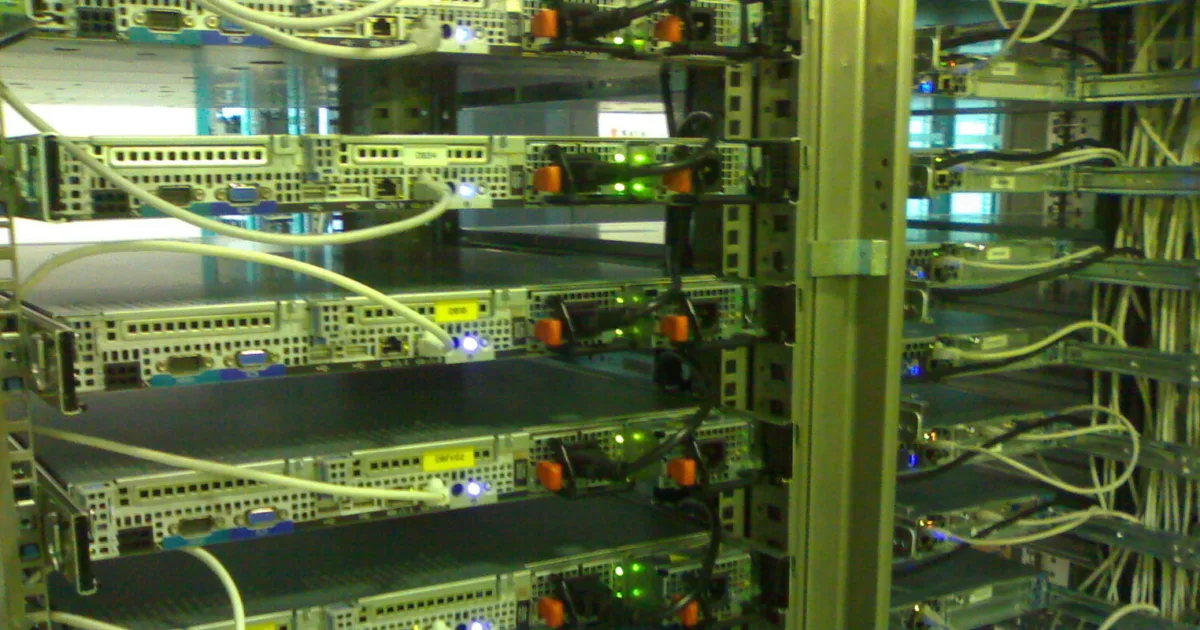
No one, including Coleman, spoke in favor of data centers, which are essentially large warehouse-type buildings that house numerous computer servers. Data center proliferation is linked to the expanding use of artificial intelligence.
“Make no mistake, I don’t want that,” said Coleman. “I don’t support it. I have two bills to try to prevent data centers from coming here. And I wish other elected officials would join in.”
Coleman is concerned about data centers increasing electricity costs, causing brownouts, using large amounts of water, emitting air pollution through diesel generators, and causing dangers to first responders from lithium batteries, which might explode.
“I just don’t think they’re good for the Lehigh Valley and Upper Bucks,” said Coleman.
He’s especially worried about a proposed data center across from Parkland High School in South Whitehall Township.
Coleman also laid the blame on Governor Josh Shapiro (D) for the sudden plethora of data centers proposed for construction in Pennsylvania.
“I think we should end the tax break,” he said.
Data centers don’t have to pay sales tax on their equipment, which will cost Pennsylvania $20 million in revenue during the upcoming fiscal year and about $2 billion through 2031, he said. His legislation, SB 1344, would end the tax incentives and put the resulting revenue toward reducing the state’s gasoline tax.
“I am going to try to make sure the state gives our local governments more tools to combat their spread,” said Coleman. His second bill, SB 1345, would give municipalities eighteen months to adopt ordinances to deal with the ramifications of data centers.
Shapiro recently announced a plan for voluntary standards that new data center proposers will have to adhere to if they want state government support. Those include energy affordability, transparency, community engagement, economic development, and environmental protection.
Residents who asked questions used only their first names.
John from Dublin Borough asked what residents can do to stop data centers.
“Stay organized,” said Coleman. And he told them to contact their other elected officials to let them know their opinion.
“Folks, you’re a lot more powerful,” Coleman added later. “If you show up at meetings, I saw Allentown tabled one. Obviously, developers don’t like it when people show up either. That’s opposition.”
“Stacy Garrity, she’s the state treasurer,” said Coleman of the Republican running for governor against Shapiro. “She’s calling for a complete pause on data centers.”
Coleman said other, more sparsely populated states like Nevada, Arizona, and New Mexico would make better sites for data centers.
Anne from Bedminster said she’s a Democrat and has also been an information technology professional for more than 45 years.
“This is an issue for our country, no matter where you’re talking about putting them,” said Anne. “These are just giant server warehouses. And they use huge amounts of resources. And there are other technologies up and coming that would allow us to use less resources, a lot less…That’s what we should be asking these corporations that want to do this.”
Anne said she is “tired” of the excuse that data centers provide jobs. The initial construction jobs will end once the centers are built, she reasoned, and then they will employ only a small staff.
“You need to educate yourselves,” Anne said. “Big tech is running all over you because you do not understand enough about what’s going on.”
Coleman appealed to populism, noting widespread hostility to data centers.
“Eighty percent of constituents in the Lehigh Valley and Upper Bucks don’t want data centers in their backyards,” he said. “This is really a bipartisan issue.”
His argument was aesthetic and ecological.
“These are going to destroy communities, kill the environment, they’re going to hurt wildlife,” said Coleman. “And we haven’t even talked about pollution. Some of these use diesel generators. The whole point is to pump the brakes.”
Brittany from Emmaus said the American Lung Association already listed the Lehigh Valley as the 50th most polluted in the U.S. She asked him to talk about the impact data centers would have on air quality.
“The diesel generators not only pollute the air with noise and low frequency waves that can hurt animals, wildlife, with bald eagles around,” he said. “With combustion, they produce emissions in the air.”
He added that the machines need cooling; they used 21.1 billion liters of water in 2014. And by 2023, he said, the Department of Energy estimated that figure grew to 66 billion liters of water, over half a million acre-feet of water per year.
And there is a danger for firefighters.
“These are massive buildings,” said Coleman. “They have complex floor plans, ultra-secure perimeters, high-value equipment inside, and it reacts poorly to water. All the while, housing backup power systems that include dangerous lithium batteries that can become explosive.”
John from Lowhill Township mentioned he’s an electrical engineer.
“The documented noise pollution from these centers is tremendous,” he said. “With data centers, it’s constant. They’ve had communities literally go out of their minds with the noise because they can’t sleep. Their whole biorhythms are affected.”
Others believe some of these concerns are overblown.
“Data centers have unfortunately become the latest target of a broader techlash, despite being an essential piece of infrastructure in the digital economy,” said Juan Londono, a policy analyst with the D.C.-based Cato Institute. “Despite their recent surge in notoriety in relation to AI, data centers have been around us for decades. The websites you browse, the TV series you stream, the video calls you take with your family, and the emails you send all depend on data centers to host, process, and transmit information. Their use extends way beyond AI.”
But Londono admitted that the power grid might not be able to handle the extra demand.
“Electric utilities are not prepared for demand growth, and they have resisted efforts by large customers and others to create new electricity supplies,” he said. “However, instead of banning their construction, policymakers should leverage tech companies’ willingness to spend to either update the grid or increase energy supply by allowing them to go off-grid.”
And noise levels could be addressed through zoning changes.
“However, claims about water use, emissions, or heat impacts are largely based on half-truths, misleading statements, or outright falsehoods,” Londono said. “Unfortunately, as these talking points gain traction, they have spurred an anti-data center movement that will do more harm than good to these communities, who will miss out on potential new AI-related jobs and tax revenues.”