
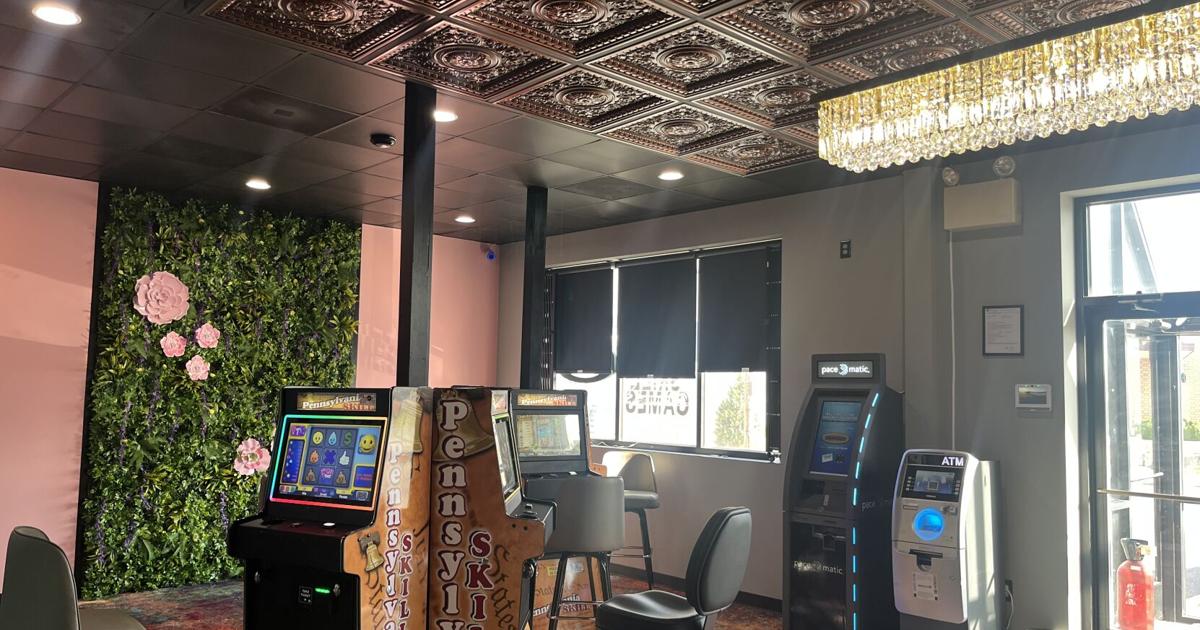
In a decision that could affect hundreds of convenience stores, social clubs and stand-alone gaming parlors, the Pennsylvania Supreme Court on Monday declared that “skill games” are gambling devices and fall under existing state law.
The decision ends a nearly decade-long fight over skill games, which have proliferated across the state as lawmakers and court weighed their legality.
Skill game terminals look identical to slot machines upon first glance. But skill games developers have long argued that these games are different because players must rely on skill, not chance, to win money.
Monday’s ruling dispensed with that argument. Writing for the majority, Justice David Wecht wrote, “Under a plain reading of the law, ‘skill game’ devices are subject to both the Gaming Act and the Crimes Code.”
Wecht said the court is merely applying an existing law: “(O)ur General Assembly already has spoken clearly on this subject, particularly through a 2017 enactment that added new terms to the Gaming Act’s definition of a ‘slot machine,’ i.e., ‘skill slot machine’ and ‘hybrid slot machine,’ which make abundantly clear that the ‘skill’ element of the subject devices is not legally significant.”
Recognizing the implications of the ruling for businesses and nonprofits across Pennsylvania, the court stayed enforcement of the ruling for 120 days and told the General Assembly to change the 2017 law it passed if its members believe skill games should continue to go unregulated or should be allowed under some sort of tax and regulatory scheme.
In a joint statement, the two top Republicans in the Pennsylvania Senate said they “appreciate” the court’s ruling. President Pro Tempore Kim Ward and Majority Leader Joe Pittman said: “The proliferation of skill games is a matter of public safety which must be addressed, and given the timing of this decision, we believe gaming reform is a critical piece of resolving this year’s budget. In addition, with the fiscal realities facing our Commonwealth, it stands to reason that new revenue from gaming reform should be directed to the general fund, as the Governor proposed in his 2026-27 budget.”
Pennsylvania House GOP leader Jesse Topper said, “Today’s decision will hopefully force us to deal with an unregulated sector of the gaming industry that has both helped mom-and-pop operations, as well as local clubs and veterans organizations, while at the same time negatively impacting traditional gaming operations in Pennsylvania.”
Pennsylvanians are no strangers to the games. They see them on their daily commutes when they stop at gas stations, buy groceries at corner stores or haul their clothing to the laundromat. During the COVID-19 pandemic, local business owners said they needed the terminals as supplementary income to keep themselves afloat, which became a defense for the industry used by pro-skill politicians. Democratic Gov. Josh Shapiro estimated in one of his annual budget addresses that Pennsylvania had 70,000 “unregulated skill game terminals.”
Read Wecht’s opinion below. There are also one concurring opinion and one opinion that concurs with the main thrust of the decision but dissents from part of the ruling.
Success! An email has been sent to with a link to confirm list signup.
Error! There was an error processing your request.