
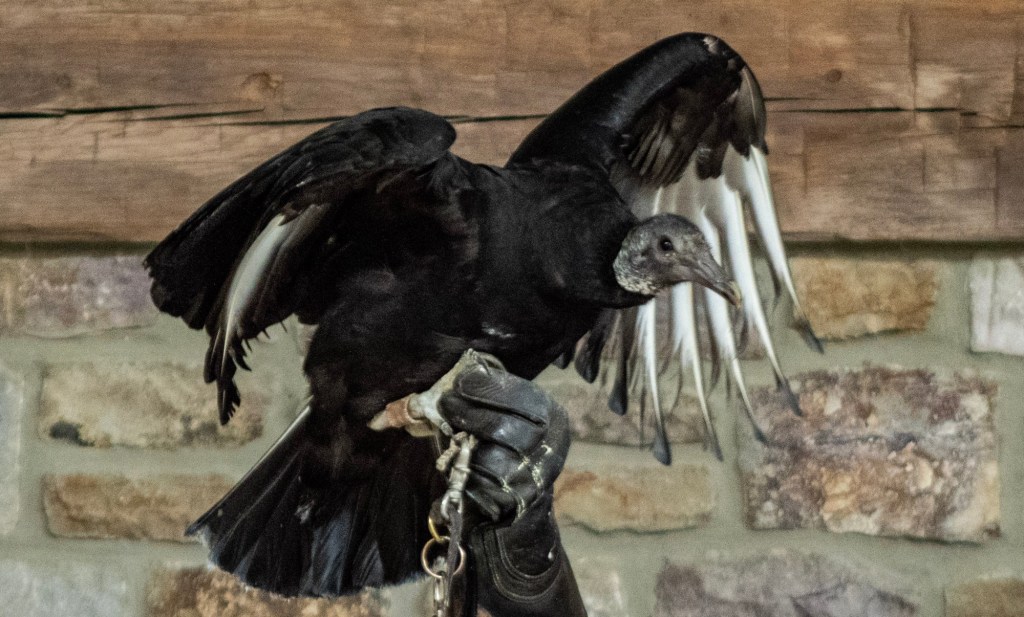
KEMPTON — Across Schuylkill County’s landscape of farms, forests and old mine lands, black vultures are settling in for the winter instead of migrating south. Hawk Mountain researchers highlighted the trend during a live encounter featuring Igor, the sanctuary’s black vulture ambassador.
Inside the Acopian Center on Friday morning, Igor flapped his wings, stirring the air as participants in the sanctuary’s vulture encounter watched in quiet awe. Igor’s dark, sleek feathers caught the light as his talons scraped against his handler’s leather glove, his silver‑edged wingtips lifting in the same motion vultures use in the wild when they rise on pockets of warm air.
Up close, visitors could see the features most people only ever notice from far below. His bare head stays clean while feeding, his curved claws steady him, his hooked beak tears through carcasses. Often labeled off‑putting or ugly, these traits are the result of millions of years of evolution that allow vultures to survive in a changing landscape.
The encounter also serves as an entry point for visitors who want to learn more about vultures and how to support ongoing research.
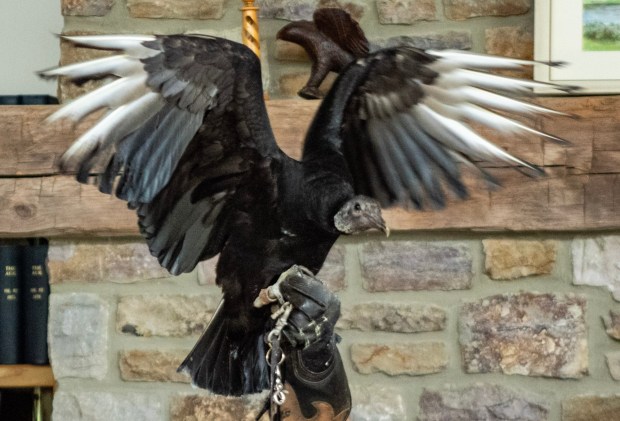 Igor spreads his wings while perched on Andrea Drumbore’s glove. (AISHWARYA BEHL/STAFF PHOTO)
Igor, a human‑imprinted black vulture and West Nile virus survivor with limited vision in his right eye, is trained to self‑crate and target for food. His sharp awareness was highlighted during the live demonstration, where his bursts of wing‑flapping and reactive demeanor challenged assumptions about how vultures behave. Igor is one bird, but he offers a controlled glimpse of a species that researchers view through a much wider lens as they monitor vultures across the region.
The gap in public understanding is part of what has driven nearly two decades of vulture research at Hawk Mountain, the world’s oldest raptor monitoring site. Biologists track vultures through wing tags and nest surveys to understand their movements, nesting habits and changes in migration as Pennsylvania’s winters warm.
Despite their reputation, vultures play a critical role in maintaining healthy ecosystems that most people never see. Their stomach acid, “stronger than battery acid,” said Hawk Mountain biologist David Barber, destroys pathogens in carcasses before they spread. Diseases such as rabies, anthrax and tuberculosis are neutralized by their digestive system. By stripping carcasses before they rot, vultures limit food for scavengers like flies, rodents and stray dogs, keeping those populations in check.
Their adaptability extends beyond how they feed and is evident in how they reproduce in a landscape shaped by people. Barber said they once nested in natural cavities such as caves and hollow logs, but now frequently use barns and abandoned buildings, laying their eggs on bare ground. He recalled tagging a nestling last year in an old shipping container in the New Jersey woods, a blunt example of how vultures utilize whatever spaces the landscape offers.
As vultures increasingly nest and roost in human‑made structures, the space between people and vultures is narrowing. Birds may gather in barns or on roofs, but Barber said most situations improve once outdoor food sources, especially cat food, are removed.
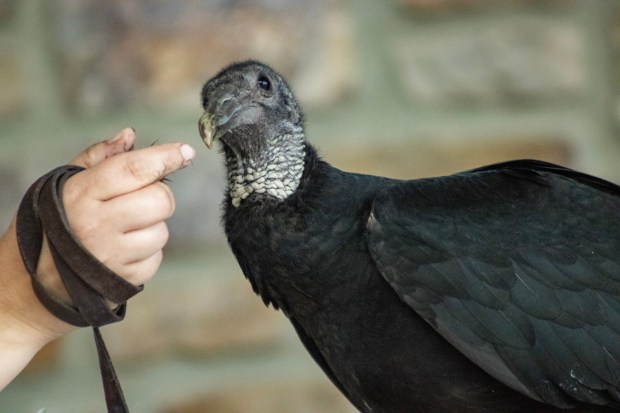 Igor eats pieces of meat as a treat during the live demonstration. (AISHWARYA BEHL/STAFF PHOTO)
Warmer winters appear to be influencing their migration patterns. “The birds we’ve tagged aren’t moving south anymore,” Barber said. “They’re staying here through the winter.” He said black vultures have also expanded from the state’s southeast into central counties and pushed north along the coast into southern Canada, where milder winters now allow them to overwinter farther north.
These changes are documented not only by researchers but by the public. From 2010 to 2026, Hawk Mountain researchers tagged 236 black vultures and received more than 1,600 re-sightings, many reported by citizen scientists who help track where the birds are seen again.
Globally, many vulture species are in steep decline, with several listed as critically endangered. Black vultures are not facing the same collapse, but they are vulnerable to emerging threats, including highly pathogenic avian influenza. More than four out of every five dead black vultures examined by University of Georgia researchers tested positive for the virus, according to a study published in Scientific Reports in January 2026.
As vultures face disease pressures and a rapidly warming climate, long‑term monitoring sites like Hawk Mountain remain critical in guiding conservation efforts. And for Igor, each encounter offers a reminder that the changes reshaping vulture populations across the state are already unfolding in Schuylkill County’s skies.
If you see a tagged vulture
Vulture encounter at Hawk Mountain
Here’s what to know if you’re interested in attending the program:
Annual member‑only event: $20 registration fee.
Registration required through Hawk Mountain’s website.
Features a live demonstration with Igor and a behind‑the‑scenes look at vulture research.
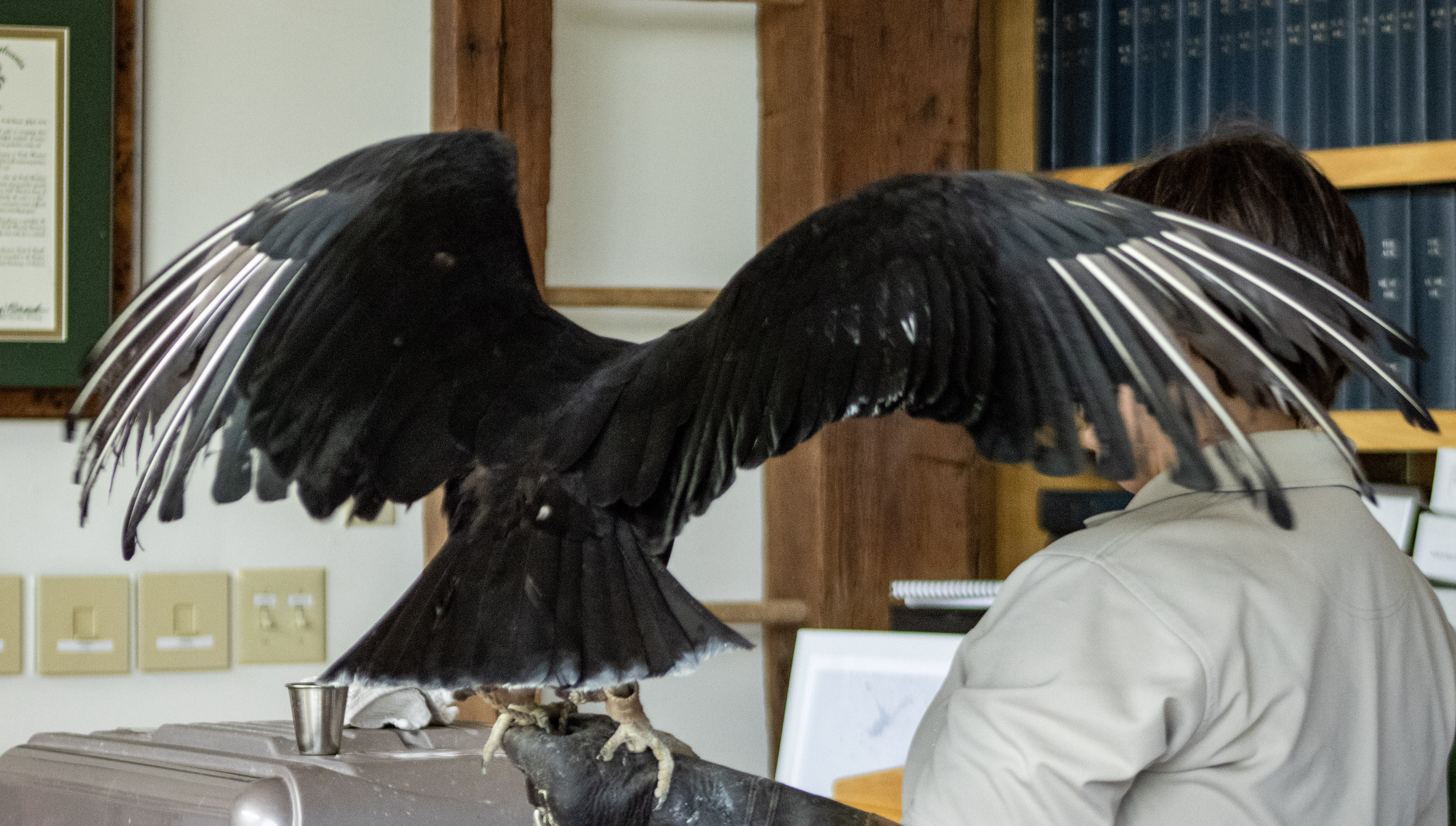
Igor spreads his wings, highlighting his dark plumage and silver wingtips. (AISHWARYA BEHL/STAFF PHOTO)

Andrea Drumbore, an educator and raptor care specialist at Hawk Mountain Sanctuary, holds Igor as he spreads his wings. (AISHWARYA BEHL/STAFF PHOTO)
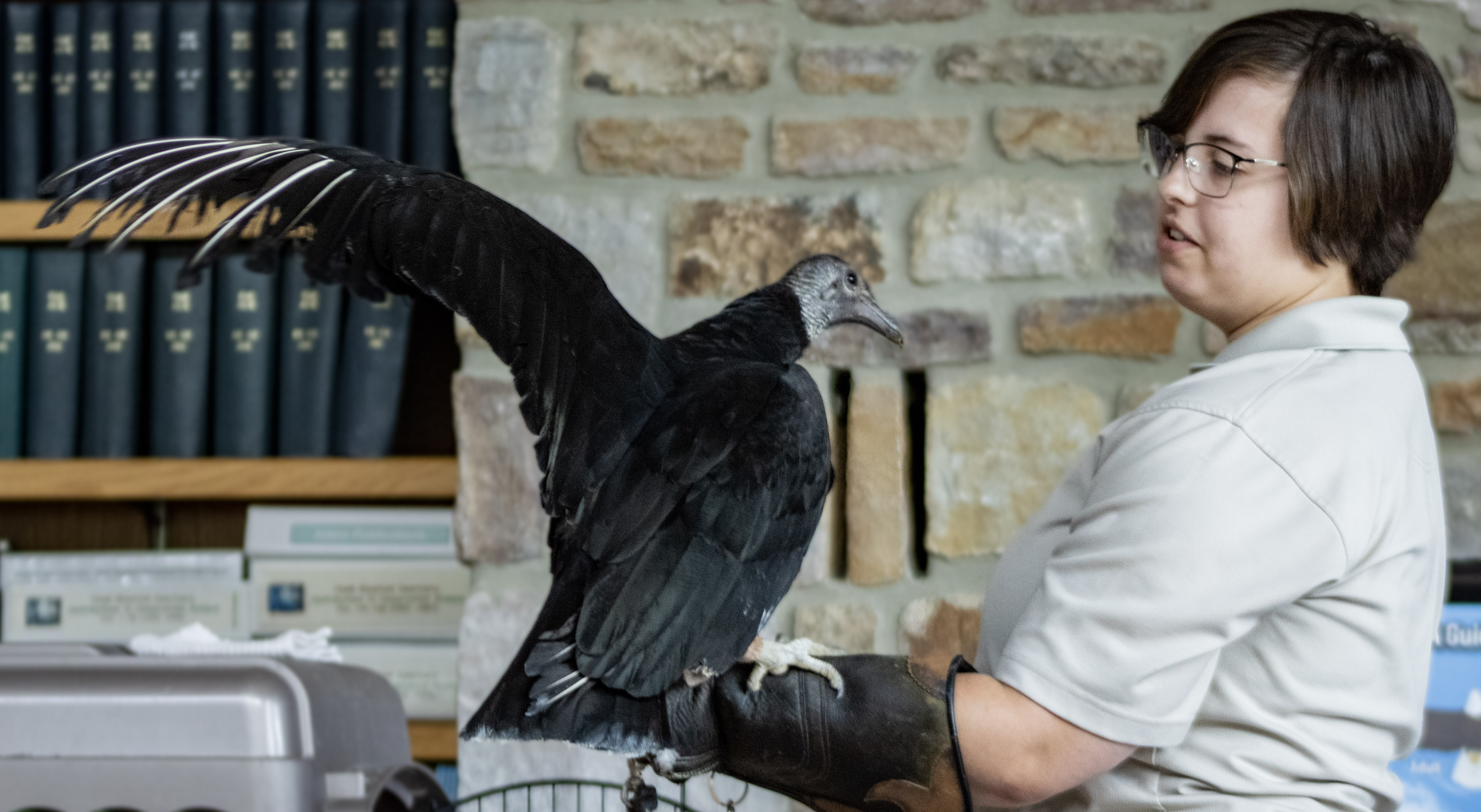
Hawk Mountain education and raptor care specialist Andrea Drumbore explains how to identify black vultures by their dark plumage and silver wingtips during a live demonstration at Hawk Mountain Sanctuary. (AISHWARYA BEHL/STAFF PHOTO)
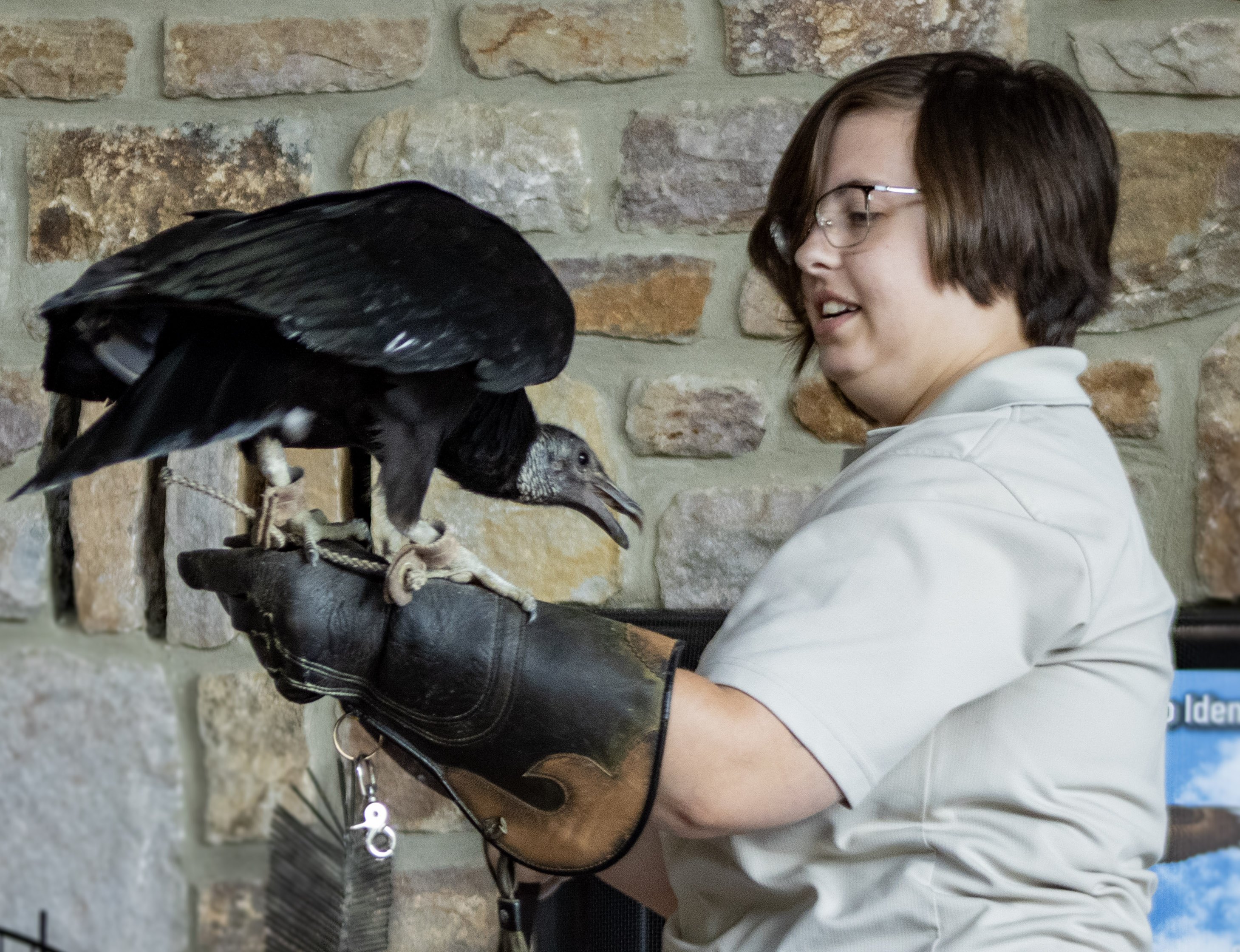
Andrea Drumbore, an educator and raptor care specialist at Hawk Mountain Sanctuary, holds a black vulture named Igor. (AISHWARYA BEHL/STAFF PHOTO)

Igor eats pieces of meat as a treat during the live demonstration. (AISHWARYA BEHL/STAFF PHOTO)

Igor, a black vulture ambassador at Hawk Mountain Sanctuary, spreads his wings during the live demonstration at the Acopian Center for Conservation Learning. (AISHWARYA BEHL/STAFF PHOTO)
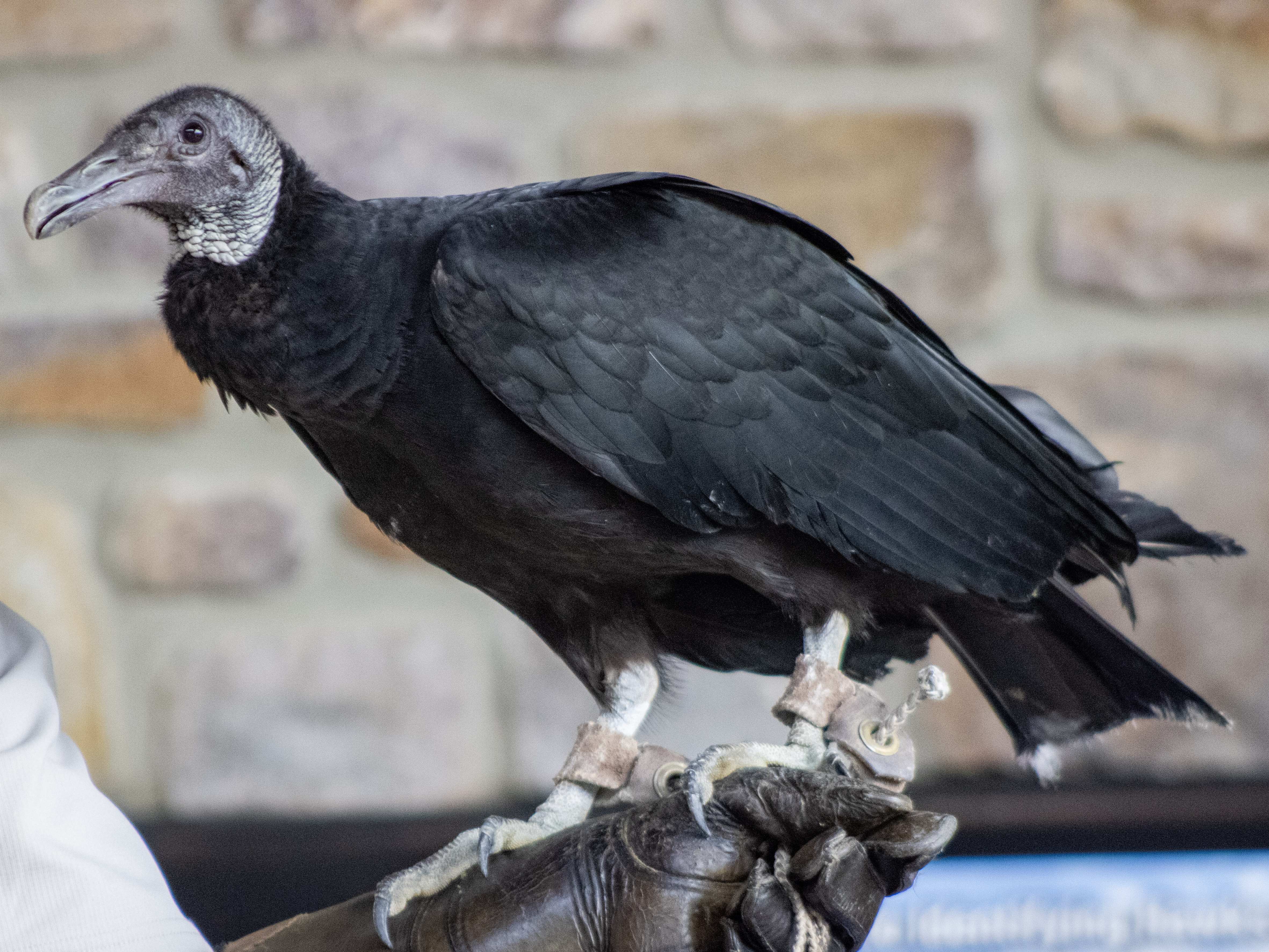
Igor, a black vulture ambassador at Hawk Mountain Sanctuary. (AISHWARYA BEHL/STAFF PHOTO)
Show Caption
1 of 7
Igor spreads his wings, highlighting his dark plumage and silver wingtips. (AISHWARYA BEHL/STAFF PHOTO)