
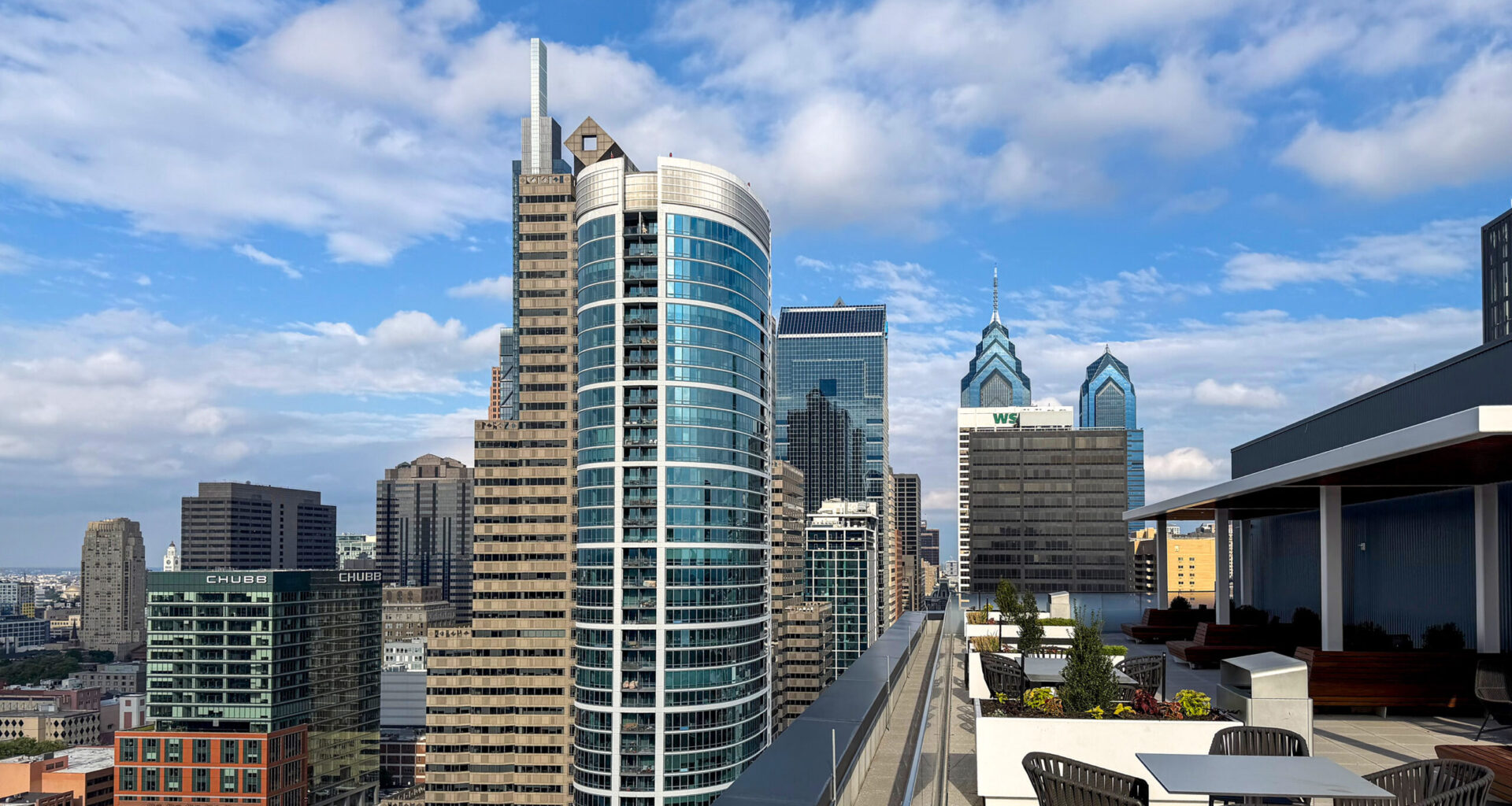
After a year of recognition as one of the world’s top startup ecosystems, Philadelphia tumbled back down the rankings.
Philadelphia came in at No. 33 in the closely watched 2026 Global Startup Ecosystem Report (GSER) from trade association and research group Startup Genome and the Global Entrepreneurship Network. It’s a 20-spot drop from last year, when the ecosystem cracked the top 15 for the first time, and the biggest decline of any ecosystem on this year’s Top 40 Global Leaders list, according to the report.
This is the lowest Philly has been ranked since 2021. The rise of AI may be partly to blame: It’s is given new weight in the 2026 report, and in VC terms, it’s not one of the region’s strengths — at least, not yet.
“Philadelphia’s AI-native startup density is lower than leading ecosystems, and that moved our number. That’s a real gap, and one this region is actively working to close,” said a joint statement the University City Science Center, the Chamber of Commerce for Greater Philadelphia and Ben Franklin Technology Partners of Southeastern Pennsylvania provided to Technical.ly
Despite the drop, Philadelphia still ranked as a top North American ecosystem for research and development, talent and performance.
The group of stakeholders also cited a lack of big funding rounds and a slowdown in startup exits (usually defined as acquisition or IPO).
“Large exit counts, billion-dollar outcomes, ecosystem value — these metrics have declined, and the gap between Philadelphia and the global top tier is widening on those dimensions,” the statement said .
Last year’s report, which looked at data from 2022 to 2024, counted $3.4 billion in early-stage funding in the region. This year’s report, with data from 2023 to 2025, totaled $1.4 billion — a 60% decline, while the global average actually increased almost 8%. Total VC funding for Philly in last year’s report was calculated as $24 billion; this year, $15 billion.
Philadelphia’s exit value stayed the same as last year’s report: $13 billion across the prior half-decade. However, the number of exits dropped: there were about 50 more in last year’s GSER data.
Since the pandemic, powered by the strong tech coalition of the 2010s, the ecosystem had been steadily climbing the Startup Genome rankings. In 2021, Philly moved from the report’s Emerging Ecosystems list to the Global Leaders list, coming in at 28. The following two years Philadelphia ranked No. 27, and in 2024 made it to No. 25. Then came last year’s big jump.
In 2025, Startup Genome described Philadelphia as a “top riser,” citing the single-year leap from No. 25 to No. 13 and the climb of 35 spots over five years. Both the report and local ecosystem orgs attributed Philly’s rise to significant funding flowing into the region, strong industries like life sciences and a collaborative network of startup resources. What happened?
Big drops like Philly’s 20-spot change are unusual for GSER, according to an analysis of recent reports. The world’s biggest startup hubs (think New York, Boston, Silicon Valley, London) hover close to the same spots year to year. Other ecosystems recently called “top risers” have generally held their gains. And when ecosystems drop, it’s usually only a few spots. In this year’s report, for example, Austin climbed 12 spots to No. 18, while Delhi dropped two places to No. 31.
But as AI changes how work gets done, it’s changing how investors view startups — and Startup Genome changed the report methodology, taking that into account.
The GSER factor called “AI-Native cluster” — a measure of how supportive an ecosystem is of AI-based startups — went from carrying 2% weight to counting for 10% of the overall score. Philadelphia is relatively weak in this category, with an AI-Native ecosystem value of $1.2 billion, vs. the global average of $4.4 billion.
Philly recognized as tops for R&D, talent and overall performance
Despite the drop in rankings, Philadelphia still shows consistent strengths.
In this year’s report, Philadelphia ranked as a top North American ecosystem for research and development, talent and performance.
The region is still a life sciences powerhouse, with multiple major announcements related to the sector over the last year. The report cites Eli Lilly’s new Gateway Labs, an incubator for biotech startups hosted by the pharmaceutical giant. Thermo Fisher Scientific opened an Advanced Therapies Collaboration Center as well.
Plus, companies did close major funding rounds, including Gopuff’s $250 million and Fore Biotherapeutics $115 million raise. Overall, venture capital numbers have been strong, but the region is impacted by venture capital consolidation trends. For example, startups in the region raised a combined $2.17 billion last quarter, but $600 million of that came from just two deals.
The ecosystem has had other wins this year that were not included in the report, like the Science Center’s partnership with global biotech company Genentech.
Local stakeholders note that the GSER report is by definition a look at the past, and not a statement about a region’s future. They’re actively working to build infrastructure that supports startups and helps them raise money here, the Science Center, Chamber of Commerce and Ben Franklin Technology Partners said.
“We’re focused on where this ecosystem is going,” read the statement, “and on building the things that make the leading indicators look better than the lagging ones.”