
Like many Black families in post-World War II America, Daniel Conner’s parents migrated north from Texas, finally settling in the Northwest Philadelphia neighborhood of Germantown in 1955, the year he was born.
With a Small Business Administration loan, they opened up Claudius BBQ in 1968, which the family ran until 1991 and where the young Mr. Conner spent years cooking ribs before beginning his legal career. Now 70, he practices law on Germantown Avenue, next door to where the family’s restaurant used to be.
The area is special to him for its green space, democratic values and progressive ideals. “Residents understand what’s at stake, you know, in terms of making the community better, and making the country better,” he said. An elder at the First Presbyterian Church in Germantown, Mr. Conner is proud of its crisis ministry, which helps low-income neighbors.
While many American success stories begin with leaving home behind, real estate agents say the Northwest Philadelphia neighborhoods of Germantown and adjacent Mt. Airy continue to attract residents like Mr. Conner, who returned home to make a difference in his community, drawn in part by the area’s rich history.
Location: The adjacent Northwest Philadelphia neighborhoods of Germantown and Mt. Airy are along the Germantown Avenue corridor, east of Wissahickon Creek.
Population: About 60,000
Area: 8.9 square miles
Homeownership: Like the rest of Philadelphia, the area has roughly an equal number of homeowner and renter households, with Mt. Airy a bit more owner-occupied and Germantown a bit less.
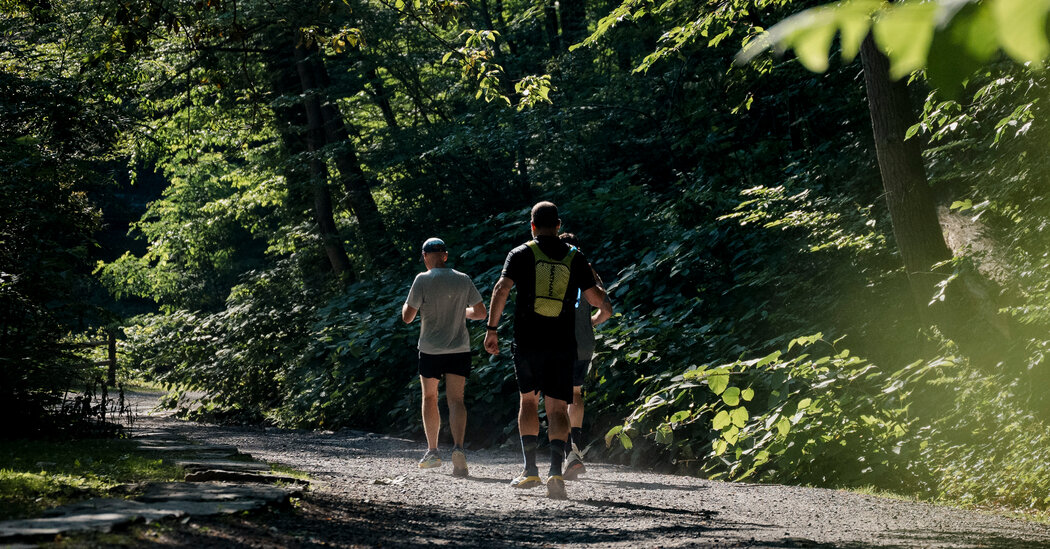
The vibe: A leafy, village-like area, the neighborhoods are known for their longstanding diversity and independent shops.
In the 17th century, Francis Daniel Pastorius, the founder of Germantown and a Quaker, was among those who signed the first protest by a religious group against slavery in America. In the mid-20th century, the area became known for community activism and fair-housing initiatives to counter white flight.
“A lot of people live here because of the diversity. And diversity is an ongoing challenge, so the second you take your eye off of it, you won’t be diverse anymore,” said Ken Weinstein, the founder of Jumpstart Germantown and a Northwest Philadelphia resident since 1989. The program’s objective is to train, mentor and help finance aspiring local real estate developers’ projects. Its goals include creating a diverse pool of developers native to the area.
Since 2015, the program has had 1,900 graduates. Most buy, rehab and sell local properties, while others hold and rent them out. Ultimo Coffee, a local gathering spot on Wayne Avenue, is a tenant of a Jumpstart Germantown graduate.
The coffee shop is one of many storefront businesses clustered along Germantown’s main thoroughfares — Wayne Avenue, Germantown Avenue and West Chelten Avenue. Beyond those commercial corridors, side streets are lined with single-family homes, semidetached homes and rowhouses from as early as the Colonial period. Less than a 30-minute commute from Center City, Germantown, a primarily working- and middle-class neighborhood, retains the character of a historic town within the city.
In the last decade about 15 older buildings were converted into new apartments. Even as homeownership has declined and renter households have increased, the neighborhood remains less a steppingstone than a place to stay or return to. As developer Ken Weinstein put it, “If you talk to 10 people on the street, five of them grew up in Germantown and never went anywhere.”
Mr. Conner left for school before returning to the neighborhood where his family built their life and business. Last year he marked his 70th birthday with fellow church members and longtime friends, a reflection of the deep roots his family has maintained in the community for more than seven decades.
“Growing up, it seemed like there was something very special about Germantown,” Mr. Conner mused. “It felt like that was the center of the universe,” he said, recalling his youth. “That same type of atmosphere still exists today.”
Going Out and About
Getting There, Getting Around
Philadelphia is two hours south of New York City, and two hours north of Baltimore, via I-95. Atlantic City, N.J., takes about an hour by car via Route 42 and Route 76.
Transportation: Two Regional Rail lines serve the area — the Chestnut Hill West Line and the Chestnut Hill East Line. Germantown-Mt. Airy is also served by former trolley lines turned SEPTA bus routes: the 18, 23 and 53.
Housing