
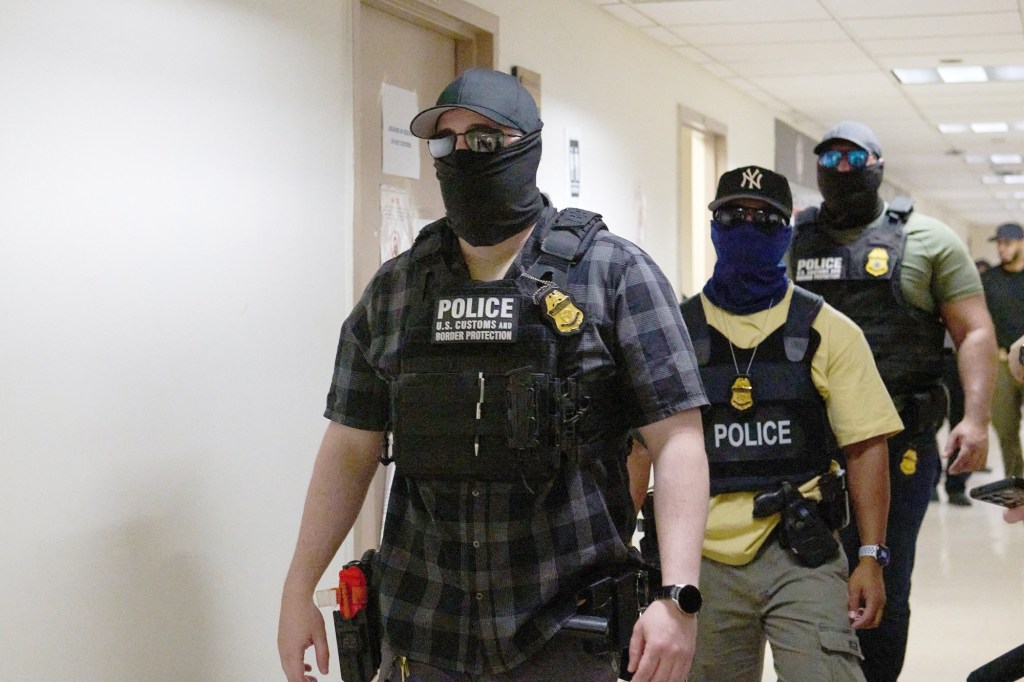
Calling it a proactive measure to protect the county from the “brutal, barbaric and oppressive tactics” of U.S. Immigration and Customs Enforcement agents who have made controversial arrests in other parts of the country, Lehigh County Executive Josh Siegel on Tuesday unveiled a proposed ordinance that would bar county employees from cooperating with ICE agents while on the job.
The legislation, which will be on the agenda at next week’s county Board of Commissioners meeting, would prevent county employees from giving nonpublic or personally identifiable information about any person to federal immigration agencies or officers unless they’re under a subpoena, court order or warrant, or the disclosure was reviewed and approved by the county solicitor.
The proposed policy would apply to Lehigh County employees in departments overseen by Siegel’s office, but wouldn’t include court employees or row officers. Employees who break the rule could face termination.
Siegel said the measure would send a clear message to the Trump administration that Lehigh County would uphold the constitutional rights of people targeted by ICE, and also prevent potentially costly lawsuits like the 2014 case brought by Ernesto Galarza, an Allentown man from Puerto Rico who was paid $95,000 after he was illegally detained in the county jail while under suspicion of being in the U.S. unlawfully.
Though there have not been any instances so far of ICE agents attempting to get information about immigrants suspected of being in the country illegally from county employees, Siegel said the rule is important in light of recent federal legislation that poured $70 billion into Homeland Security’s immigration enforcement efforts, and plans by the agency to open detention centers in nearby counties.
Both moves have unnerved the county’s racially diverse population, Siegel said, creating a need for county government to put constitutional guardrails in place.
“We are sending a clear signal that we will not be coerced, compelled or forced to join this administration’s unlawful and unconstitutional practices of enforcement. We will not let ourselves become the next Minnesota,” he said, referring to the unrest in that Midwest state in which two citizens were shot and killed by ICE agents.
Siegel took aim at Homeland Security’s hiring tactics.
“We’ve heard harrowing stories of just how far they’ve gone to increase the overall size of their force,” Siegel said. “They’ve lowered eligibility standards. They’ve diminished the quality of their training on everything from use of force to dealing with protesters. And they’ve engaged in overtly racist, national and xenophobic marketing materials to specifically attract certain types of recruits.”
A message left with the Department of Homeland Security communications office was not immediately returned Tuesday.
Siegel was joined Tuesday by Olyvia Armstrong, political director of Pennsylvania Immigration Coalition.
The daughter of an immigrant from the Dominican Republic, Armstrong described the violence and discrimination her family experienced. She said immigrants remain critical to filling labor shortages and reversing Pennsylvania’s population decline, and legal protection such as in the bill Siegel introduced would instill confidence.
“Immigrant communities still remain under attack. We know that passing these laws is what’s best for public safety, best for our local economies,” Armstrong said.
Siegel said he did not speak to county employees before drafting his bill, saying his responsibility to protect the county outweighs employees’ opinions about the change. Leadership at SEIU 668, the union that represents about 130 Lehigh County employees who would be subject to the rule, did not immediately return messages seeking comment.
The policy also would prohibit ICE from using any county facility as a staging area for operations. Agents would not have access to nonpublic areas of county buildings unless they have a judicial warrant.
Siegel said the proposed ordinance would not prohibit ICE from operating in Lehigh County but sends the message that local leadership “will not be a party and a partner to” federal immigration crackdowns.
“This policy is about making sure we uphold a constitutional balance, it is actually about law and order and public safety,” Siegel said.