
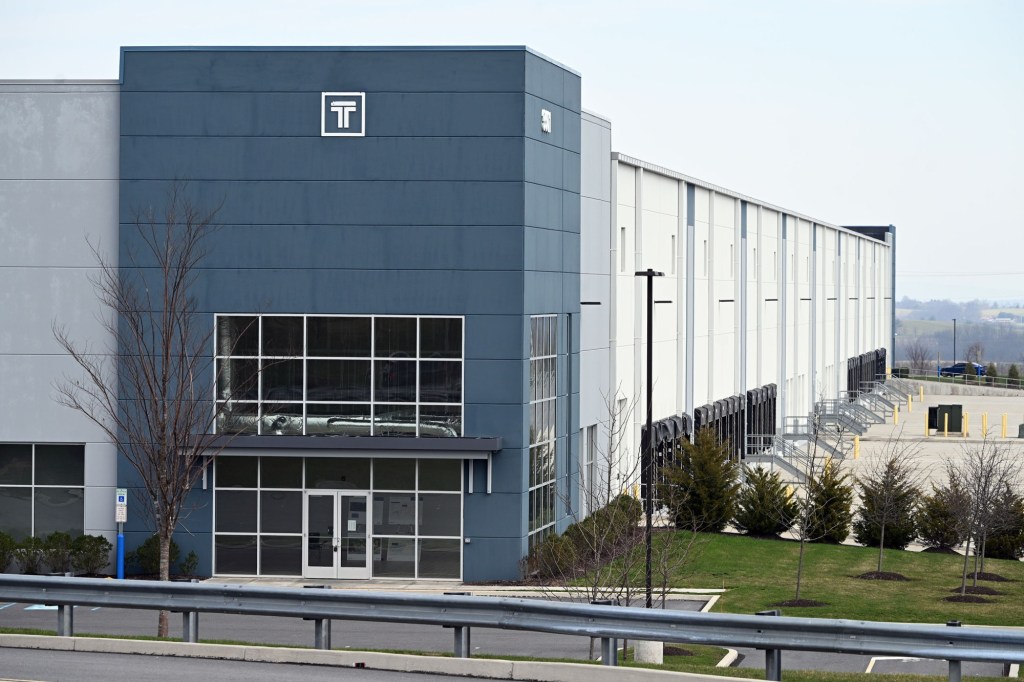
Plans to transform two warehouses in Berks and Schuylkill counties into Immigration and Customs Enforcement detention facilities — which have drawn stiff pushback from local communities — appear to have been shelved.
The New York Times on Thursday reported that, based on documents the newspaper obtained, both sites are included on a list of seven warehouse properties set to be offloaded by ICE.
The seven properties, purchased for a combined $700 million, will be given to other federal agencies or sold, according to the Times.
Officials from the U.S. Department of Homeland Security did not directly address the sites in Berks and Schuylkill in a response to questions from the Reading Eagle. Instead, they issued a short statement saying the agency is focused on existing detention sites.
“From day one, DHS has remained singularly focused on removing the worst of the worst criminal illegal aliens from the United States and is always evaluating the best methods to do so,” the statement reads “These heinous criminals, once arrested, should be removed at lightning speed, not housed on American soil at the taxpayer’s expense. DHS is moving swiftly to utilize existing detention space with our state and county partners.”
The Pennsylvania properties were each bought by ICE earlier this year as part of a nationwide effort to convert former warehouses into detention facilities.
The Berks warehouse is a 527,000-square-foot building at 3501 Mountain Road in Upper Bern Township purchased in late January for $87.4 million. Officials from ICE said it would be renovated to hold 1,500 people as a processing center.
In Schuylkill, a 1.3-million-square-foot former Big Lots distribution center in Tremont Township was purchased by ICE for $119 million and was planned to house up to 7,500 people as a detention center.
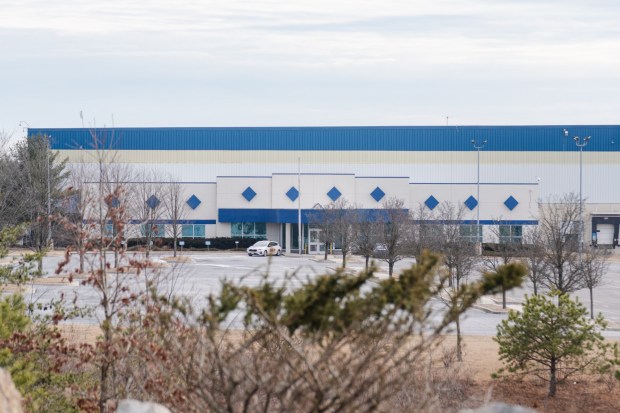 ICE has been planning to use the Big Lots Distribution Center at 50 Rausch Creek Road in Tremont Township as a detention facility. (Republican Herald)
Local officials and community members — as well as state officials including Gov. Josh Shapiro — have pushed back on ICE’s plans for the two sites, citing the potential drain on local resources and environmental impact.
Among opponents’ concerts have been that the influx in population they would create would strain water and sewer systems and create difficulties for local fire and police departments. Some opponents also objected to the recent methods ICE has deployed and the reported conditions at some existing ICE facilities.
Upper Bern Township Solicitor Andrew Hoffman on Friday said supervisors have not heard anything about the possible transfer of the property.
Berks County Commissioner Christian Leinbach on Friday said that he had seen the article in the Times but has not had any communication with federal officials about plans to offload the Bern Township property.
“We have had zero communication from DHS, ICE or anyone else,” he said. “We found out the same way everyone else did, from the New York Times article.”
He said he plans to reach out to Congressman Dan Meuser, whose district includes both the Berks and Schuylkill sites, to see if he has any additional information.
Meuser did not confirm the report in a response to the Reading Eagle on Friday. The Republican said he’s in close contact with DHS Secretary Markwayne Mullin and looks forward to providing a full update once a decision is made.
He stressed that upon first learning of the purchases of the warehouses he has worked with Schuylkill and Berks county commissioners to inform DHS officials of what would be necessary to make the facilities operable and address community concerns.
“This due diligence, and I give much credit to the county commissioners, was taken very seriously by DHS officials, and therefore, DHS is perhaps considering reevaluating the initial plan,” he said in a statement.
“Should the initial plan move forward, we secured favorable commitments from DHS that would be beneficial to our community,” the statement continued. “Nevertheless, in an effort to fully cooperate, DHS is engaged in their own evaluation of the sites being developed.”
Rachel Wallace, the Democratic candidate running against Meuser in the 9th Congressional District this fall, said she feels great pride in the way residents banded together around this issue to demand change.
“This was the obvious decision,” she said Friday morning. “Because, taking any national political conversations out of it, this was a really stupid idea. They did not do their homework and it is a mistake that is costing our taxpayers hundreds of millions of dollars.”
Wallace also commended the county commissioners for “hammering DHS with questions” that were important to their constituents.
The reaction to the report from local residents who opposed the effort to transform the warehouses into detention centers was met with cautious optimism.
Tremont residents Joe and Lara Wiscount, who have voiced their opposition to the plan at Schuylkill County commissioner meetings, regional protests and grassroots town halls, said they are excited and relieved.
“Its been a long six months so we just want to catch our breath a bit,” Lara Wiscount said Friday morning, noting that they are still awaiting official confirmation from DHS before they can celebrate the news.
Deborah Miller, chairwoman of the nonpartisan group ICE Out Upper Bern, said she’s experiencing similar feelings.
“We are delighted and grateful to everyone who helped in the defeat of these detention centers,” she said. “We are still in a little bit of a haze.”
Miller said the question now is whether the federal government can sell the warehouses so they get back on the tax rolls.
Based on the current assessment of the Upper Bern property, the loss in local tax dollars would be about $200,000 in county taxes, $31,000 in township taxes and $597,000 in school district taxes.
“The warehouse was sitting empty before the federal government purchased it and I don’t know why it would sell now,” Miller said. “So there are still some financial implications that will impact the local community.”
In Schuylkill, the county is projected to lose $222,000, the township $196,000 and the Pine Grove Area School District $555,000 in real estate taxes.