
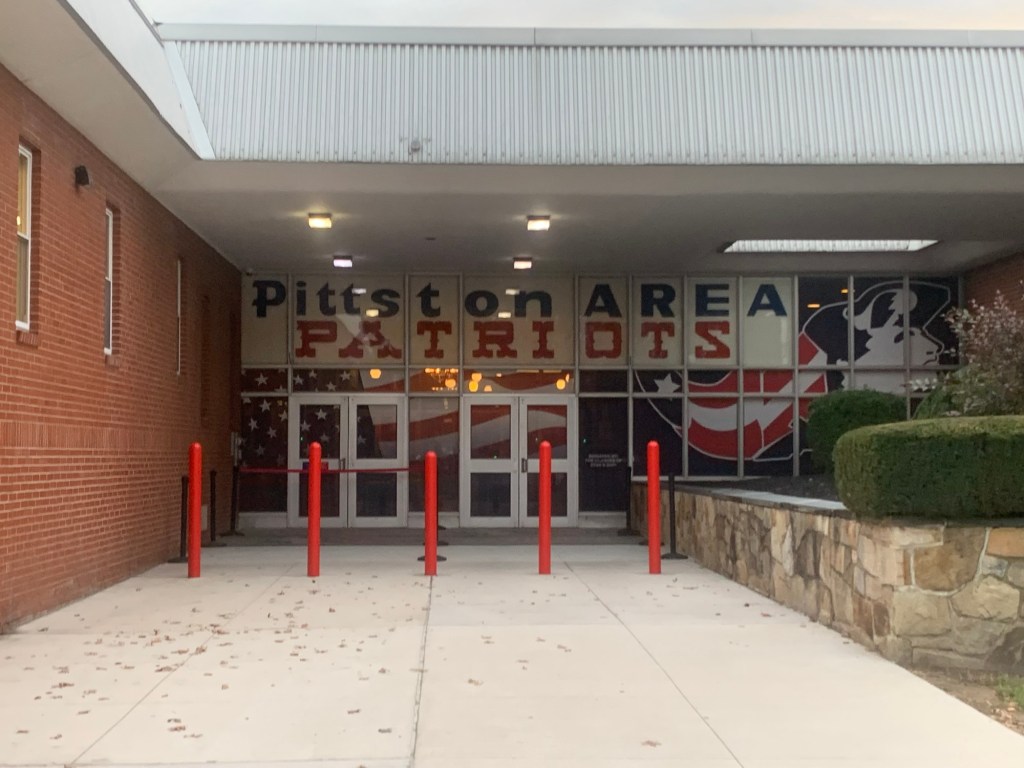
The Pittston Area Board of Education adopted its budget for the 2026-27 school year Tuesday, avoiding a tax increase for the sixth straight year.
The final budget increases annual revenue 4.26% over what was listed in last year’s budget, bringing it to a total of $67.8 million. It increases annual expenses 5.98% to $68.72 million. The resulting $921,210 deficit is closed with an equivalent reduction of the Pittston Area fund balance, which is now projected to end the 2026-27 school year at $7.94 million.
The Pittston Area school board is again setting the school district’s property tax at $16.5413 per $1,000 of assessed value, where it has sat unchanged since the 2020-21 school year. The owner of the average Pittston Area home, which has an assessed value of $146,622, will see no increase in their school taxes due to a rate hike and pay $2,425.32 to the district.
This bill can be lowered by the homestead exclusion – property-tax breaks generally funded by state gambling tax revenue. Pittston Area homeowners can lower their tax bill $218.01 using the homestead exclusion, marking a slight increase in savings over the $215.26 they saved last year.
With the Pittston Area ratable tax base being assessed at $1.97 billion and the district having a tax collection rate of 90%, the taxes Pittston Area residents pay on their property will generate $29.33 million in revenue. Local revenue altogether, which consists of funds from property taxes and other local revenue sources, such as property-transfer taxes, wage taxes, and local-services taxes, will increase 2.98% to $36.05 million, or 53.17% of total district revenue.
Most of the remainder of the budget is to be funded by Harrisburg. The budget anticipates that the commonwealth will allocate Pittston Area $29.97 million in state education funding. This would amount to a 6.12% annual increase in state funding and constitute 44.2% of Pittston Area total revenue.
Local and state revenue will be used to navigate a set of rising costs. Pittston Area salaries are increasing 4.33% to $26.57 million while benefits are increasing 5.01% to $19.5 million. Together, salaries and benefits constitute just more than two-thirds of Pittston Area’s expenses.
The total revenues and expenditures listed in the budget are both slightly higher than what was included in the proposed budget the Pittston Area school board introduced in May. The Albert B. Melone Company, which provides business-manager services to Pittston Area and worked to prepare its budget, largely attributed the higher final-revenue figure to an estimated $200,000 increase in transfer-tax revenue revenue from Pittston Area’s delinquent-tax sales. The higher expense figure was largely the result of a more than $278,000 increase to estimated healthcare costs; a $522,686 increase in tuition Pittston Area is set to pay to charter schools and vocational schools, due to student enrollment in those schools being higher than initially expected; and a $705,000 increase in supply expenses, which were in part incurred to pay for Chromebooks and Promethean Boards, which is a digital whiteboard. Together, these changes in revenues and expenses lowered the difference between Pittston Area revenue and expenditures by $1.01 million, creating a $912,210 deficit from what had been a $92,514 surplus.
The actual, realized difference between Pittston Area’s revenues and expenditures could differ significantly from what is currently budgeted.
The adopted final budget notably does not include increases to state education funding that Gov. Josh Shapiro has requested from the General Assembly. The Pittston Area budget also does not factor in reforms Shapiro proposed that could reduce tuition school districts pay to cyber charter schools. If the General Assembly does assent to the governor’s requests, state funding for Pittston Area would increase $1.48 million to a total of $31.45 million, or 45.39% of total district revenues. Most of the increase would come from an additional $1.24 million in adequacy funding, money the state disburses to school districts pursuant to the seminal 2023 ruling from the Commonwealth Court on fair school funding that furnishes new funds to schools in proportion to assessed need.
This additional state support would more than close Pittston Area’s budgeted deficit of $921,210 and leave it with an annual surplus of $559,952, which would raise its projected fund balance at the end of the 2026-27 school year to $9.42 million.
How much funding Pennsylvanian school districts receive will not be known for certain until the General Assembly adopts a state budget — something that last year took until November due to a monthslong partisan impasse.