
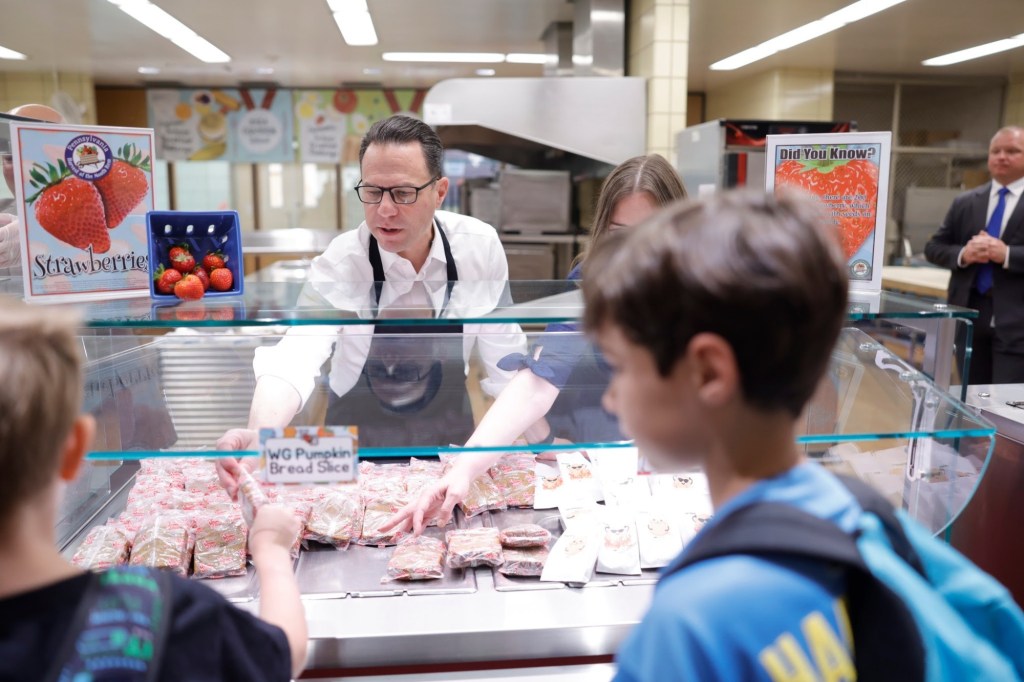
Pennsylvania has taken an important step forward by making free school breakfast available to every student. Gov. Josh Shapiro has said it plainly: kids can’t learn on an empty stomach. Under his leadership, the state has funded universal free breakfast for the third year in a row, giving 1.7 million public school students access to a nutritious start to the school day, regardless of family income.
That commitment is making a real difference. Last year alone, more than 92 million breakfasts were served to students across the commonwealth. During recent House and Senate budget hearings, education leaders emphasized what families and educators already know: when students’ basic needs are met, they are better prepared to focus, participate, and succeed in school.
But despite the promise of “universal,” not every public-school student is included.
Students enrolled in public cyber charter schools are left out entirely. Even students from low-income families, who would qualify for free breakfast in a traditional school and free lunch through the federal National School Lunch Program, are excluded from both. Cyber charter students cannot access free breakfast under Pennsylvania’s universal program, and they cannot receive free lunch even when their families meet federal income eligibility requirements.
This exclusion isn’t about student need. It isn’t about income. It’s about how a student learns.
That gap runs counter to the purpose of Pennsylvania’s school meal programs. The research is clear: students who are hungry, or worried about where their next meal will come from, struggle to concentrate, participate, and keep up academically. Those challenges do not disappear just because learning happens online.
Cyber charter students are public school students. They follow the same academic standards, take the same state assessments, and are held to the same accountability measures. Families choose cyber charter schools for many reasons, including safety concerns, bullying, medical needs, mental health support, or the need for a more flexible learning environment. Yet when it comes to nutrition support, these students are treated differently.
That contradiction matters.
Gov. Shapiro has emphasized that universal free breakfast levels the playing field and removes stigma for students. Pennsylvania also helps cover lunch costs for many income eligible students in traditional schools. But families who choose cyber charter schools, often because they are seeking stability, safety, or a better fit for their child, are denied access to both forms of support simply because their children log in rather than walk into a building.
Safety should not come at the cost of nutrition. Yet under current policy, that is exactly the tradeoff some families are forced to make.
This gap is not theoretical. During budget hearings this spring, there was broad agreement among lawmakers and education leaders that students cannot succeed academically if their basic needs go unmet. When viewed through that lens, the inequity is clear: Pennsylvania recognizes the importance of nutrition for student success, but its policies exclude students who attend public cyber charter schools.
Across the country, states are expanding universal meal programs, but very few have solved this issue. Most programs are still tied to in-person meal distribution, which means virtual students remain excluded despite broader progress. That makes Pennsylvania’s situation part of a larger national gap but also creates an opportunity to lead.
Because cyber charter schools are excluded from reimbursable meal programs, even students who clearly qualify for assistance are left without a consistent, statewide way to receive it. Unlike their peers in brick-and-mortar schools, these students have no guaranteed access to the breakfast and lunch programs designed to support low-income families. At the same time, cyber charter schools often operate with limited flexibility to provide these supports independently.
The path forward is clear. Because most states have not yet fully addressed this issue, Pennsylvania has an opportunity to lead. Rather than simply replicating existing models, policymakers can take meaningful steps to ensure equity for all public-school students.
That includes extending eligibility for state funded meal programs to cyber charter students and providing direct funding so cyber schools can deliver food assistance in flexible, student-centered ways. With the right support, schools could implement modern distribution models such as meal stipends, home delivery options, or partnerships with community organizations that reflect how cyber students actually learn and live.
Providing equitable funding is key. Cyber charter schools can meet families where they are and ensure students have access to essential supports, including nutrition, when they have resources comparable to other public schools. Just as these schools personalize education, they can also help personalize access to basic needs.
Universal should mean universal. If we believe no child should have to learn while hungry, that promise must apply to all public-school students, no matter how or where they learn.
Safety should not come at the cost of nutrition.
This is a contributed opinion column. Jane Swan is CEO of Reach Cyber Charter School. Debra Heath Horton is CEO of PA Virtual Cyber Charter School. The views expressed in this piece are those of its individual author, and should not be interpreted as reflecting the views of this publication. Do you have a perspective to share? Learn more about how we handle guest opinion submissions at themorningcall.com/opinions.