
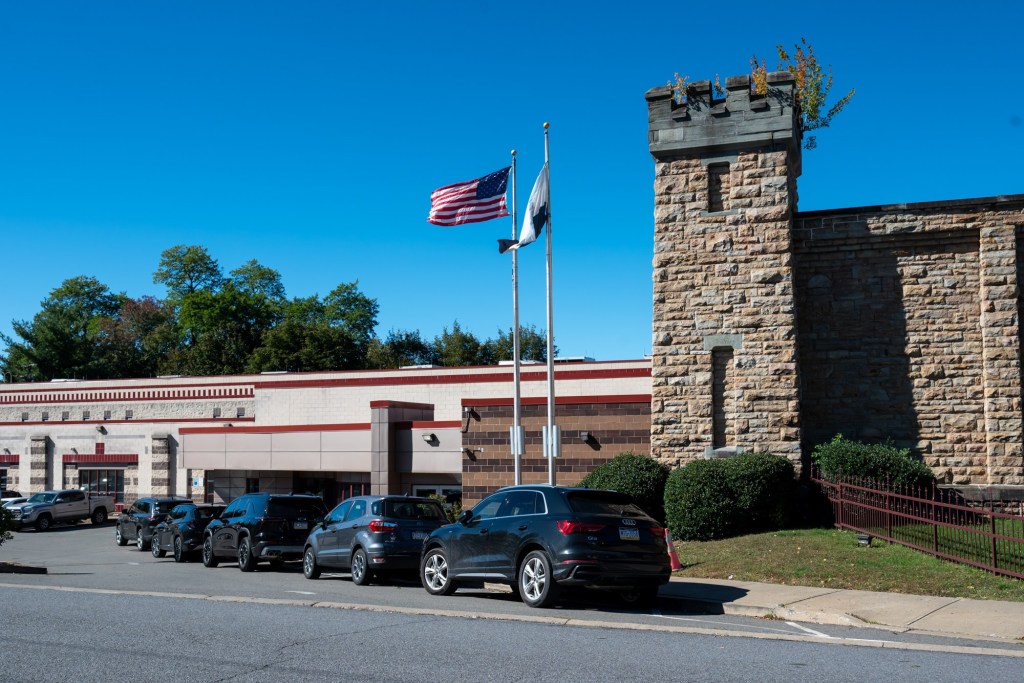
Overtime costs at the Lackawanna County Prison through roughly the end of May increased modestly compared to last year, but remain way down compared to 2024.
The roughly $612,333 in total prison overtime accrued as of the pay period ending June 2, the 11th of the year, was about $87,128 more than the $525,205 in overtime costs prison officials reported through the first 11 pay periods of 2025, per figures Warden Tim Betti provided in an email and a comparison chart he shared with the county prison board last week. A particularly expensive pay period ending Feb. 10, when overtime costs totaled about $117,313, contributed to the increase.
While the comparison chart initially showed an even higher amount for that pay period, which Betti said was incorrect, the correct figure remained an outlier, as overtime across the other 10 pay periods of 2026 averaged only about $49,502 per period. The warden attributed the late-January/early-February overtime spike to an increase in employee sick leave usage, a minor uptick in “medical runs” from the jail and other factors, with overtime costs dropping precipitously, to about $48,000, during the next pay period ending Feb. 24.
Overall the prison remains on track to finish 2026 well below its overtime budget this year, continuing a positive trend. The prison finished 2025 almost $950,000 under its overtime budget for that year after exceeding its 2024 overtime budget by more than $300,000.
Overtime expenses at the jail totaled about $2.9 million in 2024 and about $1.55 million in 2025, which was also considerably lower than the roughly $2.49 million in overtime costs the prison incurred in 2023.
Curtailing overtime as part of a broader effort to mitigate personnel costs is a key element of the county’s five-year financial management plan, with officials often noting last year the prison’s success in that area while crediting Betti and prison administrators. The county is retaining the firm that crafted the financial management plan, PFM Group Consulting LLC, through 2027 as officials continue to implement elements of it.
In October, Betti partly attributed the prison’s overtime success to “maintaining as full of a complement as we can of full-time employees” and to a drop in “FMLA usage” — leave taken under the Family and Medical Leave Act, including intermittent FMLA where leave is taken in smaller increments — by corrections officers. Officials have also noted improved shift planning and efforts to minimize staff vacancies.
Overtime came up again at last week’s prison board meeting, with Commissioner Thom Welby voicing concern about the amount of overtime accrued at the jail so far this year despite it plummeting overall since 2024. Welby, who took office in November after winning a special election to fill former Commissioner Matt McGloin’s unexpired term, acknowledged that progress has been made, but wants to see much more.
“I don’t think, as good as the improvements are — being new and not having experienced the previous years — I don’t think it’s acceptable,” he said.
Commissioner Bill Gaughan defended the prison’s performance at that meeting, pointing to last year’s major reduction in overtime expenses.
“We’re definitely continuing to move in a positive direction,” Gaughan said in a phone interview Thursday. “And there’s just no scenario where you can run an operation that size, being in charge of that many inmates, and not have overtime.”
Inevitable as some overtime may be, minimizing costs remains a goal.
Monday update
Then: Overtime costs at the Lackawanna County Prison cratered last year compared to 2024.
Now: The trend has largely continued at the prison so far this year.