
From Philly and the Pa. suburbs to South Jersey and Delaware, what would you like WHYY News to cover? Let us know!
As the sun dipped in the sky on a recent Monday evening, a white pickup truck with the Philadelphia Department of Public Health logo on its doors entered FDR Park in South Philly.
As the vehicle slowly moved throughout the park, a machine that looked like a large, black cannon sitting in the truck bed projected a fine cloud of mist, which gently fell onto the road, grass and walkways.
The mist was a chemical treatment meant to kill adult mosquitoes, which are known carriers of diseases like West Nile virus and eastern equine encephalitis. The insects can easily be found in spots like FDR Park, which is close to sports stadiums hosting baseball and FIFA World Cup games this summer.
“We know that FDR Park is going to be heavily used this summer,” said James Garrow, health department spokesman. “So, this is an effort for us to sort of get ahead of the problem and see if we can knock down populations before it gets too bad.”
FDR Park is just one of several locations the city plans to target with its bug control measures this summer. Early efforts to control insect and tick populations by killing them or eliminating their eggs have become vital as more cases of vector-borne diseases in humans and animals are seen every year.
This year is no different. Some experts predict a “bug boom” of tick and mosquito populations this summer in Greater Philadelphia and around the country.
As climate change, environmental habitat disruption and global migration continue to drive vector-borne diseases, researchers are busier than ever before in searching for better ways to control bug populations, prevent the transmission of disease, treat illnesses in people and identify the next big threats on the horizon.
“One thing is about what the next vectors are, but the other is what the next pathogen is,” said Sara Cherry, a virologist and professor in the Department of Pathology and Laboratory of Medicine at the University of Pennsylvania. “And I think all of us are paying attention to outbreaks.”
Controlling insect populations from the start
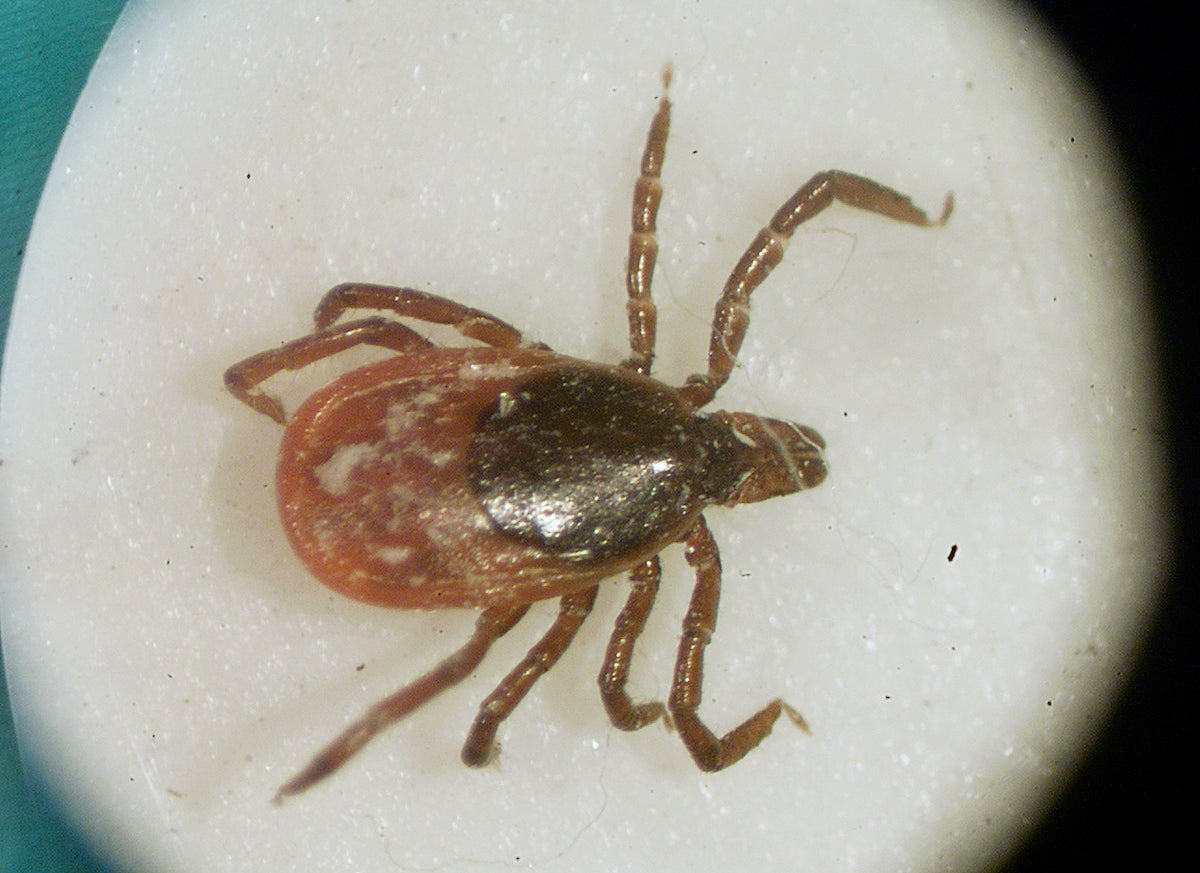
Certain species of mosquitoes and ticks, like the Asian longhorned tick, were once considered distant threats, only existing continents away. They’re now becoming commonplace in parts of the U.S., including in the tristate area where higher temperatures and humidity for longer periods of time make for perfect environments for these insects and arachnids to thrive.
These environmental changes have also given mosquitoes and local species like the blacklegged tick and lone star tick the ability to populate at faster rates, researchers said.
As these bloodsucking arthropods feed off deer, rodents, birds and other animal hosts, diseases and viruses begin to spread among the parasite and host populations. That makes it more likely for people who are bitten to be exposed to West Nile virus, Lyme disease and alpha-gal syndrome, an allergy to red meat and dairy products.
Philadelphia and other municipalities try to kill off adult bugs and their larvae by spraying pesticides throughout the warmest months. In addition to FDR Park, the city will also target areas around Philadelphia International Airport, Pennypack Park and the Wissahickon Valley Park.
People should avoid standing directly near the aerosolized chemical sprays, but the products pose minimal danger to animals, plants and people if they are exposed, Garrow said.
The city Department of Public Health’s Vector Control unit distributes dunks, or small donut-shaped pieces that are tossed in standing water to prevent mosquito larvae from growing. City experts can also help residents assess their properties to identify sources of mosquito breeding, which can include something as small as a water-filled bottle cap.
“Go out onto your property, see if there’s water just sitting there. A great time to do this is if you have a summer rain come through, that next day, all that water will have collected there,” Garrow said. “See what potentially could be holding water. Tip it over.”