
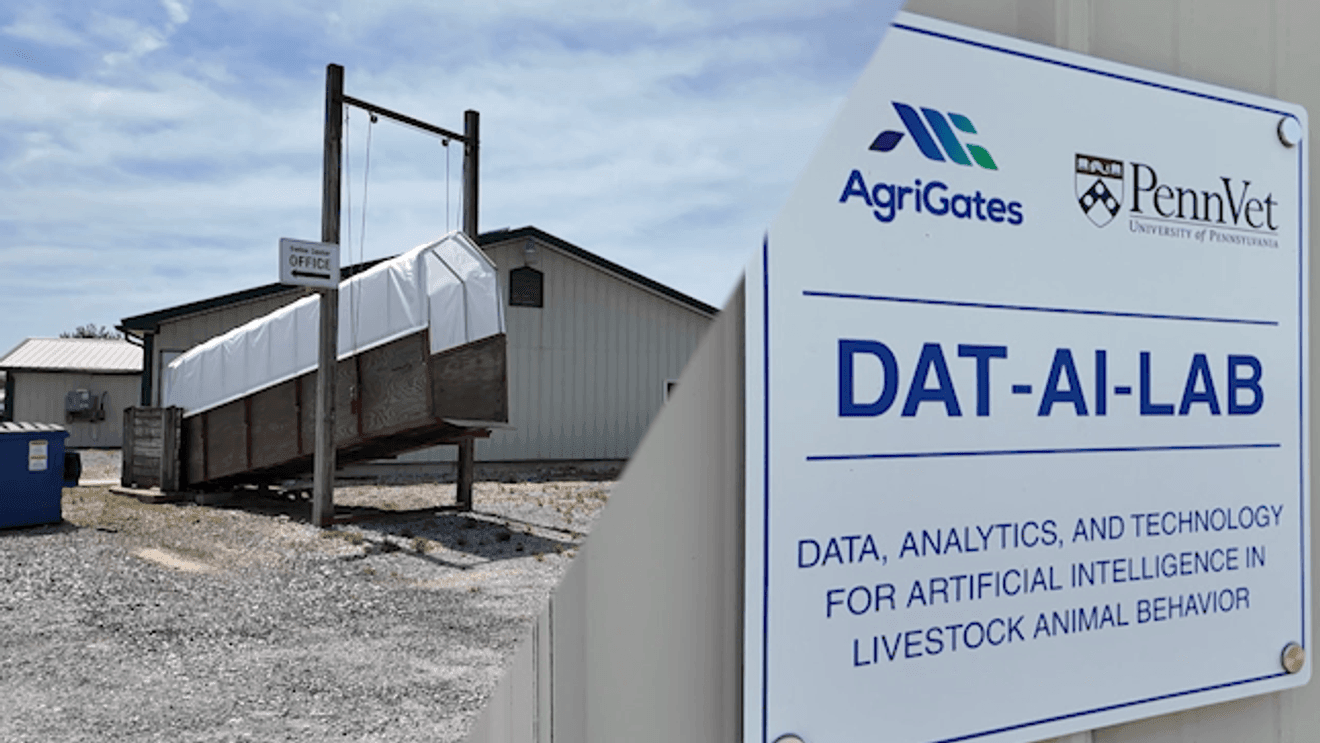
CHESTER COUNTY, Pa. (WHP) — Pennsylvania’s agriculture industry contributes more than $130 billion to the state each year, and researchers in Chester County are testing new ways to support farmers and veterinarians by using artificial intelligence to better understand animal behavior.
At the University of Pennsylvania’s New Bolton Center, Penn Vet has debuted what it describes as a first-of-its-kind laboratory that uses AI and machine learning to monitor animals. The work includes studying pigs at Penn Vet’s Swine Teaching and Research Center, where researchers are focused on understanding behavior and welfare.
“These are pregnant sows that are in our outdoor area,” said Thomas D. Parsons, director of Penn Vet’s Swine Teaching and Research Center. “So, this is not what you see on a typical farm, but we’re interested in trying to understand more about what these pigs want.”
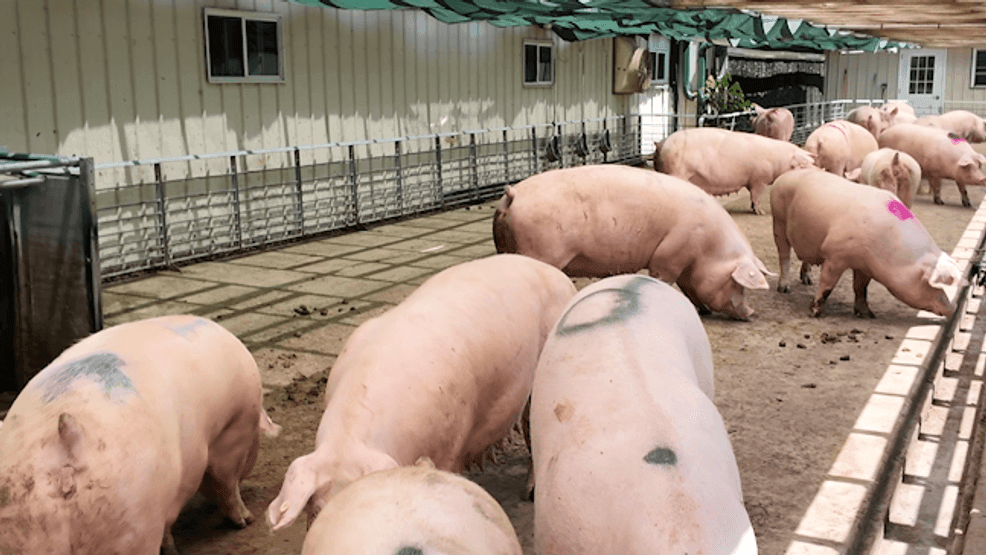
Image of pregnants sows located at the New Bolton Center, taken on June 4, 2026 (WHP)
Traditionally, researchers study the animals by filming them and reviewing the footage frame by frame—a process Parsons called time-consuming.
“As you can imagine, that’s an extremely labor-intensive process. And so, this is where we’re starting to think about ways that we can apply technology to help us,” Parsons said.
That technology is being developed through the DAT-AI-LAB, a laboratory dedicated to monitoring animals using machine learning. Parsons said the pigs wear ear tags equipped with technology that can help track their activity.
The chip functions like a fitness tracker, capturing movements ranging from resting to walking and even ear shakes. Daniel Foy, CEO and co-founder of AgriGates, said the system generates a large volume of information.
“We’re into double digit days with our device to collect, per day, per day, per animal, 17 million data points,” Foy said. “So, it’s a huge amount of information that tells us an awful amount about what is happening during a 24-hour period.”
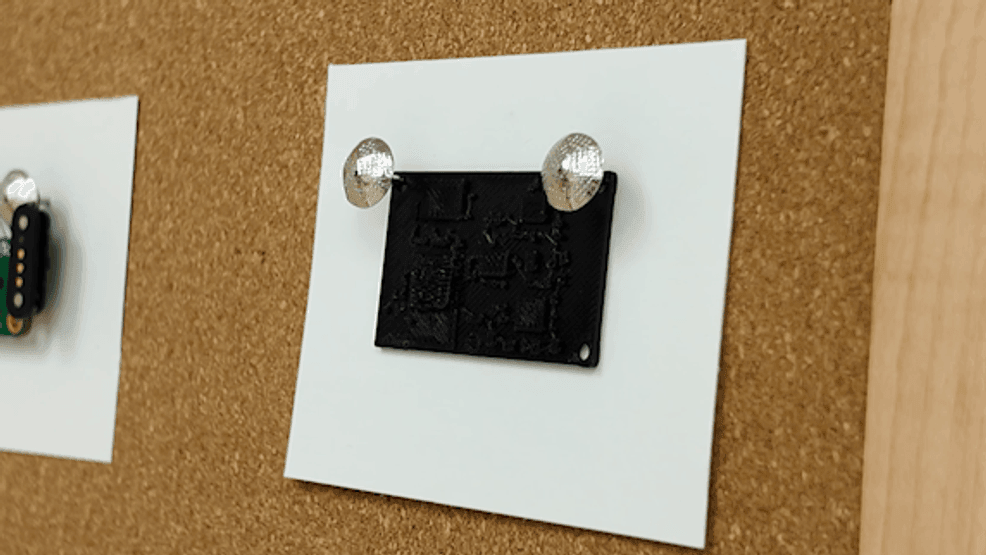
Image of the 2026 Research and Commercial Model of AgTags, taken on June 4, 2026 (WHP)
Researchers say AI can then map those movements in more detail than traditional observation alone. Foy described how the data can capture transitions in behavior with precision.

Image of Daniel Foy, CEO and co-founder of AgriGates, explaining how the machinie learning algorithims track animal movements, taken on June 4, 2026 (WHP)
Researchers involved in the project said the goal is not to remove people from agriculture but to provide tools that help address workforce challenges and potentially draw more people into the field.
“We’re using it just to help them do a better job because it’s one of the areas where we still have serious labor shortages,” Parsons said.
AgriGates also emphasizes farm data ownership, meaning the information stays on the farm.
Researchers said the lab is not storing and archiving all of the data, which reduces energy requirements. They are also exploring whether farms could use on-site energy sources such as solar or geothermal power to run AI systems.
“Maybe even if there’s enough energy potential in some of these farms that maybe we start to export it, and maybe even underwrite some of the energy needs of these large data centers that everyone worries about,” Parsons said.
The long-term goal is to expand the work across Pennsylvania and beyond, with researchers aiming to improve herd health and help protect the agriculture industry.
“Ultimately, our goal is to build smart systems that can go ahead and be deployed on farms,” Parsons said.