
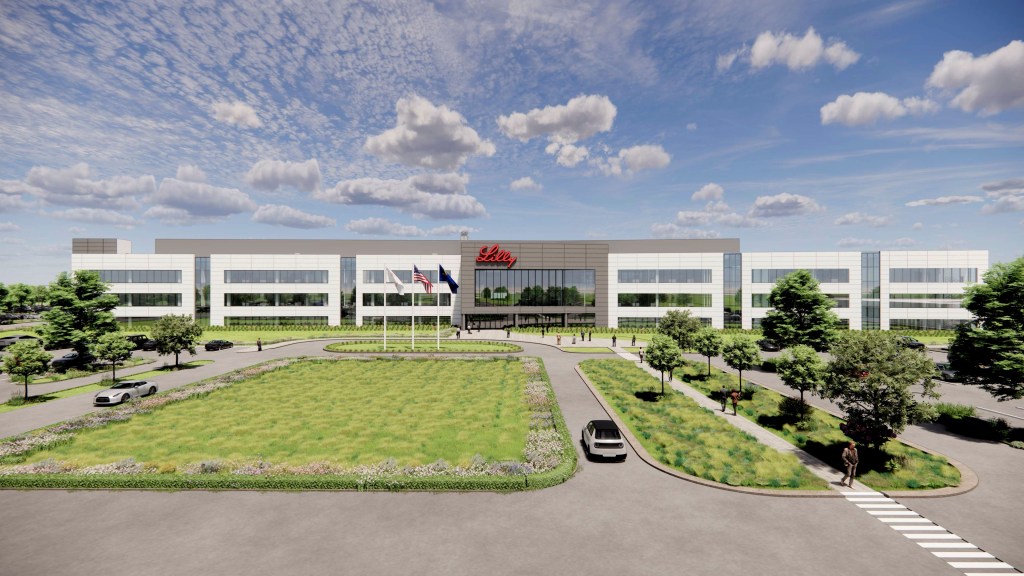
The Parkland School Board will not consider a tax break for pharmaceutical giant Eli Lilly, with district leaders saying budget pressures made the idea unsupportable.
Previous board debates surrounding the proposed Local Economic Revitalization Tax Assistance centered on board members’ concerns that the district is already pulling from its general fund to cover a deficit, and long-term budget projections indicate further action will be needed to stabilize finances as the district grows.
Superintendent Mark Madson delivered a statement during Tuesday’s board meeting, saying before public comment that the district “carefully evaluated” the proposed tax break and found “no viable way” to recommend it in light of the implementation of a five-year, $20 million expense reduction plan that is requiring the district to make “difficult choices” regarding reducing operating costs. In addition, the district is utilizing nearly $10 million in reserve funding to cover a deficit in the budget approved for the 2026-27 school year.
The immediate financial challenges, combined with the long-term structural deficit, means the district must prioritize the “stability of our local taxpayers” and the ongoing funding needed to serve the district’s more than 10,000 students, Madson said.
Madson reiterated that the district welcomes Eli Lilly’s $3.5 billion manufacturing plant to the area, calling the company a “vital part of our economic community, a partner in education and workforce development and a future taxpayer to our school system.”
The school board did not vote on the proposal, and board President David Hein said the LERTA would not be reconsidered. “This decision reflects the financial realities currently facing our school district,” he said.
LERTA is a state program designed to spur investment in “deteriorated areas” that permits township, county and school district officials to authorize tax breaks that allow land owners to delay full payment on the value of construction. Various forms of the proposal had been discussed, as the potential 10-year deal could have included differing sliding scales to determine how much tax forgiveness Eli Lilly would have received each year.
The Lehigh Valley Economic Development Corp. has strongly supported the LERTA, arguing that the program is most effective as an economic development incentive when the county, township and school district all participate. Although each entity plays a role in approving a LERTA, state law does not obligate all three elected bodies to join in.
Upper Macungie Township approved the LERTA. Lehigh County commissioners have not yet considered the plan.
Eli Lilly, Dixie Cup developers are among those seeking tax benefits in Lehigh Valley. Here’s why.