
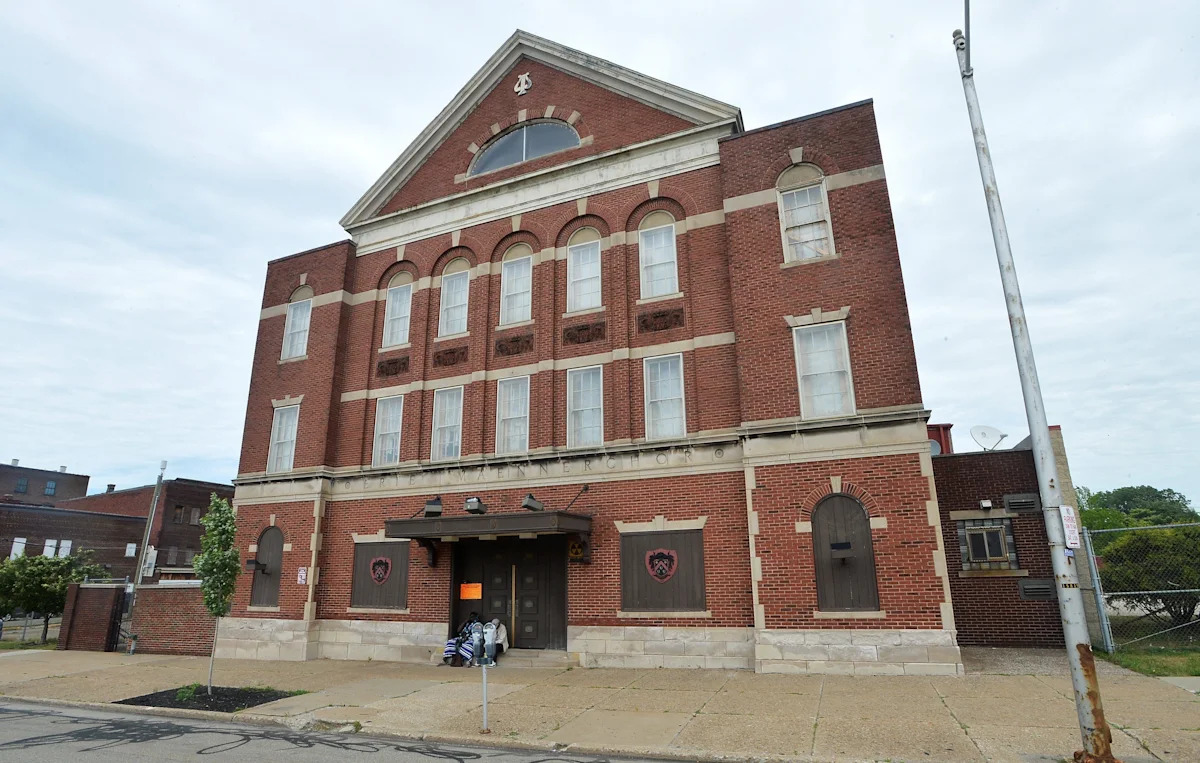
The Erie Maennerchor building, a longtime former social club in the 1600 block of State Street, is now considered a historic structure under the city’s zoning laws.
Erie City Council on June 17 unanimously approved historic designation ordinances for the Maennerchor and two other city buildings: the former South Erie Iron Works building at 1919 Peach St.; and the Erie Labor Temple property, 1701-1707 State St.
Previous coverage: Former Erie Iron Works building, labor temple eyed for historic status
Council hosted public hearings recently on whether the three buildings should receive historic designation status.
Prior to City Council’s votes, the city’s Historic Review Commission previously signed off on the designations and forwarded them to City Council for final approval. The commission is a seven-member group with five citizen appointees that advises city officials on historic preservation issues.
City zoning maps will be amended to reflect that the buildings are now considered to be historic sites.

Julio Reyes, owner of the Erie Maennerchor building.
Erie Maennerchor
The Maennerchor was a longtime social club and its construction dates back to 1889. The building was once home to a singing society created after large numbers of German immigrants migrated to Erie in the mid-1800s.
Erie Maennerchor request: City weighs historic status for property
The building is also an example of late 19th century Rundbogenstil architecture, a German-influenced architecture style that features rounded arches, “eyebrows” over the windows and inverted crenelation under the eaves.
Erie businessman Julio Reyes purchased the 33,400-square-foot Maennerchor building for $335,000 in September 2018. Reyes requested the historic designation, saying he wants to continue to improve what is a unique property.
South Erie Iron Works
The former South Erie Iron Works building at 1919 Peach St. in Erie.
The former South Erie Iron Works, currently owned by the Sisters of St. Joseph Neighborhood Network, most recently housed a printing business. It was built in two phases from 1871 to 1891, according to historic nomination documents on the city of Erie’s website.
The company once produced iron stoves and other iron-based products and included commercial storage and a foundry.
The building was considered for historic status in part because of its manufacturing history in Erie and because it is an example of late 19th century Italianate commercial storefront architecture, a storefront design common in the mid- to late 1800s characterized by two two-to-three-story brick construction, flat/low-pitched roofs, and decorative cornices.
Erie Labor Temple
The Erie Labor Temple property, 1701-1707 State St.
The Erie Labor Temple was completed in 1923 and was “specifically designed and tailored to the needs of the locals and labor unions that comprised the Central Labor Union,” according to a city nomination document.
That building is an example of Italian Renaissance Revival architecture, popular between 1890 and 1930, and features symmetrical facades, heavy masonry, rusticated ground floors and classic detailing.
Contact Kevin Flowers at kflowers@timesnews.com. Follow him on X at@ETNflowers.
This article originally appeared on Erie Times-News: Three Erie buildings receive historic status from city