
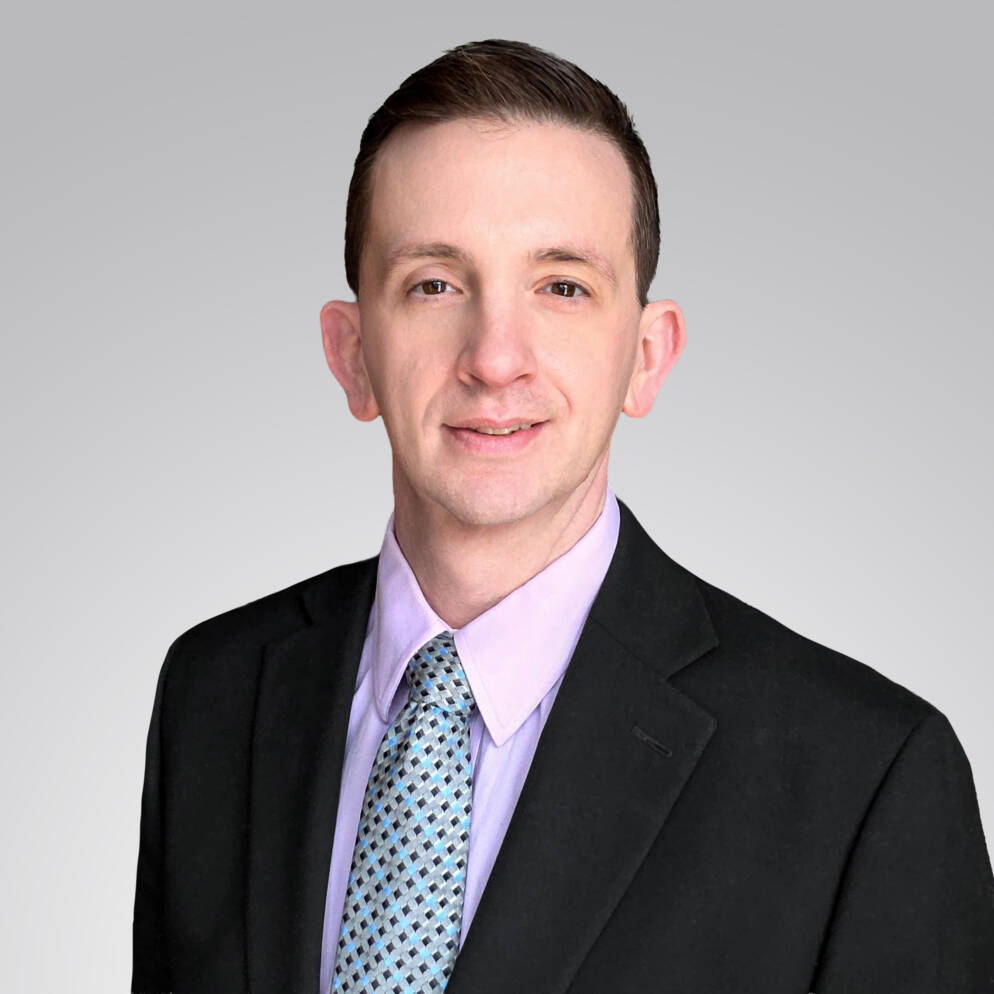
 Zev Kramer (Courtesy of Cerebral)
Zev Kramer never planned to go down a Jewish path in his professional life. In fact, it was one he consciously and actively avoided.
The South Philadelphia resident comes from a long line of clergy members. His father was a cantor, his grandfather a rabbi and so on. But Kramer said, “Hebrew was just too hard for me to learn.”
Yet even though he chose a different profession, the Jewish path still found him.
Now a psychotherapist after 15 years of working in finance at Vanguard, Kramer is embarking on a mission to explore Jewish trauma with both patients and communities. Earlier in June, he sat down with Rabbi Yosef Zarnighian at Congregation Mikveh Israel in Old City for a conversation on this subject.
The psychotherapist has also reached out to other synagogues across the city. He hopes to engage other Jewish organizations as well.
Kramer started down this path after he began working with Cerebral, an online platform for finding mental health professionals, earlier this year. The organization encouraged him to try to find patients by going out in the community and talking about what he knew.
“That’s what I started doing,” he said.
And that’s what he will keep doing.
The South Philly resident never strayed from Judaism. He just didn’t pursue it as his profession. After the suggestion from Cerebral, however, he looked around and realized that Jewish trauma had deepened since Oct. 7, 2023.
“It is not easy doing Jewish, openly Jewish, proud and Jewish, knowledgeable … in today’s day. I thought, well, let me take on some of my family’s legacy, but use my own education and do it my way, going out into the community and helping people deal with trauma that is now developing in brand-new form,” he said.
Jewish trauma is rooted in a fear of reprisal if Jews express their identities, he explained.
“It’s a coat they want to take off. But it’s a coat you should never take off. It’s a coat that will keep you warm,” the therapist said.
In this day and age, Kramer has noticed young Jews taking off the coat. Recently, while walking to a doctor’s appointment on the University of Pennsylvania’s campus, he saw a Jewish person wearing a Magen David necklace and a keffiyeh.
“I didn’t know how to react,” he said. “It’s not something I ever expected to see.”
The psychotherapist believes that the modern era offers a toxic combination of social media ubiquity and a lack of historical memory. Power users of online platforms like TikTok can find ways around hate speech filters by wielding phrases like “6 million cookies,” Kramer said. He also regularly meets young Jews who buy the modern narrative of Israeli colonialism but “don’t know what happened 80 years ago.”
Kramer is 45, and he says he rarely interacts with anyone below his age who possesses a basic understanding of Israeli history. One day in this post-Oct. 7 environment, he walked by a protest. A protester was holding a sign that expressed support for the intifada. Kramer asked him which intifada he was supporting. The protester said, “Oh, all of them.” The therapist responded that there had only been two, and they are both over.
“I can’t find anybody below my age who can explain anything to me,” he said.
This combination has deepened the Jewish sense of fear, according to Kramer. As he started thinking about how to address this trauma, the father also considered his larger contribution.
“I think to myself, my God, this is what it’s like now, when my son is only 6. What will it be like when he’s 16? I can’t just sit here with knowledge and ability and not try to do something to make a positive change,” he said.
His message at Mikveh Israel was straightforward.
“What I can do as a psychotherapist is say that there’s nothing wrong with being proud of who you are. You come from a tradition that is 5,000 years old, give or take a millennium. It’s a proud banner to carry in life,” Kramer said.
The son of a cantor and the grandson of a rabbi is also carrying on that banner now, just in his own way.
“My goal is to really get in touch with larger organizations within city and, hopefully, more broadly, to put together programs that deal with antisemitism in a psychological lens,” he said.