
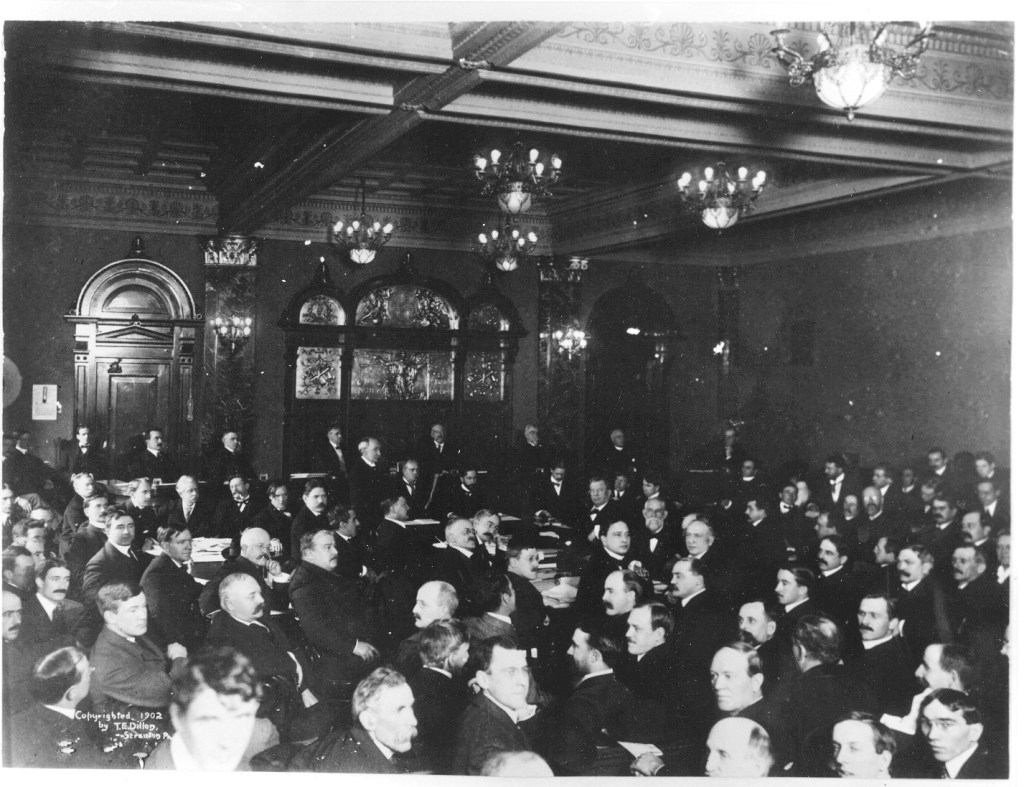
The stories of life in the coal mines of Northeast Pennsylvania paint a grim picture of long, grueling days in dangerous conditions with little … if any … thought given to the men scraping their livelihood from the mine walls. Somewhere lost in that narrative of despair is the story of triumph. There was triumph in mining the coal that powered the nation and fueled the Industrial Revolution, creating a modern American powerhouse.
Equally important were the rights the workers earned and still enjoy today.
National ripple
Scranton, of course, played a pivotal role in the labor movement as a battleground that helped catalyze the establishment of the eight-hour workday. As the heart of the nation’s anthracite coal industry, the conditions of the mines sparked deep-seated and sometimes violent labor unrest. Wanted or not, the region was a crucible or workers’ rights.
Momentum shifted during the Lattimer Massacre of 1897 and the subsequent Anthracite Coal Strike of 1902. Under the leadership of John Mitchell, president of the United Mine Workers of America, tens of thousands of miners in the Scranton region walked off the job. Their demands were fundamental: fair wages, recognition of their union, and a reduction of the exhausting 10-to-12-hour shifts.
The strike stifled the national economy, forcing President Theodore Roosevelt to intervene. The resulting federal commission was a watershed moment in labor history. While the miners did not secure all their demands immediately, the 1902 settlement granted them a nine-hour workday and a 10 percent wage increase. More importantly, it established a precedent for federal mediation in labor disputes and proved that organized solidarity could successfully challenge corporate monopolies.
Living legacy
Scranton’s fierce labor activism had a domino effect. The concessions won by the miners emboldened industries across the country to push for the “eight hours for work, eight hours for rest, eight hours for what we will” standard. By proving that shorter workdays did not collapse industry, but rather created safer, more productive workers, Scranton’s labor force laid the groundwork for the Adamson Act of 1916 and the eventual codification of the 40-hour workweek under the Fair Labor Standards Act of 1938.
Sidelights
Any discussion of an eight-hour-workday needs to acknowledge the effort of another Northeast Pennsylvanian.
Carbondale-born Terence V. Powderly moved to Scranton as a young man to work as a machinist for the railroad and quickly became a prominent labor organizer and was elected Mayor of Scranton three times (serving from 1878 to 1884). While mayor, Powderly also became the Grand Master Workman of the Knights of Labor. The group grew to become the largest and most powerful labor organization in America during the 1880s. A non-negotiable demand of Powderly’s Knights of Labor was the establishment of the eight-hour workday. Under his leadership, the organization grew to over 700,000 members and pushed the 8-hour philosophy into mainstream political discourse nationwide.
About the series
No. 3: As the nation approaches America250, we are counting down ways NEPA has powered American history. Missed a day? Read the full countdown as it unfolds at citizensvoice.com.