
As Philadelphia prepares to celebrate the nation’s 250th birthday, the city’s Black history stands as both a reflection of America’s promises and a reminder of its unfinished work. From the founding of the nation inside Independence Hall in 1776 to the election of the city’s first Black woman mayor in 2024 nearly two and a half centuries later, Black Philadelphians have helped build, defend, challenge and redefine the City of Brotherly Love.
Their stories are woven into every chapter of Philadelphia’s history — in churches and classrooms, courtrooms and Council chambers, newsrooms and neighborhoods, protest marches and polling places. Blacks in the city founded institutions, fought injustice, expanded opportunity and transformed the city through faith, education, business, politics, journalism and activism.
This timeline, compiled by The Philadelphia Tribune in recognition of the nation’s semiquincentennial celebration, highlights some of the people, moments and movements that shaped Black Philadelphia from 1776 to 2026. While no timeline can fully capture 250 years of achievement and struggle, these milestones tell the story of a community whose impact on Philadelphia — and the nation — remains immeasurable.
1700s
1776 – The birth of a nation and contradiction of freedom
On July 4, 1776, delegates gathered inside Independence Hall in Philadelphia to adopt the Declaration of Independence, proclaiming “all men are created equal.” While the document established the ideals of liberty and self-government, those promises did not extend to everyone.
1787 – The Free African Society and the rise of Black leadership
By the late 1780s, Philadelphia had become home to the largest free Black population in the United States. In 1787, two formerly enslaved ministers, Richard Allen and Absalom Jones, founded the Free African Society, the nation’s first independent Black mutual aid organization. Meeting throughout Philadelphia, the society provided financial assistance, burial funds, education and spiritual support to free African Americans who were excluded from many white institutions.
1796 – Ona Judge chooses freedom
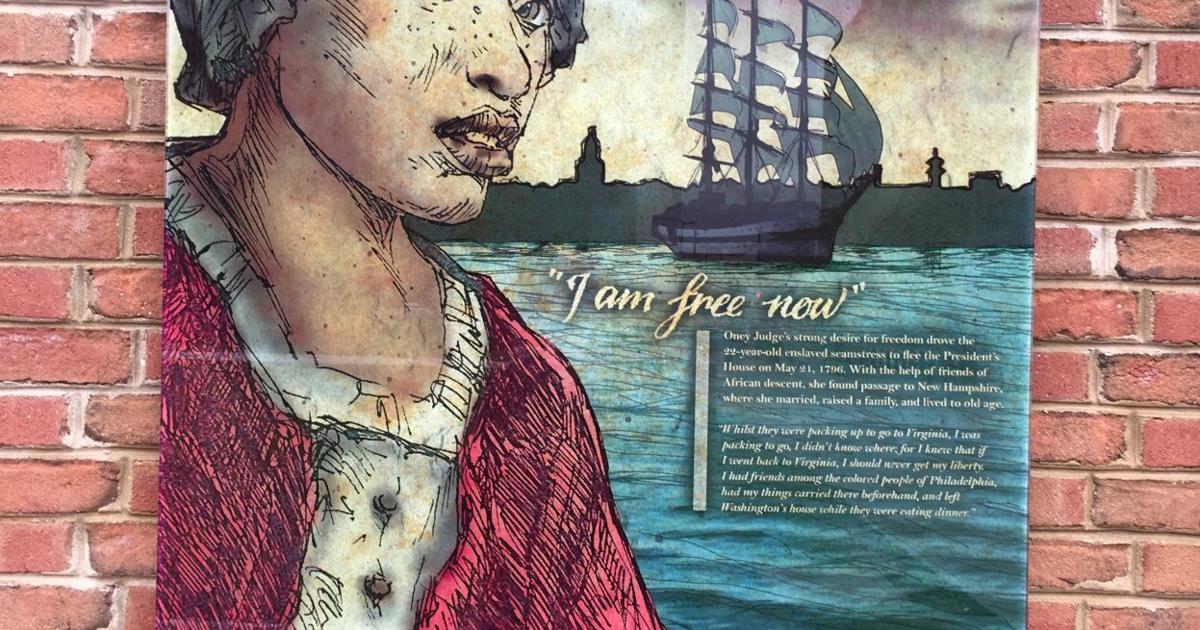
In May 1796, Ona Judge, an enslaved woman owned by President George Washington and First Lady Martha Washington, made a daring escape from the President’s House at 6th and Market streets in Philadelphia. Learning she was to be given away as a wedding gift, Ona secretly boarded a ship bound for Portsmouth, New Hampshire, with assistance from members of Philadelphia’s free Black community. Today, she is remembered as one of the earliest and most courageous freedom seekers in American history. Her story is honored at Philadelphia’s President’s House Historic Site.
1800s
1804 – Absalom Jones becomes a voice for equality
The Rev. Absalom Jones stood among Philadelphia’s most influential Black leaders and advocates for racial equality. After purchasing his freedom in 1784, Jones helped establish the Free African Society alongside Richard Allen before founding the African Episcopal Church of St. Thomas in 1794. Through his ministry and activism, Jones advocated for education, voting rights and equal treatment under the law, helping establish Philadelphia as an early center of Black civic leadership.
1816 – Richard Allen establishes the African Methodist Episcopal Church
Richard Allen, a formerly enslaved minister and abolitionist, officially founded the African Methodist Episcopal (AME) Church, and created the first independent Black Christian denomination in the United States. Its founding congregation, Mother Bethel AME Church, located at 419 S. 6th St. in Philadelphia, quickly became one of the most influential Black institutions in America.
More than a place of worship, Mother Bethel served as a school, meeting place, Underground Railroad station and center for political organizing. His work helped establish Philadelphia as the national center of Black religious leadership during the 19th century.
1826 – Sarah Mapps Douglass expands educational opportunities for Black children
By 1826 education had become one of the most powerful tools in the fight for equality in Philadelphia’s Black community. Sarah Mapps Douglass, born in Philadelphia in 1806 to a prominent free Black family, emerged as one of the city’s first Black female educators, abolitionists and intellectuals. She taught at schools established by Black churches and later helped lead the Female Literary Association, where Black women met to study literature, science, history and current events at a time when educational opportunities for African Americans —especially women — were severely limited.
1838 – Pennsylvania Hall burns, but the abolition movement endures
In May 1838, abolitionists opened Pennsylvania Hall near 6th and Haines streets as a gathering place where Black and white reformers could meet to discuss ending slavery and expanding civil rights. Among its strongest supporters was Philadelphia businessman and abolitionist Robert Purvis, who dedicated his wealth and home to the anti-slavery movement.
Just four days after opening, an anti-abolition mob set the building on fire while city officials failed to intervene. Although Pennsylvania Hall was destroyed, the attack strengthened Philadelphia’s abolition movement and further established the city as a center of resistance against slavery.
1847- William Still records the stories of freedom seekers
William Still began his work with the Pennsylvania Anti-Slavery Society and soon became one of the most important figures in the Underground Railroad. Working from offices in Philadelphia, Still helped hundreds of enslaved people escape slavery by providing shelter, transportation, clothing and financial support as they traveled northward toward freedom.
Unlike many conductors, Still carefully documented the names and stories of those he assisted, preserving histories that otherwise may have been lost forever. His book, “The Underground Railroad,” remains one of the most important firsthand accounts of the movement.
1850 – Philadelphia defies Fugitive Slave Act
In September 1850, Congress passed the Fugitive Slave Act of 1850, requiring escaped enslaved people to be returned to slavery even if they had reached free states. The law also imposed harsh penalties on anyone who aided freedom seekers. Philadelphia’s Black community refused to comply. Leaders including William Still, Robert Purvis and members of Mother Bethel AME Church organized safe houses, transportation routes and financial assistance for those fleeing bondage. Their actions transformed Philadelphia into one of the most important centers of the Underground Railroad in the United States.
1867 – Octavius V. Catto wins streetcar fight
Educator and civil rights leader Octavius Valentine Catto helped lead the successful campaign to desegregate Philadelphia’s streetcars, making the city one of the first in the nation to prohibit racial discrimination on public transportation.
Catto worked through the Pennsylvania Equal Rights League to organize protests, petitions and legal challenges against segregated transit companies. The victory marked one of the earliest civil rights successes of the Reconstruction era and demonstrated the growing political influence of Philadelphia’s Black community.
1871 – The assassination of Octavius V. Catto
On Oct. 10, 1871, Election Day violence erupted across Philadelphia as white mobs attempted to intimidate Black voters following the ratification of the Fifteenth Amendment. While encouraging African Americans to exercise their newly won right to vote, Octavius Valentine Catto was shot and killed near South Street by a white political operative.
Catto’s assassination shocked the city and transformed him into a martyr for civil rights and voting access. Today, his legacy is commemorated through the Octavius V. Catto Memorial outside Philadelphia City Hall, the city’s first public monument honoring an African American individual.
1884 – The Philadelphia Tribune makes way
Founded by Christopher J. Perry, The Philadelphia Tribune newspaper was created to ensure that African Americans had a publication dedicated to reporting on the issues affecting their lives at a time when many mainstream newspapers ignored or misrepresented Black communities. The Tribune covered civil rights, education, politics, business, religion, sports and culture while highlighting the accomplishments of Black Philadelphians. As the oldest continuously published Black newspaper in the United States, The Philadelphia Tribune became more than a newspaper — it became a trusted voice preserving the history of Philadelphia’s Black community while inspiring future generations of journalists and activists.
1896 – Caroline LeCount challenges segregation
During the late 19th century, educator and civil rights activist Caroline LeCount became one of Philadelphia’s leading voices for racial equality. A graduate of the Institute for Colored Youth, LeCount devoted her life to expanding educational opportunities for African Americans while challenging discrimination throughout the city. Years before segregation became national law, she successfully protested discrimination on Philadelphia’s streetcars, helping secure the enforcement of Pennsylvania laws that prohibited racial segregation on public transportation.
1900s
1916 – The Great Migration reshapes Philadelphia
Beginning around 1916, Philadelphia experienced a dramatic transformation during the Great Migration, one of the largest internal migrations in American history. Thousands of African Americans left Southern states such as Georgia, Virginia, Alabama, Mississippi and the Carolinas to escape Jim Crow segregation, racial violence and limited economic opportunities.
Drawn by jobs in Philadelphia’s shipyards, railroads, textile mills and factories, many settled in neighborhoods including North Philadelphia, South Philadelphia and West Philadelphia. The city’s Black population grew rapidly, bringing new churches, businesses, social organizations, newspapers and cultural traditions. The Great Migration permanently reshaped Philadelphia, establishing vibrant Black neighborhoods and strengthening the city’s role as one of the nation’s most important centers of African American culture, politics and community life.
1926 – Alain Locke and the celebration of Black history
By 1926, Philadelphia native Dr. Alain LeRoy Locke had become one of the nation’s most influential Black scholars, philosophers and educators. Born in Philadelphia in 1885, Locke graduated from Central High School before earning degrees from Harvard University and becoming the first African American Rhodes Scholar. While teaching at Howard University, he published “The New Negro” in 1925, a groundbreaking collection of essays and literature that helped launch the Harlem Renaissance, a cultural movement celebrating African American art, literature and identity.
1939 – Marian Anderson sings for a nation
After being denied permission to perform at Constitution Hall because of her race, Philadelphia-born contralto Marian Anderson delivered one of the most iconic performances in American history on the steps of the Lincoln Memorial. Before a crowd of approximately 75,000 people and millions listening by radio, Anderson performed patriotic songs and spirituals that challenged racial barriers in American culture. Raised in South Philadelphia and supported by members of the city’s Black community early in her career, Anderson became an international symbol of dignity, perseverance and artistic excellence.
1947 – Sadie Tanner Mossell Alexander shapes national civil rights policy
Philadelphia attorney and economist Sadie Tanner Mossell Alexander was appointed to President Harry S. Truman’s Committee on Civil Rights where she played a major role in producing the landmark report “To Secure These Rights,” which called for stronger federal protections against discrimination in voting, housing, employment and education. Already the first African American woman in the United States to earn a doctorate in economics and the first Black woman admitted to the Pennsylvania Bar, Alexander spent her career fighting for equality in Philadelphia and across the nation. Her work helped shape many of the federal civil rights policies that would emerge during the following decades.
1953 – Cecil B. Moore takes the helm of the Philadelphia NAACP
Attorney and activist Cecil B. Moore became president of the Philadelphia branch of the National Association for the Advancement of Colored People and quickly transformed it into one of the most influential civil rights organizations in the country. Moore adopted a more aggressive approach to combating discrimination, organizing demonstrations and direct-action campaigns against segregation in labor unions, schools and workplaces throughout the city. Under his leadership, Philadelphia emerged as a major battleground in the struggle for civil rights in the North, proving that racial inequality extended far beyond the South.
1965 – The Girard College protests
Beginning in May 1965, Moore led months of demonstrations outside Girard College, which admitted only white boys despite being located in a predominantly Black neighborhood in North Philadelphia. Thousands of protesters marched outside the school’s walls demanding equal educational opportunities and an end to racial discrimination. The demonstrations became one of the largest civil rights protests in the North and attracted national attention. The campaign ultimately succeeded when Girard College admitted its first Black students in 1968, marking a major victory for Philadelphia’s Civil Rights Movement.
1976 – Leon Sullivan and economic empowerment
As Philadelphia celebrated the nation’s Bicentennial, the Rev. Leon H. Sullivan was transforming the city through economic justice and community development. Serving as pastor of Zion Baptist Church in North Philadelphia, Sullivan believed that equal opportunity required not only civil rights but also economic independence. In 1964, he founded the Opportunities Industrialization Center (OIC), a job-training organization that provided education and employment opportunities for thousands of unemployed and underemployed people.
1984 – Philadelphia gets its first Black mayor
W. Wilson Goode became Philadelphia’s first African American mayor after winning the 1983 election and taking office in January of the following year. His election represented a historic milestone for a city with one of the nation’s oldest and largest Black communities. Goode’s victory reflected decades of political organizing and civic engagement by Black Philadelphians who had fought for greater representation in government since the days of Octavius Catto and the Reconstruction era.
1985 – The MOVE bombing
On May 13, 1985, a confrontation between the Philadelphia Police Department and members of the Black liberation organization MOVE escalated into one of the most tragic events in Philadelphia history. Police dropped an explosive device onto the group’s rowhouse on Osage Avenue in West Philadelphia, igniting a fire that killed 11 people — including five children — and destroyed 61 homes.
2000s
2000 – John F. Street becomes Philadelphia’s second Black mayor
John F. Street became Philadelphia’s second African American mayor, succeeding Mayor Ed Rendell after winning the 1999 election. Having previously served as president of Philadelphia City Council, Street focused his administration on neighborhood revitalization, affordable housing, economic development and reducing disparities affecting underserved communities.
2010s
2016 – Philadelphia helps tell America’s complete story
Philadelphia continues to expand efforts to preserve and share the full story of African American history with future generations. The President’s House Historic Site near Independence Hall educated visitors about the lives of the nine enslaved Africans who lived and worked in President George Washington’s household, including freedom-seeker Ona Judge. The site challenged traditional narratives surrounding the nation’s founding by reminding visitors that slavery existed in America’s first capital alongside the ideals of liberty and independence.
Also in 2016, historian Lonnie G. Bunch III helped open the National Museum of African American History and Culture, the first national museum solely dedicated to preserving and interpreting African American history and culture. Together, these milestones reflected a growing commitment to telling a fuller and more honest American story — one in which Black history stands at the center rather than in the margins of the nation’s history.
2020s
2024 – Philadelphia elects its first Black woman mayor
Cherelle L. Parker made history by becoming Philadelphia’s first female mayor. A former member of City Council and representative in the Pennsylvania House of Representatives, Parker’s election reflected generations of progress built by earlier pioneers including Octavius Catto, Cecil B. Moore, Sadie Alexander and W. Wilson Goode while inspiring a new generation of young Philadelphians interested in public service and civic leadership.
2026 – America250 and the future of Black history in Philadelphia
As Philadelphia hosts celebrations marking the 250th anniversary of the signing of the Declaration of Independence, the city continues recognizing that American history cannot be told without the contributions and experiences of African Americans who helped build, defend and transform the nation.
Historic institutions including the African American Museum in Philadelphia, Mother Bethel African Methodist Episcopal Church, the Paul Robeson House & Museum, the Johnson House Historic Site and The Colored Girls Museum continue to preserve and share stories of Black Philadelphians through exhibitions, education programs and community engagement.
Stay informed and connected — subscribe to The Philadelphia Tribune NOW! Click Here