

Central Pennsylvania is under an extreme heat warning through 8 p.m. Saturday, the Fourth of July, as triple-digit temperatures are forecast across the Lower Susquehanna Valley.
The temperature will be at least 100 degrees again Friday, and in the 90s over the weekend, though it’ll feel hotter.
That kind of heat is dangerous to people, pets and places. Here are some tips for staying safe:
Stay cool, people
The Centers for Disease Control and Prevention and the Pennsylvania Department of Health have plenty of suggestions.
Stay indoors.Dress in lightweight, light-colored and loose-fitting clothes. Consider hats and sunglasses outdoors.Plan to do any outdoor activities either early in the day or in the late afternoon or evening, to avoid the hottest time of day.Monitor any exercise you partake in, and take it slower and less intensely than normal.Wear sunscreen for any amount of prolonged outdoor activity.Avoid hot or heavy meals.Stay hydrated. Don’t wait until you are thirsty to drink water. Anyone working outside should drink between two and four cups of water every hour. Avoid alcoholic, caffeinated or sugary drinks. If your home is not air-conditioned, find a cooling center. They’re open in locations across all central Pennsylvania counties, often in senior centers. Libraries are also cool and open to the public during the day.
Activities are still taking place across Pennsylvania for the Fourth of July and America’s 250th birthday. Before heading out, though, make sure the event you’re attending is still happening, Some have already been rescheduled or relocated due to the heat wave.
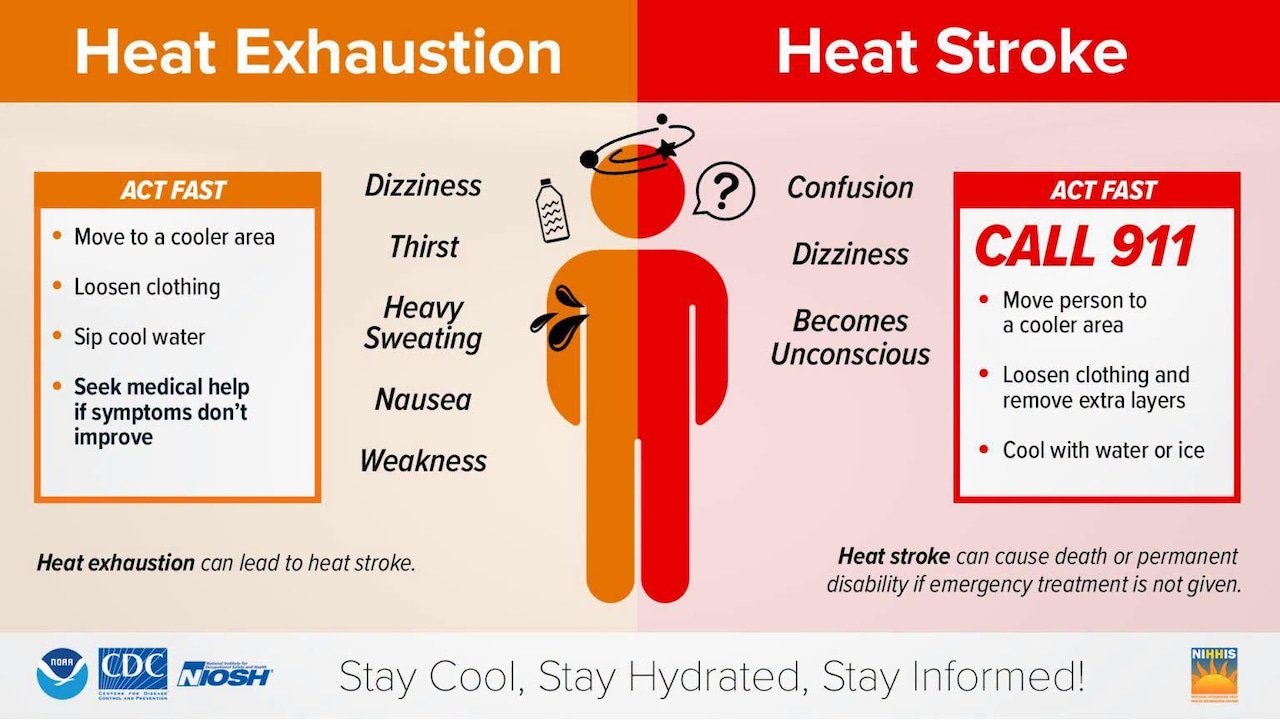 Here are the signs and symptoms of heat stroke vs heat exhaustion.Graphic provided by the National Weather ServiceHeat-related illnesses
What’s the difference between heat exhaustion and the more dangerous heat stroke?
Heat exhaustion can happen when your body becomes dehydrated and loses too much water and salt, as a result of high temperatures and humidity. Those most at risk are older adults, those with high blood pressure and those who are working outside. Left untreated, heat exhaustion can progress to the more severe heat-related illness, a heat stroke.Heat stroke is caused by the body overheating, usually as a result of prolonged exposure to or physical exertion in high temperatures. This most serious form of heat injury can occur if your body temperature rises to 104 Fahrenheit or higher. Untreated heatstroke can quickly damage the brain, heart, kidneys and muscles.
Seek immediate medical attention if you are concerned someone is showing signs of a heat-related illnesses including a heat stroke. Check on your neighbors and family, especially those who are very old, very young or have chronic illnesses.
Also, never ever leave a person or pets alone in a vehicle, even if the windows are cracked. Each year, multiple children die after being left in hot cars.
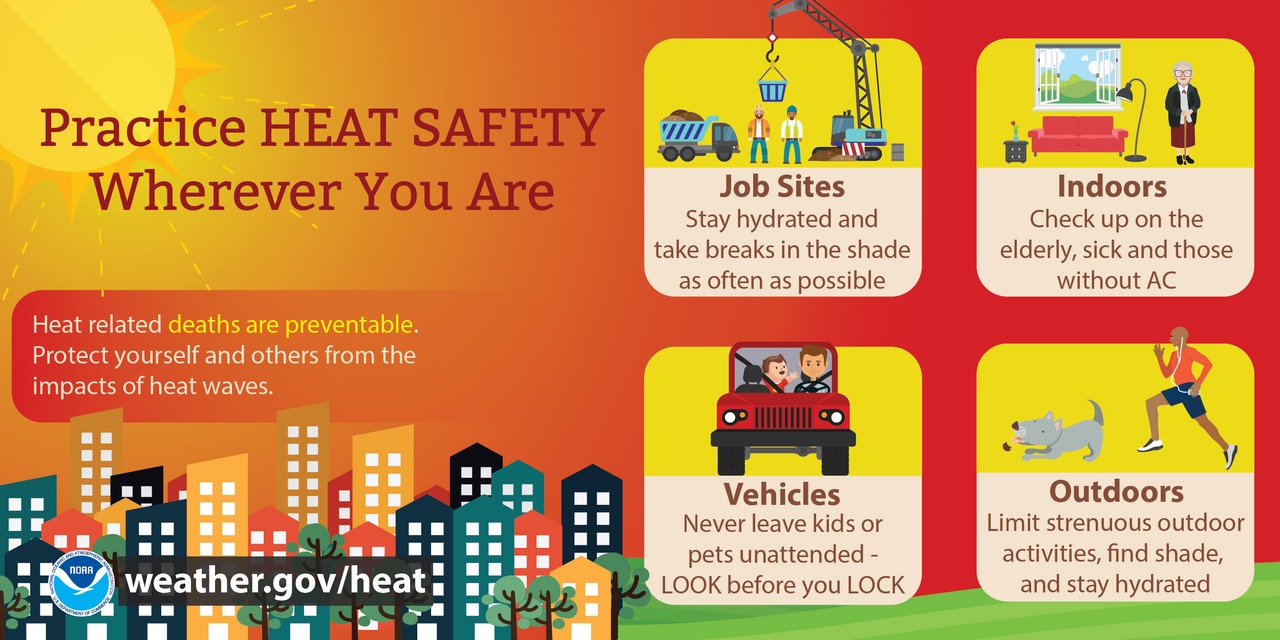 The National Weather Service urges people to practice heat safety by staying hydrated, taking breaks in the shade, limiting strenuous outdoor activity and checking on vulnerable relatives and neighbors. Children and pets should never be left unattended in vehicles.National Weather ServiceA/C systems
Make sure your air conditioning system is working efficiently by being the appropriate size for your home and that it’s in good shape. That’ll save money.
Running fans throughout the house will keep the air moving and reduce stuffiness. (Make sure to set your ceiling fans to the clockwise position for the best effect.)
Have an insulation pro take a look at your walls; older insulation is less effective and wastes energy.
Windows tend to increase heat in the home. Use blinds, curtains or window film to cover them during the day. Also, try not to run heat-generating appliances, such as clothes dryers and ovens, during the day.
Pets and heat
Under Pennsylvania’s Libre’s Law, dogs may be tied outside for no more than 30 minutes when temperatures are higher than 90 degrees.
Before you take your pets for a walk, think about how hot the sidewalk is.
Generally safe for most pets: 77 to 87 degrees. Caution advised: 88-92 degrees. Keep walks shorter and avoid prolonged exposure. Too hot for pets to walk on asphalt: 93 and up. Prolonged exposure at temperatures in the mid-90s can lead to burns and heatstroke.Pets in distress may show excessive panting and lethargy.
Here’s what the ASPCA has to say:
Give animals plenty of fresh, clean water when it’s hot or humid outdoors. Provide a shady place to get out of the sun.Don’t over-exercise pets when it’s hot.Keep pets indoors when it’s extremely hot if you can.Know your breed. Animals with flat faces, like pugs and Persian cats, are more susceptible to heat stroke because they cannot pant as effectively.It’s OK to trim longer hair on a dog, but never shave it. Brushing cats can prevent problems caused by excessive heat.
A version of this story was first published in 2024.