
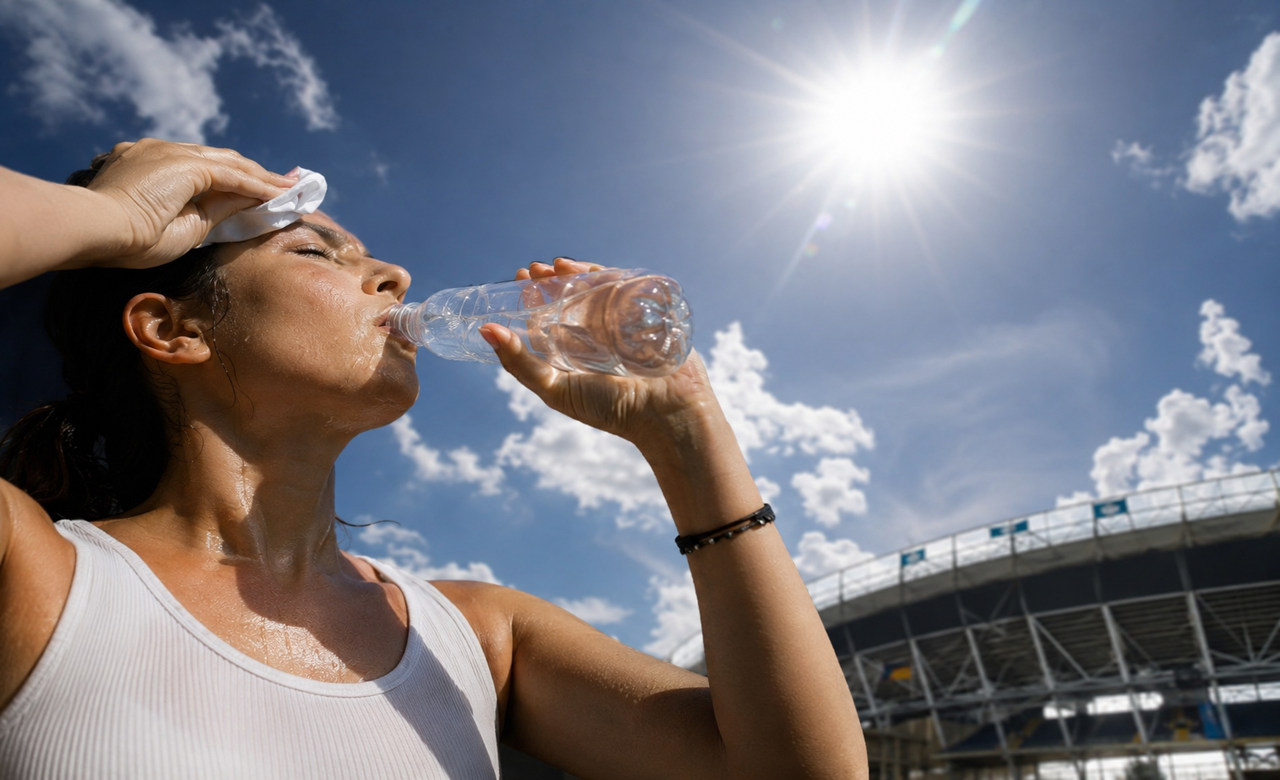
As the United States marks the 250th anniversary of its independence and tens of thousands of fans prepare to attend the FIFA World Cup Round of 16 match between France and Paraguay, the National Weather Service has issued an Extreme Heat Warning that will remain in effect until 8:00 p.m., covering virtually the entire duration of the match. Forecasts call for temperatures near 101°F (38.3°C), but the greatest danger will come from the heat index, which could reach 105°F to 115°F (40.5°C to 46°C) because of the region’s oppressive humidity.
This is more than just a hot summer day. Meteorologists describe the event as a heat dome a strong high-pressure system that traps hot air over a region for several consecutive days, preventing temperatures from cooling significantly even overnight. The situation has placed Philadelphia’s emergency services, hospitals, and public health officials on high alert, prompting the city to activate a Heat Health Emergency to protect both residents and the thousands of visitors arriving for the World Cup and Independence Day celebrations.
Philadelphia is expecting an extraordinary influx of visitors. In addition to the Round of 16 match, the city is hosting concerts, festivals, Independence Day celebrations, and events commemorating America’s 250th anniversary. That combination makes Philadelphia one of the nation’s busiest destinations this holiday weekend, precisely as dangerous heat reaches its peak. Several official events have even been modified or canceled to reduce public exposure to extreme temperatures.
Officials stress that the danger is not limited to people spending hours under direct sunlight. Heat exhaustion and heat stroke can develop quickly when the body loses its ability to regulate its temperature. Those at greatest risk include older adults, young children, pregnant women, people with cardiovascular disease, individuals taking certain medications, and visitors arriving from cooler climates whose bodies have not yet acclimated to these extreme conditions.
Doctors recommend staying well-hydrated beginning several hours before heading outdoors, avoiding alcoholic beverages and excessive caffeine, wearing lightweight, light-colored clothing, applying sunscreen, using a hat or cap, and seeking shade or air-conditioned spaces whenever possible. They also advise paying close attention to symptoms such as dizziness, weakness, headache, nausea, confusion, or rapid breathing warning signs of heat-related illness that require immediate medical attention.
To respond to the emergency, Philadelphia has launched an extensive heat response plan. More than 50 cooling centers will remain open throughout the day, while free water refill stations, misting tents, shaded rest areas, and additional medical stations have been set up across the city. The Philadelphia Department of Public Health has also activated a dedicated Heatline to provide guidance on heat-related symptoms and expanded outreach teams serving people experiencing homelessness.
The precautions extend to the World Cup as well. FIFA has authorized fans to bring one sealed plastic bottle of water up to 20 ounces into the stadium, increased hydration stations inside the venue, and established cooling tents around the stadium to reduce heat exposure before entry. Organizers are encouraging spectators to arrive early, avoid long lines in direct sunlight, and take advantage of shaded areas before kickoff.
The venue itself presents another challenge because the stadium hosting the France-Paraguay match does not have a retractable roof. Throughout much of the afternoon, thousands of spectators will be directly exposed to intense solar radiation a condition that sports medicine experts say significantly increases the risk of dehydration for both fans and event personnel.
Only after all of these concerns does the focus shift to soccer. The France-Paraguay Round of 16 match is scheduled to kick off at 5:00 p.m., precisely when temperatures and the heat index are expected to reach their daily peak. Numerous experts and sports organizations have questioned scheduling matches during periods of such extreme heat, arguing that hydration breaks alone may not adequately protect players when the heat index rises well beyond levels considered safe for vigorous physical activity.
Beyond the outcome on the field, Philadelphia has become one of the clearest examples of a challenge likely to accompany major international sporting events for decades to come. Researchers with the World Weather Attribution initiative concluded that the intense heat wave affecting the eastern United States was made significantly more severe by human-caused climate change. Their warning extends beyond this World Cup: as extreme heat becomes more frequent, organizers of large public events will increasingly need to treat weather as a safety consideration every bit as important as logistics or the competition itself.
This Fourth of July, while the world watches to see which team advances to the quarterfinals, Philadelphia will be playing a different kind of match one that will never appear on the scoreboard but could shape the experience of thousands of people. Because long before the opening whistle, the city’s toughest opponent will already be in place: an extreme heat wave determined to become the day’s most formidable challenge.