
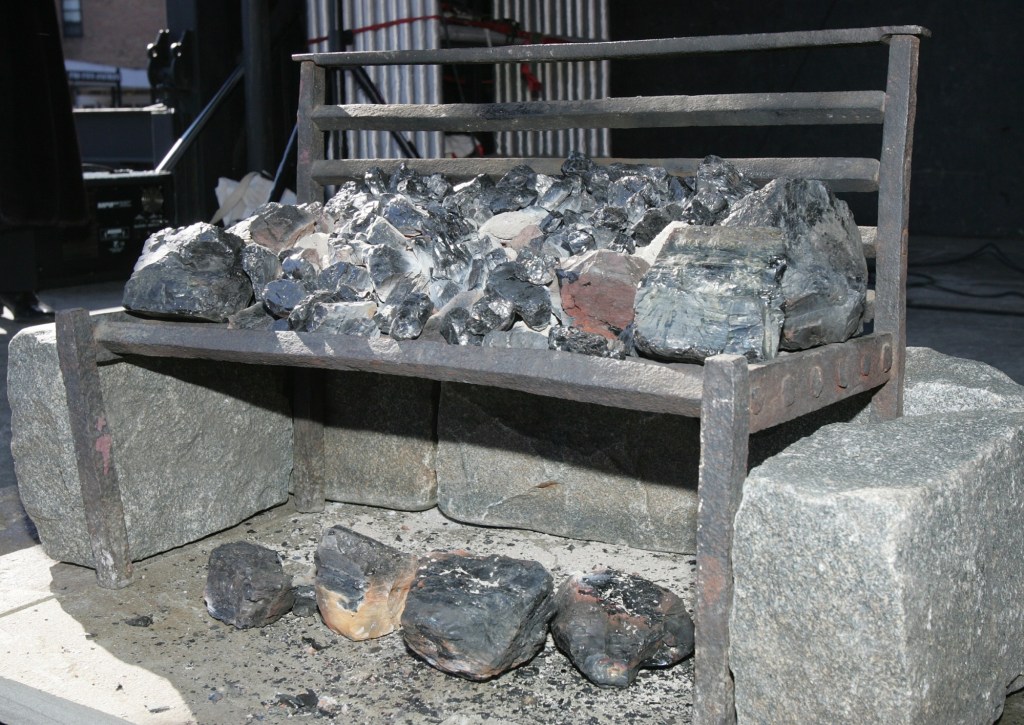
The humble iron grate looks more like a miniature park bench than a significant artifact of American history.
But the metal frame tucked away in a gallery of the Luzerne County Historical Society Museum ignited a 19th-century anthracite coal boom that fired factories and heated homes in major East Coast cities, helping drive the Industrial Revolution.
The “stone coal” found primarily in Northeast Pennsylvania – shiny, hard and less smoky than the crumbly bituminous mined elsewhere in the U.S. – was long favored by 18th-century blacksmiths, who used bellows to provide oxygen to keep it burning. In 1808, Jesse Fell, a politician and innkeeper at The Sign of the Buck in Wilkes-Barre, hit upon the idea of burning it in his fireplace using a raised grate made of iron slats that allowed for sufficient airflow, “making a cleaner and better fire, at less expense than burning wood in the common way.”
“On first lighting, I found it to burn excellently well,” Fell wrote to a relative years later. “My neighbors flocked to see the novelty. … Such was the effect of this pleasing discovery that in a few days there were a number of grates put in operation.”
The national ripple
In the following decades, demand for anthracite drove the construction of canals and rail lines linking our region to the great cities of the Northeast. Coal-driven foundries like the Scranton Iron Furnaces and the Snyder Iron Works in Pottsville churned out iron rails and mining machinery. During the Civil War, anthracite powered the Union’s arms factories, railroads and steamships.
“This little piece of metal set up the next century of industrial development,” said Mark J. Riccetti Jr., director of operations and programs at the historical society museum.
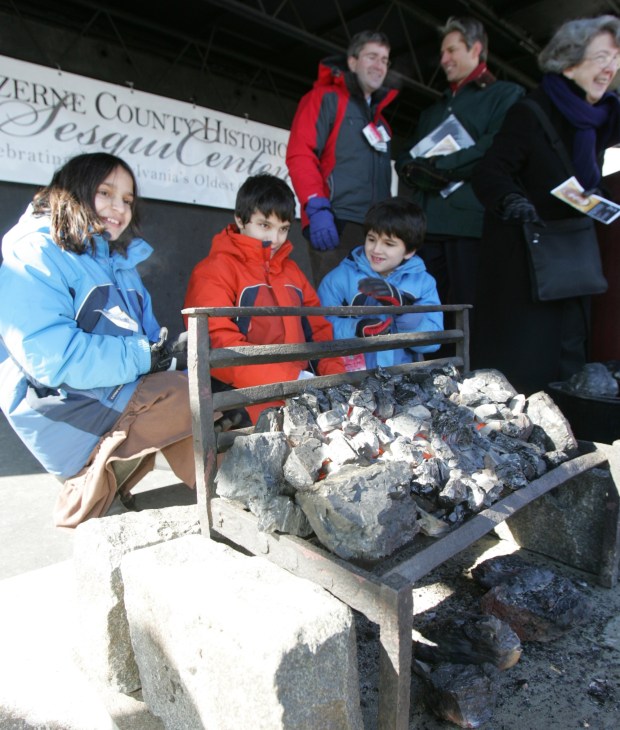 Descendants of Jesse Fell, from left, Samantha Teller Lottick, Kadan Edward Lottick and Antrim Ranjit Lottick warm themselves by an anthracite fire on a grate once used by their ancestor on the 200th anniversary of his discovery of a way to burn hard coal for home heating in 2008. (FILE PHOTO)
By 1870, regional mines produced nearly 15 million tons annually and employed 35,600, attracting thousands of job-seeking European immigrants to Northeast Pennsylvania. Production peaked during World War I at 100 million tons with a workforce of more than 150,000.
By then, natural gas and oil began to eclipse anthracite for home heating and industry. The mining industry fell into a gradual decline in the 1920s, dipping below 20 million tons in 1959. Today, annual production stands at 2 million tons, according to industry sources, primarily for steelmaking, air and water purification systems and home heating.
The living legacy
Jesse Fell’s inn on East Northampton Street, known as the Old Fell Tavern after his death in 1830, housed the first office of the Luzerne County Historical Society, founded in 1858 on the 50th anniversary of what Fell called his “experiment.” The building was largely demolished in 1905, but the original fireplace and chimney were retained in the new structure and the grate now in the historical society museum was displayed there. The 1905 structure was torn down in 1986, replaced by a parking lot.
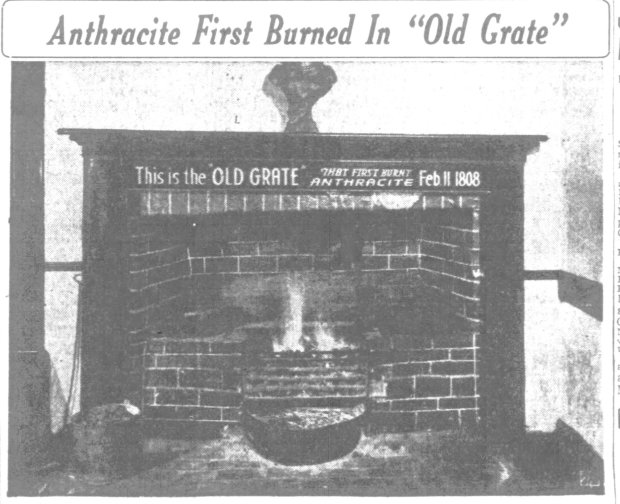 The Jesse Fell grate was originally displayed at the Old Fell Tavern in Wilkes-Barre, the original site of Fell’s experiment using a metal grate to successfully burn anthracite. There is now a parking lot on the East Northampton Street site. (FILE PHOTO)
Sidelight
Whether the tavern grate was the original one used by Fell was in dispute as early as 1908, judging from newspaper coverage of the historical society’s 50th anniversary, which noted six contenders for the honor.
Riccetti said the historical society is confident the grate it has on display, donated by descendants of Fell’s widow, was used by Fell, as were two others it owns, one in storage and another on long-term loan to the Anthracite Heritage Museum in Scranton. The grate is among the Luzerne County museum’s most-prized possessions.
“In terms of importance, if the Fell Grate isn’t Number 1, then it’s Number 2,” Riccetti said.
About the series
No. 1: As the nation approaches America250, we are counting down ways NEPA has powered American history. Missed a day? Read the full countdown at citizensvoice.com.