
At first glance, an Equitable Dinners event might look like a typical backyard barbecue. Hosted by Swissvale-based community theater company RealTime Arts, the event series invites small groups to gather in mostly outdoor spaces for a short performance, followed by a meal and conversation.
But instead of grilling and mingling, Equitable Dinners uses theater and a shared meal to introduce neighbors and spark conversation about local issues.
July’s inaugural Equitable Dinners by RealTime Arts will mark the first time the national series comes to the region, running from July 8 to 31.
“We really want to make talking to each other a thing again,” said RealTime Arts’ co-founder and co-artistic director Molly Rice.
Titled “We Hold These Truths,” honoring the Declaration of Independence and America’s 250th anniversary, the Pittsburgh series will focus on food, health and American identity.
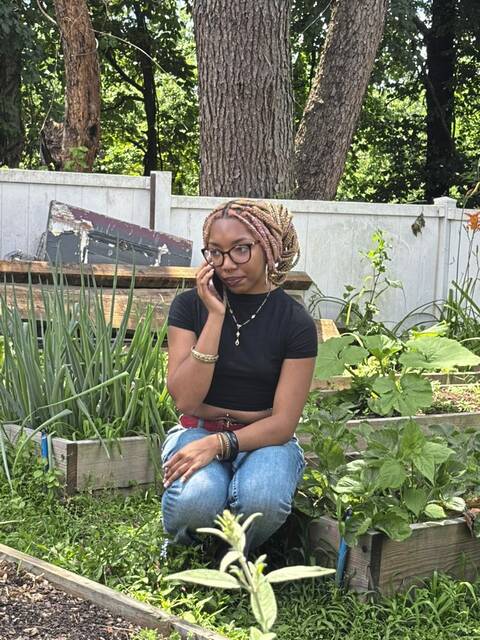
Dinners for groups of up to 10 people will be hosted by locals across four Pittsburgh neighborhoods — at NavusHouse on the North Side, a Troy Hill urban homestead, a private home in Point Breeze, and at the Millvale Food and Energy Hub for a larger-capacity event. All plays will be performed by Pittsburgh actor Malika Cleckley, with a dinner and conversation guided by trained facilitators.
Following RealTime Arts’ radical hospitality model, tickets to Equitable Dinners have no set price and are available for a suggested donation to make them accessible.
The Equitable Dinners format has three distinct acts. Guests watch an original 10-minute play on a community topic. Then, they break bread together.
Dinners are potluck-style, and hosts often encourage audience members to bring dishes that reflect their own cultural heritage. Lastly, after the shared meal has broken the ice, trained facilitators lead the group through a deeper discussion inspired by the play.
Rice and RealTime Arts co-founder and co-artistic director Rusty Thelin first encountered Equitable Dinners in Minneapolis. Created in 2019 by Out of Hand Theater in Atlanta, the show was subsequently adapted by Minneapolis’ Mixed Blood Theater, which created an event focused on houselessness.
“It was about people who are actually experiencing it, advocating around it and talking with other community members about it,” said Rice. “We were sold as soon as we experienced it.”
Rice and Thelin were impressed by the idea of an adaptable community theater model — not a licensed play, but a show format that could be tailored to local audiences.
“There’s been a lot of news lately about theater companies having a hard time finding audiences,” Rice said. “It was striking this was so hyper-local. The intimacy of 10 people sitting around a table talking was actually the strength and the selling point.”
When they brainstormed themes that would resonate with Pittsburghers, food seemed like an approachable topic.
“We said, OK, we’ll start with something a little easier to have a civic conversation about. Everyone eats and everyone has feelings and opinions about food,” Rice said. “(But) the minute you start really digging in, food becomes a policy issue.”
Following the Equitable Dinners model, RealTime Arts created the show based on two statewide community listening sessions. Rice served as lead playwright, while Thelin directed. The sessions allowed them to shape the characters based on real people. They also gathered stories from partner organizations, including Age-Friendly Greater Pittsburgh, Allegheny Health Network and Pennsylvania Community Health Worker Collaborative, a statewide nonprofit network.
In the listening sessions, American identity quickly emerged as a theme — “the very first question we asked is, ‘Are pierogies American food?’ ” said Rice — as did the prevalence of food insecurity. According to a Feeding America report, food insecurity statewide has reached unprecedented levels, increasing by 44% over the past two years, leaving 1.7 million Pennsylvanians — about 13% of the state’s population — struggling to access reliable meals.
The finished play is structured as a 10-page monologue, with multiple characters performed solely by Cleckley. The Chatham University junior connected with Thelin, also a Chatham instructor, after starring in a production of “Hedda Gabler.”
With Equitable Dinners, Cleckley said she enjoys performing outdoors and seeing the barrier between her acting and a traditional theater audience diminish, building empathy.
“I feel like it gives them more of an opportunity to connect with the show rather than feeling like they’re watching something that they’re not a part of,” she said.
Viewing the play in spaces such as a home garden builds on the food theme and is also meant to add to the event’s comfort, Rice said.
“It really feels like a Fourth of July picnic,” she said. “It’s a nice neighborly gathering feel out in the garden, and we are trying to evoke that.”
For Rice, the setting is all in service of the larger conversation. She remembered one woman’s story that shaped the play indirectly.
“She was taking care of her sister’s family, and along with her own kids, she just didn’t have enough food to go around.” Having never heard of a food bank, “her husband went,” Rice said. “And he left. He felt so much shame about needing extra food that he only stood in line for a minute.
“Then, someone else in the (listening session) impromptu said, ‘I wish I’d have known you, I would’ve stood in line for you.’ ”
To Rice, it represented the power that an empathetic conversation can hold — “a gorgeous, living example of this issue,” she said. Today, years later, the same woman volunteers for a food bank and has become an advocate for policies to improve food security.
“We feel strongly the main goal for this event is people being able to talk to each other,” Rice said of Equitable Dinners. “It feels like there’s a lot more tension around us talking in a general civic discourse kind of way. So what we’re hoping is that we can practice. This is a safe and friendly place where we can practice hearing different perspectives and talking about them.
“We’re not (necessarily) going to solve any problems, but we can start a conversation that can be carried forward.”