
UPPER NAZARETH TWP., Pa.- Martin Guitar is celebrating America’s 250th birthday with a new offering that’s imbued with patriotic symbolism.
It even has a link to George Washington himself.
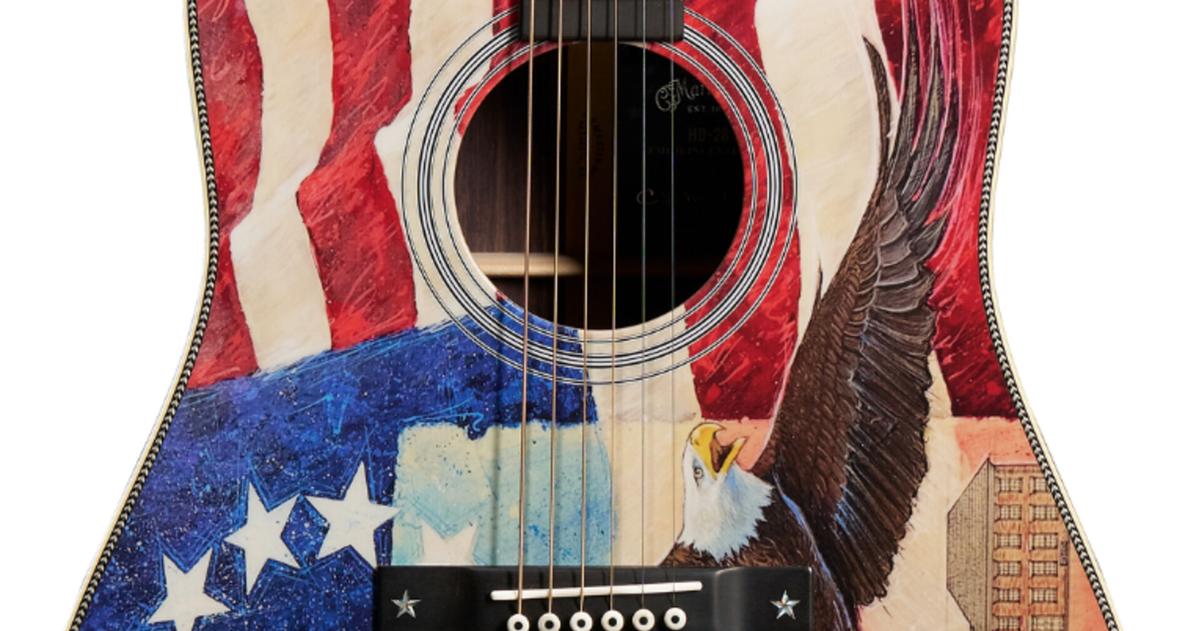
The HD-28 Semiquincentennial is a limited-edition acoustic guitar that features a bald eagle, Philadelphia’s Independence Hall, and a colonial-era American flag on its Sitka spruce top.
Stars decorate the guitar’s fretboard, leading to a Liberty Bell headplate inlay.
One detail that’s not discernible to the naked eye is the significance of the wood used in that inlay, as well as the guitar’s endpiece and heelcap. It comes from a tree nicknamed the Holy Oak, a white oak that stood for some 600 years in Basking Ridge, New Jersey, before it was taken down at the end of its natural life in 2017.

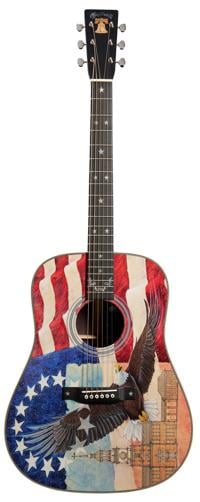
Photo courtesy of Martin Guitar
According to local lore, George Washington’s troops took part in drills near the tree, and Washington shared a picnic lunch beneath its branches with the Marquis de Lafayette.
Martin is selling just 250 of the guitars, in keeping with the Semiquincentennial theme. The release this week coincides with a significant personal milestone for the company: the 50th anniversary of its HD-28 line.
Introduced in 1976, the year of America’s Bicentennial, the HD-28 has become one of Martin’s most recognized and beloved rosewood Dreadnought models, the company said, in a news release.
“This is one of those projects where a lot of history comes together,” says Chris Martin IV, chairman of the board and sixth-generation leader of C. F. Martin & Co., in the release. “Martin has been part of the American story for nearly 200 years, and our family has its own connection to the Revolution, so celebrating the country’s 250th anniversary feels especially meaningful.”
Martin Guitar isn’t as old as the United States, but it’s not too far behind. The company was founded in New York City in 1833 by Christian Frederick Martin. It relocated to Nazareth in 1839 and then moved to its current factory in Upper Nazareth Township in 1964.