
AHN West Penn’s Burn Center is one of the nation’s leading centers for innovative treatment and specialized care for serious burn injuries
Summer in Western Pennsylvania means cookouts, campfires and Fourth of July celebrations. It’s also the busiest time of year for burn centers.
Fortunately, the region is home to top burn specialists, including those at Allegheny Health Network’s West Penn Burn Center — the only burn center in western Pennsylvania verified by the American Burn Association and the American College of Surgeons for the treatment of both adults and children. It cares for more than 2,000 patients each year.
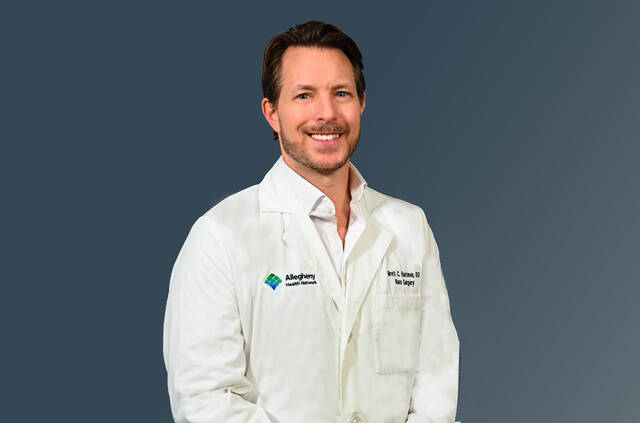
In this Q&A, Brett Hartman, DO, director of the AHN West Penn Burn Center, discusses recent advancements in burn care, why burn injuries rise in the summer, and what to do if someone gets hurt.
Q. How is burn care evolving?
Dr. Hartman: It is an exciting time in burn surgery because of the innovation happening across the field. Some of these technologies are still in development, but they have the potential to completely transform burn treatment.
One of the most promising areas is 3D bioprinting of skin. The goal is to create skin that can be applied directly to a patient without having to harvest it from a healthy donor site on another part of their body. That would reduce pain and speed up treatment. It would also remove the waiting period required to grow cells in a lab. If we can eventually apply skin at the point of care, that would be a major advancement.
Another development is bioelectric wound dressings. These are wearable devices that use electrical field stimulation along with on-demand drug delivery. The idea is a single dressing that can adjust its therapy in real time based on what the wound needs.
We are also seeing growing interest in therapies at the cellular level, including exosome-based treatments and stem cell therapies. These approaches aim to reduce inflammation, promote blood vessel growth and minimize scarring by influencing how the body heals.
What excites me most is that many of these advances are moving us toward more personalized burn care. The future is not simply replacing damaged skin. It is preserving function, minimizing scarring, accelerating recovery and improving quality of life.
Q. Beyond emerging technologies, what should people know about the care available at AHN West Penn Burn Center?
Dr. Hartman: Burn care is highly specialized, and not every hospital is equipped to manage complex injuries. The AHN West Penn Burn Center provides comprehensive care across the entire patient journey. In addition to surgeons, our patients are cared for by specialized nurses, physical and occupational therapists, nutritionists, pharmacists, social workers and psychologists. That multidisciplinary approach is what allows us to address not only wound healing but also function, recovery and long-term quality of life.
Reconstruction is an important part of recovery that people may not always think about. Depending on the injury, that can involve advanced techniques like tissue transfer or tissue expansion to help restore both function and appearance.
Many patients continue their care with us long after discharge through scar management, laser therapy and reconstructive surgery. Recovery from a serious burn often extends well beyond the initial hospitalization.
Q: Why is specialized burn care so important for serious injuries?
Dr. Hartman: Burn injuries affect nearly every organ system in the body. Patients may require critical care, surgery, wound management, rehabilitation, nutritional support and long-term reconstruction. Numerous studies have shown that patients with serious burn injuries have better outcomes when treated in specialized burn centers.
Q: Why do burn injuries increase during the summer?
Dr. Hartman: Summer is consistently our busiest season because people are spending more time outdoors around grills, fire pits, fireworks and other high-heat items they do not encounter as often during the rest of the year. Alcohol can also lower inhibitions and impair judgment around flames. Children are outside more, too, which increases the chances of contact burns and flame burns, which can happen in just a few seconds.
Our burn center exists for exactly these moments, and we are ready to take care of everything from smaller injuries to the most serious cases.
Q: What makes July 4th especially risky for burn injuries?
Dr. Hartman: The holiday combines several of the biggest summer burn risks at once: fireworks, outdoor cooking, open flames and large gatherings. Fireworks are especially dangerous because even small consumer devices can cause serious injuries. Even sparklers can reach temperatures exceeding 1,000 degrees Fahrenheit, making them hot enough to cause serious burns.
Q: If a burn does happen, how should you react?
Dr. Hartman: The first few minutes matter. We recommend running cool water over the burn for 20 minutes, then covering it with a clean, dry cloth. Do not put home remedies on a burn, including ice or butter. If the burn is larger than the palm of the hand, involves the face, hands, feet or genitals, or looks deep, seek medical attention right away.
Q: What is the bottom-line message for families heading into the Fourth of July?
Dr. Hartman: Many serious burn injuries are preventable. A few moments of awareness can prevent months of recovery. If an injury does occur, seeking prompt specialized care can make a meaningful difference.
For more information on the AHN West Penn Burn Center, call (412) 578-5273.