
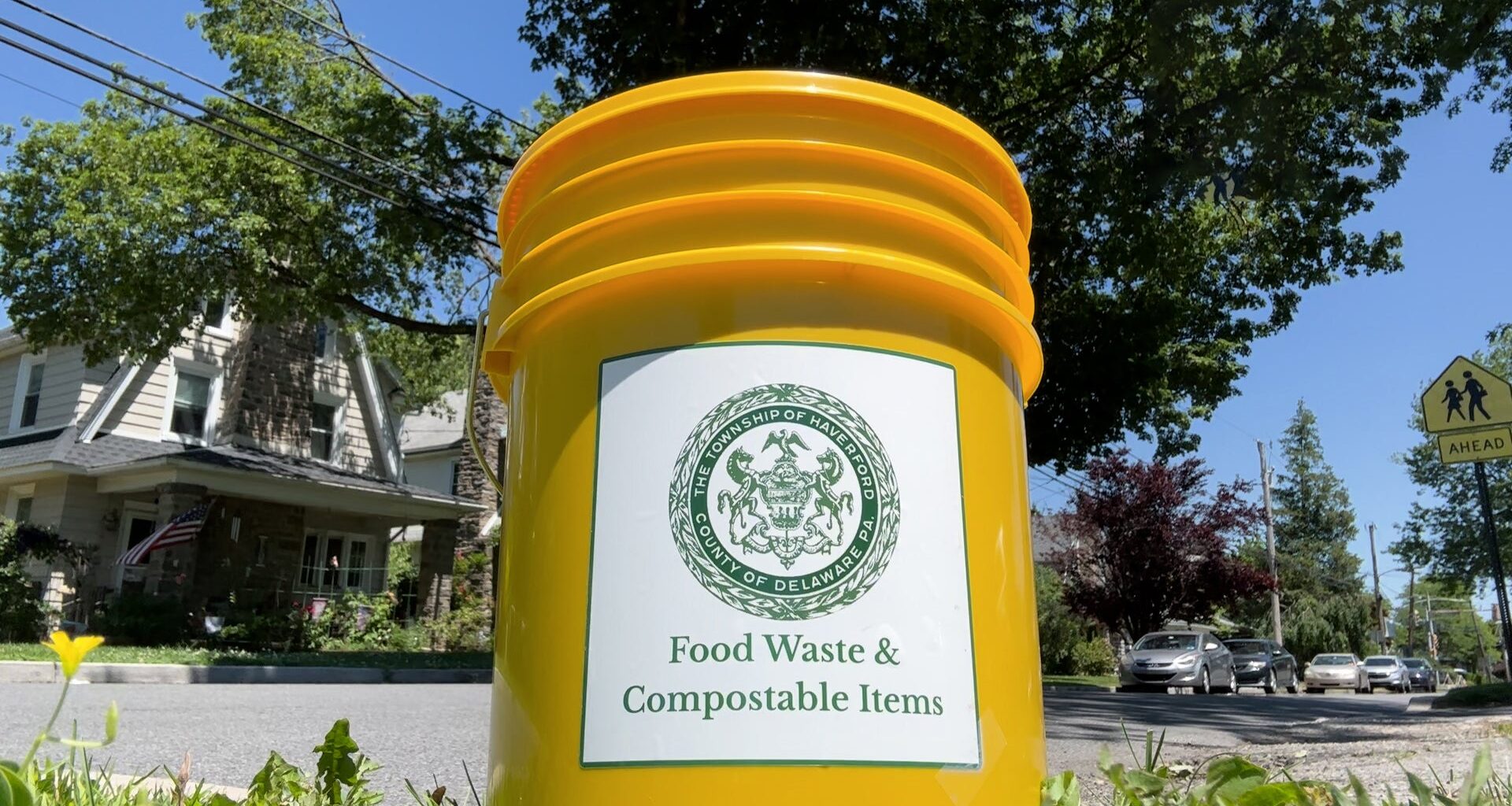
What can — and cannot be composted?
From fruits and vegetables to grains and baked goods, the list of food waste that can be composted is extensive.
“We could take dairy, nuts, eggshells, cooked or processed foods, fried foods, and table scraps, flour and house plant trimmings, hair and fur, cold fireplace ash, and sawdust — not charcoal, not treated wood — and we could take empty pizza boxes without the wax paper,” Burman said.
However, there are strict guidelines regarding what will not be accepted. This includes plastic, meat, bones, pet waste and produce stickers.
“A lot of folks are very concerned about the odors and the fact that sometimes food waste will attract vermin and other potential bugs and all that,” Burman said. “So it’s very important that folks put a lid on their bucket.”
A comprehensive list of do’s and don’ts can be found on the township’s website.
“We think that if people participate on a voluntary basis, they’re going to get it right,” Burman said.
Burman and Trombetta credited Haverford’s Environmental Advisory Committee, volunteer Joy Baxter and the township’s staff for turning an aspect of Haverford’s climate action plan into something actionable for residents.
“This is a win-win-win from the township’s perspective,” Trombetta said.