
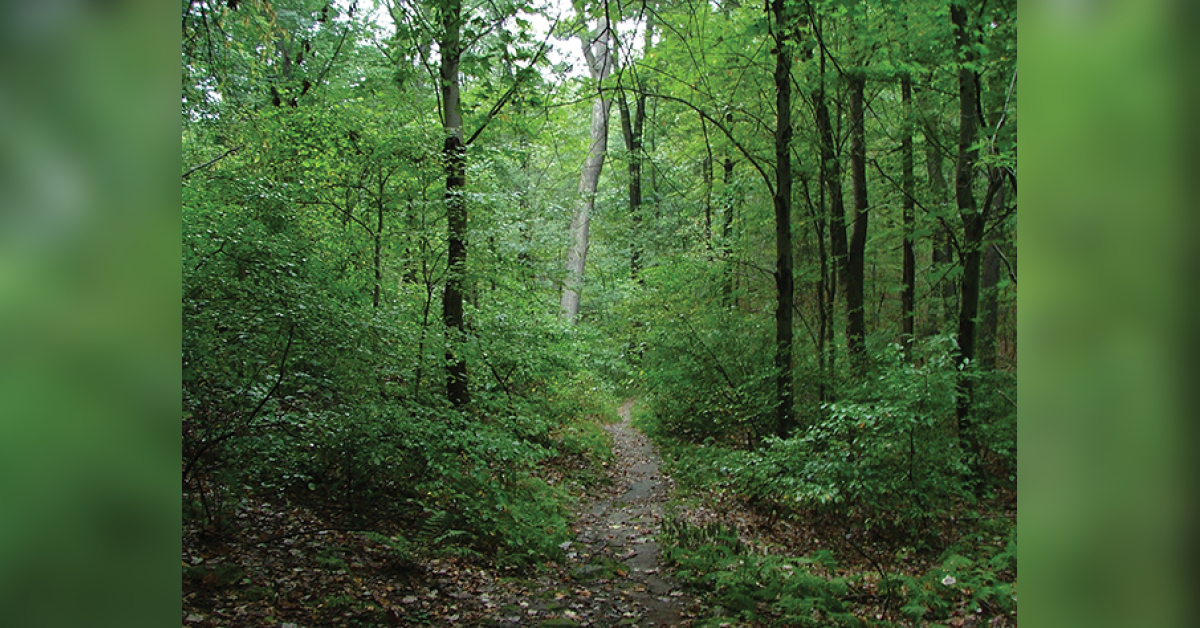
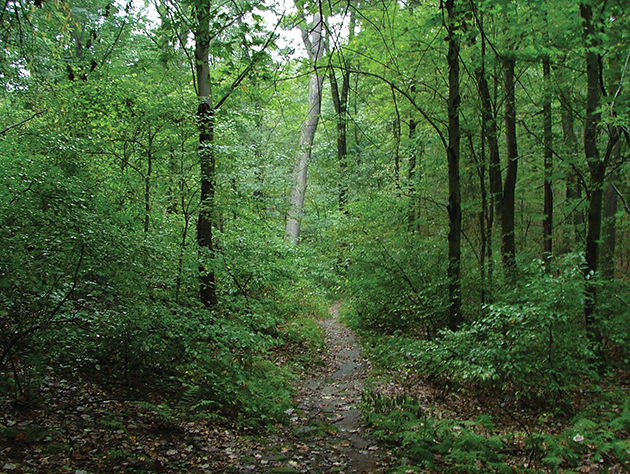
Trail in Jumonville Glen.
“I heard the bullets whistle and believe me there was something charming in the sound”
– George Washington
Over the 4th of July weekend on the 250th anniversary of the United States of America, I had the opportunity to see the new movie called “Young George Washington.” I was pleasantly surprised by this film as it was well cast, and the cinematography was exceptional in many scenes. The movie brought into focus the challenges a man faced when not born of noble or “English” blood in the colonies—along with the pompous attitudes, old world customs and courtesies in Colonial Williamsburg.
The movie also demonstrated how ambitious George Washington was and how he conducted extensive surveying for Lord Fairfax and others in the unknown regions of western Virginia and Pennsylvania. Keep in mind, he was 20 years old when he and a few others covered over a thousand miles in the wilderness to survey strange lands in Indian territory.
I was pretty excited to see this movie because I had stumbled upon several of the key locations where significant events portrayed in the film took place in what is now western Pennsylvania. One time while I was in the Pittsburgh area, I decided to take a drive to do some exploring. I followed U.S. 40 south to Uniontown and there the road climbed precipitously up a mountain that is known as Chestnut Ridge. The views of the terrain and town below were fantastic and surprising, and later I discovered this mountain is the westernmost ridge of the Appalachian Mountains in that area.
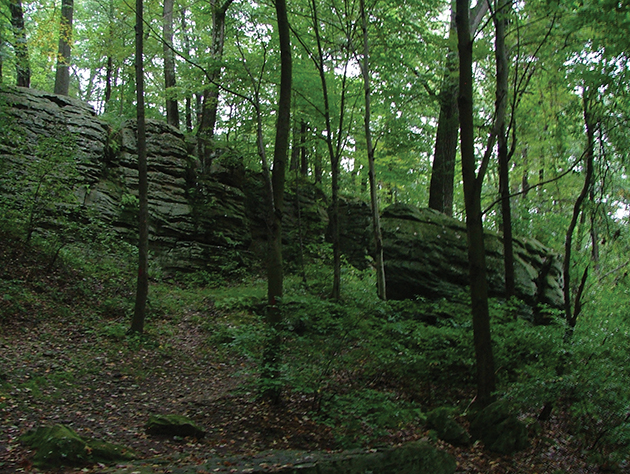
Ledges from which Cpt. Stephen’s men fired on the French.
A few miles further along I noticed a National Park Service sign that read “Jumonville Glen,” so I followed that side road off U.S. 40 into the woods and shortly arrived at a small parking area and trailhead. Signs at the trailhead told of significant acts that occurred here in late May of 1754, where 21-year-old George Washington led a small contingent of militia and Indian allies on a reconnaissance of French forces in the area. The trail is only 0.6 miles long but quite pretty. A portion of this trail is paved to an overlook of the glen.
I had to know more about this place, so I did some quick research and found that Washington had conducted explorations in this area and discovered the French were building forts on land that was claimed by the British. Governor Dinwiddie of Virginia ordered an expedition to the Ohio River country to carry a message to the French demanding that they cease construction of forts on land claimed by Britain and to vacate the area.
George Washington volunteered to lead the expedition stating that due to his surveying experience, he knew the land better than any other. Dinwiddie accepted Washington’s offer and gave him a promotion to Lieutenant Colonel in the militia. He then ordered Washington to proceed to the forks where the Monongahela and the Allegheny Rivers come together to form the Ohio River and garrison a fort there. Some say Dinwiddie sent militia instead of regular British troops so that if the expedition failed, it could be blamed on the militia.
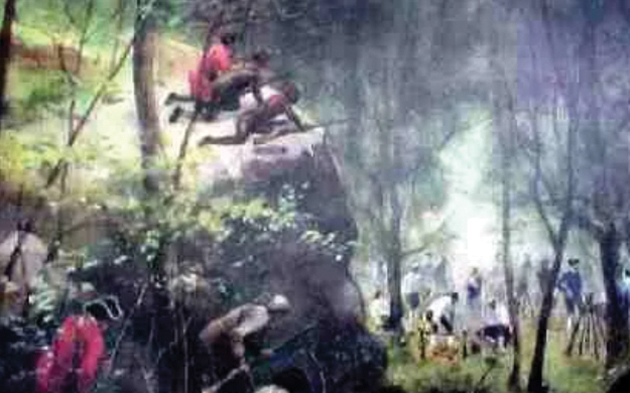
Artist’s rendition of the Battle of Jumonville Glen
Washington’s orders from Dinwiddie instructed him to “act on the defensive but if any attempts are made to obstruct the works or interrupt our settlements by any persons whatsoever, you are to restrain such offenders and in case of resistance, to make prisoners of or kill and destroy them.”
Washington and about 150 men then traveled through the wilderness to Fort LeBouef, south of present-day Erie, Pennsylvania. He and his men were received politely by the French there as guests. While hospitable, the French commander emphatically rejected the British claim and mandate to vacate the area and sent Washington and his militia on their way. I found the portrayal of this event in the movie to be quite entertaining as the man who played the French Officer did an excellent job.
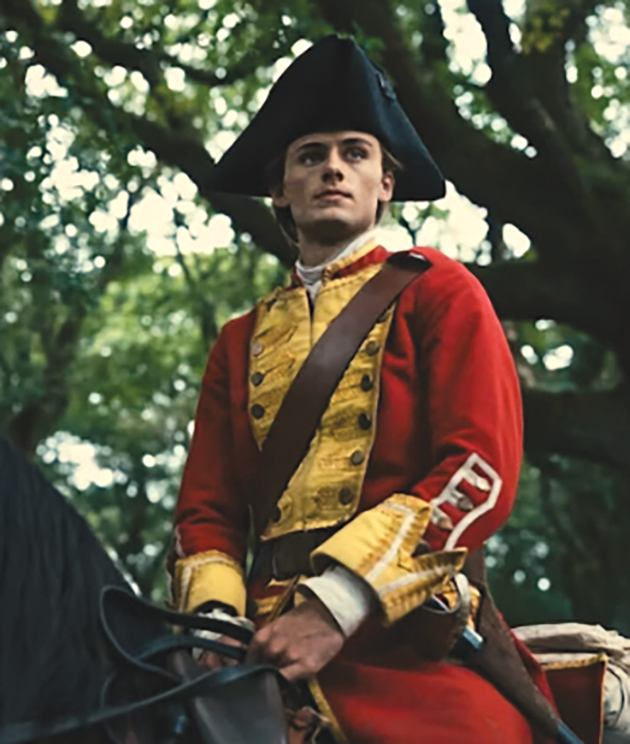
William Franklin Miller as young George Washington.
Washington was now faced with a conundrum. He did not have sufficient forces to compel the French to leave but his orders were clear, so he withdrew to an area south of present-day Pittsburgh, known as the “Great Meadow,” and instructed his men to build a fort while he personally rode 300 miles to deliver the French response to Governor Dinwiddie and plead for reinforcements.
The Governor agreed to send reinforcements, but that would take some time, so Washington quickly returned to his men in the Great Meadow. When he arrived there, he was informed that a small contingent of French troops was camped near their new fort in a secluded glen which made their presence very suspicious.
Through Indian scouts, Washington knew the French position and numbers, but he did not know their intent. Were the French here as friends and diplomats or were they here as spies gathering information on British Troops? Unknown to Washington, the French carried papers supporting both positions. Interpretive signs at the site tell of the following events that occurred next at this place.
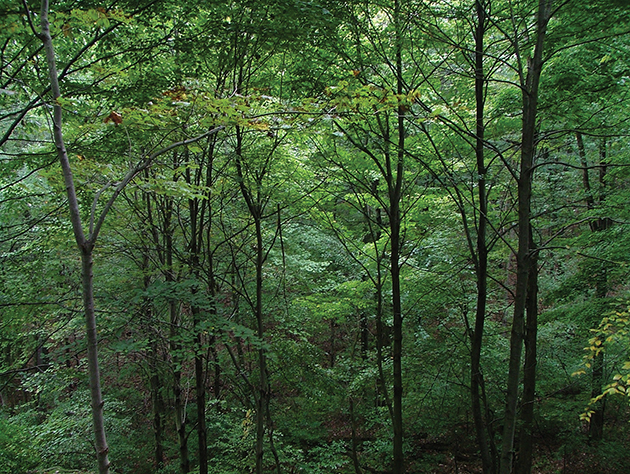
Beautiful woods near Jumonville Glen
In the early morning hours of 27 May 1754, Washington and his officers met near the glen with their Iroquois allies, specifically Tanacharison who was known as the Half King and another Iroquois leader Monacatooha. As the officers and the Indians planned their strategy, 40 untested, soaked Virginia Militia soldiers ate their rations and dried their flintlocks. Soon, two Iroquois scouts led Washington and his troops to the ledge overlooking the unsuspecting French camp.
Washington peered down onto the French camp where Ensign Joseph Coulon De Jumonville and 31 French soldiers were just waking up and preparing their breakfast with rifles stacked and no sentries posted. Washington quickly placed Captain Adam Stephens with 20 men on top of the rock ledges to his left, and then instructed the Iroquois to take up a position to the south in the ravine while he and 20 men crept to the edge of the rocks overlooking the French camp.
Suddenly, without orders, someone fired a shot. The French then saw the enemy soldiers at the edge of their camp, called out an alarm and ran for their stacked muskets. As many of the surprised Frenchmen fled down the ravine, they were met by the Indians who laid into them with tomahawks and other weapons. Initially, Washington ordered his men to hold their fire, but when the terrified French began to fire at them, he gave the order to open fire and advance. His party’s rifle volley was joined by Captain Adam Stephen’s men above the glen.
Gray smoke from musket fire hung in the air in the half light of the humid misty morning. The crackle of musket fire and the screams of Indians and Frenchmen locked in hand-to-hand combat echoed through the trees as chaos and confusion reigned over meadows. Later, in his journal, Washington would recall, “I heard the bullets whistle and believe me there was something charming in the sound.”
Washington finally gained control of the situation and when the melee ceased, over a dozen Frenchmen lay dead including their leader, Ensign Jumonville. 21 French were captured but one man escaped and walked barefooted 60 miles to Fort Duquesne (present day Pittsburgh) to report the incident which became known worldwide as the Jumonville Affair.
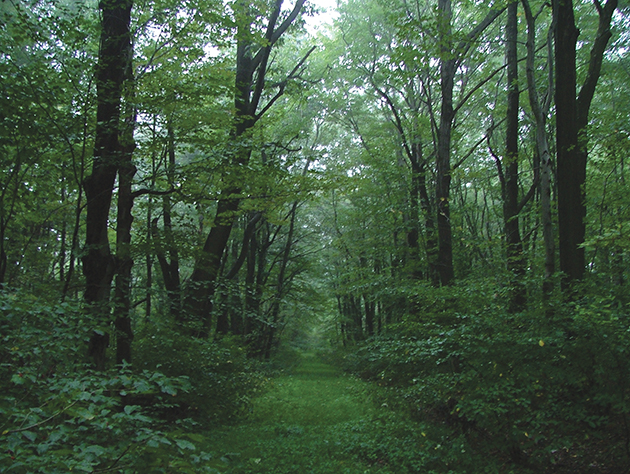
Woods near Jumonville Glen.
As Washington accepted the French surrender, some Indians continued to scalp the dead and wounded. The Indians wanted to take the prisoners too, but Washington refused to release them. When the attack ended, the British had suffered one dead soldier and two wounded. French survivors of the attack claimed they were on the same sort of diplomatic mission that Washington himself went on the year before to Fort LeBouef, and that is why they had no sentries posted. This was suspicious, however, because they had camped in a ravine off the trail and had been in that position not far from the Great Meadow for several days.
The representatives of New France were outraged by this attack. This 15 min. skirmish led by Washington, a 21-year-old militia officer on the back side of the Appalachian Mountains, is said to be the beginning of the “Seven Years War” which some call the first World War because its combat spanned North and South America, Europe, Africa and Asia. In the Colonies it was referred to as the French and Indian War, and at the conclusion of which, the French were shattered in North America and the British ruled supreme for several decades leading up to the American Revolution.
Fascinated by what I had learned from signs on the site and a few quick internet searches, I followed the trail into the woods. It had been overcast and raining. Everything was soaked which made the foliage an intense green, and a light mist hung in the trees. It was verging on evening, and a hint of darkness was spreading through the woods.
As I walked along, I noticed thick green ferns beneath tall moisture-dampened trees, piled brown leaves, moss on the slick rocks, and some logs completely covered with white shelf fungi. Multicolored leaves in the path and large green plants had clear beads of water collected on them.
When I reached the overlook, I admired the giant cracked boulders that resembled stacked pancakes, looming high over the glen. The French below would have been at the complete mercy of the attackers because the British guns had total command of the area from the heights. The ledge of these boulders is now known as “Washington’s Rocks.”
I left the trail and went over to the edge of the rocks and peered down onto the glen, imagining the French encampment below with the morning cook fires sending tendrils of smoke into the air. I thought to myself that I was in exactly the same spot as Washington and his men would have been when that mysterious first shot rang out and he ordered his men to open fire. I then descended some stone steps that have been cut between the boulders to provide access to the bottom of the glen. I explored the area where the French campsite would have been. It is incredible that places like this have been preserved in their natural state.
It was calm and peaceful down in that glen. Even though the skirmish that occurred in these woods 272 years ago was small by battlefield standards, the repercussions of it were felt around the world. It’s amazing what things you can discover and find when you take a drive out of the city into the country. “Young George Washington,” which covers the ambush at Jumonville Glen and other events in the early part of our first president’s life, is still in theatres, and in my opinion, it is well worth the price of admission.
In next week’s article, we will wrap up the series by covering my visit to Fort Necessity in the Great Meadows, the events that occurred there, and the final event that has captured my imagination for decades—Braddock’s defeat and the Battle of the Monongahela.
Jaromy Jessop has been a frequent contributing writer to the Transcript Bulletin. Jessop has traveled to all 50 states, U.S. Territories and a dozen foreign countries. He can be followed on Facebook at “JD Jessop” and on his Facebook group “American Tales & Trails.” Jessop retains the rights to his writing and photographs. His permission is required for any republication.