
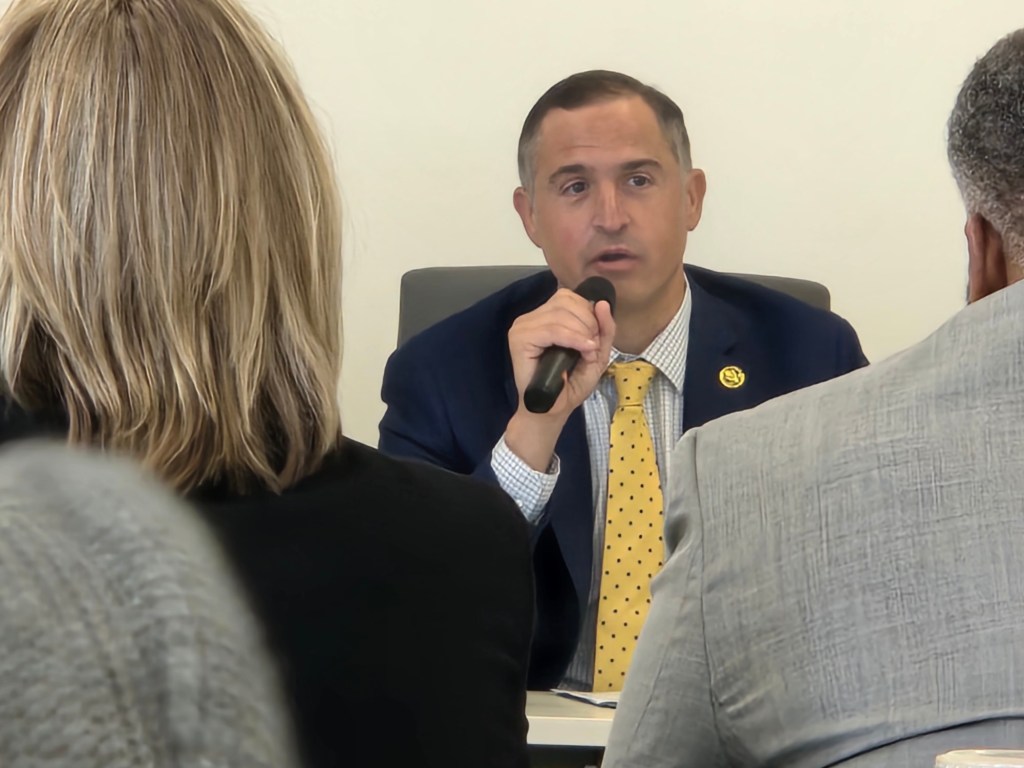
Joseph DeFelice has visited Reading several times over the past year. And the U.S. Department of Housing and Urban Development Assistant Deputy Secretary said he has been struck by what he’s seen.
“I’m seeing excitement in Reading,” he told a crowd gathered at the Reading Housing Authority’s Willis Center for Administration during the spring. “And I’m not going to lie to you, I haven’t seen that before.”
DeFelice’s May 20 stop in Reading was to take part in a discussion about what’s going right when it comes to development in Reading and Berks County, and what the federal government can do to help make sure things keep moving forward.
The session included local developers, real estate professionals, leaders of housing organizations and local government officials.
One of the chief subjects of interest was the desperate need for and critical lack of affordable housing.
According to data and comments shared during the session, the available housing stock in the county — much like many other places across the country — is woefully lacking. Housing construction has simply not kept up with demand, having ground to a halt following the bursting of the housing bubble in 2008 and now estimated to be about 20 years behind.
In the greater Reading area there is a need for about 5,000 new units. Several construction projects underway would provide about 900.
Those who spoke during the roundtable said there is a need for all sorts of housing — market value, luxury and affordable. Affordable housing, they said, represents the biggest challenge.
DeFelice acknowledged that, saying the dollars and cents don’t typically add up for those kinds of projects.
“The problem is, building affordable housing is not affordable,” he said.
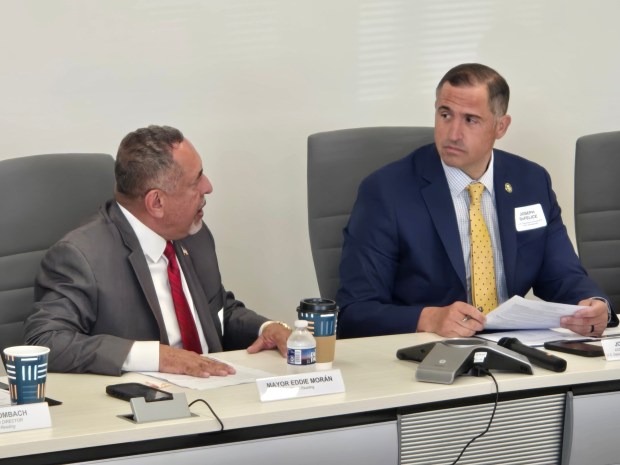 Reading Mayor Eddie Moran (left) and U.S. Department of Housing and Urban Development Assistant Deputy Secretary Joseph DeFelice took part in a roundtable about affordable housing and economic development held in Reading on May 20. (DAVID MEKEEL – READING EAGLE)
The federal government does have something in place to help with that as well as other development, DeFelice said.
He touted the federal Opportunity Zone program, where certain areas are designated for development assistance, largely through the deferral of federal capital gains taxes. The zones have been widely successful in spurring development, he said.
The new tracts that will be included in that program will be unveiled on July 1, DeFelice said. He guaranteed that some of those zones will be in Reading and elsewhere in Berks County.
“Reading is a place to put this Opportunity Zone money into and watch it work,” he said.
DeFelice also spoke about the possibilities loans available through the federal Community Development Block Grant program can afford. Communities are able to borrow up to five years worth of their CDBG funding at a reduced rate in the form of a federally-backed loan.
The loan does not impact a community’s annual CDBG allotment, DeFelice said, and the money can be used for things like building hotels and parking garages that can help support economic development.
DeFlice stressed that HUD offers programs that can provide up to $10 million in small-business loans.
Developers who took part in the session said, the federal programs offered by HUD are helpful for the most part. But there are some issues with them.
One of the biggest complaints was the red tape associated with applying for programs, as well as the slow pace at which applications move through the approval process.
In particular, the Build American/Buy American program — which requires developers to purchase U.S.-made products for projects receiving federal dollars — creates challenges.
Some necessary products aren’t made in the U.S., and the waiver process is lengthy. The delays, they said, can end driving up the cost of projects.
DeFelice acknowledged processes often move too slowly and said HUD is working on streamlining efforts.
“We don’t want to be the reason your project takes six more months or costs a lot more money,” he said.